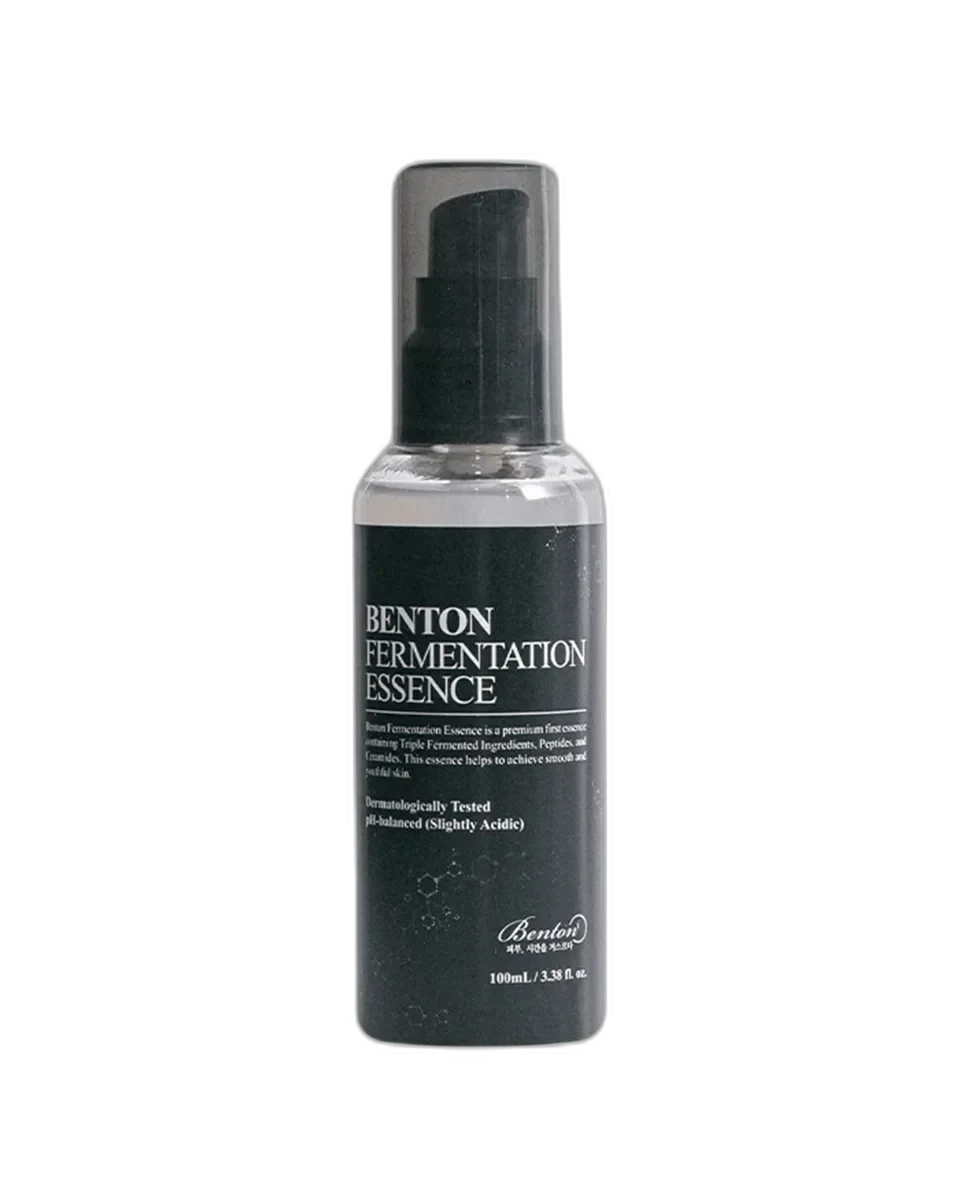
Fermentation Essence
K-Beauty Active Hub
 Verified reviewer
Pros & cons.
- +Six-peptide bench at sub-$30 price point
- +Bifida ferment lysate sits high on the INCI
- +Ceramide NP added unusually early for an essence
- +Galactomyces ferment filtrate adds a second ferment pathway
- +Fragrance-free, alcohol-free, and silicone-free
- +Layers cleanly with retinol, vitamin C, and niacinamide
- −Individual peptide concentrations are unknown and likely modest
- −Faint ferment scent may bother a small subset of users
- −Lecithin content may concern fungal-acne sufferers
- −Subtle, long-game results rather than dramatic changes
- −Dropper format is less convenient than a pump
The full review.
Some K-beauty products exist to impress ingredient readers instead of delivering one clear benefit. The Benton Fermentation Essence is that product, and it earns its density rather than just performing it. The INCI starts with a humectant base of butylene glycol, pentylene glycol, glycerin, and 1,2-hexanediol, then places bifida ferment lysate in the fifth slot. Ceramide NP follows, which is unusually high for an essence. Next are aloe, betaine, panthenol, allantoin, sodium hyaluronate, adenosine, and arginine. The peptide section—sh-oligopeptide-1 (EGF), copper tripeptide-1, palmitoyl tripeptide-1, hexapeptide-9, tripeptide-1, palmitoyl pentapeptide-4, hexapeptide-11—and galactomyces ferment filtrate make this ingredient list look like a $60 serum rather than a $24 essence from an indie Korean brand.
The peptide bench is deliberately stacked across categories. sh-Oligopeptide-1 is the EGF (epidermal growth factor) Korean brands use for cell-signaling claims. Copper tripeptide-1 is the old-school carrier peptide Pickart wrote about in the 1970s; it has a reasonable literature base for wound healing and fibroblast activation. Palmitoyl tripeptide-1 and palmitoyl pentapeptide-4 are the Matrixyl family of lipid-conjugated matrikines used in everything from The Ordinary’s ‘Buffet’ to high-end peptide serums. Hexapeptide-9 and hexapeptide-11 add more signaling coverage. Tripeptide-1 is the lightweight active used in much of the affordable peptide market. Stacking these in one product is partly marketing—exact concentrations are unknown, and concentration dictates peptide efficacy—but it is also a reasonable hedge. Instead of betting on one high-dose peptide, Benton bets on breadth, similar to how Olay Regenerist and Matrixyl-based serums work.
The texture is satisfying. The essence pours from the dropper as a clear, slightly viscous liquid—thicker than a toner but thinner than a serum—and spreads with a soft cushioning quality. Ferment-essence veterans will recognize a very faint ferment note on application, though first-time users may not notice it. It absorbs in under a minute to a non-greasy finish that layers well under any serum or cream. The formula is fragrance-free, contains no alcohol, and has no silicone. Benton preserves its fragrance-free signature here instead of using scent to mask the ferment aroma.
Results match this category. The humectant stack provides hydration and a plumper surface within a few days. Peptide and ferment effects on fine lines, tone, and resilience take longer; most long-term users report visible improvements after 8-12 weeks, consistent with peptide behavior in skincare literature. This product does not transform skin overnight. It is a long-game ingredient delivery system for users with established routines who want a dense treatment step that works with retinoids, vitamin C, and moisturizer.
The limitations are modest. At ~$24 for 100ml, the value is strong, but you pay for ingredient breadth rather than high individual concentrations; this is not the choice for a single peptide at a research-backed percentage. The faint ferment smell is a non-issue for most, but a deal-breaker for those who associate fermented scents with spoilage. Dropper packaging is hygienic for a ferment product but less convenient than a pump. Suitability is broad but not universal: fungal-acne sufferers should patch test the lecithin content, and those expecting SK-II-level pitera intensity will find this essence less assertive than a single-ingredient pitera product. Within these bounds, it is one of the most ingredient-dense essences per dollar in K-beauty.
Formula
Ingredient analysis.
Full INCI list · pH 5.5
Butylene Glycol, Pentylene Glycol, Glycerin, 1,2-Hexanediol, Bifida Ferment Lysate, Ceramide NP, Aloe Barbadensis Leaf Extract, Betaine, Panthenol, Allantoin, Sodium Hyaluronate, Adenosine, Arginine, Xanthan Gum, Water, sh-Oligopeptide-1 (EGF), Lecithin, Copper Tripeptide-1, Caprylyl Glycol, Hydrogenated Lecithin, Polyglyceryl-10 Laurate, Galactomyces Ferment Filtrate, Palmitoyl Tripeptide-1, Polysorbate 20, Hexapeptide-9, Water, Propanediol, Tripeptide-1, Zanthoxylum Piperitum Fruit Extract, Usnea Barbata (Lichen) Extract, Althaea Rosea Root Extract, Pulsatilla Koreana Extract, Hexapeptide-11, Isopentyldiol, Sucrose Palmitate, Acrylates/C10-30 Alkyl Acrylate Crosspolymer, Palmitoyl Pentapeptide-4, Sodium Surfactin
Skin match.
The science.
The Science
The science uses three categories: peptides, ferments, and supporting barrier actives. Peptide literature is uneven. copper tripeptide-1 has decades of history; Loren Pickart's 1980s work shows it increases collagen synthesis in vitro and supports wound healing and fibroblast stimulation. The Matrixyl family (palmitoyl pentapeptide-4, palmitoyl tripeptide-1) has a smaller, growing body of cosmetic-chemistry literature. A 2005 paper by Robinson et al. in the International Journal of Cosmetic Science shows measurable wrinkle-depth improvements at the 3-5% range. The peptides here are likely at lower concentrations, but the mechanism remains the same. sh-Oligopeptide-1 (epidermal growth factor) has more controversial evidence in cosmetic use; some studies support topical benefit while others question if the molecule is large enough to penetrate.
Regarding ferments, bifida ferment lysate research focuses mostly on Estée Lauder's Advanced Night Repair; a 2009 paper suggests it helps DNA repair and UV-damage recovery. Galactomyces ferment filtrate is the SK-II pitera, with published research since the 1980s showing improved skin brightness and texture after extended use. Neither ferment is a miracle, but both have better-than-average evidence for cosmetic actives in their class. Ceramide NP adds established barrier-lipid support—ceramide, cholesterol, and fatty acids are the core components of stratum corneum repair—but without cholesterol and fatty acid partners, its barrier-restoration benefit is capped compared to a full Elias-style 3:1:1 ratio. Panthenol and allantoin provide soothing effects with decades of supporting data. The formula's strength is the combination; its weakness is that no single active has a dose high enough to anchor the claims alone.
Dermatologist Perspective
Dermatologists view the Benton Fermentation Essence as a thoughtful, well-rounded K-beauty essence for patients wanting peptides, ferments, and barrier support in one step. The fragrance-free, alcohol-free formula works for most skin types, including sensitive and combination. The common derm caveat is that 'kitchen-sink' peptide products rarely have individual peptides at therapeutic concentrations. Patients seeking a single well-dosed active (like a 2-5% Matrixyl serum) may prefer a targeted product. For patients wanting a gentle, supportive layer that works with prescription retinoids and other actives, dermatologists commonly recommend this essence.
Where it fits in your routine.
Cleanse and tone, then press 2-3 drops into damp face and neck skin. Apply targeted serums (vitamin C, retinol, niacinamide) and a moisturizer after. Use twice daily. You can layer this under or over other water-based essences. For sensitive or reactive skin, use once daily in the evening for the first week, then move to twice daily.
At roughly $24 for 100ml, the Fermentation Essence offers strong value for its ingredient density. Comparable Western peptide-and-ferment essences from The Ordinary, Medik8, or Paula's Choice tend to sit in the $30-50 range for similar active profiles, and luxury ferment essences from SK-II or La Prairie start at 5-10x this price for a narrower ingredient story. A 100ml bottle typically lasts 2-3 months with twice-daily use, giving an effective cost of around $8-12 per month. No larger size is available.
Normal, combination, dry, and resilient sensitive skin types use this dense, peptide-and-ferment-rich essence as a routine 'active hub'. It works well for users who already use retinol and vitamin C and want a gentle, ingredient-dense middle step.
Skip this if you want one specific peptide instead of a broad peptide bench, or if the faint ferment scent bothers you. Users prone to fungal-acne should patch test first due to the lecithin content.
Product details.
A clear, slightly viscous liquid — thicker than a toner but thinner than a serum, it feels soft and cushioned as it absorbs.
A faint ferment note exists—a "bread-adjacent" hint that galactomyces essence users recognize.
The frosted-glass bottle uses a dropper, which improves hygiene and feel compared to the rest of the Benton range.
The first few uses are quiet — the essence spreads cleanly and absorbs into a soft cushion without tack. The humectant stack provides bounce and plumpness within a few days; the peptide and ferment effects are subtle and build over weeks.
Around 2-3 months with twice-daily application of a few drops per use.
12 months
All Year
The backstory.
Benton introduced the Fermentation Essence in 2019 as the densest-active product in its lineup, aimed at Korean users who wanted to consolidate several premium steps into one bottle. Its value proposition — peptides, ferments, and ceramides in a single essence for under $30 — earned it steady traction among ingredient-focused review communities on Reddit and in K-beauty Discord servers.
About Benton
Established Brand (5–20 years)Benton launched in 2011, building a reputation for ingredient transparency through minimalist K-beauty essentials. The Fermentation Essence is the brand's most concentrated active product. It combines probiotic ferments, peptides, and ceramides in one step for the advanced K-beauty user.
Common myths.
Essences are just "fancy toners" and lack real function.
This formula has an active payload similar to most serums — peptides, ferments, and ceramides in a water-light format. This texture spreads further and layers easier than a thicker product. Essences work when the ingredients justify them.
FAQ.
What is a fermentation essence?
This treatment step uses fermented ingredients — usually yeast or bacterial ferments like bifida ferment lysate and galactomyces — to deliver amino acids, peptides, and organic acids. These ingredients support hydration, firmness, and skin clarity. It is essentially a peptide-and-probiotic serum in essence format.
How does this compare to SK-II Facial Treatment Essence?
SK-II uses one high-concentration active (pitera, which is galactomyces ferment filtrate) and a luxury price. Benton combines galactomyces with bifida ferment lysate, ceramide NP, and a six-peptide bench for about one-sixth the price. The two are not directly comparable, but Benton provides more ingredient breadth for the money.
Can I use it with retinol or vitamin C?
Yes. The fragrance-free, alcohol-free formula layers comfortably before or after retinol and vitamin C. Apply the essence first on damp skin, then follow with your active, then seal with a moisturizer.
How long until I see results?
Hydration and bounce appear within the first week. The peptide and ferment effects on tone and fine lines show after 8-12 weeks of consistent twice-daily use.
Is it pregnancy safe?
It lacks retinoids, salicylic acid, or hydroquinone, and is generally compatible with pregnancy. As always, ask your OB or derm about specific concerns regarding peptides or ferments during pregnancy.
What the community says.
"ingredient-dense for the price"
"fragrance-free"
"noticeable bounce"
"works well layered with actives"
"slightly tacky before moisturizer"
"subtle rather than dramatic results"
"ferment smell for a few users"
People also looked at.