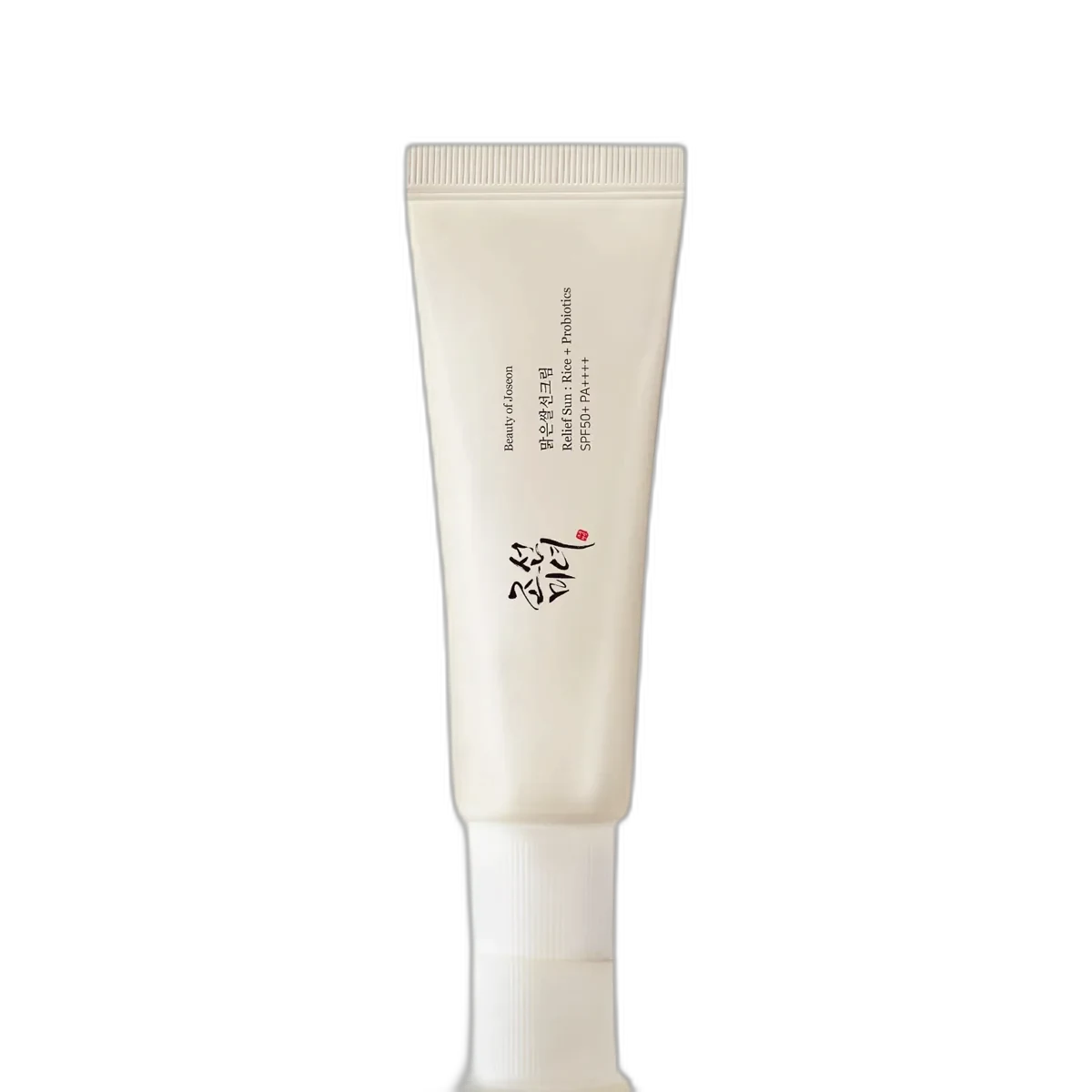
Relief Sun: Rice + Probiotics SPF 50+
The K-Beauty Sunscreen That Changed Everything
 Verified reviewer
Pros & cons.
- +Independently verified SPF 50+ — lab-tested at 52.5 and 63.1 by two separate facilities
- +Virtually weightless texture that feels like wearing nothing — the gold standard in sunscreen comfort
- +30% rice extract, niacinamide, probiotic ferments, and adenosine provide genuine skincare benefits
- +Essentially invisible on most skin tones with minimal to no white cast
- +At $14.40 for 50ml, affordable enough for generous application and worry-free reapplication
- +Broad skin type compatibility — works for nearly everyone from dry to oily
- −Slightly dewy finish may require powder for very oily skin types in humid conditions
- −50ml tube depletes within 3-5 weeks with proper daily application amounts
- −Tinosorb M nanoparticles may produce subtle cast on very deep skin tones
- −Can pill under certain heavy moisturizers or silicone-heavy products
- −Not water-resistant — reapplication needed after swimming or heavy sweating
The full review.
About Beauty of Joseon
The Relief Sun: Rice + Probiotics isn’t just a product — it’s proof of concept. Proof that sunscreen can be affordable and elegant. Proof that K-beauty’s formulation expertise can compete with the best European pharmaceutical sunscreens at a fraction of the price. Proof that when you remove the barriers to daily SPF use — cost, texture, finish, feel — people will actually protect their skin. In a category full of products that feel like obligations, this one feels like a gift.
Myth
There is a before and after in the history of K-beauty sunscreens, and the dividing line is this tube. Before the Relief Sun: Rice + Probiotics, the landscape was binary: you could have affordable sunscreen that felt like spackling paste, or elegant sunscreen that cost thirty-five dollars and came in a bottle designed by someone who also does perfume packaging. Beauty of Joseon walked into this market in 2021 and quietly detonated the assumption that these two qualities couldn’t coexist at $14.
Reality
The product went viral in the most authentic way possible. No paid campaigns, no celebrity endorsements, no manufactured scarcity. Users tried it, found that it felt like nothing on their skin, confirmed it actually protected them from the sun, and told everyone they knew. Reddit threads. TikTok reviews. Dermatologist recommendation videos. The organic spread was so overwhelming that Beauty of Joseon repeatedly couldn’t keep it in stock.
But viral products don’t always survive scrutiny, which is why what happened next matters: independent SPF testing. When beauty enthusiasts commissioned laboratory analysis — one lab in South Korea, one in Spain — the results came back at 52.5 and 63.1 respectively, both exceeding the SPF 50+ claim. The product wasn’t just pleasant to wear; it was doing its job.
The formulation deserves serious attention. The UV filter system combines four chemical filters that cover the full UV spectrum: DHHB for UVA1, ethylhexyl triazone for UVB, methylene bis-benzotriazolyl tetramethylbutylphenol (Tinosorb M) for broad coverage, and diethylhexyl butamido triazone (Iscotrizinol) for additional UVB stability. These are modern, photostable filters — the same technology found in premium European formulations. They don’t degrade under UV exposure the way older filters like avobenzone can.
Beyond UV protection, the formula packs genuine skincare punch. The 30% rice extract base delivers amino acids, vitamins, and mild brightening activity. Niacinamide — listed eighth, suggesting meaningful concentration — provides barrier strengthening, brightening, and anti-inflammatory benefits. A multi-source probiotic ferment complex (including lactobacillus, saccharomyces, and aspergillus ferments) supports the skin microbiome. And adenosine, Korea’s approved anti-wrinkle ingredient, adds collagen-supporting activity.
Texture
The texture is where this sunscreen earns its cult status. It applies like a lightweight lotion — fluid, thin, and cooperative. There’s no resistance, no heavy film, no sense that you’ve applied a protective layer at all. It absorbs within seconds and sets to a finish that’s natural with the faintest hint of dewiness. On most skin tones, it’s completely invisible. Some users with very deep skin tones have reported a subtle cast from the Tinosorb M nanoparticles, but the majority find it undetectable.
How to Use
As a daily sunscreen, the experience is transformative for people who previously dreaded SPF application. When your sunscreen feels like skincare — when it actually makes your skin look and feel better rather than worse — you stop viewing it as a chore and start viewing it as a benefit. This psychological shift is arguably as important as the UV protection itself, because the best sunscreen in the world does nothing if it stays in the drawer.
Common Complaints
The limitations are minor but real. Very oily skin types may find the finish slightly too dewy in humid conditions — a powder or matte primer on top resolves this. The 50ml tube runs out faster than you’d like when you’re applying the proper two-finger-length amount daily. And some users experience pilling when layering it over heavier moisturizers or silicone-based primers — a compatibility issue that a quick trial with your existing routine will resolve.
Price
At $14.40 for 50ml, the financial argument for this sunscreen is almost unfair to competitors. It’s inexpensive enough that you can apply generously without wincing, reapply without counting the cost, and keep one at home and one in your bag without budgetary guilt. This accessibility has done more for real-world sun protection than any luxury SPF ever could.
Ingredient analysis.
Full INCI list
Water, Oryza Sativa (Rice) Extract, Dibutyl Adipate, Propanediol, Diethylamino Hydroxybenzoyl Hexyl Benzoate, Polymethylsilsesquioxane, Ethylhexyl Triazone, Niacinamide, Methylene Bis-Benzotriazolyl Tetramethylbutylphenol, Coco-Caprylate/Caprate, Caprylyl Methicone, Diethylhexyl Butamido Triazone, Glycerin, Butylene Glycol, Oryza Sativa (Rice) Germ Extract, Camellia Sinensis Leaf Extract, Lactobacillus/Pumpkin Ferment Extract, Bacillus/Soybean Ferment Extract, Saccharum Officinarum (Sugarcane) Extract, Macrocystis Pyrifera (Kelp) Extract, Cocos Nucifera (Coconut) Fruit Extract, Panax Ginseng Root Extract, Monascus/Rice Ferment, Pentylene Glycol, Behenyl Alcohol, Poly C10-30 Alkyl Acrylate, Polyglyceryl-3 Methylglucose Distearate, Decyl Glucoside, Tromethamine, Carbomer, Acrylates/C10-30 Alkyl Acrylate Crosspolymer, 1,2-Hexanediol, Sodium Stearoyl Glutamate, Polyacrylate Crosspolymer-6, Ethylhexylglycerin, Adenosine, Xanthan Gum, Tocopherol, Lactobacillus/Rice Ferment, Aspergillus Ferment, Saccharomyces/Rice Ferment Filtrate
Skin match.
The science.
The Science
Two laboratories independently validated the UV filter system in this sunscreen. This makes it one of the most transparently tested K-beauty sunscreens on the market.
The four-filter combination covers the full spectrum. DHHB targets UVA1 (340-400nm), the radiation most responsible for dermal photoaging. Ethylhexyl triazone and diethylhexyl butamido triazone (Iscotrizinol) absorb UVB. Methylene bis-benzotriazolyl tetramethylbutylphenol (Tinosorb M, in nano form) acts as an organic particulate filter for both UVA and UVB.
The independent SPF verification is notable. A Korean laboratory yielded SPF 52.5±5.8, and a Spanish laboratory measured SPF 63.1±0.6. Both results exceed the SPF 50+ label claim. This level of transparent third-party validation is rare in the cosmetic sunscreen market.
Niacinamide appears at a likely significant concentration (eighth in the INCI list, after UV filters) and provides photoprotective benefits beyond UV filtering. Research in Photodermatology, Photoimmunology & Photomedicine shows that topical niacinamide increases cellular energy production and DNA repair after UV exposure, supporting the skin's recovery.
The probiotic ferment complex includes Lactobacillus/Pumpkin Ferment Extract and Saccharomyces/Rice Ferment Filtrate. While research on topical probiotics in sunscreen is emerging, studies show ferment lysates can modulate skin immune response and strengthen barrier function—both relevant to UV-stressed skin.
Adenosine works by stimulating collagen synthesis through adenosine receptor activation. Korean MFDS certification of adenosine as a functional anti-wrinkle ingredient relies on clinical studies showing measurable wrinkle reduction.
Dermatologist Perspective
Dermatologists recognize this sunscreen as a top value option for daily UV protection. Board-certified dermatologists note that independent SPF testing sets this product apart from competitors whose protection claims lack independent validation. The mix of modern, photostable UV filters and skincare actives (niacinamide, adenosine) follows the dermatological principle that sunscreen should be a treatment step, not just a barrier. Dermatologists recommend this product for patients who avoid daily sunscreen due to texture; its lightweight, invisible application solves common barriers to sunscreen adherence.
Where it fits in your routine.
Apply about two finger-lengths (1.25ml) to the face as the final morning skincare step. Spread it evenly over the face and neck. Wait 1-2 minutes before applying makeup. Reapply every 2 hours during long sun exposure, or after swimming, sweating, or toweling off. Remove in the evening with an oil-based cleanser — the UV filters need oil or micellar water to remove completely.
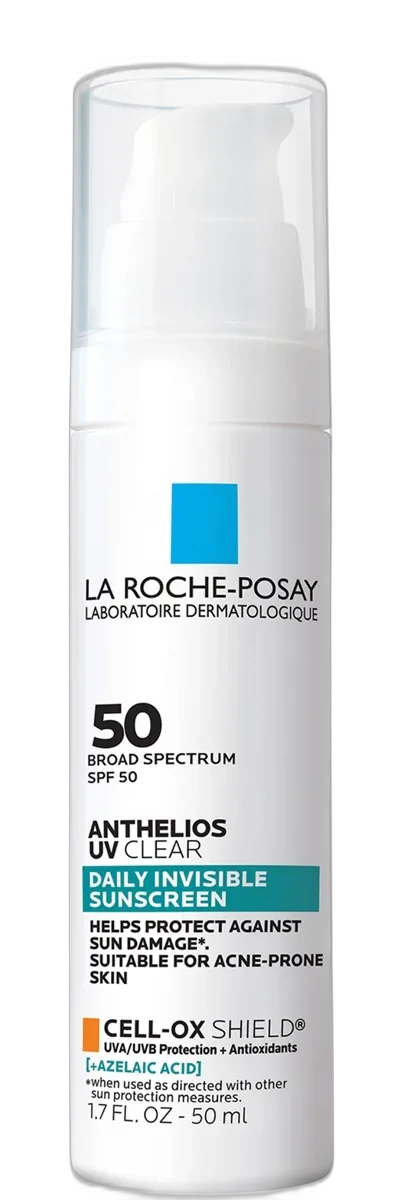
At $14.40 for 50ml, this is the best value sunscreen in any market category. The UV filter system uses four modern, photostable filters independently verified at SPF 52.5-63.1, matching or exceeding brands that cost $30-50. With 30% rice extract, niacinamide, probiotic ferments, and adenosine, the ingredient-to-price ratio is high. Proper daily application costs $14-20 per month, which is less than many budget sunscreens with simpler formulations. For comparison, La Roche-Posay Anthelios with similar filter technology costs $30-40 for 50ml and lacks the rice extract or probiotic complex.
This is a near-universal recommendation for anyone who wears sunscreen daily. It works well for people who dislike most sunscreens, K-beauty enthusiasts, or budget-conscious shoppers who want high protection. It also suits those seeking skincare benefits with UV protection, and people with normal, combination, or dry skin who want a slightly dewy finish.
People with very deep skin tones sensitive to white cast should test this carefully. Tinosorb M nanoparticles can show on some deeper complexions. Very oily skin types in humid climates may find the dewy finish too heavy — use the Matte Sun Stick instead.
Product details.
This lightweight, fluid cream applies like a thin lotion. It sets to a natural, slightly dewy finish without grease. The formula is virtually transparent on all skin tones.
No added fragrance. The rice and ferment extracts have a faint, neutral scent that is barely noticeable.
50ml squeeze tube with minimalist Beauty of Joseon design. A 10ml travel size is also available. The tube format controls dispensing for consistent application.
The first application feels surprisingly unlike sunscreen. It is light, fluid, and absorbs fast without thick, paste-like resistance. The finish is natural and has a subtle glow. It has no stinging, no tingling, and no fragrance. This product shows how most sunscreens are needlessly unpleasant.
3-5 weeks with daily face and neck application at proper amount
12 months
All Year
The backstory.
The Relief Sun: Rice + Probiotics became a global phenomenon around 2022-2023, going viral on TikTok and Reddit simultaneously. Beauty of Joseon had to dramatically increase production to meet demand. What made it viral wasn't aggressive marketing — it was thousands of organic user testimonials praising its weightless texture and genuine effectiveness. Independent SPF testing commissioned by beauty influencers confirmed its protection claims, cementing its reputation. It has since become one of the most-recommended sunscreens in the history of the K-beauty movement.
About Beauty of Joseon
Established Brand (5–20 years)Beauty of Joseon launched in 2016 and updated its approach in 2019. The brand combines traditional Korean hanbang ingredients with modern formulation science. Beauty of Joseon has a large global following and sells at Sephora, with products that earn high user ratings on many retail platforms.
FAQ.
Does this sunscreen really have SPF 50+?
Yes — and independent tests verify this. Two separate laboratories, one in South Korea and one in Spain, tested this sunscreen and measured SPF values of 52.5±5.8 and 63.1±0.6 respectively. Both exceed the SPF 50+ label claim.
Is there a white cast?
Most skin tones see no cast. This is a chemical sunscreen using transparent organic UV filters. It contains methylene bis-benzotriazolyl tetramethylbutylphenol (Tinosorb M) in nano form, which can leave a slight cast on deeper skin tones. Most users, including those with medium and dark skin, report no visible white cast.
Can I use this as a moisturizer and sunscreen in one?
Yes, for normal and combination skin in warm, humid weather. The 30% rice extract, glycerin, and niacinamide provide enough hydration to work as a light moisturizer. In winter or for dry skin, use a separate moisturizer underneath.
How does this compare to the Relief Sun Aqua-Fresh version?
The original Rice + Probiotics has a lighter, matte finish and uses niacinamide and probiotic ferments. The Aqua-Fresh version is more hydrating, has a dewy finish, and adds ceramide NP, phytosphingosine, and ferulic acid. Use the original for a universal, matte finish; use Aqua-Fresh for extra hydration and barrier repair.
Why did this sunscreen go viral?
It combines several factors: a lightweight texture that feels like nothing, zero white cast, and SPF 50+ protection verified by independent labs. It includes rice, niacinamide, and probiotics. At $14.40, the price makes daily application easy. Organic word-of-mouth from users who loved it did the rest.
Is this sunscreen water-resistant?
This sunscreen is not water-resistant. Reapply after swimming, heavy sweating, or toweling off. Use a dedicated water-resistant sunscreen for water activities.
What the community says.
"Virtually undetectable on the skin — feels like wearing nothing"
"No white cast whatsoever on any skin tone"
"Affordable enough to apply generously and reapply without guilt"
"Layers perfectly under makeup"
"Rice extract gives a subtle brightness over time"
"Can feel slightly greasy on very oily skin in summer"
"50ml size runs out quickly with proper daily application"
"Slight white cast reported on deeper skin tones by some users"
"Contains nano-sized UV filter (Tinosorb M) which some prefer to avoid"
"Texture may pill under certain heavy moisturizers"
Featured in.
People also looked at.