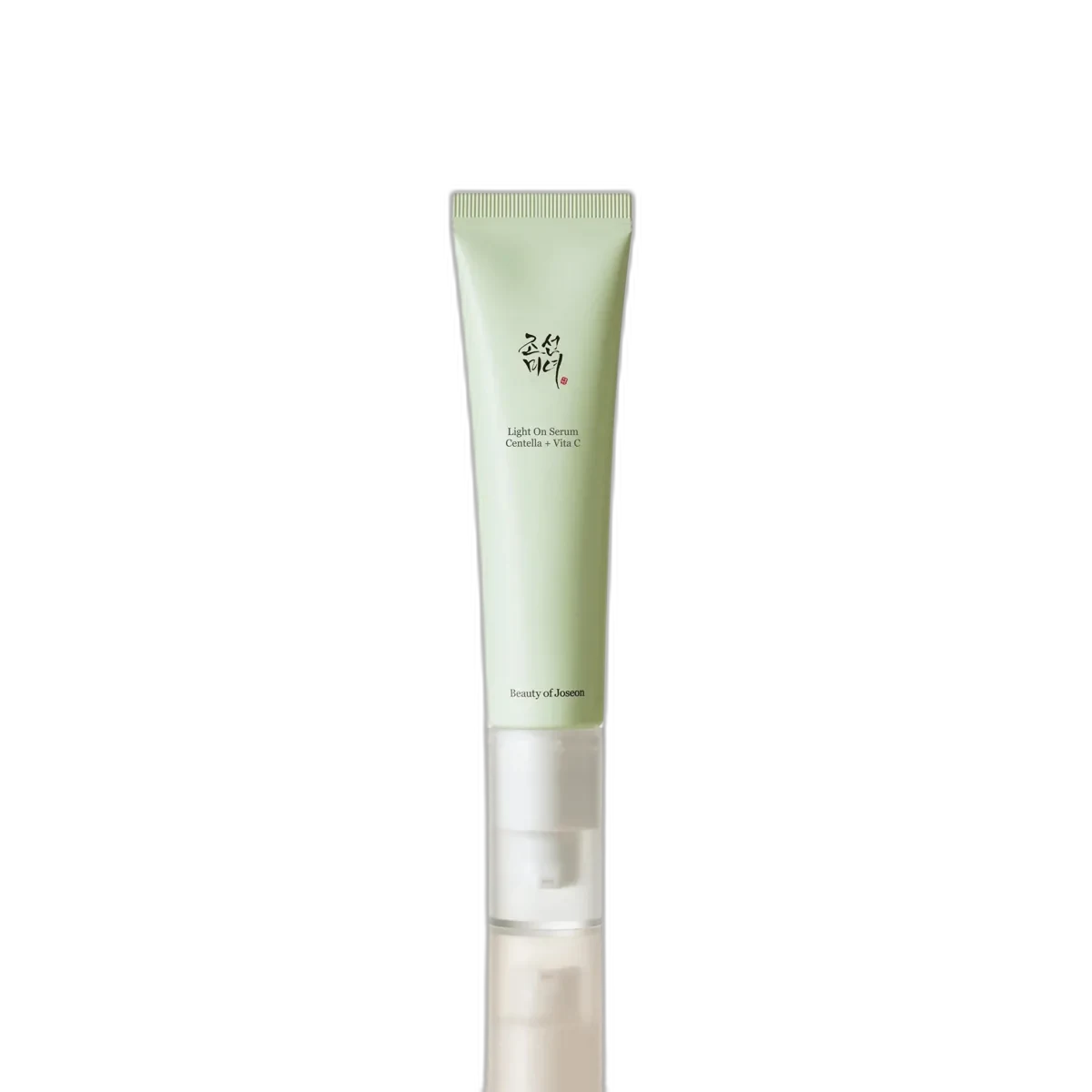
Light On Serum: Centella + Vita C
Sensitive Skin Vitamin C Champion
 Verified reviewer
Pros & cons.
- +68% centella asiatica base creates an inherently calming environment for vitamin C delivery
- +10% 3-O-ethyl ascorbic acid provides proven brightening without L-ascorbic acid irritation
- +Exceptionally stable formula that won't oxidize, discolor, or lose potency over months
- +Zero stinging, tingling, or adjustment period — usable from day one on sensitive skin
- +Comprehensive supporting cast including panthenol, adenosine, beta-glucan, and bisabolol
- +Lightweight emulsion texture absorbs quickly and layers well under other products
- +Outstanding value at $17 for a serum with these concentrations of active ingredients
- −Brightening results are more gradual than pure L-ascorbic acid serums at comparable concentrations
- −Small 30ml size lasts only 6-8 weeks with recommended twice-daily application
- −Slightly emulsion-like texture may not layer as cleanly under certain gel-based products
- −Contains silicones which some users prefer to avoid
- −No larger size option available for those who want to commit long-term
The full review.
Vitamin C serums have a reputation problem. The most effective form — L-ascorbic acid — is also the most irritating, the least stable, and most likely to turn into expensive orange juice on your shelf. For years, sensitive skin types stayed away as vitamin C became a cornerstone of dermatologist routines, knowing every attempt caused stinging, flushing, and rebellion. Beauty of Joseon’s Light On Serum targets those users.
The formula’s architecture shows this. Centella asiatica extract is first on the INCI list at 68% — it is the foundation of the serum, not a supporting player. This is the same ingredient used in calming masks and cica creams, backed by decades of wound-healing and anti-inflammatory research. By using centella as the base instead of water, the brand creates a soothing vehicle for the vitamin C.
The vitamin C is 10% 3-O-ethyl ascorbic acid. This is where Korean cosmetic philosophy differs from Western approaches. Western vitamin C serums typically use 10-20% L-ascorbic acid in acidic formulations — these work, but they are unstable, pH-sensitive, and irritate enough that many consumers abandon them. Japanese and Korean research focuses on stabilized vitamin C derivatives that trade slight peak potency for better stability, tolerability, and user compliance. Using a gentle vitamin C every day for six months beats using an aggressive one for two weeks before quitting.
3-O-ethyl ascorbic acid is a promising derivative. It is both water-soluble and oil-soluble, so it penetrates the skin’s lipid barrier better than purely hydrophilic L-ascorbic acid. Once it reaches skin cells, enzymes cleave the ethyl group to release free ascorbic acid. This performs its documented functions: inhibiting tyrosinase (the enzyme for melanin overproduction), stimulating collagen synthesis, and neutralizing free radicals. The conversion happens inside the cells, delivering the active form directly where it is needed instead of degrading on the skin surface.
Clinical data supports the brightening efficacy of this 10% concentration. It won’t deliver the dramatic visible changes 20% L-ascorbic acid produces in two weeks, but it provides steady, measurable brightening over four to eight weeks with essentially zero irritation risk. This timeline is acceptable for addressing hyperpigmentation, dark spots, and general dullness.
The supporting ingredients matter. Panthenol provides humectant moisture and soothing. Bisabolol — the chamomile-derived anti-inflammatory — reinforces the calming theme without essential oil concerns (it is the isolated compound, not the whole oil). Adenosine contributes mild anti-aging benefits via its own collagen-stimulating pathway, complementing the vitamin C. Beta-glucan and fructooligosaccharides add prebiotic hydration to support the skin’s microbiome. This is not a vitamin C serum with fillers; every ingredient works toward the same goal.
The texture surprises those used to the thin, watery feel of L-ascorbic acid serums. It has a slightly milky, emulsion-like consistency from the olive-derived emulsifiers and the high centella extract base. It spreads easily, absorbs quickly, and leaves a smooth, satin finish that layers under moisturizer and sunscreen. There is no stickiness, no greasiness, and no sting.
Stability sets this formula apart. L-ascorbic acid serums degrade the moment you open the bottle — they change color, lose potency, and become pro-oxidant rather than antioxidant. 3-O-ethyl ascorbic acid maintains its potency throughout the shelf life. The serum looks the same on month four as it did on day one. The frosted glass bottle provides light protection, though this derivative does not need it as much as L-AA.
The limitation is speed. If you need maximum visible brightening for an event in two weeks, a 15-20% L-ascorbic acid serum works faster — if your skin tolerates it. The Light On Serum is a long game. It is for people who want to use vitamin C in their daily routine permanently, not for a short-term boost.
At $17 for 30ml, the price is low for what it delivers. Comparable stable vitamin C serums include Klairs Freshly Juiced Vitamin Drop ($23/35ml) and Purito Pure Vitamin C Serum ($16/60ml at 5%); Dear Klairs Fundamental Nourishing Eye Butter is not comparable. The 10% concentration and 68% centella at this price is hard to match.
This serum changes the vitamin C category: brightness does not require burning, efficacy does not require irritation, and the best vitamin C serum is the one your skin lets you use every day.
Formula
Ingredient analysis.
Full INCI list
Centella Asiatica Extract, 3-O-Ethyl Ascorbic Acid, Glycerin, Propanediol, Betaine, Dicaprylyl Carbonate, Methyl Trimethicone, Cetyl Ethylhexanoate, Panthenol, Laminaria Japonica Extract, Eclipta Prostrata Leaf Extract, Phellodendron Amurense Bark Extract, Citrus Unshiu Peel Extract, Brassica Oleracea Acephala Leaf Extract, Hydrolyzed Gardenia Florida Extract, Hydrogenated Lecithin, Cetearyl Alcohol, Water, Dimethicone/Vinyl Dimethicone Crosspolymer, Silica, Bisabolol, Potassium Cetyl Phosphate, Hydrolyzed Jojoba Esters, Cetearyl Olivate, Sorbitan Olivate, Hydroxyethyl Acrylate/Sodium Acryloyldimethyl Taurate Copolymer, Ammonium Acryloyldimethyltaurate/Beheneth-25 Methacrylate Crosspolymer, Xanthan Gum, Polyglyceryl-10 Myristate, Adenosine, Fructooligosaccharides, Beta-Glucan, Butylene Glycol, Sorbitan Isostearate, Hydrolyzed Hyaluronic Acid, Maltodextrin, Arginine, Carbomer, Ascorbic Acid Polypeptide, 1,2-Hexanediol
Skin match.
The science.
The Science
3-O-Ethyl ascorbic acid (ethyl ascorbic acid, EAA) is a vitamin C derivative gaining research attention in Asian dermatological literature. A 2009 study in Chemical and Pharmaceutical Bulletin shows EAA inhibits melanogenesis by directly inhibiting tyrosinase and downregulating melanocyte-stimulating pathways—the same mechanism as L-ascorbic acid—but with much better stability at neutral pH. L-ascorbic acid requires acidic formulations (pH 2.5-3.5) to penetrate well, but EAA works across a wider pH range. This allows EAA to function within the centella-based vehicle of this serum without pH conflicts.
A 2019 study in the Journal of Cosmetic Dermatology compared the skin-brightening efficacy of 2% EAA versus 2% L-ascorbic acid over 8 weeks. It found comparable melanin index reductions, though EAA showed better tolerability and no reported irritation. At the 10% concentration in this serum, the brightening effect is expected to be much more pronounced.
The centella asiatica base does more than soothe. Research in the International Journal of Molecular Sciences (2019) shows madecassoside—a primary centella triterpene—inhibits the NF-κB inflammatory pathway and promotes wound healing via TGF-β stimulation. At 68% centella extract, this formula uses a therapeutic concentration of these compounds to support skin repair while the vitamin C addresses pigmentation.
Adenosine is a nucleoside naturally present in cells. KFDA (Korean FDA) classifies it as an anti-wrinkle ingredient because studies show it stimulates collagen I synthesis in human dermal fibroblasts. Combined with the independent collagen-stimulating mechanism of vitamin C, these two ingredients provide complementary anti-aging support through distinct biochemical pathways.
Dermatologist Perspective
Dermatologists who recommend vitamin C but face patient compliance issues from irritation increasingly suggest stable vitamin C derivatives like 3-O-ethyl ascorbic acid. Board-certified dermatologists note that the best vitamin C serum is the one a patient uses consistently. Products combining brightening actives with soothing bases like centella asiatica maximize both efficacy and compliance. The 68% centella concentration in this formula meets dermatological therapeutic standards, providing anti-inflammatory and barrier-support benefits beyond simple cosmetic soothing. Dermatologists recommend using this serum under sunscreen in the morning for maximum photoprotective benefit, as vitamin C and sunscreen provide complementary UV defense mechanisms.
Where it fits in your routine.
Cleanse and tone first, then dispense 3-4 drops onto clean fingertips. Press the formula into your face, neck, and hyperpigmentation areas. Wait 30-60 seconds for absorption before you apply moisturizer. Use it morning and evening. Always follow morning use with sunscreen — vitamin C boosts sun protection but does not replace it. Store in a cool, dry place away from direct sunlight; this formula is more stable than L-ascorbic acid serums.
At $17 for 30ml, this serum offers high value for a 10% stable vitamin C + 68% centella formulation. For comparison: Drunk Elephant C-Firma Day Serum ($78/30ml) uses 15% L-ascorbic acid and ferulic acid at nearly 5x the price. SkinCeuticals C E Ferulic ($182/30ml) is the L-ascorbic acid gold standard at over 10x the cost. These products use a different, more potent vitamin C, but the Light On Serum's gentler approach and proven brightening efficacy puts the $17 price in a different category. Twice-daily use costs about $9-12 per month — less than most daily coffee habits.
Sensitive skin types who cannot tolerate L-ascorbic acid serums but want vitamin C's brightening and antioxidant benefits. People with hyperpigmentation, dark spots, or dullness who want a gentle, daily-use brightening serum. K-beauty enthusiasts looking for a vitamin C option that fits the gentle, hydrating Korean skincare philosophy.
Users wanting the fastest brightening results who tolerate L-ascorbic acid see faster visible changes with a pure LAA serum at 15-20%. Those needing maximum-strength vitamin C for established sun damage or deep hyperpigmentation may find this serum's gradual approach insufficient as a sole treatment.
Product details.
All Year Background
The backstory.
Beauty of Joseon's expansion into the vitamin C serum category was a natural evolution from its centella-focused calming products. Rather than following the market toward high-strength L-ascorbic acid serums (which conflict with the brand's sensitivity-first philosophy), the brand chose 3-O-ethyl ascorbic acid — a vitamin C derivative that Korean cosmetic research has championed for its stability and efficacy. Pairing it with the brand's signature centella at 68% creates a vitamin C experience that feels distinctly Korean: gentle, hydrating, and focused on long-term skin health rather than aggressive short-term results.
About Beauty of Joseon
Established Brand (5–20 years)Sumin Lee founded Beauty of Joseon in 2016 in South Korea. The brand uses hanbang ingredients and Joseon dynasty beauty traditions for inspiration. The Light On Serum is the brand's first vitamin C serum. It combines a stable vitamin C derivative with the centella asiatica used in many other Beauty of Joseon products.
Common myths.
Only L-ascorbic acid is 'real' vitamin C — derivatives don't work
3-O-ethyl ascorbic acid penetrates the skin and converts to free ascorbic acid. It has the same tyrosinase-inhibiting, collagen-stimulating, and antioxidant effects as L-ascorbic acid. Clinical studies show its brightening efficacy at 10% concentration. 3-O-ethyl ascorbic acid is more stable than L-ascorbic acid. It does not oxidize, change color, or lose potency as fast, so every application delivers the full intended dose.
You can't use vitamin C with niacinamide
This myth relies on outdated chemistry involving pure ascorbic acid at extreme pH and nicotinic acid. 3-O-ethyl ascorbic acid at this serum's pH does not interact with niacinamide. You can layer this serum with any niacinamide product safely. The combination works well: vitamin C brightens and niacinamide strengthens the barrier.
FAQ.
Is this vitamin C serum suitable for sensitive skin?
Yes — this formula targets sensitive skin. The 68% centella asiatica base soothes the 10% vitamin C derivative, and 3-O-ethyl ascorbic acid is less irritating than pure L-ascorbic acid. It has no pH-related stinging, no tingling, and no adjustment period. If L-ascorbic acid serums felt too harsh, this is the vitamin C serum for you.
How does 3-O-Ethyl Ascorbic Acid compare to L-Ascorbic Acid?
3-O-Ethyl Ascorbic Acid is a stable vitamin C derivative that converts to active ascorbic acid in the skin. It offers similar brightening, collagen-stimulating, and antioxidant benefits but stays stable longer; it does not oxidize or degrade as fast as L-ascorbic acid. The trade-off is slower visible results: expect 3-4 weeks for noticeable brightening compared to 1-2 weeks with high-strength L-ascorbic acid serums.
Can I use this serum with retinol?
Yes. 3-O-Ethyl Ascorbic Acid works at a different pH range than L-ascorbic acid and lacks the same incompatibility concerns. You can layer this serum under retinol — apply the serum first, wait 2-3 minutes for absorption, then apply retinol. If you are new to retinol, use it on alternate nights while using this serum daily. The centella base may buffer retinol irritation.
Will this serum oxidize and turn yellow?
No. 3-O-ethyl ascorbic acid has better oxidative stability than pure L-ascorbic acid. The serum stays light and milky throughout its shelf life, avoiding the yellowing or browning common in L-ascorbic acid serums. The frosted glass bottle adds light protection as a precaution.
Should I use this serum morning or night?
Both work well. In the morning, the vitamin C provides antioxidant protection that complements your sunscreen — studies show that vitamin C under sunscreen enhances photoprotection. In the evening, the centella supports overnight skin repair. For maximum brightening results, use it twice daily. If you can only use it once, morning application provides the most UV-protective benefit.
What the community says.
"No irritation despite being a vitamin C serum — suitable for sensitive skin"
"Visible brightening and dark spot fading within weeks"
"Lightweight, non-sticky texture absorbs quickly without greasiness"
"Stable formula that doesn't oxidize or change color over months of use"
"Excellent value for a 10% vitamin C + 68% centella serum at $17"
"Results are more gradual than pure L-ascorbic acid serums at similar concentrations"
"Small 30ml bottle doesn't last long with twice-daily use"
"Mild silicone content may not suit those avoiding silicones"
"Slightly emulsion-like texture doesn't layer as cleanly under some products"
"No larger size option available"
Featured in.
People also looked at.