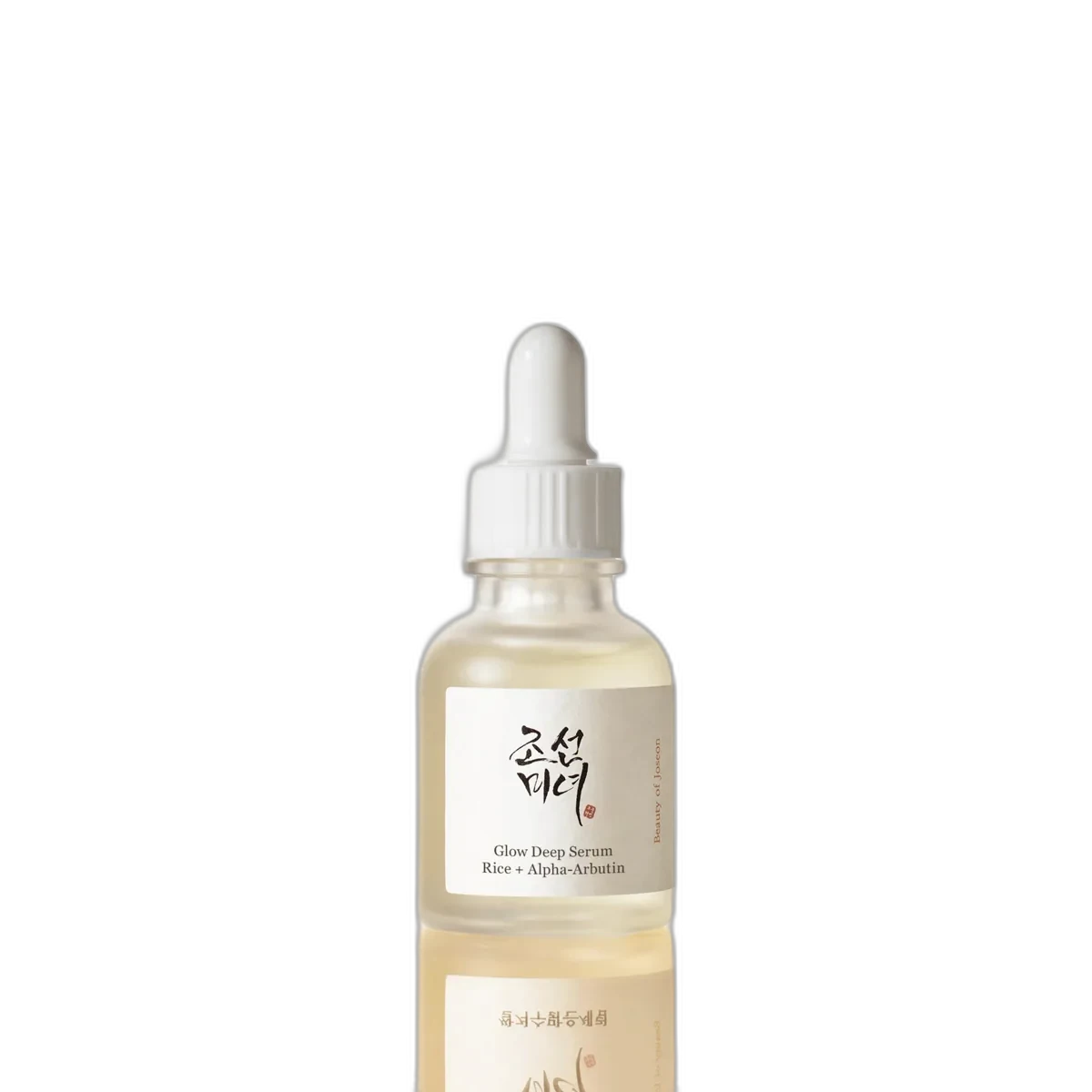
Glow Deep Serum: Rice + Alpha-Arbutin
K-Beauty Brightening Gem
 Verified reviewer
Pros & cons.
- +Full concentration transparency: 68.6% rice bran water and 2% alpha-arbutin clearly disclosed
- +Dual brightening pathways via alpha-arbutin and niacinamide attack hyperpigmentation from two angles
- +Exceptionally gentle — no fragrance, alcohol, or known irritants for sensitive skin compatibility
- +Ultra-lightweight texture layers seamlessly under any moisturizer or sunscreen without pilling
- +Remarkable value at $13.60 for clinically meaningful active concentrations
- +Available in both 30ml and 60ml sizes with better per-unit value on the larger option
- +Vegan and cruelty-free with clean ingredient list free of parabens and sulfates
- +Traditional seven-grain botanical complex provides supplementary antioxidant support
- −Very watery texture may feel insubstantial for those who prefer richer, more cushioning serums
- −30ml size depletes quickly with twice-daily use — budget for the 60ml instead
- −Brightening results require 6-8 weeks of patience and may underwhelm on severe hyperpigmentation
- −Contains soybean, wheat, and sesame extracts — potential concern for those with grain allergies
- −No disclosed niacinamide concentration makes it hard to assess the full brightening potency
The full review.
While most brands hide ingredient concentrations, Beauty of Joseon prints theirs on the bottle: 68.6% rice bran water and 2% alpha-arbutin. There are no asterisks, no proprietary blends, and no fine print. At a $13.60 retail price, this level of transparency is rare.
The Glow Deep Serum fits Beauty of Joseon’s strategy to combine traditional Korean beauty with modern ingredient standards. Rice bran water—a staple in Korean and Japanese beauty for centuries—replaces the purified water found in most serums. This isn’t just tradition. Rice bran contains ferulic acid, gamma-oryzanol, and phytic acid, which provide antioxidant and mild brightening activity. Using it as the primary solvent delivers these compounds before the star actives even work.
The star active is alpha-arbutin, a tyrosinase inhibitor that slows melanin production at the enzymatic level. At 2%, this serum hits the clinically supported range. Research in the Journal of Cosmetic Dermatology shows meaningful brightening at 1-2% concentrations, and alpha-arbutin causes significantly less irritation than hydroquinone. This safety profile makes alpha-arbutin ideal for daily, long-term use: it works like hydroquinone without the sensitization risks, usage limits, or regulatory concerns.
The supporting ingredients add intelligence to the formula. Niacinamide appears early in the list, providing a second brightening mechanism via a different pathway. While alpha-arbutin slows melanin production, niacinamide disrupts the transfer of melanin-containing melanosomes to surrounding skin cells. Two actives use two pathways without redundancy. This approach to hyperpigmentation punches above its price point.
Opinions on texture vary. This serum is more like slightly thickened water than a traditional serum. It absorbs in seconds and leaves no film, stickiness, or trace. It may feel insubstantial to those who prefer heavier textures. However, for anyone layering a Korean skincare routine, the near-invisible finish is an asset. It works with moisturizers, sunscreens, and sleeping masks without pilling.
The grain extract complex, though lower on the ingredient list, is worth noting. Soybean, barley, rice, sesame, wheat, mung bean, and corn extracts form a seven-grain blend inspired by Korean hanbang medicine. While individual concentrations are likely modest, the collective antioxidant and skin-conditioning effects provide a nutritional safety net of trace amino acids and minerals to support brightening.
Expectations for performance require calibration. This product does not deliver dramatic overnight results. The first week improves hydration and adds subtle luminosity. Real brightening—visible fading of dark spots, evening skin tone, and reducing post-inflammatory hyperpigmentation—requires six to eight weeks of consistent twice-daily use. For deep-set melasma or severe sun damage, this serum alone may not suffice; it is a foundational brightening step in a comprehensive routine.
The packaging uses traditional Korean design with white and gold on a clear glass dropper bottle, but the 30ml size is small for twice-daily use. The 60ml option at $23.80 offers better value per milliliter and is the better choice for a committed routine.
One limitation: the grain-based botanical extracts include soybean, wheat, and sesame, which are common allergens. These are present in trace amounts and unlikely to trigger reactions in most, but those with grain sensitivities should patch test first.
At this price, the Glow Deep Serum does not need to be a miracle to earn a recommendation; it just needs to be effective, gentle, and honest. It meets all three criteria. This daily-use brightening serum respects both your skin and your intelligence—a rare combination in the K-beauty market.
Ingredient analysis.
Full INCI list
Oryza Sativa (Rice) Bran Water, Water, Glycerin, Butylene Glycol, 1,2-Hexanediol, Dipropylene Glycol, Alpha-Arbutin, Niacinamide, Methyl Gluceth-20, Panthenol, Polyglycerin-3, Trehalose, Glyceryl Glucoside, Hydrolyzed Jojoba Esters, Hydroxyethyl Acrylate/Sodium Acryloyldimethyl Taurate Copolymer, Ethylhexylglycerin, Hydroxyethylcellulose, Xanthan Gum, Acrylates/C10-30 Alkyl Acrylate Crosspolymer, Arginine, Disodium EDTA, Coptis Japonica Root Extract, Sorbitan Isostearate, Glucose, Coix Lacryma-Jobi Ma-Yuen Seed Extract, Glycine Soja (Soybean) Seed Extract, Hordeum Distichon (Barley) Extract, Oryza Sativa (Rice) Extract, Sesamum Indicum (Sesame) Seed Extract, Triticum Vulgare (Wheat) Seed Extract, Vigna Radiata Seed Extract, Zea Mays (Corn) Kernel Extract
Skin match.
The science.
The Science
This serum uses a dual-active approach to target melanin production through two complementary biochemical pathways. This is sound formulation logic, not just marketing.
Alpha-arbutin, the primary active at 2%, is a hydroquinone glycoside that inhibits tyrosinase, the rate-limiting enzyme in melanin biosynthesis. A 2021 review in Antioxidants (MDPI) confirmed alpha-arbutin has significant antimelanogenic activity and antioxidant properties, with a much better safety profile than hydroquinone. While alpha-arbutin can release trace amounts of hydroquinone through hydrolysis, these quantities stay far below levels of concern. This makes it suitable for long-term daily use without the regulatory restrictions applied to hydroquinone.
Niacinamide, the supporting brightening agent, works downstream of tyrosinase. Instead of slowing melanin production, it interferes with melanosome transfer from melanocytes to surrounding keratinocytes. A 2002 study by Hakozaki et al. in the British Journal of Dermatology showed that 5% niacinamide significantly reduced hyperpigmentation and increased skin lightness over 8 weeks. This serum does not disclose its niacinamide concentration, but its position seventh in the INCI list (after the 2% alpha-arbutin) suggests a moderate concentration.
The rice bran water base adds mild brightening activity via gamma-oryzanol and ferulic acid. Both are documented antioxidants that may inhibit melanin synthesis by reducing oxidative stress. These effects are modest compared to the dedicated actives, but they add to the formula's cumulative brightening approach.
The combination strategy—inhibiting melanin production at the enzymatic level while disrupting its distribution—works better than targeting one pathway alone. A 2025 split-face study in the Journal of Cosmetic Dermatology compared a combination of alpha-arbutin 5% and kojic acid 2% with triple combination cream for melasma; it found multi-active brightening formulations achieve clinically meaningful results.
References
- Arbutin as a Skin Depigmenting Agent with Antimelanogenic and Antioxidant Properties — Antioxidants (MDPI) (2021)
- The effect of niacinamide on reducing cutaneous pigmentation and suppression of melanosome transfer — British Journal of Dermatology (2002)
- The Efficacy of Topical Cosmetic Containing Alpha-Arbutin 5% and Kojic Acid 2% Compared With Triple Combination Cream for the Treatment of Melasma — Journal of Cosmetic Dermatology (2025)
Dermatologist Perspective
Dermatologists often recommend alpha-arbutin as a first-line brightening agent for patients who cannot tolerate hydroquinone or need long-term maintenance after a hydroquinone cycle. Board-certified dermatologists note the 2% concentration in this serum stays within the effective therapeutic range while minimizing irritation risk. Dermatologists generally approve of the niacinamide addition, as it provides anti-inflammatory and barrier-supportive benefits alongside brightening. This serum is a common entry-level brightening treatment for patients new to active skincare, especially those with sensitive or reactive skin who need a gentle start before using stronger interventions like prescription retinoids or professional peels.
Where it fits in your routine.
Apply 2-3 drops to clean, toned skin every morning and evening. Pat it onto the face and neck, targeting hyperpigmentation or uneven tone. Wait 30 seconds for absorption before applying moisturizer. In the morning, always use a broad-spectrum SPF 50+ sunscreen. UV protection is required when using brightening actives because sun exposure triggers the melanin production you want to suppress. Use consistently for at least 8 weeks to see results.
At $13.60 for 30ml, this brightening serum is highly cost-effective and discloses clinical-grade active concentrations. The 60ml size at $23.80 offers better value and is the best choice for daily users. For context, Western alpha-arbutin serums often cost $25-40 for 30ml and lack the rice bran water base or concentration transparency. The formula uses meaningful levels of actives and well-chosen supporting ingredients. The price shows K-beauty's efficiency-first approach rather than any deficiency in formulation quality.
This is for anyone with dark spots, post-inflammatory hyperpigmentation, or general dullness seeking a gentle, affordable way to start brightening. It works well for sensitive skin, K-beauty routine enthusiasts, and people who want a calmer alternative to irritating vitamin C serums.
Skip this if you have severe melasma or deep-set hyperpigmentation requiring prescription-grade interventions. Skip if you have confirmed allergies to soybean, wheat, or sesame, as trace grain extracts are present. This water-light formula feels thin if you prefer a thick, cushioning serum texture.
Product details.
This serum is very lightweight and almost water-like, with a slightly viscous feel. It absorbs quickly into the skin and leaves no residue or stickiness.
No added fragrance. The rice bran water base has a faint, barely perceptible grain-like scent that dissipates immediately upon application.
A clear glass dropper bottle has a white and gold label with traditional Korean-inspired design elements. The dropper dispenses product cleanly, but the 30ml size is small for daily use.
The serum feels like slightly thickened water on first application. It sinks in almost immediately and provides a brief flash of hydration. There is no tingling, stinging, or adjustment period. The dewy finish shows right away. During the first 1-2 weeks, expect subtle improvements in skin texture and luminosity instead of dramatic brightening.
4-6 weeks using 30ml twice daily on the face; 8-10 weeks with the 60ml size
12 months
All Year
The backstory.
Beauty of Joseon draws its name from Korea's Joseon Dynasty (1392-1897), and the Glow Deep Serum embodies the brand's philosophy of pairing traditional Korean grain-based beauty rituals with modern actives. Rice water has been central to Korean and Japanese beauty traditions for centuries, and this serum bridges that heritage with alpha-arbutin, a contemporary brightening powerhouse that represents the best of evidence-based K-beauty.
About Beauty of Joseon
Established Brand (5–20 years)Beauty of Joseon launched in 2016 and updated its focus in 2019. The brand combines traditional Korean hanbang ingredients with modern formulation science. Beauty of Joseon has a large global following and sells at Sephora, with products that earn high user ratings on many retail platforms.
Common myths.
Alpha-arbutin releases hydroquinone on the skin, making it unsafe for long-term use.
Alpha-arbutin is a hydroquinone glycoside, but studies show topical application releases negligible hydroquinone levels well below safety thresholds. Cosmetic regulatory bodies worldwide consider alpha-arbutin safe for long-term use.
Rice water offers no real skincare benefits and is a gimmick.
Rice bran has ferulic acid, gamma-oryzanol, and phytic acid. These compounds show antioxidant and mild brightening properties. Rice-derived ingredients provide benefits beyond hydration, though the evidence is less robust than for alpha-arbutin.
FAQ.
How long does it take to see results from the Glow Deep Serum?
Most users see a subtle glow and better hydration within one week. Dark spots fade and skin tone evens at 4-6 weeks of consistent twice-daily use, with optimal results at 8-12 weeks. Alpha-arbutin slows melanin production in new skin cells, so patience is key.
Is this serum safe for sensitive skin?
This is one of the gentlest brightening serums. It has no fragrance, alcohol, or essential oils. alpha-arbutin is less irritating than hydroquinone or vitamin C. The rice bran water base and panthenol soothe the skin. However, it contains grain-derived extracts (soybean, wheat, sesame), so people with grain allergies should patch test.
Should I use Beauty of Joseon Glow Deep Serum in the morning or at night?
The brand recommends evening use because alpha-arbutin is sensitive to light and heat, though it is safe for both AM and PM application. If you use it in the morning, always follow with SPF 50+ sunscreen. UV protection prevents new dark spots while the serum fades existing ones.
What's the difference between Beauty of Joseon Glow Serum and Glow Deep Serum?
The Glow Serum focuses on propolis and niacinamide for oil control and a healthy glow, while the Glow Deep Serum targets hyperpigmentation specifically with its 2% alpha-arbutin and 68.6% rice bran water formula. Choose the Deep Serum if dark spots and uneven tone are your primary concerns.
Does the 2% alpha-arbutin concentration actually work?
Clinical studies show alpha-arbutin at 1% concentrations inhibits tyrosinase activity and reduces melanin production. At 2%, this serum uses a well-supported therapeutic level—enough to brighten skin without the irritation risk of higher concentrations.
What the community says.
"Noticeably brighter skin within weeks"
"Extremely lightweight and absorbs quickly"
"No irritation even on sensitive skin"
"Affordable price for effective brightening"
"Pleasant non-greasy texture"
"Very watery texture may feel insubstantial for those expecting a richer serum"
"30ml bottle runs out quickly"
"Gradual results require patience — not an overnight brightener"
"Some users see minimal change on deeper-set hyperpigmentation"
People also looked at.