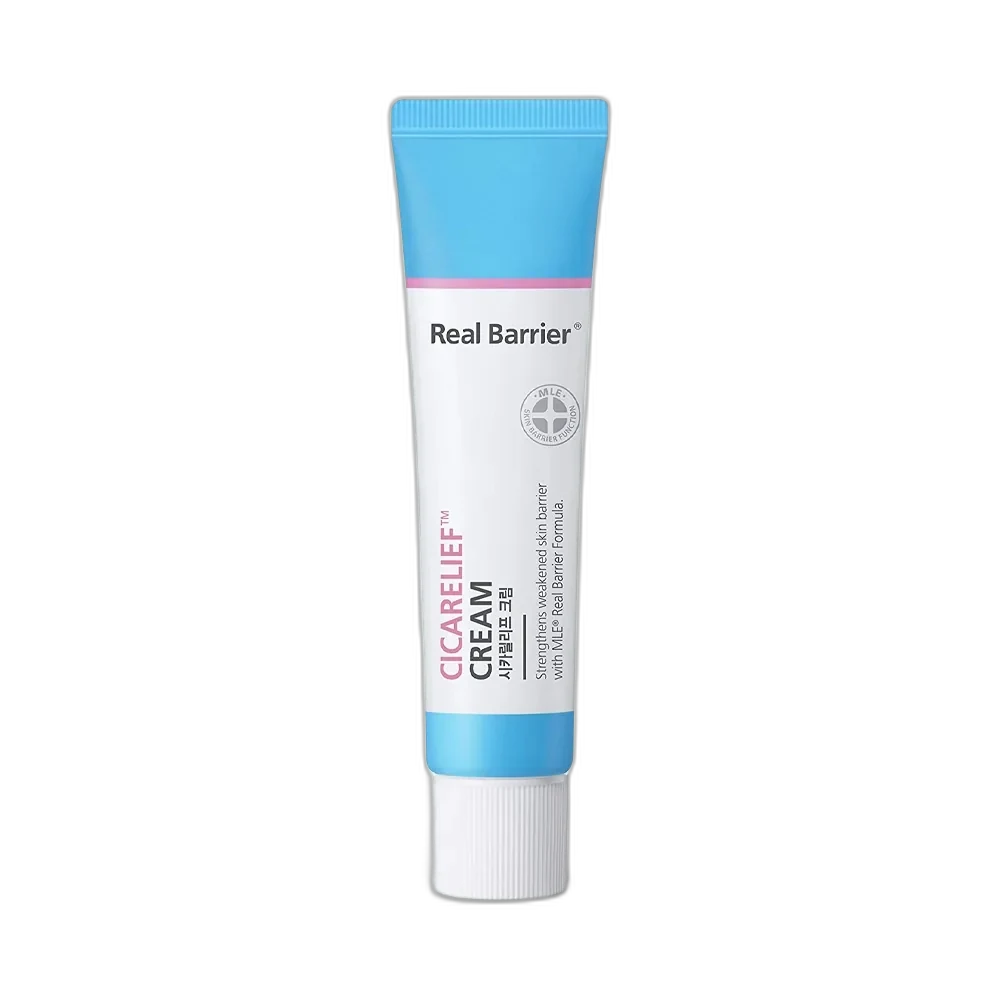
Real Barrier Intense Moisture Cream
Derm-Pharmacy Barrier MVP
 Verified reviewer
Pros & cons.
- +MLE technology physically restores the barrier's lipid lamellae, not just coats the surface
- +Immediate relief from tightness, burning, and flaking on compromised skin
- +Fragrance-free and allergen-light — safe for sensitive and eczema-prone skin
- +Rich, cushiony texture that never feels greasy or heavy
- +Derm-pharmacy origin with published research behind the delivery system
- +Excellent buffer for tretinoin users and post-procedure recovery
- +Pregnancy-safe active profile
- −50ml size disappears quickly with twice-daily face-wide use
- −Shea butter content makes it risky for oily, acne-prone skin
- −Not fungal-acne safe due to fatty acid content
- −Jar packaging invites fingers; a pump would be more hygienic
- −Can pill slightly under certain silicone-heavy sunscreens
The full review.
One K-beauty version grabs the spotlight with glass skin routines, ten-step serums, and pastel stationery-style packaging. Another version is quieter, originating from Korean pharmaceutical labs in the nineties and remaining clinical. Real Barrier Intense Moisture Cream belongs to that second category, which is its most interesting trait.
This jar uses Multi-Lamellar Emulsion, or MLE. Neopharm, a Korean dermatology research company founded in 1996, developed it to commercialize a manufacturing process. This process arranges ceramides, cholesterol, and free fatty acids in the same layered pattern as your stratum corneum. Peer-reviewed papers on barrier repair and atopic dermatitis cite this technology. Neopharm’s original Atopalm line served clinical use before Real Barrier became a consumer product. When this cream claims to rebuild your barrier, it uses that specific architecture.
Lipid chemists, not marketers, wrote this INCI list. Ceramide NP sits next to cholesterol, stearic acid, and hydrogenated lecithin. Together, these approximate the 3:1:1 physiological lipid ratio research suggests is optimal for barrier repair. Shea butter adds a cushiony texture and fatty acids. The supporting ingredients match a Korean pharmacy brand: panthenol for hydration and calming, madecassoside from centella for inflammation, allantoin for soothing, and antioxidant botanical extracts. It has no fragrance, no essential oils, and no alcohol—nothing to irritate compromised skin.
The cream feels thick but not greasy, a common trait of lipid-lamellae creams. It looks dense upon application but turns invisible within a minute or two. If your barrier is irritated, it provides almost immediate relief; the tight, burning, or stinging sensations quiet down. By day three or four, flaking usually calms. By the two-week mark, most people find that triggers like an active toner, cold wind, or a new retinol night bother them less.
Many in the r/AsianBeauty community use it as a tretinoin buffer. Layer it before or after tret to soften initial dryness without blunting the retinoid effect. It also works for post-procedure skin, winter dryness in normal complexions, and eczema-prone adults seeking something more elegant than pure petrolatum.
The limitations are clear. The 50ml jar is small; using it face-wide twice a day lasts two to three months, and using it on the neck and chest uses it faster. Jar packaging requires care; the formula is stable, but use a spatula to avoid introducing fingers. Shea butter and rich lipids do not suit oily, acne-prone skin—choose a lighter Real Barrier product instead. It is not fungal-acne safe.
At around thirty-two dollars, you pay for a clinically-backed lipid matrix from a pharmacy-rooted brand. This costs more than CeraVe but less than many similar dermocosmetic options. For anyone recovering from a course of tret, harsh winter, over-enthusiastic acid use, or an eczema flare, this is a sensible K-beauty purchase.
Formula
Ingredient analysis.
Full INCI list
Water, Caprylic/Capric Triglyceride, Glycerin, Cetearyl Olivate, Butyrospermum Parkii (Shea) Butter, Dipropylene Glycol, Cetyl Alcohol, Glyceryl Stearate, Sorbitan Olivate, Behenyl Alcohol, 1,2-Hexanediol, Stearic Acid, Panthenol, Stearyl Alcohol, Acrylates/C10-30 Alkyl Acrylate Crosspolymer, Tromethamine, Dimethicone, Polyglyceryl-3 Methylglucose Distearate, Hydrogenated Lecithin, Ceramide NP, Xanthan Gum, Allantoin, Disodium EDTA, Adenosine, Betaine, Helianthus Annuus (Sunflower) Seed Oil, Madecassoside, Tocopherol, Centella Asiatica Extract, Chamomilla Recutita (Matricaria) Flower Extract, Houttuynia Cordata Extract, Cholesterol, Phytosteryl/Behenyl/Octyldodecyl Lauroyl Glutamate
Skin match.
The science.
The Science
Multi-Lamellar Emulsion technology is the scientific hook that distinguishes this cream from a standard ceramide moisturizer, and it's worth understanding what that actually means. Healthy stratum corneum organizes its intercellular lipids into a layered pattern of roughly 50% ceramides, 25% cholesterol, and 15% free fatty acids, arranged in lamellae that control transepidermal water loss and act as the skin's principal barrier. In compromised skin — whether from eczema, over-exfoliation, or aggressive retinoid use — this layered structure is disrupted, lipid ratios shift, and barrier function drops. Topical ceramide creams attempt to address this, but most simply deposit the lipids on the surface without replicating the lamellar organization.
Research by Man et al. in the Journal of Investigative Dermatology and subsequent work by Neopharm's own research team has demonstrated that delivering ceramides, cholesterol, and fatty acids in a pre-organized lamellar structure produces superior barrier repair outcomes compared to non-lamellar lipid creams. Neopharm's patented MLE manufacturing process creates these layered structures during formulation, which is the technology underlying this product. Ceramide NP specifically (N-stearoyl phytosphingosine) is one of the most prevalent ceramide subtypes in human skin and is well-studied for its role in barrier function.
The supporting actives are also well-grounded. Madecassoside and centella asiatica extract have been studied extensively for their effects on wound healing and inflammatory skin conditions, with a 2022 review in the International Journal of Molecular Sciences summarizing their mechanisms in atopic dermatitis. Panthenol (provitamin B5) is one of the most studied humectants and has demonstrated efficacy in reducing transepidermal water loss and supporting epidermal differentiation.
Dermatologist Perspective
Dermatologists frequently recommend physiological lipid-based moisturizers — creams containing ceramides, cholesterol, and fatty acids in roughly the ratios found in healthy skin — for patients with atopic dermatitis, eczema, and compromised barriers from procedures or aggressive topicals. Board-certified dermatologists note that the delivery structure matters almost as much as the ingredient list, which is why lamellar emulsion technologies have received growing attention in dermocosmetic literature. Real Barrier Intense Moisture Cream is often cited in Korean dermatology content as a consumer-accessible example of this approach, and it's commonly suggested for patients dealing with tretinoin adaptation, post-laser recovery, and chronic dry-skin reactivity. The fragrance-free, allergen-minimal profile also makes it a reasonable pick for pediatric eczema cases when a derm is looking for something gentler than prescription options.
Where it fits in your routine.
Apply a pea-to-nickel-sized amount as your final hydrating step, morning and night. In the AM, follow with sunscreen; in the PM, layer an occlusive over the top if your skin is severely compromised. For best results, press it into slightly damp skin right after a hydrating toner or essence — this helps the lipid matrix integrate with the skin's moisture. If you use it as a tretinoin buffer, apply it before tret to dilute the retinoid or after tret to seal and soothe; both methods work, so pick what your skin tolerates better. Use a small spatula or clean fingertip to keep the jar hygienic.
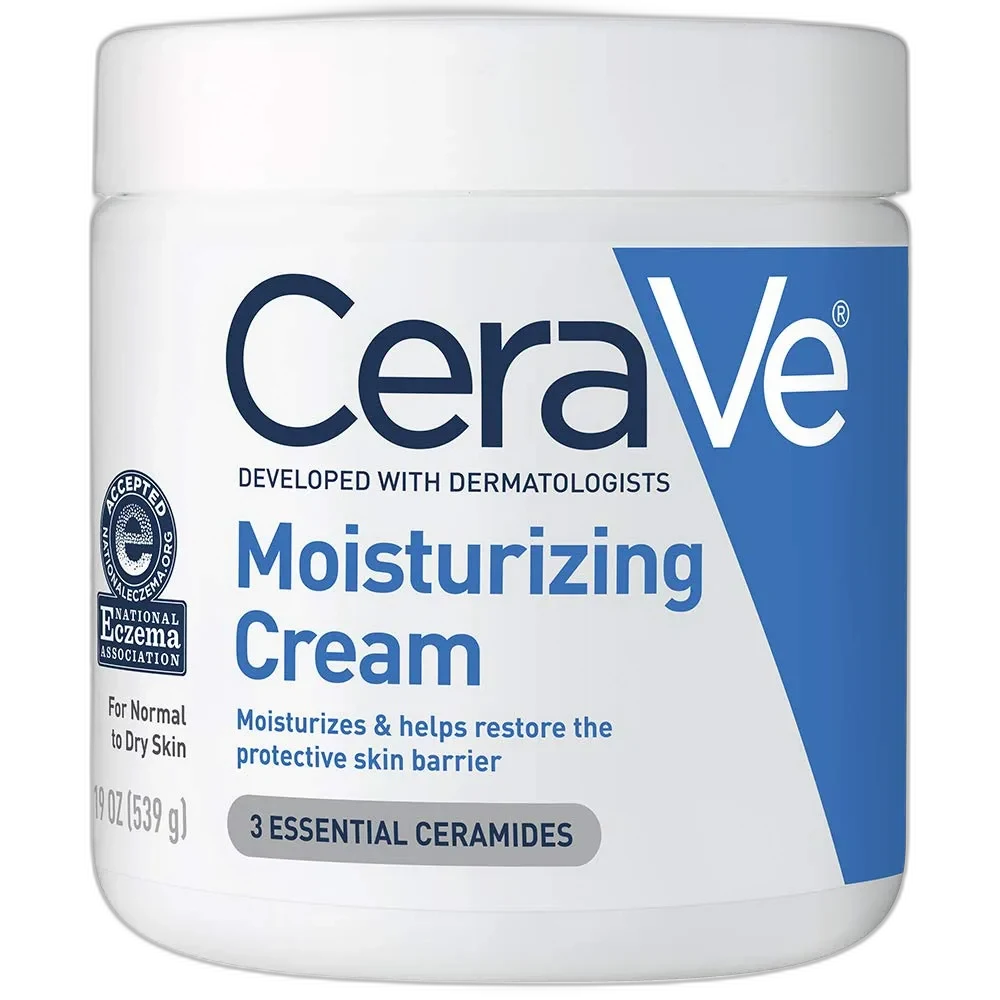
At around thirty-two dollars for 50ml, this costs more than drugstore ceramide creams like CeraVe Moisturizing Cream, but much less than European dermocosmetic equivalents or luxury barrier creams. The price makes sense if you value the patented lipid-layering process and its supporting research over simple ceramides on an ingredient list. This premium comes from an established Korean pharmaceutical brand with nearly three decades of barrier research. For barrier-compromised or reactive skin, this is one of the most defensible purchases in the category. If your skin is healthy and you want a daily moisturizer, cheaper options work just as well.
This works for anyone with a compromised barrier, eczema-prone skin, or reactive sensitivity from aggressive actives. Tretinoin users need a buffer cream that performs structural repair instead of just surface hydration. It suits people who prefer Korean pharmacy brands and want a cream with real research instead of a hyped influencer launch.
Oily and acne-prone skin types that do not need this much lipid support. People with fungal acne, because the fatty acid content feeds malassezia. Anyone seeking a lightweight gel moisturizer, or those who prefer fragranced products and fancy packaging over clinical performance.
Product details.
Fragrance-free with a faint natural lipid smell
Squat white jar with a screw lid — the formula is stable, but jar packaging has typical hygiene concerns Finish non-greasy, velvety What to Expect on First Use The formula relieves tightness and stinging immediately if your barrier is compromised. It has no tingling or purging. A cushiony layer 'settles' into the skin within one or two minutes. Most users see less flaking by day 3-5. How Long It Lasts 2-3 months using twice-daily face and neck application Period After Opening 12 months
fall winter Background
The backstory.
Neopharm, the parent company, was founded in 1996 by Korean dermatology researcher Dr. Raymond Park specifically to commercialize MLE technology for atopic dermatitis patients. Atopalm was the original clinical line; Real Barrier launched as a more consumer-friendly extension in the mid-2010s, with this Intense Moisture Cream targeting the severe end of dry and reactive skin.
About Atopalm
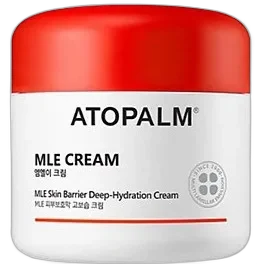
Established Brand (5–20 years)Neopharm, a Korean pharmaceutical company founded in 1996, produces Atopalm and its sister line Real Barrier. Neopharm pioneered Multi-Lamellar Emulsion (MLE) technology, which originally targeted atopic dermatitis patients. Dermatological literature on ceramide-based skincare cites these barrier-repair formulations.
Common myths.
All ceramide creams are essentially the same once ceramides appear on the label.
Ceramide concentration, the ratio to cholesterol and fatty acids, and the emulsion structure all matter. This cream's MLE process creates lipid lamellae that penetrate the barrier instead of just coating it. This is why it behaves differently from a standard ceramide moisturizer.
FAQ.
Is Real Barrier actually the same as Atopalm?
Both brands belong to the parent company, Neopharm, and use the core MLE lipid technology. Atopalm targets clinical, pharmacy-leaning needs, while Real Barrier targets everyday consumers. Formulations vary in texture and secondary actives, but both use the same lipid-layering approach.
Can I use this on eczema patches?
Yes — researchers originally developed the MLE technology for atopic dermatitis. This fragrance-free, allergen-light formula works on eczema-prone skin. For active flare-ups, dermatologists recommend treating inflammation with prescribed topicals first, then layering this on top to repair.
Will this clog my pores?
It contains shea butter and thick lipids, so it is not the best pick for acne-prone oily or combination skin. If you only break out on the cheeks and forehead in winter, it is usually fine, but skip it if you have active congestion.
Is it safe for use during pregnancy?
Yes — the formula lacks retinoids, salicylic acid, and other pregnancy-caution actives. Physiological lipids, panthenol, and centella compounds are the hero ingredients; all are widely considered pregnancy-safe.
How does it compare to standard ceramide moisturizers from drugstore brands?
Drugstore ceramide creams usually list ceramides without detailing the emulsion structure. This one uses Neopharm's patented MLE process to arrange lipids into the same layered pattern as healthy skin. Research shows this penetrates more effectively. You pay for the delivery system, not just the ingredient list.
Can I use this under tretinoin?
This is a popular buffer cream in the tretinoin community. Apply it before or after tret based on your tolerance — the lipid layer reduces dryness and flaking without interfering with the retinoid's action.
Community
What the community says.
"Visibly calms flaking and redness within days"
"Rich without feeling greasy or heavy"
"Fragrance-free and genuinely non-reactive"
"Works for both adults and kids with eczema"
"Small 50ml size disappears quickly if you use it body-wide"
"International shipping can be slow or expensive"
"Mild initial pilling under certain sunscreens"