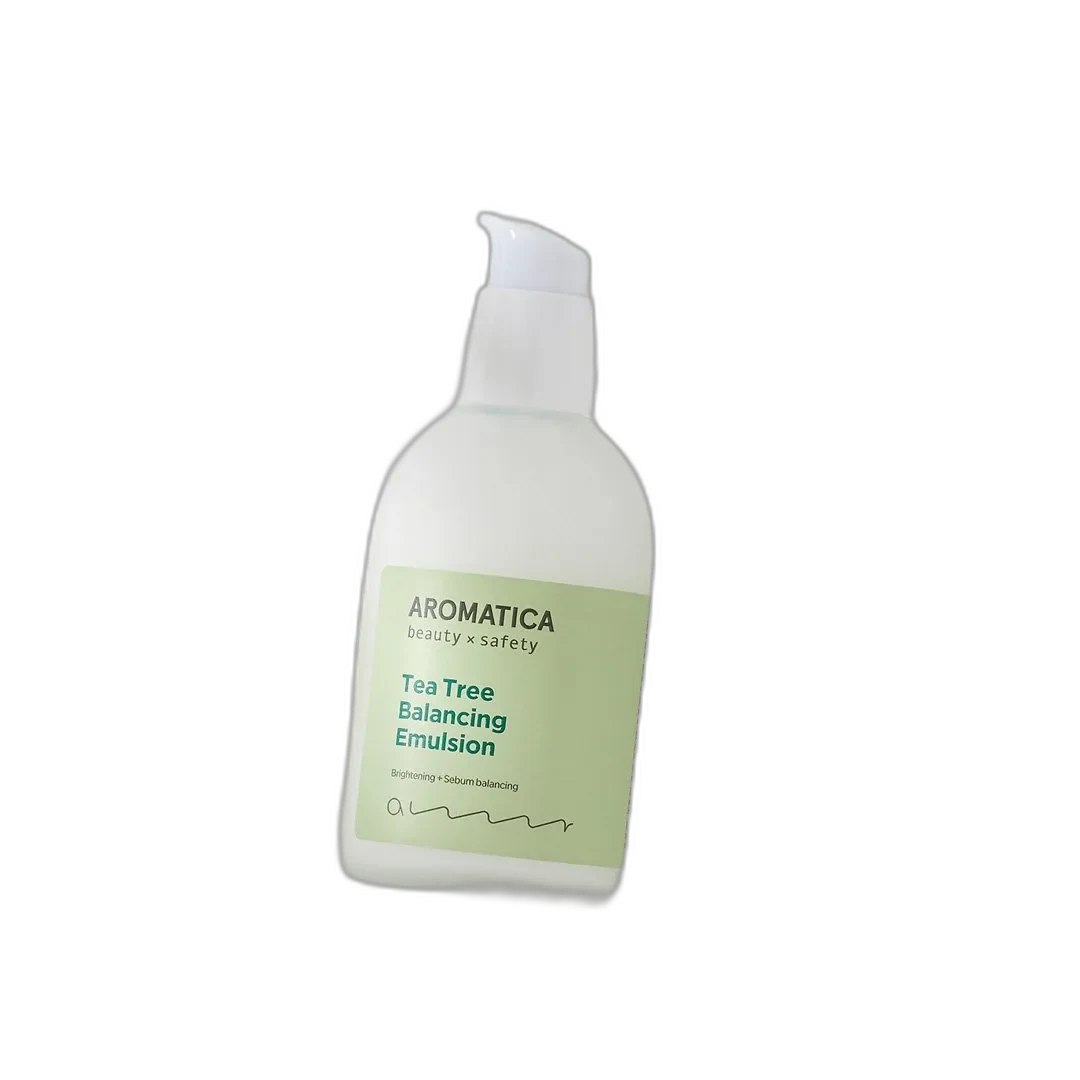
Tea Tree Balancing Emulsion
Oily-Skin Lightweight
 Verified reviewer
Pros & cons.
- +Tea tree leaf extract and aloe replace water as the formula base
- +Genuinely lightweight texture that absorbs without tackiness
- +Glycerin and betaine deliver hydration without heavy oils
- +Calming botanicals reduce redness around breakouts
- +Alcohol-free, sulfate-free and EWG Verified
- +Layers cleanly under sunscreen and over actives
- +Honest oily-to-combination skin formulation
- −Bergamot oil and essential-oil scent rule it out for sensitive skin
- −Not moisturizing enough on its own for dry or winter conditions
- −Coconut oil may concern users who break out from it
- −Small 100ml bottle for the mid-range price point
- −Dropper packaging is slow and breakable
The full review.
About Aromatica
Established Brand (5-20 years)
Texture
The texture earns the emulsion’s name. It is thinner than a cream, thicker than an essence, and it absorbs in a few seconds without leaving the tackiness that ‘oil-free’ moisturizers often substitute for actual mattification.
Scent
The formula loses some users is the bergamot oil. It is dosed at a level that’s more about scent than function — a clean, citrus-tinged top note that lifts the herbal tea tree base — but bergamot is one of the more sensitizing essential oils, and skin that’s already reactive may not appreciate the extra input.
Pairs Well With
Layered after a BHA toner or niacinamide serum, it provides the hydrated, calmed-down baseline that those actives need to be effective without sandpapering the barrier.
Works for
On its own, it’s a competent daily lotion for oily-to-combination skin in warm or humid weather.
Not ideal for
If your skin is sensitive in addition to being oily, this is the reason to look elsewhere.
In winter, or for genuinely dry skin, it needs a richer cream over the top.
Ingredient analysis.
Full INCI list
Melaleuca Alternifolia (Tea Tree) Leaf Extract, Aloe Barbadensis Leaf Extract, Glycerin, Aqua, Butylene Glycol, Caprylic/Capric Triglyceride, Polyglyceryl-3 Methylglucose Distearate, Cocos Nucifera (Coconut) Oil, Arctium Lappa Root Extract, Plantago Major Leaf Extract, Symphytum Officinale Root Extract, 1,2-Hexanediol, Coco-Caprylate/Caprate, Cetearyl Alcohol, Betaine, Hydrogenated Olive Oil Unsaponifiables, Butyrospermum Parkii (Shea) Butter, Orbignya Oleifera Seed Oil, Propanediol, Ethylhexylglycerin, Acrylates/C10-30 Alkyl Acrylate Crosspolymer, Arginine, Allantoin, Citrus Aurantium Bergamia (Bergamot) Peel Oil, Limonene, Hydrolyzed Glycosaminoglycans, Xanthan Gum, Tamarindus Indica Seed Polysaccharide, Linalool, Verbena Officinalis Extract, Chamomilla Recutita (Matricaria) Flower Extract, Rosmarinus Officinalis (Rosemary) Leaf Extract, Zanthoxylum Piperitum Fruit Extract, Usnea Barbata (Lichen) Extract, Pulsatilla Koreana Extract, Citral, Styrax Benzoin Gum
Skin match.
The science.
The Science
Skincare uses for tea tree stem from Melaleuca alternifolia essential oil research. A 2007 randomized trial in the Journal of Dermatology showed 5% tea tree oil gel reduced inflammatory acne lesions over six weeks with fewer side effects than benzoyl peroxide. This emulsion uses leaf extract, a different vehicle that is gentler and less concentrated; it provides antioxidant and soothing benefits instead of antimicrobial action. Terpinen-4-ol and related terpenes drive this mechanism, as they show anti-inflammatory effects on keratinocytes in vitro. Glycerin provides the formula's hydration. A 2008 review in the British Journal of Dermatology by Fluhr and colleagues confirms glycerin is a humectant that improves stratum corneum hydration and barrier function without occlusion—ideal for oily skin. Allantoin is another established ingredient, recognized by the FDA as a skin protectant and used for decades as a soothing and mildly keratolytic agent. The botanical extracts—burdock, plantain, chamomile, and rosemary—fall into the traditional-use and emerging-evidence category. They add antioxidant phytochemistry but act as supporting characters rather than evidence-driven actives. Ultimately, glycerin-led hydration and botanical soothing drive the emulsion's effects on oily, congested skin, while tea tree extract plays a meaningful, supporting role.
References
- The efficacy of 5% topical tea tree oil gel in mild to moderate acne vulgaris: a randomized, double-blind placebo-controlled study — Indian Journal of Dermatology, Venereology and Leprology (2007)
- Glycerol and the skin: holistic approach to its origin and functions — British Journal of Dermatology (2008)
Dermatologist Perspective
Dermatologists see tea tree-based moisturizers as reasonable adjuncts for mild oily and breakout-prone skin, especially for patients preferring botanical formulations or those who cannot tolerate strong acne treatments. Board-certified dermatologists note the leaf extract in this emulsion is gentler than tea tree essential oil and unlikely to cause the irritation seen with undiluted oils. Patients with rosacea or chronic sensitivity should be careful, as bergamot oil and other essential-oil components can trigger flare-ups. For active inflammatory acne, dermatologists emphasize that botanical moisturizers are supportive, not therapeutic—topical retinoids, benzoyl peroxide, and oral therapies remain the evidence-backed first line for moderate to severe cases. This product works best as the hydration step in a routine that already includes proper acne treatment.
Where it fits in your routine.
Apply to clean skin after toner and any serums, before sunscreen in the morning. Two to three drops are usually enough for the full face. Press into the skin rather than rubbing — this helps the emulsion absorb evenly without disturbing layers underneath. In warm or humid weather, this can serve as the only moisturizer; in winter or for dry skin, layer a richer cream over the top. Use morning and night, and pair with a dedicated SPF in the AM since this product offers no UV protection.
At around $28 for 100ml, this emulsion sits in the mid-range of the K-beauty moisturizer market — pricier than Innisfree or COSRX equivalents, cheaper than Sulwhasoo or Hera. Whether it earns the price depends on what you're comparing it to. As a single-product oily-skin moisturizer, it's competitive with anything in its tier. As a clean-beauty formulation with EWG Verified and COSMOS certifications backing it up, it's one of the better-formulated options in the category. The 100ml size is small and there's no larger version, which is the main pressure point on value — a 200ml refill or pump option would substantially improve the per-ml math.
Oily and combination skin types want a lightweight, botanical moisturizer that hydrates without shine. This works well for K-beauty fans, EWG-conscious shoppers, and people seeking a tea tree product gentler than an essential oil treatment.
This works for sensitive skin types reacting to essential oils, dry skin users needing a heavier cream, and people who break out from coconut oil. Fragrance-avoidant users should skip this — the bergamot is noticeable.
Product details.
Thin, milky lotion spreads easily and absorbs in seconds without a sticky film
Herbal tea tree and citrus-bergamot notes smell natural, not synthetic.
Frosted glass bottle with a dropper applicator — feels premium but breaks easily and dispenses slowly
The first few uses feel light for cream users—that is the goal. Skin feels hydrated but bare. Tea tree may cause a faint tingle on very reactive skin; if it lasts past a minute, bergamot is the likely cause and you should patch test the jaw.
About 2-3 months with twice-daily face use
12 months
spring summer
The backstory.
Aromatica's tea tree line was built around the brand's early commitment to EWG-Verified clean beauty, launching when most K-beauty acne lines were still leaning on alcohol denat and synthetic actives. The emulsion was designed as the lighter daily counterpart to the brand's tea tree cleanser and toner — for oily skin that wants the soothing botanical angle without the heavier creams the K-beauty acne category usually defaults to.
About Aromatica
Established Brand (5–20 years)Aromatica launched in 2003 in South Korea. It was an early adopter of EWG Verified and COSMOS Natural certifications in K-beauty. While dermatologists did not develop the brand, Aromatica has a long track record in clean botanical skincare with products that pass independent ingredient scrutiny.
Common myths.
Tea tree skincare will dry out an oily breakout fast.
Tea tree extract in a moisturizer like this calms breakout inflammation but is not a spot treatment. People confuse it with undiluted tea tree oil, which irritates skin; this formula does not use that.
Oily skin doesn't need a moisturizer.
Skipping moisturizer often causes oil glands to overproduce. A light emulsion like this provides hydration that tells the skin to stop compensating. This helps oily-skin users reduce midday shine after a few weeks of consistent use.
FAQ.
Will the bergamot oil make my skin photosensitive?
Regulated K-beauty formulas use furocoumarin-free, cosmetic-grade bergamot oil to remove phototoxic risk. However, a fragrance-free moisturizer is safer for reactive skin.
Can I use this morning and night?
Yes, it works for both. Layer SPF on top in the morning; at night, stop here or follow with a heavier cream if your skin needs it during colder months.
Is it enough on its own as a moisturizer?
This works for oily and combination skin in warm or humid weather. For dry skin or winter conditions, layer a thicker cream over it because this formula has few occlusive ingredients.
Why does it list coconut oil if it's for oily skin?
Coconut oil appears mid-list at a low percentage, buffered by lighter esters. It acts as a secondary emollient instead of the main lipid base. Most oily-skin users tolerate it, but avoid this if coconut oil causes your breakouts.
Does it contain alcohol?
No — the formula is alcohol-free, which is rare for a tea tree product. Most acne-targeted lines use alcohol denat to create a "tightening" feel, but this uses botanical extracts instead.
Is it fragrance-free?
No. Bergamot peel oil and natural tea tree compounds create the scent. It is not synthetic perfume, but the smell is noticeable and does not suit fragrance-avoidant skin.
What the community says.
"lightweight enough for oily skin"
"calms redness around breakouts"
"natural tea tree scent feels clean"
"bergamot scent is divisive"
"not moisturizing enough on its own for dry skin"
"small 100ml bottle for the price"