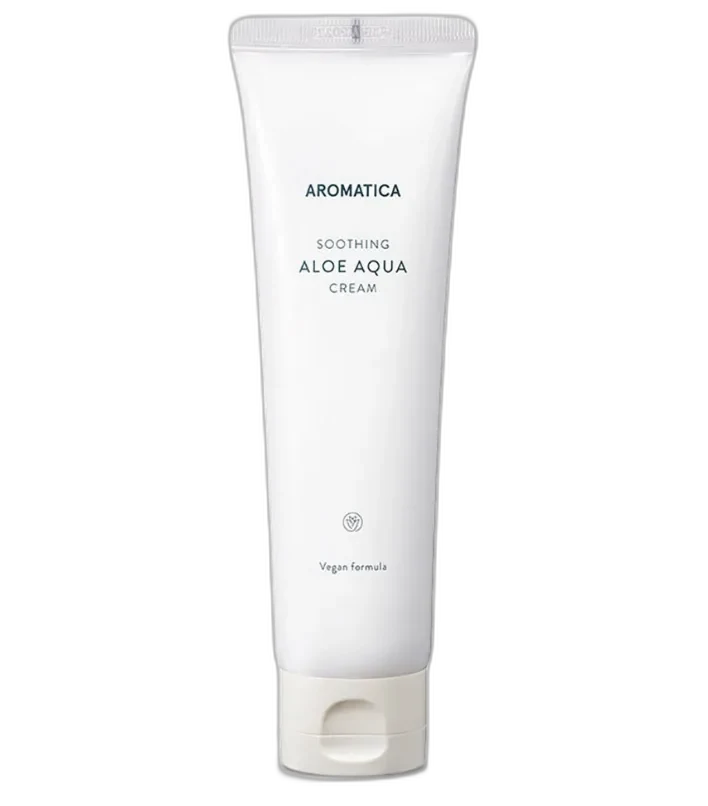
Aloe Aqua Cream
K-Beauty Aloe Hydrator
 Verified reviewer
Pros & cons.
- +Aloe extract listed first on the INCI — actually the dominant ingredient by weight
- +Genuine cooling sensation from real aloe rather than synthetic cooling agents
- +Ceramide NP provides real barrier support in a gel-cream texture
- +Tamarind seed polysaccharide and glycosaminoglycans add layered humectant strategy
- +Strong value at K-beauty pricing — meaningfully cheaper than Western equivalents
- +EWG Verified for users who prioritize that certification
- +Lightweight texture absorbs in under thirty seconds with no tackiness
- +Cruelty-free and vegan formulation
- −Lavender flower water can trigger reactions in fragrance-sensitive users
- −Gel-cream texture isn't occlusive enough alone for very dry winter conditions
- −Plastic jar packaging exposes ceramide content to air with each opening
- −Limited size options — only the 100ml format available
- −100ml only — no travel size for short trips
The full review.
If you read the back of an average aloe-themed moisturizer, you’ll find aloe somewhere on the ingredient list — typically eighth or tenth, behind water, glycerin, and a string of emulsifiers. This is normal. INCI rules require ingredients to be listed in descending order of concentration, and most brands include aloe at trace levels for the marketing claim while building the actual formula around water. Aromatica’s Aloe Aqua Cream does something different. Aloe barbadensis leaf extract is listed first. That single ordering choice means aloe is the largest ingredient by weight in the formula, replacing water as the base. The downstream consequences of that choice are what make this product genuinely interesting. The texture is the most obvious difference. Real aloe extract carries a natural cooling sensation that comes from its high water content and the gel-like polysaccharide structure of the leaf interior — it’s not a synthetic cooling agent, it’s just what aloe feels like at high concentrations. This cream applies with that signature cooling slip and absorbs in under thirty seconds, leaving a satin finish that doesn’t feel sticky or filmy. If you’ve used a high-quality straight aloe gel, the experience here is recognizable but more substantial — the gel is thickened with carbomer and supported by ceramide and emulsifier additions that pure aloe gels lack. The supporting cast is where the formula earns its complete-moisturizer status rather than functioning as just a souped-up aloe gel. Ceramide NP — the most clinically studied of the skin-identical ceramides — sits in the middle of the INCI and slots into the skin’s natural lipid matrix to support barrier function. Hydrolyzed glycosaminoglycans contribute a sophisticated humectant that includes the small-molecule fragments that penetrate further than basic surface humectants can reach. Tamarind seed polysaccharide is an interesting plant-derived alternative to hyaluronic acid that some research suggests has comparable water-binding capacity. Chamomile and rosemary extracts contribute polyphenol-derived anti-inflammatory and antioxidant support. None of these are headline actives, but together they elevate the formula from a basic hydration product to one that actually does barrier maintenance work. The lavender flower water is the single ingredient choice that complicates the recommendation. It sits in the middle of the INCI rather than near the bottom, so the concentration is modest but not vanishing. For most users the lavender contributes a faint herbaceous scent and a small amount of additional botanical extract, both of which are pleasant. For users specifically sensitive to lavender or floral hydrosols — and there are more of these than most brands acknowledge — it can be enough to trigger reactions. Patch-testing is a genuine recommendation if your skin is fragrance-reactive. The price is one of the strongest features. At around twenty-six dollars for one hundred milliliters, this is solidly in the K-beauty value range and meaningfully cheaper per milliliter than equivalent gel creams from Western brands like First Aid Beauty or Drunk Elephant. The EWG Verified certification adds value for users who prioritize that label. The 100ml jar lasts about three months at twice-daily use, which works out to a per-application cost that’s hard to beat in this category. The performance, in practice, is exactly what you’d expect from a well-built aloe-and-ceramide formulation. Skin feels immediately calmer and softer on first application, the cooling sensation is genuinely refreshing in warm weather, and the cumulative barrier improvement from the ceramide content becomes noticeable at three to four weeks of consistent use. It’s a product that does what it says without trying to be more than it is, which is a quiet kind of compliment in a market full of overpromising. The honest limitations: the gel-cream texture isn’t occlusive enough on its own for very dry winter skin and benefits from layering with a heavier moisturizer or facial oil. The plastic jar packaging is less hygienic than a tube and exposes the ceramide content to air with each opening. And the lavender water keeps it off the shortlist for the most fragrance-reactive sensitive skin. For everyone else, particularly anyone in warm climates or anyone looking for a summer-weight moisturizer with real substance, this is one of the better K-beauty value picks on the market.
Ingredient analysis.
Full INCI list
Aloe Barbadensis Leaf Extract, Glycerin, Maltodextrin, Butylene Glycol, Caprylic/Capric Triglyceride, 1,2-Hexanediol, Aqua, Lavandula Angustifolia (Lavender) Flower Water, Rosmarinus Officinalis (Rosemary) Leaf Water, Acrylates/C10-30 Alkyl Acrylate Crosspolymer, Arginine, Polyglyceryl-3 Methylglucose Distearate, Propanediol, Ethylhexylglycerin, Hydrolyzed Glycosaminoglycans, Ceramide NP, Chamomilla Recutita (Matricaria) Flower Extract, Rosmarinus Officinalis (Rosemary) Leaf Extract, Verbena Officinalis Extract, Tamarindus Indica Seed Polysaccharide
Skin match.
The science.
The Science
Clinical research since the 1990s supports aloe vera as a topical hydrator. It improves barrier hydration, provides mild anti-inflammatory action, and speeds wound healing in superficial epidermal injuries. Aloe mucopolysaccharides — mainly acemannan — bind water. This creates a gel-like texture that feels cooling and substantive but not heavy. Ceramide NP is a well-studied skin-identical ceramide in cosmetic dermatology. Peer-reviewed evidence shows it repairs the barrier, reduces transepidermal water loss, and hydrates skin. Tamarind seed polysaccharide is a newer ingredient; emerging research suggests its molecular structure binds water similarly to hyaluronic acid. Hydrolyzed glycosaminoglycans provide small and large humectant molecules that hydrate at multiple skin depths. Laboratory evidence shows chamomile (bisabolol, apigenin) and rosemary (carnosic acid) botanical antioxidants have anti-inflammatory effects, though their concentrations in this formula provide support rather than primary action.
Dermatologist Perspective
Dermatologists favor aloe-based moisturizers for patients with mild skin sensitivity, post-procedural recovery, or compromised barriers, as real aloe extract has documented soothing properties. Board-certified dermatologists note that aloe concentration matters more than its mere presence; products listing aloe first on the INCI show different results than those using it as a trace ingredient. This formula includes ceramide NP, which aligns with standard dermatologist recommendations to use barrier-supporting ceramides for daily maintenance. Clinical commentary most frequently flags lavender flower water as a potential contact sensitizer for some patients. For users without that sensitivity, this works as a daily summer-weight moisturizer or a layering cream over a heavier night moisturizer in winter.
Guidance
Where it fits in your routine.
Apply this as your final hydration step in morning and evening routines, after toner, serum, and any treatment products. Use a pearl-sized amount on your fingertips and pat it onto your face and neck instead of rubbing. Patting helps the gel-cream absorb without disturbing underlying serums. Wait thirty to sixty seconds for absorption before you apply sunscreen or makeup in the morning. For very dry skin or winter conditions, layer this over a more substantial hydrating serum and follow with a heavier occlusive moisturizer or facial oil.
At about twenty-six dollars for one hundred milliliters, this cream offers better value than K-beauty gel creams and costs less per milliliter than Western brands like First Aid Beauty Ultra Repair Cream or Drunk Elephant Lala Retro. The EWG Verified certification adds value for users who prioritize that label. One 100ml jar lasts about three months using it twice daily on the face and neck. This costs under nine dollars per month—strong value for a moisturizer with ceramides and a thoughtful humectant strategy. The only trade-off is the lack of a travel size for users who want a smaller format.
This lightweight gel-cream moisturizer has substance. It works well for warm climates, summer wear, or people who find heavier creams oppressive. It is a strong choice for combination and oily skin, and for normal skin needing daily hydration and barrier support. It suits users seeking K-beauty value and EWG Verified certification.
Users sensitive or reactive to lavender or floral hydrosols. Very dry skin types in winter who need a more occlusive primary moisturizer. People who prefer tube packaging over jars for hygiene. Sensitive skin users who cannot tolerate any botanical fragrance.
Product details.
Light gel-cream with cooling slip — absorbs in under 30 seconds
Faint herbaceous lavender-rosemary note from the floral waters
Frosted plastic jar with screw cap
The cream feels cool on application. The high aloe content creates this sensation, not synthetic cooling agents. It absorbs quickly and is not tacky. Skin feels calmer and softer immediately. There is no adjustment period; this gentle hydration cream works from day one for nearly all skin types except those reactive to lavender.
Approximately 3 months with twice-daily face and neck application
12 months
spring summer
The backstory.
Aromatica was founded in 2003 by Suh Young, who became one of the first Korean beauty entrepreneurs to commit to EWG Verified certification across her entire range. The Aloe Aqua Cream was developed as the brand's answer to the gel-cream trend that took over Korean skincare in the late 2010s — Aromatica's contribution was to use real aloe extract as the base ingredient rather than the more common water-and-glycerin formulation strategy.
About Aromatica
Established Brand (5–20 years)Aromatica launched in South Korea in 2003. It was among the first Korean brands to get EWG Verified certification for its entire range. The brand has over twenty years of formulation history and a large following of Korean clean beauty consumers.
Common myths.
Aloe in moisturizers is always just a marketing claim.
The INCI position of aloe determines its concentration. Because aloe is listed first in this cream, it is the dominant ingredient. If it were listed eighth or tenth, it would mostly be for the label.
Gel-cream textures are only for oily skin.
Modern gel creams with ceramides and humectants like this one work for dry skin too — especially in summer when heavy creams feel heavy. Layer this over a hydrating serum instead of using it alone.
FAQ.
Is Aromatica Aloe Aqua Cream good for sensitive skin?
The results vary. The aloe base, ceramide content, and chamomile work well for sensitivity, but the lavender flower water triggers reactions in fragrance-sensitive users. Patch-test if your skin reacts to floral hydrosols.
Can this cream be used in winter?
Yes, but layer it. The gel-cream texture lacks enough occlusion for very dry winter conditions alone. Apply it over a hydrating serum and add a heavier occlusive moisturizer or facial oil if needed.
Is this safe during pregnancy?
Yes. All active ingredients in this formula — aloe, ceramides, glycosaminoglycans, chamomile — are safe for topical use during pregnancy and breastfeeding. Some pregnant users avoid the lavender water as a precaution.
How does this compare to a basic aloe gel?
Basic aloe gel is mostly water, aloe, and a thickener. This cream uses aloe as the base but adds ceramides for barrier work, glycosaminoglycans for layered hydration, and tamarind polysaccharides for sustained moisture binding. It is a more complete formulation that keeps the aloe-first character.
Can I layer this cream with retinol?
Yes, this combination works. Apply retinol first to dry skin, wait one minute, then apply the Aromatica cream as a buffering hydration layer. The aloe and ceramides offset the dryness retinol causes.
Why is the cream so cooling?
Real aloe extract feels naturally cool because of its high water content and gel-like polysaccharide structure. The INCI lists aloe first, so the cooling effect comes from the ingredient itself, not added cooling agents like menthol.
Is the lavender water in this formula significant?
It sits in the middle of the INCI, so the concentration is modest. For most users, it adds a faint herbaceous scent and a small amount of botanical extract. For users sensitive to lavender or floral hydrosols, it can trigger a reaction.
What the community says.
"Lightweight gel-cream texture absorbs in seconds"
"Genuine cooling effect from the aloe base"
"Calms post-sun and post-active skin"
"Excellent value for the size and ingredient quality"
"Lavender water can irritate fragrance-sensitive skin"
"Not occlusive enough for very dry winter skin"
"Plastic jar packaging is less hygienic than a tube"