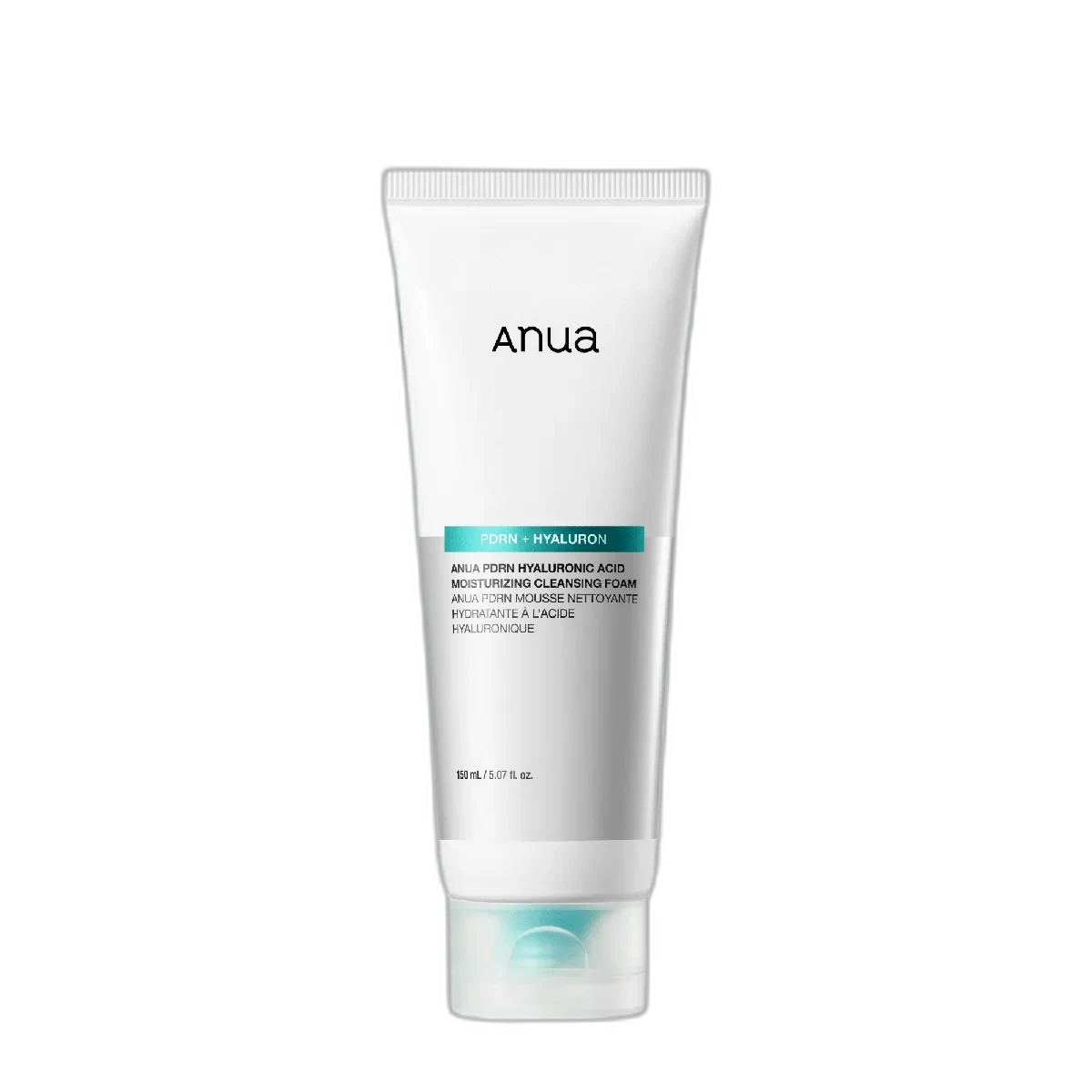
PDRN Hyaluronic Acid Moisturizing Cleansing Foam
Gentle First Step
 Verified reviewer
Pros & cons.
- +Glycerin-first formula prioritizes moisture preservation over aggressive cleansing
- +Amino acid surfactant blend foams richly without sulfates or barrier damage
- +Cationic hyaluronic acid deposits and remains on skin even after rinsing
- +Dense, cloud-like foam texture feels luxurious and substantial during use
- +Completely fragrance-free, sulfate-free, and alcohol-free
- +Panthenol and allantoin condition skin during the wash for zero post-cleanse tightness
- −PDRN and glutathione have minimal functional benefit in a rinse-off format
- −Cannot adequately remove waterproof sunscreen or heavy makeup alone
- −May not provide enough cleansing power for very oily skin types
- −Relatively new product with limited independent reviews available
- −Not vegan due to salmon-derived PDRN and hydrolyzed collagen
The full review.
Most cleansers list water as the first ingredient. Most people do not question this. Anua’s PDRN Cleansing Foam is different. Glycerin—a humectant, skin conditioner, and moisture magnet—is the first ingredient. Water is second. This is intentional. It shows Anua views a cleanser as a moisturizing treatment that also cleans the face.
The surfactant system follows this logic. Sodium cocoyl glycinate leads the formula; this amino acid-derived surfactant creates foam and maintains a gentler pH than sulfate-based mass-market cleansers. Sodium lauroyl glutamate and potassium cocoyl glycinate increase cleansing power, while sodium methyl cocoyl taurate adds foam without harshness. This is the opposite of a foam cleanser that leaves skin feeling like a dried-out sponge.
The pump dispenses a dense, mousse-like foam. It feels thick, not like the thin, airy bubbles of traditional foaming washes. This thick cloud cushions the skin during massage. The texture feels substantial enough to be effective yet gentle enough for twice-daily use.
The real innovation is the cationic hyaluronic acid—hydroxypropyltrimonium hyaluronate. This positively charged HA adheres to the negatively charged skin surface. It deposits onto the face during the wash and stays after rinsing. Regular hyaluronic acid washes down the drain, but this cationic version electrostatically clings to skin. It leaves a conditioning layer that preps the surface. This inclusion solves the problem of putting hydrating ingredients in a rinse-off product.
Alongside the cationic HA, the formula uses sodium hyaluronate and hydrolyzed hyaluronic acid for brief contact-time hydration, panthenol for conditioning, allantoin for calming, and arginine—an amino acid that neutralizes the mild acidity of the amino acid surfactants on the skin surface.
About the PDRN Cleansing Foam
The PDRN, glutathione, and niacinamide in this formula have minimal functional impact because the cleanser stays on the face for only thirty to sixty seconds. PDRN needs sustained contact to engage adenosine A2A receptors. Glutathione needs time to influence melanin pathways. Niacinamide benefits require prolonged exposure. These ingredients work better in the Capsule Serum and Booster Toner than in a rinse-off foam. Their presence maintains the brand narrative across the PDRN line. This is standard K-beauty product line architecture, but consumers should not expect PDRN benefits comparable to leave-on products.
Best for
This cleanser performs the basic job well: it removes impurities, excess oil, and water-soluble debris without disrupting the skin barrier. The amino acid surfactant blend is gentle, as confirmed by the glycerin-first formulation and the absence of sulfates, alcohol, and fragrance. It earns trust from dry and sensitive skin types who dislike typical foaming cleansers.
Not ideal for
This is less ideal as a standalone cleanser for heavy makeup or sunscreen removal. It handles light makeup and daily grime well, but waterproof sunscreen and full-coverage foundation require an oil cleanser first. In a double-cleansing routine—using an oil cleanser followed by this foam—it works as a perfect second step to remove oil residue and condition the skin for toner.
Pricing
At approximately $18 for 150ml, the price is competitive for an amino acid foam cleanser with this profile. One to two pumps per wash makes the bottle last two to three months, keeping the daily cost under fifty cents. This is reasonable for a cleanser that leaves skin hydrated rather than tight.
Summary
Anua made a cleanser that does not work against the rest of a routine. Many foam cleansers strip the skin, forcing the next three products to repair damage. This cleanser leaves the barrier intact and the skin primed for hydration. It is not the most exciting product in the PDRN line—the Capsule Serum holds that title—but it may be the most foundationally important.
Ingredient analysis.
Full INCI list
Glycerin, Water, Sodium Cocoyl Glycinate, Butylene Glycol, Sodium Lauroyl Glutamate, Lauryl Betaine, 1,2-Hexanediol, Hydroxypropyl Starch Phosphate, Sodium Methyl Cocoyl Taurate, Potassium Cocoyl Glycinate, Citric Acid, Sodium Lauroyl Methylaminopropionate, Sodium Chloride, Potassium Cocoate, Caprylyl Glycol, Disodium EDTA, Ethylhexylglycerin, Polyquaternium-67, Melia Azadirachta Leaf Extract, Melia Azadirachta Flower Extract, Coptis Japonica Root Extract, Coccinia Indica Fruit Extract, Sodium DNA, Arginine, Solanum Melongena (Eggplant) Fruit Extract, Ocimum Sanctum Leaf Extract, Curcuma Longa (Turmeric) Root Extract, Corallina Officinalis Extract, Hydrolyzed Collagen, Sodium Hyaluronate, Hydroxypropyltrimonium Hyaluronate, Allantoin, Panthenol, Propanediol, Hydrolyzed Hyaluronic Acid, Niacinamide, Hydrogenated Lecithin, Glutathione, Glyceryl Oleate, Lauryl Glucoside, Myristyl Glucoside, Polyglyceryl-6 Laurate
Skin match.
The science.
The Science
The amino acid surfactant system is the standout formulation choice here. Sodium cocoyl glycinate and sodium lauroyl glutamate derive from amino acids and cause less irritation than traditional anionic surfactants like sodium lauryl sulfate (SLS). A study in the International Journal of Cosmetic Science shows that amino acid-based surfactants protect skin barrier integrity as measured by transepidermal water loss (TEWL), whereas SLS-based cleansers cause measurable barrier disruption at equivalent cleansing efficacy.
The cationic hyaluronic acid — hydroxypropyltrimonium hyaluronate — is an intelligent inclusion for a rinse-off product. Standard hyaluronic acid has a negative charge at skin pH, so it has minimal substantivity (ability to remain on skin after rinsing). The quaternized form has a permanent positive charge that electrostatically adheres to the negatively charged skin surface. This provides sustained hydration even after wash water carries everything else away. Research shows cationic HA has significantly higher skin deposition rates than standard sodium hyaluronate in rinse-off applications.
The glycerin-first approach is noteworthy for formulation science. At its highest concentration, glycerin works as a humectant that binds water during cleansing and as a skin-conditioning agent that reduces the surfactant system's defatting potential. Studies in Contact Dermatitis show that glycerin-enriched cleansers significantly reduce surfactant-induced irritation.
Regarding the PDRN and other treatment actives: their inclusion maintains the product line's identity, but the 30-60 second contact time in a rinse-off application limits their bioavailability. The cationic HA may carry trace amounts of co-deposited actives, but the cleansing and conditioning benefits are the primary functional outcomes of this product.
Dermatologist Perspective
Board-certified dermatologists emphasize that patients often damage their skin barrier during the cleansing step without realizing it. Dermatologists frequently recommend amino acid-based cleansers over sulfate formulations, especially for patients with dry, sensitive, or eczema-prone skin. This cleanser's glycerin-first formulation and gentle surfactant blend align with dermatological recommendations for non-stripping cleansing. Dermatologists would note that while the PDRN and glutathione offer minimal benefit in a rinse-off context, the cationic hyaluronic acid technology is a meaningful advancement in cleanser formulation — leaving behind a hydrating deposit is the kind of functional innovation dermatologists appreciate in a cleanser.
Where it fits in your routine.
Wet your face with lukewarm water. Dispense one to two pumps of foam into your hands; the pre-foamed texture requires no extra lathering. Massage the foam onto your face in circular motions for thirty to sixty seconds, focusing on the T-zone and congestion-prone areas. Rinse well with lukewarm water and pat dry. Use as your only morning cleanser or as the second step in an evening double-cleanse routine after oil cleansing. Apply toner immediately while skin remains slightly damp.
At about $18 for 150ml, this cleanser is priced well for an amino acid surfactant formula with cationic HA technology. The pre-foaming pump uses one to two pumps per wash, making the bottle last two to three months with twice-daily use — about 30 cents per day. Basic gentle cleansers cost less, but the cationic HA deposition, glycerin-first base, and conditioning profile justify the small premium over drugstore foam cleansers. The PDRN and glutathione add little functional value in a rinse-off product but do not significantly raise the price.
Dry and sensitive skin types seeking a foam cleanser that does not strip skin. Users building a full Anua PDRN routine who want a coordinated cleansing step. Double-cleansing enthusiasts seeking a gentle second cleanser. People who want to give foam cleansers another chance after previous stripping experiences.
Very oily skin types needing stronger cleansing power. Users who want one cleanser to remove waterproof sunscreen or heavy makeup without a prior oil cleanse. Budget-conscious consumers who prioritize actives in leave-on products for better value.
Product details.
The pump dispenses a dense foam that creates a thick, creamy lather instead of an airy one on the skin.
Unscented — no detectable fragrance
The pump-action bottle dispenses pre-foamed cleanser so you do not lather it manually; the 150ml tube allows controlled dispensing.
The first pump dispenses a dense, creamy foam. It feels like a gentle cushion on the face, not a stripping detergent. Skin feels clean after rinsing without tightness or squeakiness, unlike many foam cleansers. The cationic hyaluronic acid leaves a subtle conditioning residue that preps skin for the next step.
2-3 months with twice-daily use (one to two pumps per wash)
12 months
All Year
The backstory.
Anua designed this cleanser as the entry point to their PDRN routine — recognizing that barrier damage during cleansing undermines everything the toner, serum, and mist work to build. By using amino acid surfactants and depositing cationic HA during the wash, the cleanser preps the skin to absorb the subsequent PDRN products more effectively.
About Anua
Established Brand (5–20 years)Anua launched in 2019 and grew fast as a K-beauty brand, now in all 1,500 Ulta Beauty stores. The brand's PDRN line won Olive Young Awards and the Hwahae Beauty Awards for best new product.
Common myths.
Foam cleansers are always too harsh for sensitive skin.
Traditional foam cleansers with sodium lauryl sulfate strip the skin. This formula uses amino acid-based surfactants (sodium cocoyl glycinate, sodium lauroyl glutamate) to create thick foam, maintain a skin-friendly pH, and preserve the lipid barrier.
Rinse-off products waste active ingredients like PDRN and glutathione.
Contact time is limited, but the cationic hyaluronic acid in this formula binds to skin even after rinsing. Some conditioning actives deposit and stay on skin during washing. This provides less benefit than leave-on products, but not zero.
FAQ.
Is the Anua PDRN Cleansing Foam sulfate-free?
Yes — the formula uses amino acid-based surfactants (sodium cocoyl glycinate, sodium lauroyl glutamate) instead of sulfates like SLS or SLES. This creates thick foam and is gentler on the skin barrier.
Myth
Does the PDRN in this cleanser actually work since you rinse it off?
Reality
PDRN and glutathione have limited functional benefit in a rinse-off product because contact time lasts only 30-60 seconds. The real value of this cleanser is its amino acid surfactants, cationic hyaluronic acid (which deposits and stays on skin after rinsing), and glycerin-first conditioning base.
Can this cleanser remove sunscreen and makeup?
It removes light makeup, daily grime, and non-waterproof sunscreen well. Use an oil cleanser first for waterproof sunscreen or heavy makeup, then use this foam as your second cleanse. This foam works well as a gentle second step in a double-cleansing routine.
Best for
Why is glycerin listed before water in this cleanser?
Glycerin is the first ingredient, making it the highest-concentration component in the formula. This prioritizes skin conditioning and moisture preservation during cleansing, which reduces how much surfactants strip the skin barrier.
Works for
Is this cleanser good for acne-prone skin?
Gentle amino acid surfactants cleanse without over-stripping. This protects acne-prone skin from sebum overproduction caused by harsh cleansers. If you want stronger acne-fighting ingredients like salicylic acid or benzoyl peroxide, use a targeted treatment serum alongside this instead of expecting the cleanser to treat breakouts directly.
About Ingredients
What is cationic hyaluronic acid and why does it matter in a cleanser?
Cationic hyaluronic acid (hydroxypropyltrimonium hyaluronate) has a positive electrical charge. This charge makes it stick to skin after rinsing, unlike regular HA which washes away. The cleanser deposits a moisture-binding layer during your wash that stays to prep skin for your toner and serum.
What the community says.
"Does not leave skin feeling tight or stripped"
"Rich, dense foam texture"
"Pairs well with the rest of the PDRN line"
"Gentle enough for morning and evening use"
"May not remove heavy makeup or sunscreen alone"
"PDRN and actives have limited benefit in a rinse-off product"
"Foam can be very dense — a little goes a long way"
People also looked at.