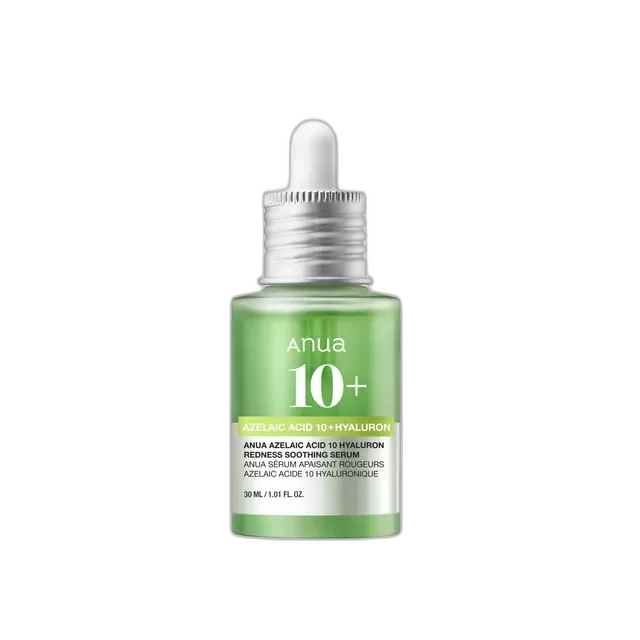
Azelaic Acid 10 Hyaluron Redness Soothing Serum
Redness Relief Powerhouse
 Verified reviewer
Pros & cons.
- +10% azelaic acid at the maximum OTC concentration for effective redness and blemish treatment
- +Comprehensive centella complex with four isolated active fractions for multi-pathway soothing
- +Ceramide NP, niacinamide, and panthenol protect the barrier while actives work
- +Clinically proven redness reduction within 4 weeks of consistent use
- +Fragrance-free, alcohol-free, silicone-free — minimal irritation potential from vehicle
- +Pregnancy-safe active ingredient at an effective concentration
- +Accessible $20 price point undercuts prescription azelaic acid alternatives
- −30ml bottle is small for twice-daily use — lasts only 1-2 months
- −Mild tingling on first use may concern first-time azelaic acid users
- −Some users report no visible redness reduction despite consistent use
- −Emerging brand with limited long-term formulation track record
- −Contains propylene glycol which a minority of users may be sensitive to
The full review.
Azelaic acid has always been dermatology’s quiet achiever. While retinol dominates headlines and vitamin C gets the glamour shots, azelaic acid has been steadily doing its job in dermatology clinics for decades — treating rosacea, calming inflammatory acne, fading post-blemish marks, all without increasing sun sensitivity or thinning the skin. It is, by most measures, one of the safest and most versatile prescription actives in the dermatological toolkit. And yet, the K-beauty market — which has embraced every other active from snail mucin to galactomyces — largely overlooked it until Anua decided to change that.
The Azelaic Acid 10 Hyaluron Redness Soothing Serum launched in 2024 and immediately became one of the most talked-about K-beauty releases of the year. Within months, it had accumulated thousands of reviews with a 4.7 average rating, won the YesStyle Favorite Serum award, and landed on Ulta Beauty shelves. The velocity of adoption was unusual even by K-beauty standards, and the reason is straightforward: this serum addresses a need that the market was underserving.
The 10% azelaic acid concentration sits at the OTC maximum — matching what dermatologists prescribe for mild to moderate rosacea and acne, but without a prescription requirement. The azelaic acid is derived from wheat and barley, which is a cosmetic rather than pharmaceutical source, but the mechanism of action is identical: it inhibits tyrosinase to reduce melanin production, disrupts acne-causing bacteria, and normalizes keratinization to prevent pore clogging. Clinical testing conducted for this specific product demonstrated visible redness reduction within four weeks, which aligns with the established timeline for azelaic acid efficacy.
What elevates this serum beyond a simple active-delivery vehicle is the supporting formulation. The centella asiatica complex is unusually comprehensive — not just a generic extract, but four isolated active fractions: madecassoside, asiaticoside, asiatic acid, and madecassic acid. Each fraction contributes a different aspect of centella’s therapeutic profile: anti-inflammatory activity, collagen stimulation, wound healing, and barrier strengthening. This multi-fraction approach means the soothing support for the azelaic acid is coming from every angle centella can offer.
Niacinamide amplifies the brightening and oil-regulating effects through an independent pathway. Panthenol provides immediate soothing and hydration. Ceramide NP protects the lipid barrier. Sodium hyaluronate delivers hydration. Zinc PCA contributes antimicrobial and sebum-regulating support. Beta-glucan adds another layer of calming. Each ingredient has a clear purpose in the formula, and collectively they create a system where the active ingredient can do its work without the common side effects — dryness, flaking, irritation — that make high-concentration actives problematic for sensitive skin.
The texture is a watery serum with a distinctive pale green tint from the botanical extracts. It absorbs almost instantly, leaving no residue, film, or tackiness. This rapid absorption is important — it means the serum layers cleanly under moisturizer and sunscreen without pilling, which is a persistent frustration with many active serums. The absence of fragrance, alcohol, and silicones keeps the formula as clean and non-reactive as possible.
First-time use may produce mild tingling. This is standard with azelaic acid and is not a cause for concern — it indicates the active is engaging with the skin and typically subsides within one to two minutes. The tingling diminishes with continued use as the skin acclimates. If you have never used azelaic acid before, starting with once-daily application (preferably PM) and building to twice daily over two weeks is the prudent approach.
The 30ml bottle is the honest limitation. For a serum intended for twice-daily use, 30ml lasts approximately one to two months — which means repurchasing frequently at $20 per bottle. While the per-bottle price is accessible, the annualized cost for consistent use adds up. A larger size option would significantly improve the value proposition.
Anua is an emerging brand, and that matters contextually. The azelaic acid itself has decades of clinical validation behind it — this is not an experimental ingredient. But Anua’s specific formulation has a limited track record compared to established pharmaceutical azelaic acid products. The 7,000+ reviews and clinical testing provide meaningful validation, but long-term data is still accumulating.
For anyone dealing with rosacea redness, post-acne marks, or uneven texture who wants a single serum that addresses all three without compromising the skin barrier, this is a genuinely impressive entry. The formulation philosophy — treating the problem while protecting the skin from the treatment — reflects a maturity of thinking that many brands with longer track records have not achieved. The price makes it accessible, the texture makes it pleasant, and the results, for the majority of users, make it worth repurchasing.
Ingredient analysis.
Full INCI list
Water, Azelaic Acid, Propylene Glycol, Sodium Hydroxide, Dipropylene Glycol, 1,2-Hexanediol, Panthenol, Hydroxyethylcellulose, Betaine Salicylate, Glycerin, Biosaccharide Gum-1, Ethylhexylglycerin, Allantoin, Dipotassium Glycyrrhizate, Melia Azadirachta Leaf Extract, Camellia Sinensis Leaf Water, Sodium Hyaluronate, Melia Azadirachta Flower Extract, Niacinamide, Aloe Barbadensis Leaf Juice, Beta-Glucan, Centella Asiatica Extract, Centella Asiatica Leaf Extract, Centella Asiatica Root Extract, Madecassoside, Asiaticoside, Asiatic Acid, Madecassic Acid, Squalane, Zinc PCA, Butylene Glycol, Pentylene Glycol, Caprylyl/Capryl Glucoside, Hydrogenated Lecithin, Ceramide NP
Skin match.
The science.
The Science
Azelaic acid's dermatological efficacy is supported by extensive clinical research. A landmark review published in the Journal of Drugs in Dermatology confirmed that 15-20% azelaic acid is effective for rosacea (papulopustular and erythematotelangiectatic subtypes) and acne vulgaris, with a favorable safety profile that includes no photosensitization and pregnancy safety (FDA Category B). At 10%, this OTC formulation provides a meaningful active dose based on dose-response studies showing efficacy begins at concentrations above 5%.
The mechanism of action is multi-pathway: azelaic acid competitively inhibits tyrosinase, reducing melanin synthesis in hyperactive melanocytes without affecting normally pigmented skin. It also exhibits antimicrobial activity against Propionibacterium acnes through disruption of bacterial protein synthesis, and normalizes aberrant keratinization in the follicular canal — addressing three of the four pathogenic factors in acne simultaneously.
The centella asiatica complex in this formula provides four isolated triterpene compounds. Research published in Phytomedicine demonstrated that madecassoside and asiaticoside stimulate type I collagen synthesis in human fibroblasts, while asiatic acid and madecassic acid exhibit potent anti-inflammatory activity through inhibition of iNOS and COX-2 expression. The synergy between these compounds and azelaic acid creates a complementary anti-inflammatory system.
Niacinamide's role in this formulation is supported by a 2005 study in the British Journal of Dermatology showing that topical 5% niacinamide significantly reduced hyperpigmentation and increased skin lightness after 4 weeks. Its mechanism — inhibiting melanosome transfer from melanocytes to keratinocytes — is independent of azelaic acid's tyrosinase inhibition, creating an additive brightening effect.
References
- Azelaic acid in the treatment of rosacea and acne — Journal of Drugs in Dermatology (2017)
- Topical niacinamide reduces hyperpigmentation and increases skin lightness — British Journal of Dermatology (2005)
Dermatologist Perspective
Dermatologists have long recommended azelaic acid as a first-line treatment for papulopustular rosacea and mild to moderate acne, particularly for patients who cannot tolerate retinoids or who are pregnant. Board-certified dermatologists note that 10% represents a therapeutically meaningful concentration that can deliver visible results without the irritation profile of higher concentrations. The inclusion of centella asiatica and ceramide NP aligns with current dermatological guidance on supporting the skin barrier during active treatment — a principle that reduces the frequency of active-induced irritation and improves long-term treatment adherence.
Where it fits in your routine.
Product details.
This lightweight watery serum has a pale green tint from botanical extracts. It absorbs almost instantly without residue, tackiness, or pilling.
Unscented. No fragrance or essential oils.
30ml glass dropper bottle. The glass shows a pale green tint. The dropper dispenses a controlled amount for precise application.
The serum feels cool and watery on application. It causes mild tingling during first use, which is normal for azelaic acid; this sensation lasts 1-2 minutes and fades with continued use. It leaves no visible residue or pilling. The soothing complex makes skin appear slightly calmer immediately, but significant redness reduction requires consistent use over weeks.
1-2 months with twice-daily application
12 months
All Year
Common myths.
10% azelaic acid is too strong for sensitive or rosacea-prone skin.
Azelaic acid is one of the gentlest prescription-class actives. It does not thin the skin or increase sun sensitivity like retinoids or strong AHAs. At 10%, it reaches the OTC maximum but most skin types tolerate it well, including rosacea-prone skin — its primary dermatological indication.
Azelaic acid works like other brightening acids, such as glycolic or lactic acid.
Azelaic acid uses different mechanisms: it inhibits tyrosinase (melanin production) and acts as an antimicrobial. Glycolic and lactic acids primarily exfoliate the surface. Azelaic acid does not increase photosensitivity and is pregnancy-safe, which distinguishes it from other brightening actives.
FAQ.
Is the Anua Azelaic Acid serum pregnancy-safe?
Yes. Azelaic acid is one of the few prescription-class actives safe during pregnancy. This 10% serum treats redness and hyperpigmentation without the pregnancy concerns of retinoids, salicylic acid, or hydroquinone. Always confirm with your OB-GYN.
Can I use this serum with retinol?
Yes, but introduce them carefully. Azelaic acid and retinol work together for acne and hyperpigmentation. Use them on alternating nights first, then increase to the same routine if your skin tolerates it. Apply azelaic acid first (thinner consistency), then retinol, then moisturizer.
How long does it take to see results from this serum?
Clinical testing shows visible redness reduction after 4 weeks of consistent daily use. Post-blemish dark marks fade at 4-6 weeks; full brightening and texture improvement show at 8-12 weeks. For azelaic acid results, consistency matters more than concentration.
Will this serum help with rosacea?
Yes — azelaic acid is a primary dermatologist-recommended treatment for rosacea redness. This serum uses a 10% concentration, the highest OTC level available, and the centella asiatica complex adds anti-inflammatory soothing. Many users with rosacea report visible redness reduction.
Does the Anua Azelaic Acid serum cause purging?
Azelaic acid causes brief purging (1-2 weeks) in acne-prone skin by accelerating cell turnover and clearing clogged pores. This is normal and temporary. If irritation lasts more than 2-3 weeks or worsens, use it every other day.
What the community says.
"Visible redness reduction within weeks of consistent use"
"Lightweight watery texture absorbs instantly without residue"
"Does not sting or irritate even on sensitive rosacea-prone skin"
"Affordable compared to prescription azelaic acid alternatives"
"Pretty green color from natural botanical extracts"
"30ml bottle is small for a serum used twice daily"
"Some users report no visible redness reduction despite consistent use"
"Mild tingling on first few applications"
"Propylene glycol may not suit those who are sensitive to glycols"
People also looked at.