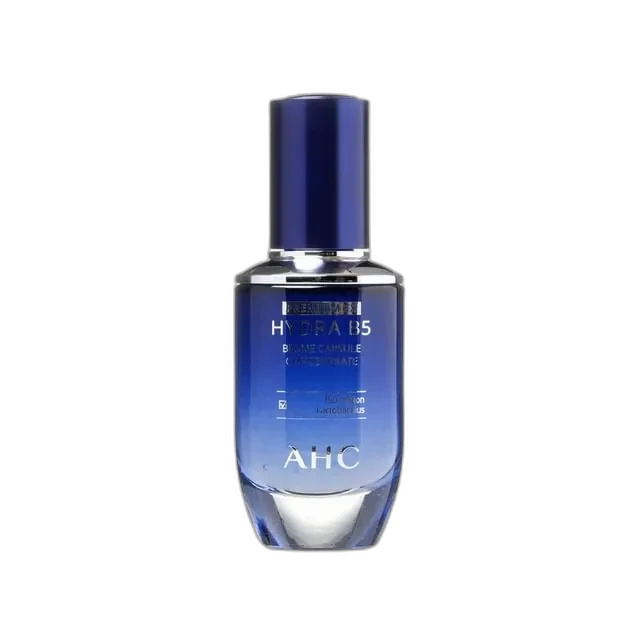
B5 Hyaluronic Acid Hydrating Serum
Budget Multi-Weight HA Serum
 Verified reviewer
Pros & cons.
- +Five molecular weights of hyaluronic acid for multi-depth hydration
- +Generous panthenol dose supports barrier function
- +Madecassoside and Centella add real soothing to a hydration serum
- +Non-sticky, fast-absorbing finish
- +Layers cleanly under sunscreen and makeup
- +Meaningfully cheaper than La Roche-Posay Hyalu B5
- +Fragrance-free and well-tolerated
- −Pump can clog if the nozzle isn't wiped
- −Plastic packaging feels budget
- −Not a replacement for anti-aging actives
- −Owned by Unilever, not an indie brand
The full review.
La Roche-Posay’s Hyalu B5 Serum changed what a hydrating serum could be. Before 2018, most hyaluronic serums were one-note — glycerin, a single molecular weight of HA, maybe some botanicals. Hyalu B5 proposed something smarter: pair multiple weights of hyaluronic acid with a serious panthenol dose, in a lightweight vehicle that actually absorbed. It became the reference product for ‘hydration serum’ at the mid-price tier and set off a cycle of competitors building their own versions.
AHC’s B5 Hyaluronic Acid Hydrating Serum is the Korean answer to that cycle, and it deserves more attention than it gets. AHC has been around since 1999, originally as a brand formulated for Korean aesthetic clinics and later crossing into mass-market K-beauty before Unilever acquired the line in 2017. That professional-channel heritage shows up in the formulation here: the B5 serum isn’t a copycat, it’s a clinic-brand take on the same problem, and it makes some choices La Roche-Posay’s version doesn’t.
The hydration layer is the obvious headline. Five forms of hyaluronic acid show up on the INCI — sodium hyaluronate, sodium hyaluronate crosspolymer, hydrolyzed sodium hyaluronate, potassium hyaluronate, hydrolyzed hyaluronic acid, and standard hyaluronic acid itself. Molecular weight determines penetration: low-weight fragments slip into the upper stratum corneum and hydrate at depth, mid-weight forms build a hydrating lattice in the intermediate layers, and high-weight polymers sit on the surface and form a water-binding film. Stacking the weights means you’re hydrating multiple depths simultaneously, which plays out in practice as the distinctive plumping sensation this category delivers when it’s done right. Panthenol — the B5 of the name — is dosed high, right after the polyols, which puts it well above the trace level most serums get away with.
What AHC adds on top of the Hyalu B5 template is soothing support. Madecassoside and whole Centella asiatica extract are both on the INCI, along with allantoin and tocopherol. That’s a more substantial calming system than La Roche-Posay’s version, and it pays off on reactive skin — users in the middle of a retinoid ramp-up or dealing with acute dehydration after over-exfoliating report noticeably less flinching from the serum than they do from the all-glycerin alternatives. Niacinamide sits at a modest level to support barrier function and transepidermal water loss reduction without being the star. Trehalose and betaine contribute osmotic hydration. Adenosine, at a trace level, is there for its mild smoothing reputation. The preservation system is fragrance-free and clean.
Texture
Texture is where the serum earns daily use. It’s light, slightly viscous, and absorbs within twenty seconds onto damp skin. The finish is non-tacky and non-greasy, which is the real test of any multi-weight HA serum because high molecular weights tend to leave a film. This one doesn’t. It layers cleanly under moisturizers, under sunscreens, and under makeup without pilling — a specific failure mode of serums that include crosspolymers or lots of film-formers, and one AHC has engineered around.
Results
Results scale with consistency. Within the first week, dehydrated skin feels plumper and fine dehydration lines visibly soften. Within three to four weeks, users report steadier baseline hydration through the day, less tightness, and better tolerance of other actives in the routine. It’s not an anti-aging serum in the clinical sense — no peptides, no retinoids, no strong antioxidants — and it shouldn’t be treated as one. It’s a hydration specialist, and it does that job well.
Limitations
The honest limitations are narrow. The pump can clog if you don’t wipe the nozzle — a common minor annoyance with plastic-pump serums. AHC is now owned by Unilever, which matters to users who prefer small indie brands on principle but doesn’t affect the formulation. And if you’ve been using Hyalu B5 and love it, switching probably won’t change your life — both serums are built on the same framework, and the differences are refinements rather than revolutions. The case for AHC’s version is mostly about value: you typically pay twenty to thirty percent less per milliliter, for a formulation with comparable core actives and a more substantial soothing complex.
Recommendation
For users looking for a well-formulated hydration serum at a realistic price, this is one of the easier recommendations in K-beauty. It’s not trying to be exciting. It’s trying to be competent and affordable, and it hits both.
Ingredient analysis.
Full INCI list · pH 5.5
Water, Glycerin, Butylene Glycol, Methylpropanediol, Niacinamide, Panthenol, 1,2-Hexanediol, Sodium Hyaluronate, Sodium Hyaluronate Crosspolymer, Hydrolyzed Sodium Hyaluronate, Hyaluronic Acid, Potassium Hyaluronate, Hydrolyzed Hyaluronic Acid, Glycereth-26, Trehalose, Betaine, Allantoin, Madecassoside, Centella Asiatica Extract, Adenosine, Tocopherol, Carbomer, Arginine, Disodium EDTA, Ethylhexylglycerin, PEG-60 Hydrogenated Castor Oil
Skin match.
The science.
The Science
This hydration logic uses established research on hyaluronic acid, panthenol, and stratum corneum hydration. Hyaluronic acid binds water; dermatology research shows different molecular weights work differently when applied topically. A 2011 study in the Journal of Cosmetic Dermatology by Pavicic and colleagues compared hyaluronic acid formulations of different molecular weights. They found multi-weight preparations beat single-weight formulations in stratum corneum hydration and wrinkle depth reduction over 60 days of use. Panthenol has extensive literature—clinical trials in journals like the American Journal of Clinical Dermatology show topical panthenol at these concentrations improves stratum corneum hydration, barrier function, and transepidermal water loss. Niacinamide increases ceramide biosynthesis and barrier recovery. Madecassoside has peer-reviewed anti-inflammatory research, and trehalose studies support its role in osmotic protection during cellular dehydration. This serum's value lies in the combination: stacked molecular weights of HA for layered hydration, high panthenol for barrier support, a calming complex for tolerance, and a vehicle built for absorption instead of film-feel. This formulation uses the La Roche-Posay template but tunes it for K-beauty sensibilities, and it passes ingredient scrutiny.
Dermatologist Perspective
Dermatologists often recommend multi-weight hyaluronic acid serums as a foundation for patients with dehydration, compromised barriers, or sensitivity to heavier emollients. Board-certified dermatologists note that hydrating the upper skin layers is a simple, low-risk way to improve smoothness, fine lines, and the tolerability of other actives like retinoids and acids. The panthenol content in this serum adds barrier support that dermatologists value for patients post-procedure or starting retinoids. It is generally safe during pregnancy and breastfeeding, works for all skin types including oily and combination, and fits into daily morning and evening routines with most other actives.
Guidance
Where it fits in your routine.
Cleanse and tone first, then dispense one or two pumps into your palm or onto damp skin. Press the product in with warm palms instead of rubbing, moving outward from the face center. Apply two or three layers to severely dehydrated skin, pausing briefly between each. Follow with your usual treatment (retinol or other actives) and seal with a moisturizer. Use sunscreen in the morning. This works twice daily, around the eyes, and with vitamin C, niacinamide, and retinoids.
At $28 for 50ml, AHC's B5 serum sits meaningfully below La Roche-Posay Hyalu B5 Serum on a per-ml basis and matches or beats most other K-beauty competitors in the multi-weight hydration category. Korean pricing closer to $20 pushes the value further. A larger 100ml size is also available and offers better per-ml value for users who layer generously. For the formulation quality — particularly the added Centella complex — the value proposition is genuinely strong, and this is one of the serums that holds up against more premium competition without compromise.
This works for anyone with dehydrated skin, regardless of skin type. It serves users ramping up retinoids who need a hydration buffer, and fans of La Roche-Posay Hyalu B5 seeking a cheaper, similarly formulated alternative. It also suits combination and oily users who need hydration without occlusive weight.
If you own Hyalu B5 and like it, you don't need to switch—the changes are refinements, not revolutions. Users seeking anti-aging actives like peptides or retinoids should use this serum alongside those instead of using it alone.
Product details.
Lightweight, slightly viscous serum that absorbs quickly
Unscented
Plastic pump bottle
The first use provides immediate cooling and plumping. Dehydrated skin feels softer within minutes. It causes no purging or tingling.
2-3 months with twice-daily application
12 months
All Year
The backstory.
AHC started in 1999 as a Korean brand formulated for aesthetic clinics and spas, before becoming a mass-market K-beauty label in the 2010s. The B5 line was launched to compete directly with La Roche-Posay's Hyalu B5 Serum, taking the same panthenol-plus-hyaluronic concept and tuning it to K-beauty sensibilities with added Centella soothing and a lower price tag.
About AHC
Established Brand (5–20 years)AHC (A.H.C) launched in 1999 as a Korean professional skincare brand for aesthetic clinics and spas. It moved into the mass-market K-beauty space in the 2010s and Unilever acquired it in 2017. The brand has two decades of experience with hydration and anti-aging formulations.
Common myths.
One type of hyaluronic acid is enough.
Hyaluronic acid's molecular weight dictates its penetration depth and function. Low-weight forms enter the upper stratum corneum, while high-weight forms stay on the surface to form a hydrating film. This serum uses multiple weights to target different depths at once, which works better than a single-weight formula.
FAQ.
How is this different from La Roche-Posay Hyalu B5?
Both use the same core concept — panthenol plus multi-weight hyaluronic acid — but this serum adds madecassoside and Centella asiatica to soothe and uses more niacinamide. AHC's version costs less, especially through Korean retailers.
Can I use it with vitamin C and retinol?
Yes. The serum works with both. Use vitamin C in the morning, apply this serum after, then moisturize and SPF. At night, use this serum before your retinoid to cushion the active, or layer it after a retinoid to restore hydration.
Is it good for oily skin?
Yes. The serum is oil-free. Its lightweight base works well for oily and combination skin. Many oily users use it as their only hydration step under a gel moisturizer.
Is it fragrance-free?
Yes. The formula has no added fragrance or essential oils. Any scent is a faint, inherent ingredient note, not a perfume.
Is it pregnancy safe?
Yes. The ingredient list lacks retinoids, hydroquinone, and salicylic acid. Hyaluronic acid, panthenol, niacinamide, and madecassoside are safe during pregnancy.
Does it help fine lines?
Short-term yes, because plumping the upper skin layers reduces dehydration lines. For real wrinkle reduction, use a retinoid or peptide treatment — this serum provides hydration, not anti-aging actives.
What the community says.
"Immediate plumping"
"Non-sticky finish"
"Layers well"
"Affordable for the size"
"Calms tight skin"
"Not owned by a small indie brand"
"Pump can get clogged"
"Plastic packaging"
People also looked at.