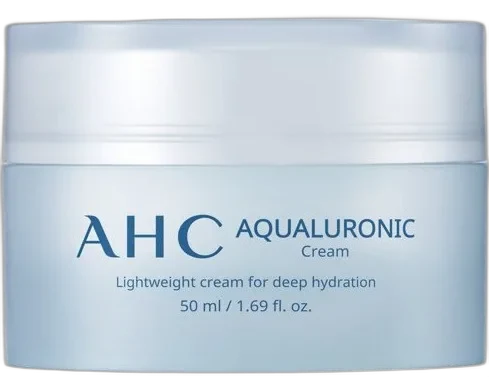
Aqualuronic Cream
K-Beauty Drugstore MVP
 Verified reviewer
Pros & cons.
- +Niacinamide at a meaningful concentration around 2-5%
- +Triple algae complex provides marine-derived humectant activity
- +Five-ceramide barrier lipid complex unusual at this price point
- +Lightweight gel-cream texture suits combination and oily skin
- +Layers cleanly under makeup and sunscreen
- +Excellent value for the ingredient depth on display
- −Added fragrance bothers fragrance-reactive users
- −Not cruelty-free due to mainland China retail distribution
- −Jar packaging less hygienic than a pump
- −Silicones make it not fungal acne safe
- −May not be enough alone for very dry skin in winter
The full review.
AHC’s Aqualuronic line sits at eye level in Korean drugstores next to Laneige and Innisfree. Laneige Water Bank is the standard name for hydrating gel-creams for international K-beauty shoppers; it has the Sephora presence, the Hailey Bieber mentions, and the marketing budget. AHC sells more units in Korea because of its formulation. Side-by-side INCI comparisons show AHC lists more functional ingredients at higher positions for roughly the same price. The Aqualuronic Cream proves this pattern.
The formula uses a humectant-forward base. Water leads, followed by propanediol and butylene glycol—two solvent humectants that dissolve actives and bind water—then glycerin and 1,2-hexanediol. Niacinamide is sixth on the list. In Korean skincare, niacinamide at this position usually means a 2% to 5% concentration. This range shows real benefits for barrier function, pore appearance, and tone evening in published research. At $26, the niacinamide inclusion is generous.
A marine algae trio anchors the ‘aqualuronic’ positioning. Codium tomentosum, enteromorpha compressa, and undaria pinnatifida are three brown and green algae extracts that provide polysaccharides, minerals, and natural humectant activity. Skincare often uses algae extracts as decorative botanicals at trace levels, but their high INCI position here suggests they contribute meaningfully to the cream’s water-binding. Combined with sodium hyaluronate further down the list, the cream has a high total humectant load.
The lower third of the INCI is where the formula gets interesting. AHC layered in a five-ceramide complex (NP, AP, NS, AS) plus cholesterol and phytosphingosine. This is the full physiological barrier lipid family, the same combination expensive treatment products use for barrier repair. Centella triterpenes—madecassic acid and asiatic acid—add anti-inflammatory and tissue-supportive activity. You do not expect these in a $26 drugstore moisturizer.
Using the cream is easy. A small dollop from the frosted glass jar warms between fingertips and spreads with a lightweight gel-cream feel, absorbing within about a minute. The texture is lightweight—closer to a hydrating gel than a traditional cream—and leaves a soft satin finish without tackiness or residue. Skin looks immediately more plump and slightly more luminous; the cream layers under sunscreen and makeup without pilling. The marine-fresh fragrance is moderate and fades within minutes.
The cream works best on normal, combination, and oily skin in moderate climates. The lightweight texture suits humidity-prone Korean and East Asian skin types, and the niacinamide helps with combination-zone shine and uneven tone. For very dry skin, the gel-cream format may not suffice. Winter or dehydrated skin will likely need a heavier layer or a thicker cream in cold months. AHC sells a richer cream in the same line, but if you only own this one, plan for seasonal supplementation if your skin is dry.
The limitations depend on your skin type. The moderate fragrance makes this cream a poor match for sensitive, rosacea-prone, or fragrance-reactive skin. AHC is not cruelty-free because the brand sells through mainland China retail channels that require animal testing for some categories. The jar packaging is functional but less hygienic than a pump, and the dimethicone/cyclopentasiloxane silicone content means this is not fungal-acne-safe for users with malassezia. These are the realities of a product designed for the Korean drugstore mainstream rather than the ultra-sensitive niche.
The value case is the strongest argument for this cream. At $26 for 50ml, AHC delivers more functional ingredient depth for the money than nearly any comparable product. American drugstore moisturizers in this range typically list one or two humectants, a generic ceramide, and filler botanicals. K-beauty competitors often skimp on ceramides or niacinamide concentration. AHC includes both at meaningful levels alongside the algae complex and centella triterpenes, which is impressive for the price. It is an unsung hero of the affordable K-beauty gel-cream category and shows that brand recognition often lags behind formulation quality.
Formula
Ingredient analysis.
Full INCI list · pH 6
Aqua, Propanediol, Butylene Glycol, Glycerin, 1,2-Hexanediol, Niacinamide, Polymethylsilsesquioxane, Cyclopentasiloxane, Dimethicone, Cyclohexasiloxane, Ethylhexyl Palmitate, Codium Tomentosum Extract, Enteromorpha Compressa Extract, Undaria Pinnatifida Extract, Ammonium Acryloyldimethyltaurate/VP Copolymer, Carbomer, Cetearyl Olivate, Cetyl Ethylhexanoate, Tromethamine, Sorbitan Olivate, Artemisia Princeps Leaf Extract, Polyglyceryl-10 Oleate, Parfum, Maris Aqua, Ethylhexylglycerin, Adenosine, Hydrogenated Lecithin, Disodium EDTA, Sodium Hyaluronate, Caprylic/Capric Triglyceride, Camellia Sinensis Leaf Extract, Nelumbo Nucifera Flower Extract, Propylene Glycol, Butyrospermum Parkii Butter, Avena Sativa Kernel Extract, Lilium Candidum Bulb Extract, Ceramide NP, Myrothamnus Flabellifolia Leaf/Stem Extract, Ceramide AP, Ceramide NS, Cholesterol, Ceramide AS, Eucalyptus Globulus Leaf Extract, Madecassic Acid, Asiatic Acid, Ascorbic Acid
Skin match.
The science.
The Science
This cream uses a layered hydration mechanism. The humectant base — propanediol, butylene glycol, glycerin, sodium hyaluronate, and the marine algae extracts — draws water into the upper skin layers and reduces transepidermal water loss. Skin science supports multi-humectant approaches over single humectants because different humectants work best at different depths and humidity levels within the stratum corneum.
The niacinamide position on the INCI suggests a 2-5% concentration. Published research shows this range improves barrier function via increased ceramide biosynthesis, improves skin tone by interfering with melanosome transfer, reduces sebum production, and improves pore appearance. Including niacinamide at a functional concentration in a budget moisturizer is a meaningful formulation choice, not a token inclusion.
The ceramide complex (NP, AP, NS, AS plus cholesterol and phytosphingosine) contains the full physiological barrier lipid family. Research shows physiological ratios of ceramides, cholesterol, and free fatty acids outperform any single lipid class at restoring barrier function. This combination does more than hydrate; it performs lipid restoration alongside surface hydration.
The centella asiatica triterpenes — madecassic acid, asiatic acid — have well-studied anti-inflammatory and wound-healing activity. Published evidence supports their role in soothing reactive skin and supporting barrier recovery. The marine algae extracts (codium, enteromorpha, undaria) provide polysaccharides like fucoidan and alginate; evidence for their skincare benefits is promising but more limited than the formula's established humectants.
The silicone components (cyclopentasiloxane, dimethicone, cyclohexasiloxane) give the gel-cream texture its smooth slip and soft finish, while providing mild occlusion to trap humectant-bound water in the skin.
Dermatologist Perspective
Dermatologists generally view well-formulated K-beauty gel-creams as effective hydrating moisturizers for normal, combination, and oily skin types. Board-certified dermatologists note the niacinamide concentration in this cream matches the range in published research for barrier and tone benefits. They also note the five-ceramide complex with cholesterol and phytosphingosine is a physiological lipid combination commonly recommended for barrier support. Dermatologists typically recommend fragrance-free alternatives for patients with sensitive or fragrance-reactive skin. For combination and oily skin patients seeking lightweight hydration with active ingredients, dermatologists may recommend this product as an affordable, well-formulated daily moisturizer base.
Where it fits in your routine.
Use this moisturizer morning and night. After cleansing, toner, and treatment serums, scoop a small amount of cream from the jar and warm it between fingertips. Press and massage it into the face and neck for 30-60 seconds until absorbed. Wait one or two minutes before applying sunscreen or makeup in the morning. Use more in dry conditions or layer a heavier cream over it in winter. Replace the jar 12 months after opening.
At $26 for 50ml, AHC Aqualuronic Cream offers high value in the K-beauty gel-cream category. No larger size exists. AHC Aqualuronic Cream has more ingredients than Laneige Water Bank Hydro Cream or similar K-beauty competitors at equal or higher prices, specifically the niacinamide concentration and the full five-ceramide complex. The formulation depth exceeds American drugstore gel-creams in this price range. Functional ingredient content matches luxury K-beauty creams costing three to five times more; only scent, packaging, and brand prestige differ. For buyers prioritizing ingredient performance per dollar, this cream is hard to beat in its price range.
Buyers with normal, combination, or oily skin want an affordable, well-formulated hydrating moisturizer with active ingredients. It works well under makeup and sunscreen. It provides niacinamide, ceramides, and HA in one product without luxury prices.
People with sensitive, rosacea-prone, or fragrance-reactive skin should use a fragrance-free alternative. Strict cruelty-free shoppers should skip this because of mainland China distribution. Very dry skin in winter conditions may need a thicker cream than this gel-cream format provides.
Product details.
Lightweight gel-cream that absorbs quickly with a soft satin finish
Fresh marine-floral fragrance
Frosted glass jar with screw-top lid
First application feels weightless and absorbs within a minute. Skin looks immediately plumper and slightly more luminous. The fragrance is moderate — noticeable on application, fades within minutes.
About 2 months with twice-daily face application
12 months
spring summer
The backstory.
AHC developed the Aqualuronic line as an entry-point hydration range for everyday Korean consumers, leveraging Carver Korea's manufacturing infrastructure to deliver more loaded formulations than the price tag would normally allow. The cream was designed as the lightweight finishing step for normal-to-oily Korean skin types in humid climates.
About AHC
Established Brand (5–20 years)AHC launched in Korea in 1999. It built its reputation in Korea's professional aesthetics market before moving to consumer retail. Carver Korea (Unilever) now owns the brand. AHC is available in Korean drugstores and global K-beauty retailers.
Common myths.
Affordable K-beauty moisturizers lack the edge of luxury brands.
Korean manufacturing and competitive pricing allow affordable K-beauty products to use ingredient lists that rival luxury brands costing five times more. AHC Aqualuronic Cream shows this.
Gel-cream textures lack the weight to moisturize effectively.
A well-formulated gel-cream like this one delivers meaningful hydration through humectants and barrier support through ceramides without the heaviness of an occlusive cream. For normal-to-oily skin, gel-creams are often the better functional choice.
FAQ.
Is AHC Aqualuronic Cream good for oily skin?
Yes, and it works well for oily and combination skin. The gel-cream texture hydrates without heaviness, and the niacinamide at a meaningful percentage balances sebum and refines pore appearance over time.
How does AHC Aqualuronic Cream compare to Laneige Water Bank?
Both are K-beauty hydrating gel-creams at similar prices. AHC uses a more ingredient-heavy formula with five ceramides and centella triterpenes. Laneige relies on its proprietary algae complex. Both are well-formulated; choice depends on scent and texture.
Can I use this cream under makeup?
Yes — the gel-cream texture absorbs fast and leaves a smooth base that does not pill under foundation or powder. Wait 30-60 seconds for absorption before applying SPF and makeup.
Is AHC cruelty-free?
AHC sells in mainland China via retail channels. Chinese regulations require animal testing for some categories. The brand lacks cruelty-free certification.
Is this cream pregnancy safe?
Yes — this formula lacks retinoids, salicylic acid, or other ingredients typically avoided during pregnancy. The niacinamide, ceramides, hyaluronic acid, and centella complex are pregnancy safe, but always consult your doctor.
Is the cream enough for very dry skin in winter?
Probably not alone. The gel-cream texture hydrates instead of occluding, so very dry skin in winter conditions may need a heavier ceramide cream layered on top or a thicker formula seasonally.
What the community says.
"Lightweight gel-cream texture"
"Hydrates without feeling greasy"
"Layers well under makeup"
"Excellent value for the ingredient quality"
"Fragrance bothers some users"
"Not enough for very dry skin in winter"
"Tub packaging is less hygienic than a pump"