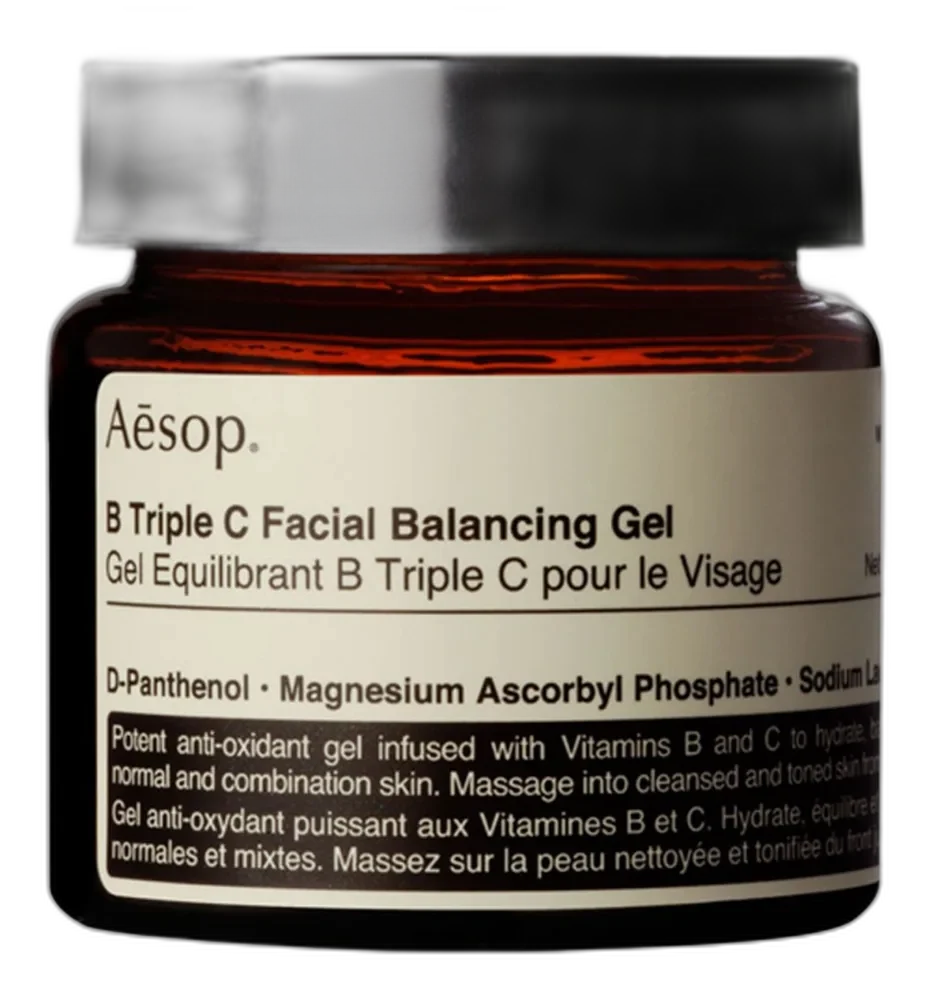
B Triple C Facial Balancing Gel
Three-Form Vitamin C Gel
 Verified reviewer
Pros & cons.
- +Genuinely interesting multi-derivative vitamin C formulation concept
- +Gentle, non-acidic approach suitable for users who react to L-ascorbic acid
- +Lightweight gel texture ideal for oily and combination skin
- +Layers cleanly under sunscreen for morning antioxidant support
- +Niacinamide and panthenol add legitimate supporting benefits
- +Beautiful packaging and sensory experience typical of Aesop
- +Vegan and Leaping Bunny certified
- −Steep $75 price significantly higher than superior alternatives
- −Fragrance and citrus peel oils rule it out for sensitive users
- −Vitamin C derivatives at unknown concentrations limit potency predictions
- −Not potent enough for significant hyperpigmentation correction
- −Small 60ml size accelerates the per-month cost
The full review.
B Triple C uses an interesting concept, which is rare in luxury skincare. Most vitamin C products use one form—usually L-ascorbic acid for potency, or a single derivative like sodium ascorbyl phosphate for gentleness—and build the formula around it. Aesop uses three vitamin C derivatives at once, each with a different solubility profile, in a lightweight water-gel with B vitamin support. This formulation choice interests chemistry enthusiasts. In practice, B Triple C is a competent product at a price that is hard to recommend unless you want the brand experience.
The technical concept deserves credit. The three forms are magnesium ascorbyl phosphate (water-soluble, gentle, stable), ascorbyl glucoside (water-soluble, glucose-bound, converts to active vitamin C on the skin), and tetrahexyldecyl ascorbate (oil-soluble, stable, penetrates the lipid layers of the stratum corneum more effectively than water-soluble forms). The logic is that each derivative has limits—water-soluble forms struggle to penetrate, the oil-soluble form requires conversion, and the glucose-bound form is slow-release—so using all three uses different delivery pathways for a steady antioxidant effect. Combined with niacinamide, panthenol, and pyridoxine (the ‘B Triple’ in the name), this multi-vitamin approach works as a supportive maintenance layer rather than a single-active serum.
The skin experience matches the concept. The gel is light and watery, absorbs within about a minute, and leaves no residue—it works under sunscreen in the morning or over a toner at night. The texture is excellent; oily or combination skin types who find most vitamin C serums too tacky or oily will like how cleanly this wears. None of the derivatives are acidic enough to cause the tingling or stinging that pure L-ascorbic acid serums cause on sensitive skin. Over 4-6 weeks of consistent use, most users see subtle brightening—skin looks slightly more even, refreshed, and less dull. It is not a transformation, but a maintenance benefit typical of multi-derivative vitamin C products.
The formula has two issues: fragrance and price. The scent uses the signature Aesop citrus-aromatic blend, with orange peel oil and mandarin peel oil to match the ‘bright’ vitamin C concept. It smells clean and zesty, but citrus peel oils are photosensitizing in high concentrations and contain limonene, a known fragrance allergen. For most users, these concentrations are too low to cause issues, but people with reactive, rosacea-prone, or fragrance-sensitive skin should be cautious. A $75 gentle vitamin C gel that excludes 20% of potential users due to fragrance is a difficult sell.
The price is also a factor. $75 for 60ml competes with top vitamin C serums—SkinCeuticals CE Ferulic ($182, with 15% L-ascorbic acid and clinical data), Naturium Vitamin C Complex Serum ($20, multi-derivative, no fragrance), and Paula’s Choice C15 Super Booster ($55, pure 15% L-ascorbic acid in an airless pump). Compared to these, B Triple C struggles. It lacks the clinical depth of SkinCeuticals, the value of Naturium, and the ingredient transparency of Paula’s Choice. It sits in a beautiful amber glass bottle and smells like a citrus grove—which may be enough depending on your priorities.
B Triple C is a lifestyle product with a decent formula, not a formula-first product with decent packaging. If you love Aesop and the brand ritual, this gel fits into a routine and delivers respectable maintenance-level vitamin C benefits. You pay for the sensory experience and aesthetic more than clinical performance; if you accept that trade, it is a reasonable choice.
If you evaluate vitamin C products by ingredient merit and cost-to-efficacy, you can do better for less money. A $25 multi-derivative vitamin C serum from Naturium or The Ordinary gives similar antioxidant benefits without the fragrance, citrus oils, or lack of transparent concentration disclosure. The choice is whether you are buying skincare or an object—both are legitimate, but different.
Formula
Ingredient analysis.
Full INCI list
Water (Aqua), Glycerin, Butylene Glycol, Niacinamide, Panthenol, Magnesium Ascorbyl Phosphate, Ascorbyl Glucoside, Tetrahexyldecyl Ascorbate, Pyridoxine HCl, Sodium PCA, Allantoin, Aloe Barbadensis Leaf Juice, Citrus Aurantium Dulcis (Orange) Peel Oil, Mandarina (Mandarin) Peel Oil, Carbomer, Xanthan Gum, Sodium Hydroxide, Citric Acid, Fragrance (Parfum), Linalool, Limonene, Phenoxyethanol, Ethylhexylglycerin.
Skin match.
The science.
The Science
This formula uses a multi-derivative approach based on formulation science, despite undisclosed concentrations. Magnesium ascorbyl phosphate works at 3-10% concentrations to suppress melanin and provide antioxidant activity, but its water-soluble, charged structure limits penetration through the stratum corneum. Ascorbyl glucoside, a glucose-conjugated vitamin C, skin enzymes gradually hydrolyze to release ascorbic acid—a slower, steadier release than direct application. Research in the Journal of Cosmetic Dermatology and related journals shows brightening effects at 2% and above over 8-12 weeks of use.
Tetrahexyldecyl ascorbate is the most interesting derivative. As an oil-soluble ester of ascorbic acid, it penetrates the skin's lipid barrier better than water-soluble forms and stays stable in formulation longer. Small studies show it contributes to antioxidant activity and collagen synthesis markers; premium serums often use 1-3% concentrations. Layering all three derivatives provides both surface-level (water-soluble) and deeper-penetrating (oil-soluble) vitamin C activity from one product.
The niacinamide-vitamin C pairing is well-supported. The old idea that niacinamide "neutralizes" vitamin C stems from decades-old research using unrealistic concentrations of pure nicotinic acid and modern formulation research has debunked it. Niacinamide at 2-5% with vitamin C derivatives is a well-tolerated combination that supports barrier function and enhances brightness. The science is less firm without disclosed concentrations. Without knowing the amount of each derivative, you cannot predict clinical efficacy—and for a $75 product, this opacity is frustrating.
Dermatologist Perspective
Dermatologists view multi-derivative vitamin C products as reasonable for patients wanting gentler antioxidant support without the irritation risk of L-ascorbic acid, though they usually recommend them for maintenance rather than treatment. Board-certified dermatologists note that derivative-based vitamin C formulas suit sensitive skin, patients with rosacea, and users who reacted poorly to traditional vitamin C serums. This product is not typically singled out in clinical recommendations; patients seeking vitamin C benefits often use well-studied, transparently concentrated alternatives from SkinCeuticals, Paula's Choice, or Naturium. Dermatologists also flag fragrance and citrus peel oils as potential issues for reactive patients, which limits the appropriate user pool for this product.
Where it fits in your routine.
Cleanse and tone first, then press one pump into clean hands across the face and neck, avoiding the immediate eye area. Wait 30-60 seconds for full absorption before applying moisturizer and sunscreen (AM) or night cream (PM). Use once or twice daily. Do not layer with other vitamin C treatments. If using with retinol, apply this in the morning and retinol at night. Patch test on the jawline before full-face use, especially if you have sensitive or fragrance-reactive skin.
At $75 for 60ml, this has one of the weakest value propositions in the Aesop lineup. Brands like Naturium, The Ordinary, Timeless, and Paula's Choice offer equivalent or better vitamin C products with transparent concentrations, better research, and no fragrance for $20-55. Even in the luxury tier, SkinCeuticals C E Ferulic at $182 is a better spend due to its clinical backing. At $75, you pay for the Aesop brand, the packaging, and the sensory experience—all legitimate, but not skincare-specific benefits. I do not recommend this for value-focused users. For users buying on aesthetic, it is a coherent addition to a branded routine.
Committed Aesop customers who value the brand experience, oily and combination skin types who want a lightweight vitamin C gel without the tackiness of serums, and users who've tried traditional vitamin C products and found them too irritating. Also suitable for anyone building an all-Aesop aesthetic routine.
Citrus peel oils and fragrance make this unsuitable for sensitive, rosacea-prone, or fragrance-reactive skin. Value-focused shoppers find better vitamin C products at a fraction of the price. Users with significant hyperpigmentation need more potent, transparent formulations.
Product details.
This clear, slightly viscous water-gel spreads easily and absorbs in 30-60 seconds without residue.
It smells citrusy with the signature Aesop aromatic — orange and mandarin peel oils create a bright, zesty scent.
Amber glass bottle uses a pump dispenser and the iconic beige Aesop label. The packaging is weighty and aesthetically considered, like all Aesop packaging.
The gel dispenses easily and absorbs fast. It leaves a fresh citrus scent that fades within a minute. Some users feel a mild tingle during first use from the vitamin C derivatives; this usually stops after a few applications.
3-4 months with daily face application, depending on dose.
12 months
All Year
The backstory.
Aesop introduced the B Triple C Facial Balancing Gel as a gentler alternative to traditional L-ascorbic acid serums, targeting customers who wanted vitamin C benefits without the sting and oxidation issues. The multi-derivative approach aligns with Aesop's broader philosophy of comfort-first formulation.
About Aesop
Legacy Brand (20+ years)Aesop launched in 1987. The brand has nearly four decades of history using botanical formulation and apothecary aesthetics. Design and a loyal following build its reputation, not dermatologist endorsement or peer-reviewed research.
Common myths.
Vitamin C derivatives work as well as pure L-ascorbic acid.
Each derivative has different bioavailability and conversion rates. Some have more research than others, but none match the depth of research behind L-ascorbic acid at 10-20%. Derivatives work, but they do not have equivalent potency.
High-end vitamin C products outperform drugstore options.
Formulation matters more than price. A well-formulated $25 vitamin C serum outperforms a $75 luxury gel if it has better concentration and delivery. Evaluate by ingredients and concentration, not price tier.
FAQ.
Is the B Triple C worth the $75 price tag?
No—not on a pure ingredient-to-cost basis. Better-performing vitamin C products cost a third as much. You pay for Aesop's brand, packaging, and sensory experience. This is reasonable if those matter; otherwise, better-value options exist.
Can I use this alongside a vitamin C serum?
You can, but it is redundant and may cause irritation. Use this as your vitamin C step or a dedicated serum — not both. Layering two vitamin C products rarely adds benefits and increases sensitivity.
Is it moisturizing enough to skip a separate moisturizer?
This water-based gel has limited occlusive properties. It works for oily and combination skin in warm weather, but most users need a moisturizer on top, especially in cooler seasons or for drier skin types.
Can I use it in the morning under sunscreen?
Yes. The lightweight gel texture layers cleanly under sunscreen, and the vitamin C derivatives add antioxidant support to your UV protection — a well-documented benefit. Always apply sunscreen over vitamin C products for best results.
Is it okay for sensitive skin?
Use caution. This formulation is gentler than a traditional L-ascorbic serum, but fragrance and citrus peel oils can trigger reactions in sensitive or reactive skin. Patch test on the jawline first. Avoid if you have rosacea or a compromised barrier.
Will it fade dark spots?
Slowly. Vitamin C derivatives brighten and even skin tone over 8-12 weeks of consistent use, but they lack the potency of dedicated pigmentation treatments. For significant hyperpigmentation, use a more focused product containing tranexamic acid, higher-strength vitamin C, or prescription-strength brighteners. --- Community ---
What the community says.
"Lightweight gel texture feels great on oily skin"
"Subtle glow after a few weeks"
"Signature Aesop scent"
"Non-irritating compared to L-ascorbic acid serums"
"Extremely expensive for what it is"
"Citrus fragrance concerns some users"
"Results slower than dedicated vitamin C serums"
"Small 60ml size"