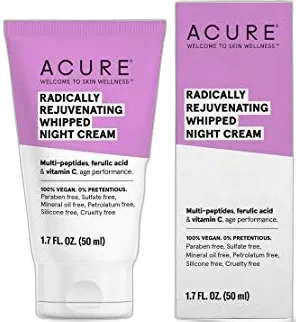
Radically Rejuvenating Whipped Night Cream
Budget Peptide Powerhouse
 Verified reviewer
Pros & cons.
- +Five growth factor analogs and copper peptide at a budget price
- +Light whipped texture absorbs without feeling heavy
- +Marula oil provides rich emollience without greasiness
- +Ferulic acid and ascorbyl glucoside add antioxidant support
- +Plant-based, EWG Verified, vegan, cruelty-free certifications
- +Visibly plumped and comfortable skin in the morning
- −Jar packaging exposes peptides to air and light
- −50ml size smaller than some competitors at this price
- −Contains salicylic acid, so not pregnancy-safe
- −Too rich for oily skin in warm weather
- −Growth factor effect is gradual and modest rather than dramatic
The full review.
There’s a particular tell in budget anti-aging skincare. A brand will put a single peptide on the front of the box — “with palmitoyl pentapeptide-4!” — and the actual ingredient list will reveal that it’s listed near the bottom, between the preservative and the dye. The marketing implies serious actives, the formulation delivers a token gesture. It’s so common that you start to assume any drugstore peptide claim is mostly cosmetic.
Acure’s Radically Rejuvenating Whipped Night Cream is one of the rare exceptions, and that’s worth saying clearly because it’s unusual. The ingredient deck includes five different bioengineered peptides — sh-oligopeptide-1 (an EGF analog), sh-oligopeptide-2 (an IGF analog), sh-polypeptide-1 (a TGF-beta analog), sh-polypeptide-9 (a VEGF analog), sh-polypeptide-11 — plus copper palmitoyl heptapeptide-14, palmitoyl tripeptide-1, palmitoyl tetrapeptide-7, and heptapeptide-15 palmitate. That’s a peptide and growth factor stack you’d expect to find in a $150 prestige serum, not a $25 jar at Target. Around it, the formula adds marula seed oil for emollient richness, ferulic acid and ascorbyl glucoside for antioxidant support, a Pseudoalteromonas marine ferment for hydration, and a slow-release lactic-glycolic copolymer for whisper-mild overnight resurfacing.
Let’s get the caveats out of the way before getting too excited. The growth factor analogs in this cream are bioengineered short peptides that mimic the signaling action of larger growth factor proteins. They’re not the same as the proprietary fibroblast-derived complexes in prestige products like SkinMedica TNS. The clinical evidence for topical growth factor analogs is genuinely promising but more modest than the marketing language suggests, and the realistic expectation is gradual smoothing and supporting collagen production over months, not dramatic visible firming in weeks. If you’re choosing between this cream and a prescription tretinoin, tretinoin has stronger and more consistent evidence for anti-aging benefits. The growth factors and peptides are a complementary tool, not a replacement for the heavy-hitters.
But on its own terms — as a supporting actor in an anti-aging routine — this cream punches significantly above its price. The whipped texture is genuinely light. Despite a fairly rich emollient base anchored by marula oil, the cream absorbs without that heavy occlusive feeling that some night creams leave. Skin in the morning looks plumped and feels comfortable. There’s no tingling on application, no scent beyond the soft natural oil note from the plant extracts, and no greasy residue. As a daily nighttime moisturizer for normal-to-dry skin doing peptide-supported anti-aging maintenance, it does its job competently.
The formulation has a few honest limitations. The jar packaging is the biggest one. Peptides and antioxidants like ferulic acid degrade with exposure to air and light, and a screw-top jar means each opening exposes the entire formula. Airless pump packaging would protect the actives better, but it would also cost more. For a $25 jar, you accept the trade-off — store it in a cool dark place, use clean fingers, and don’t expect the last quarter of the jar to be as potent as the first quarter. The 50ml size is also slightly smaller than some competitors at this price point, which somewhat undermines the value math.
The small inclusion of salicylic acid is another consideration. It’s far below an exfoliating concentration and contributes a subtle resurfacing effect rather than active peeling, but it does mean the cream isn’t pregnancy-safe and isn’t ideal for very sensitive skin or anyone with active rosacea. The lactic-glycolic copolymer is a slow-release form that’s gentler than free AHAs, but the combined exfoliating contribution makes this a slightly more active product than a pure peptide moisturizer. For most people that’s a feature; for some it’s a complication.
The other thing worth saying is that this cream sits in interesting tension with the rest of the Acure lineup. The cleansing gel and the walnut shell scrub from this same brand are middling at best. The vitamin C serum is a smart formulation choice. This night cream is the line’s most ambitious product and arguably the most genuinely good thing Acure makes. If you’ve been skeptical of Acure as a clean-beauty brand because the basics didn’t impress you, this is the product that demonstrates what the brand can do when it puts its formulation budget into something real.
Where this cream wins is for anyone who wants a peptide-and-growth-factor moisturizer without paying prestige prices. Anyone with normal-to-dry skin doing maintenance anti-aging. Anyone curious about growth factor skincare who isn’t sure if it’s worth a $150 commitment yet. Pair it with daily SPF, a vitamin C serum in the morning, and a retinoid alternated in at night, and you have a complete budget anti-aging routine that would have cost three times as much five years ago.
Where it doesn’t win is for oily skin in summer (too rich), pregnant users (salicylic acid), or anyone expecting a dramatic transformation (peptides are slow and modest, even at this concentration). It’s also not the right product for someone who already uses prestige growth factor serums — those products have proprietary complexes and clinical data that this budget version doesn’t try to match.
As a $25 jar that includes a meaningful peptide stack, real growth factor analogs, copper peptides, ferulic acid, marine ferment, and marula oil, this is one of the better-formulated drugstore moisturizers you can find. The jar packaging is annoying, the size is small, and the realistic expectation should be modest. But the formulation effort is genuinely there, and that’s increasingly rare at this price point.
Formula
 ### Best for


 Where this cream wins is for anyone who wants a peptide-and-growth-factor moisturizer without paying prestige prices. Anyone with normal-to-dry skin doing maintenance anti-aging. Anyone curious about growth factor skincare who isn't sure if it's worth a $150 commitment yet. Pair it with daily SPF, a vitamin C serum in the morning, and a retinoid alternated in at night, and you have a complete budget anti-aging routine that would have cost three times as much five years ago.

 ### Not ideal for


Where it doesn't win is for oily skin in summer (too rich), pregnant users (salicylic acid), or anyone expecting a dramatic transformation (peptides are slow and modest, even at this concentration). It's also not the right product for someone who already uses prestige growth factor serums — those products have proprietary complexes and clinical data that this budget version doesn't try to match.Ingredient analysis.
Full INCI list
Water/Aqua/Eau, Glycerin, Cetearyl Alcohol, Cetearyl Olivate, Sorbitan Olivate, Sclerocarya Birrea (Marula) Seed Oil, Nymphaea Alba Root Extract, Sh-Oligopeptide-1, Sh-Oligopeptide-2, Sh-Polypeptide-1, Sh-Polypeptide-9, Sh-Polypeptide-11, Copper Palmitoyl Heptapeptide-14, Heptapeptide-15 Palmitate, Palmitoyl Tetrapeptide-7, Palmitoyl Tripeptide-1 (Peptide Blend), Ferulic Acid, Ascorbic Glucoside, Coconut Alkanes, Pseudoalteromonas Ferment Extract, Salicylic Acid, Coco-Caprylate/Caprate, Sodium Hyaluronate, Aspartic Acid, Linoleic Acid, Linolenic Acid, Lecithin, Sodium PCA, PCA, Sorbitan Isostearate, Lactic Acid/Glycolic Acid Copolymer, Symphytum Officinale Callus Culture Extract
Skin match.
The science.
The Science
Research exists for topical peptides and growth factor analogs, though clinical evidence is less than marketing suggests. Studies show bioengineered growth factor analogs (sh-oligopeptide-1 as an EGF analog, sh-polypeptide-1 as a TGF-beta analog, sh-polypeptide-9 as a VEGF analog) signal skin cells to increase collagen production, aid wound healing, and improve skin texture with consistent use over weeks. These peptides bind to cell surface receptors to trigger downstream signaling cascades. Clinical effect sizes are usually smaller than retinoids but work well in combination.
Copper peptides have more evidence for wound healing and barrier repair. Researchers have studied the copper-bound tripeptide GHK-Cu since the 1980s for its role in collagen synthesis, antioxidant activity, and fibroblast function. Copper palmitoyl heptapeptide-14 in this formulation is a related copper peptide with similar biological activity.
Ferulic acid stabilizes the ascorbyl glucoside in this cream and adds antioxidant capacity via its hydroxycinnamic acid structure. The 2005 Lin et al. study in the Journal of Investigative Dermatology shows synergistic photoprotection from C+E+ferulic combinations; ferulic acid's stabilizing role is established in vitamin C formulation chemistry.
Pseudoalteromonas ferment extract comes from cold-water marine bacteria. Emerging evidence suggests it supports hydration and skin protection in harsh environments. Published data is more limited than for the peptides or vitamin C derivatives, so it acts here as a secondary supporting active.
References
- Ferulic acid stabilizes a solution of vitamins C and E and doubles its photoprotection of skin — Journal of Investigative Dermatology (2005)
Dermatologist Perspective
Dermatologists see topical peptides and growth factor analogs as supportive anti-aging tools rather than primary actives. Board-certified dermatologists note that retinoids are the strongest evidence-based topical anti-aging treatment. They suggest using peptides with retinoids and SPF instead of as standalone therapy. Many dermatologists recommend peptide-rich moisturizers for patients wanting to support skin renewal without adding more actives, or as a nighttime layer over a retinoid. For significant photoaging, dermatologists typically pair peptide products with prescription retinoids, vitamin C serums, and sometimes in-office treatments like microneedling or laser resurfacing.
Where it fits in your routine.
Apply a pea-sized amount to clean skin after serums and treatments as your final nighttime step. Press it into the face, neck, and décolleté using upward motions. Let it absorb for 30-60 seconds before bed. Use clean fingers to scoop from the jar to minimize contamination. Store the jar in a cool, dark place away from direct sunlight to protect the peptides and antioxidants. Use nightly for best long-term results.
At around $25 for 50ml, this cream's price matches its formulation. Comparable peptide and growth factor moisturizers from prestige brands cost $80-$200 for similar sizes. The Acure version lacks prestige clinical data or proprietary complexes, but it provides a peptide stack at a fraction of the cost. The bottle lasts 2-3 months with nightly use. For an established budget brand, the price reflects the ingredient quality, offering real value for anyone adding peptides to their routine without prestige prices.
People with normal to dry skin doing budget anti-aging maintenance. Those curious about growth factor and peptide skincare without prestige prices. Skincare enthusiasts who value a thoughtful ingredient deck. Acure fans wanting to upgrade from the basic Brightening line to something more sophisticated.
Oily skin types who dislike thick creams. Pregnant or nursing users (due to the salicylic acid). Users of prestige growth factor products seeking clinical-grade equivalents. People who prefer airless pump packaging for active-rich formulas.
Product details.
Light whipped cream that melts into a soft emollient layer without heaviness
Subtle natural oil note from marula and the plant extracts; no added fragrance
Glass jar with screw-top lid; opaque exterior helps protect from light
It feels light and hydrating on application without tingling or burning. Skin looks visibly plumped and feels comfortable in the morning. Peptide-driven changes accumulate over months rather than showing a one-week dramatic transformation.
About 2-3 months with nightly face and neck application
12 months
fall winter
The backstory.
The Radically Rejuvenating line launched in 2019 as Acure's premium tier — products positioned to compete with the prestige anti-aging market on ingredient sophistication while keeping a drugstore price. The Whipped Night Cream became the line's hero product, frequently cited in skincare forums as one of the few budget creams with a peptide and growth factor blend that genuinely matches what you'd expect from prestige formulations. The whipped texture was an intentional choice to make the rich active load feel lighter than it reads on paper.
About Acure
Established Brand (5–20 years)Acure launched in 2010 as a budget clean beauty brand at Target, Whole Foods, and Ulta. The Radically Rejuvenating line is the brand's premium tier. It costs more than the core Brightening line and uses more sophisticated peptide and growth factor formulations.
FAQ.
Are the growth factors in this cream effective?
The growth factor analogs in this cream are bioengineered peptides. These peptides signal skin cells to increase collagen and elastin production. The effect is gradual and modest, not dramatic; visible changes usually show after 8-12 weeks of consistent use. They support an anti-aging routine but do not replace retinoids or in-office treatments.
Can I use this with retinol or tretinoin?
Yes, but introduce it gradually. Many users alternate nights — retinoid one night, this cream the next — to build tolerance, then layer them once the skin adjusts. The peptides and growth factors complement retinoids by supporting the collagen-building pathway, but the small amount of salicylic acid in this cream requires monitoring for irritation.
Is this safe during pregnancy?
No. The cream uses a small amount of salicylic acid in a leave-on format, which doctors generally advise against during pregnancy. Find a pregnancy-safe peptide moisturizer without BHA or AHA inclusions instead.
Why is the jar packaging considered a downside?
Peptides and antioxidants like ferulic acid and ascorbyl glucoside degrade when exposed to air and light. Jar packaging exposes the formula every time you open it, which reduces potency. Airless pump packaging protects the actives better. Use clean fingers and store the jar in a cool, dark place.
How does this compare to luxury growth factor creams?
Luxury growth factor creams (SkinMedica TNS, ZO Skin Health, etc.) use proprietary growth factor complexes from human fibroblast cultures. These have higher concentrations and more clinical data. Acure's cream uses bioengineered analogs at lower concentrations. It works as a budget alternative for healthy skin maintenance, but it is not a clinical equivalent to prestige products.
What the community says.
"Genuinely impressive ingredient deck for the price"
"Whipped texture is light despite the rich actives"
"Visibly plumped and hydrated skin in the morning"
"Multiple peptides and growth factors at budget price"
"Jar packaging exposes peptides to air and light"
"Bit too rich for oily summer use"
"50ml bottle smaller than some competitors at this price"