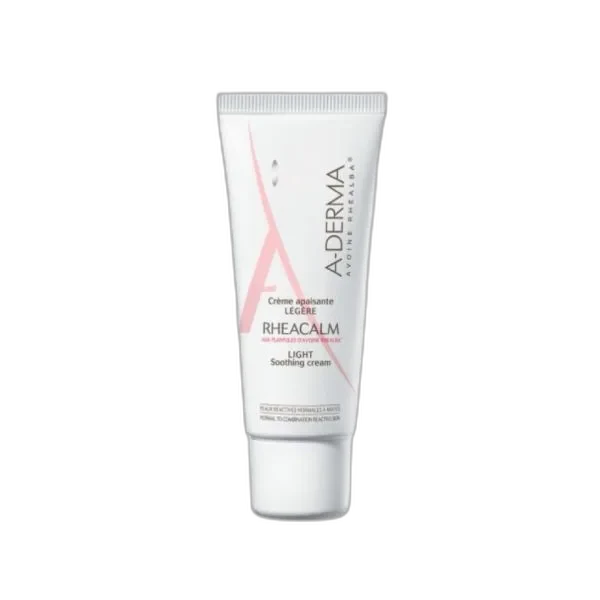
Rheacalm Soothing Cream
Pharmacy Anti-Redness Cream
 Verified reviewer
Pros & cons.
- +Genuine anti-inflammatory action from Rhealba oat plus bisabolol and allantoin
- +Fragrance-free and alcohol-free, safe for highly reactive skin
- +Lightweight texture that doesn't trap heat on flush-prone skin
- +Layers cleanly under makeup with a soft satin finish
- +Backed by decades of pharmacy-validated formulation work
- +Comfortable enough for twice-daily long-term use
- −40ml tube is small relative to the price point
- −Not rich enough as a standalone winter cream for very dry skin
- −Subtle, gradual results rather than a dramatic short-term fix
- −Shea butter content makes it less ideal for oily or fungal-acne-prone skin
The full review.
Scent
This is fragrance-free.
Packaging
The 40ml tube is small for the price. At around twenty-four dollars, two months of twice-daily use is all you get. This makes it a face-only daily moisturizer rather than a product for liberal application.
Not ideal for
The emollient base is too much if you have oily, breakout-prone skin or do not tolerate shea butter well.
Ingredient analysis.
Full INCI list
Aqua, Glycerin, Caprylic/Capric Triglyceride, Cetearyl Alcohol, Coco-Caprylate/Caprate, Glyceryl Stearate, PEG-100 Stearate, Cyclopentasiloxane, Cetyl Alcohol, Butyrospermum Parkii (Shea) Butter, Avena Sativa (Oat) Plantlet Extract, Tocopherol, Allantoin, Bisabolol, Phenoxyethanol, Ethylhexylglycerin, Carbomer, Sodium Hydroxide, Disodium EDTA, Xanthan Gum
Skin match.
The science.
The Science
The anti-redness logic of Rheacalm rests on stacking three anti-inflammatory ingredients from different mechanistic angles into a single fragrance-free base. Rhealba oat plantlet extract is the proprietary backbone — Pierre Fabre has published research demonstrating that this specific extract reduces inflammatory cytokine release in skin models and improves clinical scores in atopic dermatitis when used as a topical adjunct, and applied to facial redness the same pathway down-regulation translates into gradual reduction of diffuse erythema over weeks of use. Bisabolol works through a parallel pathway: it's a chamomile-derived sesquiterpene with documented inhibition of nitric oxide-mediated inflammation and a long history in dermatological formulations for sensitive skin. Allantoin is the third leg, with well-established skin-conditioning and mild keratolytic effects that smooth the rough surface texture often associated with chronic inflammation. The combination is more than additive because each ingredient targets a slightly different inflammatory mechanism, which is why the formula performs better on reactive skin than a single-active centella or oat cream typically does. Equally important is what's been left out: there are no fragrances, no essential oils marketed as soothing, no acids, no alcohol denat, none of the ingredients that frequently sit in 'sensitive skin' products and quietly trigger flares. That subtractive choice is part of why this formula can be used on rosacea-prone skin without complications, even though it isn't marketed as a rosacea product specifically.
Dermatologist Perspective
Dermatologists managing reactive skin and rosacea-prone patients commonly recommend simple, fragrance-free moisturizers built around oat-derived soothing ingredients, and A-Derma's Rheacalm range is one of the formulations frequently mentioned in European clinical practice. Board-certified dermatologists generally view the Rhealba oat platform as well-tolerated and supported by Pierre Fabre's published research, and the cream is often suggested as a daily moisturizer to layer alongside prescription rosacea therapies like azelaic acid or topical metronidazole. The standard derm advice with a product like this is to give it a full 4-8 weeks of consistent use before judging it, since anti-inflammatory work on chronic redness is gradual.
Where it fits in your routine.
Apply to clean, slightly damp skin every morning and evening as a daily moisturizer. A pea-sized amount covers the full face. Press the product in with your finger pads instead of rubbing to protect reactive skin. In the morning, use a sensitive-skin SPF 50+ afterward. At night, layer it over a treatment serum like azelaic acid if your skin tolerates it. Use it consistently for 4-6 weeks to see the anti-redness effect.
At about twenty-four dollars for 40ml, Rheacalm Soothing Cream costs more than basic drugstore moisturizers but less than luxury anti-redness creams. The 40ml size is the main value issue — you pay pharmacy specialty pricing for a small tube, costing about twelve dollars per month for twice-daily face use. The price is defensible because of the proprietary Rhealba oat formulation and the brand's clinical track record, but it is not a bargain. Cheaper options exist if you only need hydration; if you need the anti-inflammatory backbone, the price is fair.
This fragrance-free daily moisturizer uses anti-inflammatory ingredients instead of basic hydrators. It works for people with chronically flushed, reactive, or rosacea-prone facial skin. It suits users who reacted to other 'sensitive skin' creams containing fragrance or essential oils.
The emollient base may not suit oily, fungal-acne-prone skin or those who do not tolerate shea butter. If you need a thicker winter barrier cream, the regular Rheacalm version is too light; use the Rich variant or a layered approach instead.
Product details.
Lightweight cream that spreads easily and absorbs into a soft matte finish
Unscented
40ml white squeeze tube with a small flip cap
The application feels cooler and lighter than a typical barrier cream because of the high water content. It is fragrance-free and does not sting, which tests reactive skin. After two weeks of consistent use, diffuse redness in the cheek area typically looks less prominent.
About 2-3 months with twice-daily face application
12 months
All Year
The backstory.
Rheacalm was developed as A-Derma's dedicated answer to the diffuse facial redness and capillary reactivity its pharmacy customers were increasingly bringing in. It applies the same Rhealba oat platform that anchors the brand's eczema range to the specific cosmetic problem of a chronically flushed face.
About A-Derma
Legacy Brand (20+ years)A-Derma is the Pierre Fabre Dermo-Cosmetique brand centered on Rhealba oat plantlet extract since 1981. The Rheacalm line targets diffuse redness and reactive skin and sits in many European pharmacies on dermatologist recommendation.
Common myths.
Soothing creams should be thick and rich to actually work.
Reactive skin often prefers a lightweight texture; heavy occlusives trap heat and increase flushing. Rheacalm's lighter cream texture is a deliberate choice for its target population.
If your face is only red, skip 'soothing' products and use a moisturizer.
Diffuse facial redness is an inflammatory state. A regular moisturizer without anti-inflammatory ingredients hydrates but does not address the underlying flare. A formulation with Rhealba oat, bisabolol, and allantoin does different work.
FAQ.
Is Rheacalm Soothing Cream good for rosacea?
The formulation is not labeled as a rosacea treatment, but it suits the diffuse erythema rosacea presents with. The fragrance-free base uses Rhealba oat, bisabolol, and allantoin. Dermatologists recommend this profile as a daily moisturizer for rosacea-prone skin alongside any prescription therapy.
Can I wear it under makeup?
Yes — the light texture layers under foundation without pilling, and the matte-leaning satin finish gives makeup a smooth surface to grip. It works well with mineral foundations marketed for sensitive skin.
Is this hydrating enough for very dry winter skin?
This formula focuses on calming rather than heavy hydration. For very dry winter skin, layer a thicker barrier cream on top at night. Consider the Rheacalm Rich version if dryness is your main concern.
How long until I see less redness?
Most users see less diffuse redness within 2-4 weeks of consistent twice-daily use, with more improvement around 6-8 weeks. Results build as the barrier stabilizes rather than fixing skin overnight.
Is it safe for sensitive eyes?
This fragrance-free formula lacks common stinging ingredients. It is generally well-tolerated near the eye area, but it is not an eye cream. Avoid the immediate lash line and use a dedicated eye product if your periocular skin is particularly sensitive.
What the community says.
"Visibly reduces redness over a few weeks"
"No fragrance sting on reactive skin"
"Comfortable under makeup"
"Doesn't pill or feel greasy"
"40ml tube is small for the price"
"Not as hydrating as a barrier cream for very dry winter skin"
"Subtle results — not a dramatic overnight fix"