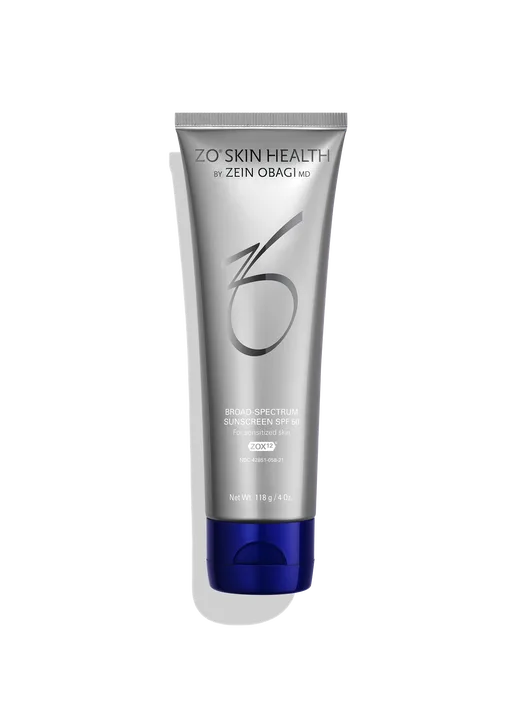
Broad-Spectrum Sunscreen SPF 50
Derm-Grade Sun Shield
 Verified reviewer
Pros & cons.
- +Triple-spectrum protection covers UV, HEV (blue light), and IR-A radiation
- +High zinc oxide concentration (15%) provides robust broad-spectrum mineral coverage
- +Surprisingly lightweight and elegant texture for a high-mineral formula
- +Fragrance-free and formulated for post-procedure and sensitized skin
- +ZOX12 antioxidant complex with vitamins A, C, E, and ethyl ferulate
- +Iron oxide tint minimizes white cast on most skin tones
- +Generous 4 oz tube lasts 2-3 months with daily use
- −Sixty dollars is a premium price for a sunscreen
- −Professional-channel distribution limits easy purchasing
- −Contains silicones and PEGs that clean beauty consumers may avoid
- −Very dark skin tones may still notice some residual tint
- −Not cruelty-free or vegan certified
The full review.
Dermatologists reach for specific products after chemical peels or laser resurfacing. In many offices, that product is ZO Skin Health’s Broad-Spectrum Sunscreen SPF 50. It lacks the social media hype of serums, but it holds a high place in the hierarchy of skincare dermatologists use when stakes are high.
The formula uses a mineral foundation: fifteen percent zinc oxide and 6.4 percent titanium dioxide. This is not a marketing-driven mineral SPF. Fifteen percent zinc oxide provides broad-spectrum protection across UVA I, UVA II, and UVB wavelengths, while titanium dioxide reinforces UVB coverage. The result is SPF 50 using only physical filters on the skin’s surface. It uses no chemical absorbers, has no stability concerns from UV-induced degradation, and carries no risk of irritating freshly treated or barrier-compromised skin.
Protection extends beyond ultraviolet light. Fractionated melanin—the same pigment that colors human skin—absorbs high-energy visible light (HEV), the blue wavelengths between 400 and 500 nanometers that conventional UV filters ignore. HEV light links to skin hyperpigmentation, especially in darker skin tones. While evidence evolves, including a dedicated HEV absorber is forward-thinking. Most sunscreens use iron oxides for tinting to provide incidental HEV absorption. This formula adds melanin as a dedicated HEV filter alongside its existing iron oxides.
The ZOX12 antioxidant complex adds a third layer. Ascorbic acid scavenges free radicals directly. Retinyl palmitate and tocopheryl acetate—vitamins A and E—provide antioxidant support through different mechanisms. Ethyl ferulate, a ferulic acid derivative, stabilizes the vitamin C and adds photoprotective benefits. Together, they address oxidative damage from infrared-A radiation—wavelengths that penetrate deeper than UV and cause collagen degradation and photoaging via reactive oxygen species. This is the comprehensive, redundant, and clinically oriented antioxidant layering a cosmetic chemist with dermatological backing would design.
The texture is impressive. High-zinc mineral sunscreens are often thick, white, and difficult to wear. ZO Skin Health’s Broad-Spectrum Sunscreen SPF 50 is lightweight, spreadable, and only faintly tinted. Iron oxides provide a subtle universal tint for most skin tones, while polymethyl methacrylate and silica create a soft-focus effect that blurs the skin. It dries to a comfortable satin finish for use alone or under makeup. This is impressive engineering for a formula with over twenty percent total mineral actives.
The soothing complex—bisabolol from chamomile and beta-glucan—supports its post-procedure use. These are clinically validated anti-inflammatory agents, not marketing botanicals, included because users apply this to skin that was just laser-treated, acid-peeled, or microneedled. This gentleness also makes it suitable for rosacea-prone, eczema-adjacent, and reactive skin types.
Squalane and argan oil form the emollient base, providing non-comedogenic hydration so the minerals glide on without the dry-down feeling common in zinc-heavy formulas. The experience feels more like a lightweight moisturizer than a traditional sunscreen, which helps with daily compliance.
The critique focuses on price and accessibility. At sixty dollars for four ounces, this is a premium sunscreen. The four-ounce tube lasts two to three months of daily face and neck application, but the monthly cost exceeds typical consumer expectations. Professional-channel distribution means you likely won’t find it at a local drugstore; most people buy it through dermatology offices, medical spas, or authorized online retailers.
The formula contains cyclopentasiloxane (a volatile silicone) for spreadability, which some clean beauty consumers avoid. It also contains PEGs. Both are safe ingredients with extensive safety data, but they may not appeal to the strictly clean-beauty crowd.
For those prioritizing sun protection—whether protecting professional treatments, managing photosensitivity, or seeking comprehensive daily defense—this sunscreen delivers more than most consumer products. It protects against UV, HEV, and IR-A spectra. It feels pleasant and does not irritate sensitized skin. It was designed by a dermatologist focused on skin health under the sun. That combination of clinical rigor and cosmetic elegance justifies the sixty dollars.
Formula
Ingredient analysis.
Full INCI list
Active Ingredients: Titanium Dioxide 6.4%, Zinc Oxide 15%. Inactive Ingredients: Acrylates Copolymer, Alumina, Aqua/Water/Eau, Argania Spinosa Kernel Oil, Ascorbic Acid, Beta-Glucan, Bisabolol, C12-15 Alkyl Benzoate, Caprylyl Glycol, Ceteareth-20, Cetearyl Alcohol, Chlorphenesin, Cyclopentasiloxane, Disodium EDTA, Disodium Uridine Phosphate, Erythritol, Ethyl Ferulate, Glycerin, Glyceryl Stearate, Glycine Soja (Soybean) Seed Extract, Helianthus Annuus (Sunflower) Seed Oil, Homarine HCl, Hydroxyethyl Acrylate/Sodium Acryloyldimethyl Taurate Copolymer, Iron Oxides, Isohexadecane, Melanin, Methicone, Neopentyl Glycol Diheptanoate, Nephelium Lappaceum Peel Extract, PEG/PPG-17/6 Copolymer, PEG-100 Stearate, Phenoxyethanol, Polyglyceryl-5 Trioleate, Polyhydroxystearic Acid, Polymethyl Methacrylate, Polysorbate 60, PPG-3 Isostearyl Methyl Ether, Propanediol, Retinyl Palmitate, Rosmarinus Officinalis (Rosemary) Leaf Extract, Silica, Squalane, Styrene/Acrylates Copolymer, Tocopheryl Acetate
Skin match.
The science.
The Science
Decades of photobiology research underpin this sunscreen's dual mineral filter system. A review in the Journal of the American Academy of Dermatology (Smijs & Pavel, 2011) established zinc oxide as a superior broad-spectrum UV filter. The study confirmed zinc oxide covers the widest UV protection spectrum of any single sunscreen agent: UVA I (340-400 nm), UVA II (320-340 nm), and UVB (290-320 nm). At 15%, this formula uses one of the highest consumer-grade zinc oxide concentrations available.
Fractionated melanin provides HEV protection based on growing evidence. A Journal of Investigative Dermatology study (Mahmoud et al., 2010) shows visible light, especially blue spectrum light, induces significant hyperpigmentation in darker skin tones (Fitzpatrick IV-VI) that lasts longer than UV-induced changes. Iron oxides in tinted sunscreens offer some visible light protection, but fractionated melanin extends the absorption profile specifically into the HEV range.
The antioxidant complex follows evidence for combination antioxidant photoprotection. Darr et al. published a landmark study in Acta Dermato-Venereologica (1996) showing topical ascorbic acid provides meaningful photoprotection when combined with UV filters. Research from Pinnell et al. in the Journal of the American Academy of Dermatology (2008) supports adding ferulic acid derivatives; they showed ferulic acid doubled the photoprotective capacity of a vitamin C and E combination. This finding has shaped sunscreen antioxidant formulation ever since.
References
- Titanium dioxide and zinc oxide nanoparticles in sunscreens: focus on their safety and effectiveness — Journal of the American Academy of Dermatology (2011)
- Effects of visible light on the skin — Journal of Investigative Dermatology (2010)
- Ferulic acid stabilizes a solution of vitamins C and E and doubles its photoprotection of skin — Journal of Investigative Dermatology (2005)
Dermatologist Perspective
Dermatologists recommend mineral sunscreens for patients with sensitive, post-procedure, or rosacea-prone skin because physical filters sit on the skin surface instead of being absorbed. Board-certified dermatologists note ZO Skin Health's Broad-Spectrum SPF 50 is a common post-procedure recommendation; its high zinc oxide concentration provides reliable protection without the irritation risk of chemical absorbers. The ZOX12 antioxidant complex follows dermatological guidance that UV filters alone may not provide complete photoprotection—antioxidants help address oxidative damage from wavelengths filters cannot fully block. Dermatologists emphasize that generous application and regular reapplication every two hours during sun exposure remain essential for effective protection, regardless of sunscreen quality.
Where it fits in your routine.
Apply a generous amount to the face and neck after serums and moisturizer. Use a nickel-sized amount for the face alone; most people under-apply sunscreen and reduce effective protection. Reapply every 2 hours in direct sun, or after swimming, sweating, or towel drying. Wear it under makeup. Remove it with an oil-based cleanser at night.
At $60 for 4 oz, this is a premium sunscreen — about $20/month for daily face and neck use. The price covers medical-grade formulation standards, the ZOX12 antioxidant complex, HEV protection via fractionated melanin, and a smooth texture despite over 21% combined mineral actives. For post-procedure patients spending hundreds or thousands of dollars on treatments, using a $60 sunscreen protects that investment. For everyday consumers with healthy skin, the HEV and IR-A protection layers must justify the premium over quality drugstore mineral sunscreens that provide solid UV coverage for less. If sun protection is your priority active — as dermatologists argue it should be — this investment has a defensible rationale.
This formula works for sensitive, post-procedure, or reactive skin needing maximum mineral-only protection. It suits rosacea patients, post-laser or post-peel patients, and anyone wanting comprehensive UV, HEV, and IR-A photoprotection in a wearable texture.
Budget-conscious consumers get solid UV protection without a premium price; quality mineral sunscreens exist at lower price points. This is not the best pick for those who strictly avoid silicones or PEGs, or for very dark skin tones that may notice residual tint from the mineral filters.
Product details.
Fragrance-free — contains no added fragrance or essential oils. A faint mineral/cream base scent is barely detectable.
Professional-grade tube uses a flip-top cap. The 4 oz size is large for a premium sunscreen and lasts longer than many competitors. Clean, clinical branding matches its medical-grade positioning.
It applies smoothly, with less resistance than a 15% zinc oxide formula usually shows. The slight tint blends without a stark white cast. It dries to a comfortable satin finish within a few minutes. It causes no stinging, tingling, or irritation — it works immediately after professional treatments.
2-3 months with daily face and neck application
12 months
All Year
The backstory.
Developed by Dr. Zein Obagi as part of the ZO Skin Health professional line, this sunscreen was formulated specifically for the demanding requirements of post-procedure skin — after chemical peels, laser treatments, and microneedling — where the barrier is compromised and maximum protection is essential. Its success in clinical settings led to broader adoption as a daily-wear sunscreen for anyone seeking medical-grade protection.
About ZO Skin Health
Established Brand (5–20 years)Dr. Zein Obagi, a board-certified dermatologist and international skin health authority, founded ZO Skin Health in 2007. The brand uses clinical-grade standards for its formulations, which dermatologists and medical spas use widely. Dr. Obagi's earlier brand, Obagi Medical, built his reputation over decades.
Common myths.
Mineral sunscreens look white and chalky when they reach high SPF.
Zinc oxide and titanium dioxide provide SPF 50. Iron oxides (tint), polymethyl methacrylate (soft-focus), and silica (blurring) reduce white cast. The slight tint fits most skin tones, but very dark skin tones may see some residual cast.
Blue light from screens damages skin as much as UV, so use a specific sunscreen for it.
HEV light causes hyperpigmentation and oxidative stress, but screen doses are lower than sun exposure. The fractionated melanin in this formula adds protection, but UV filters provide the primary benefit of any sunscreen. HEV protection is a bonus, not a reason to replace your current sunscreen.
FAQ.
Can I use this sunscreen after a chemical peel or laser treatment?
Yes — this sunscreen targets post-procedure skin. The mineral-only filters (zinc oxide and titanium dioxide) stay on the skin's surface instead of absorbing, which works for compromised barriers. The bisabolol and beta-glucan provide anti-inflammatory support for healing skin. Always confirm timing with your dermatologist.
Does this sunscreen leave a white cast?
The formula uses iron oxides and soft-focus particles to minimize white cast compared to other high-zinc mineral sunscreens. Most light-to-medium skin tones see minimal to no cast. Very dark skin tones may notice some residual tint — makeup blends this slight color if needed.
What is fractionated melanin and does it really protect against blue light?
Fractionated melanin is a natural pigment that colors human skin. This formula absorbs high-energy visible (HEV) light, which mineral UV filters do not cover. Research links HEV exposure to hyperpigmentation and oxidative stress, but daily screen doses are much lower than sun exposure.
Is this worth the price versus drugstore mineral sunscreens?
The $60 price covers medical-grade formulation standards, the ZOX12 antioxidant complex, HEV protection via fractionated melanin, and a texture that minimizes white cast. The gentle formula justifies the premium for sensitized, post-procedure, or highly reactive skin. For everyday sun protection on healthy skin, quality drugstore mineral sunscreens provide good basic protection for less.
Can I use this with retinol?
Absolutely — in fact, retinol users especially need robust sun protection. Apply your retinol at night and use this sunscreen every morning. The vitamin A (retinyl palmitate) in the ZOX12 complex complements your nighttime retinol by providing daytime antioxidant support.
Community
What the community says.
"No white cast — blends well into most skin tones"
"Lightweight for a high-zinc mineral formula"
"Gentle enough for post-procedure skin"
"Antioxidant complex provides added protection"
"Sixty dollars is expensive for a sunscreen"
"Not widely available at regular retailers"
"Can feel slightly greasy on very oily skin"
"Contains silicones which some consumers avoid"
Featured in.
People also looked at.