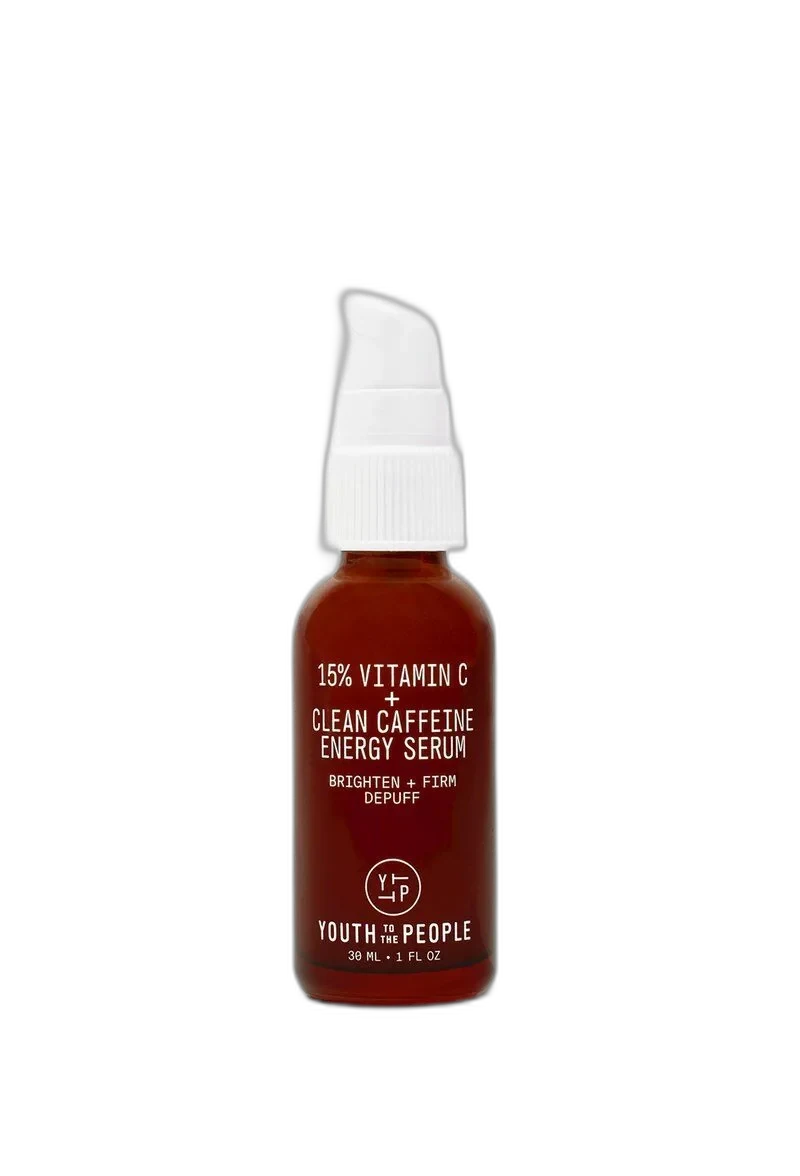
15% Vitamin C + Clean Caffeine Energy Serum
Multi-Form Vitamin C Flagship
 Verified reviewer
Pros & cons.
- +Three stable vitamin C derivatives avoid the stinging and oxidation of L-ascorbic acid
- +Caffeine and ergothioneine provide additional antioxidant and stability support
- +Lightweight texture layers cleanly under sunscreen without pilling
- +No stinging makes it tolerable for sensitive skin users
- +Amber glass packaging protects the formula from light-induced oxidation
- +Brightening and tone-evening effects emerge within 4-6 weeks
- −$68 for 30ml is a premium price for the category
- −Ginger root oil scent is pronounced and not to everyone's taste
- −Does not deliver L-ascorbic acid level results for deeply entrenched hyperpigmentation
- −The 15% claim refers to the combined vitamin C derivatives, not a single-form concentration
- −Contains essential oil that may irritate very sensitive skin
The full review.
Two lessons define vitamin C serum use. First, L-ascorbic acid—the gold standard with the most research—stings. This stinging can cause sensitive skin users to quit the category. Second, L-ascorbic acid oxidizes. A promising bottle turns yellow by week six and brown by week ten, leaving the user with an expensive brown bottle that lacks antioxidant value. These real problems turn vitamin C serum shelves into graveyards of half-used bottles. Youth to the People’s 15% Vitamin C + Clean Caffeine Energy Serum exists because the brand’s formulators engineered around these issues instead of hoping for better tolerance or storage.
The formulation is clear. Three vitamin C derivatives appear in the first half of the INCI. 3-O-Ethyl Ascorbic Acid at position two is a stable, water-soluble form. Research shows it converts to active ascorbic acid in skin and produces antioxidant and brightening effects similar to L-ascorbic acid without the same pH requirements. Tetrahexyldecyl Ascorbate at position three is a stable, lipid-soluble ester that penetrates the stratum corneum more effectively than water-soluble forms. Magnesium Ascorbyl Phosphate appears further down, adding a third form at a different depth and pH reach. The 15% label refers to the combined total of these three, not a single 15% form; users should note this before comparing it to SkinCeuticals CE Ferulic. Marketing percentages across vitamin C products do not always measure the same thing.
The supporting ingredients add interest. Caffeine at position sixteen, plus yerba mate and guayusa leaf extracts, add a polyphenol and antioxidant layer for the ‘energy serum’ claims. Skincare caffeine has moderate evidence for brightening, de-puffing, and protecting against UV-induced oxidative damage, making it a rational pair for vitamin C. Squalane at position eight provides a skin-identical lipid that cushions the lipophilic THD ascorbate and cleans up the texture. Ergothioneine at the end of the INCI is a mushroom-derived amino acid antioxidant that stabilizes vitamin C in formulation. Its presence is a strategic fix for the oxidation problem.
The texture is a well-built water-based serum with slight slip. It absorbs cleanly without the tacky finish some vitamin C serums leave. Ginger root oil near the end of the INCI produces a warm, citrusy ginger note that users either love or find too strong. There is no stinging. This matters because sensitive skin users can use this serum long enough to see results. Within one hour, a subtle light-reflecting glow appears, working well as skin prep. Over four to six weeks, tone evens, dullness lifts, and brightening becomes visible. Over eight to twelve weeks, antioxidant effects compound to support against sun damage and fine line softening.
Limitations exist. Sixty-eight dollars for thirty milliliters is a premium price. Direct competition—including 10% niacinamide serums and clinical multi-form vitamin C serums from Paula’s Choice or The Ordinary—is cheaper. The ginger scent is polarizing; users who dislike essential oils should patch test. For deep dark spots and significant hyperpigmentation, these derivatives do not correct as deeply as prescription hydroquinone or tranexamic acid treatments. This is a good vitamin C serum, but it is not a pigmentation procedure in a bottle.
Value depends on your replacement. If this replaces an L-ascorbic acid serum you do not finish, the cost per usable milliliter may favor YTTP over cheaper alternatives. If this is a new step, sixty-eight dollars is a significant cost. Youth to the People’s brand heritage—a decade on the market, L’Oréal ownership since 2021, and superfood-forward positioning—makes the price easier to justify than newer indie brands. The formulation is thoughtful and solves real problems. Few products in the vitamin C category solve stability and tolerance correctly; this is one of them.
Formula
Ingredient analysis.
Full INCI list
Water/Aqua/Eau, 3-O-Ethyl Ascorbic Acid, Tetrahexyldecyl Ascorbate, Propanediol, Glycerin, Pentylene Glycol, Sodium Citrate, Squalane, Triethyl Citrate, Gluconolactone, Citric Acid, Polyhydroxystearic Acid, Polyglyceryl-6 Polyricinoleate, Xanthan Gum, Sodium Hyaluronate, Caffeine, Magnesium Ascorbyl Phosphate, Sodium Stearoyl Glutamate, Sodium Benzoate, Lauroyl Lysine, Passiflora Edulis (Passionfruit) Extract, Sclerotium Gum, Lecithin, Ilex Guayusa Leaf Extract, Ilex Paraguariensis (Yerba Mate) Leaf Extract, Pullulan, Mannitol, Hylocereus Undatus (Dragon) Fruit Extract, Zingiber Officinale (Ginger) Root Oil, Calcium Gluconate, Silica, Potassium Sorbate, Phenoxyethanol, Ergothioneine
Skin match.
The science.
The Science
Vitamin C derivative evidence varies by form. Research shows 3-O-Ethyl ascorbic acid converts to active L-ascorbic acid in skin. Studies in the International Journal of Cosmetic Science examined its stability and efficacy against pure ascorbic acid. This form works as a credible L-ascorbic acid alternative. Tetrahexyldecyl ascorbate — THD ascorbate — is a highly researched lipid-soluble vitamin C derivative; published work examines its stratum corneum penetration and antioxidant activity. A 2012 study in the Journal of Cosmetic Dermatology examined THD ascorbate's brightening and anti-aging effects. This form is stable enough to formulate without the pH restrictions of L-ascorbic acid. Magnesium ascorbyl phosphate has a thinner but real evidence base as a stable vitamin C derivative that converts to ascorbic acid in skin.
Combining three derivatives instead of one form accounts for how different vitamin C forms reach different skin depths and stability levels. Water-soluble forms provide surface-level antioxidant support, lipid-soluble forms penetrate deeper, and pH-different forms work under different skin conditions. This multi-form approach is common in evidence-informed vitamin C serum design because it spreads antioxidant reach across conditions a single form cannot cover alone. Caffeine adds polyphenolic support and has research for mild brightening and vasoconstriction. Ergothioneine is an emerging antioxidant; research focuses on its ability to stabilize vitamin C in formulation and provide extra free radical defense. The formulation uses a multi-layered antioxidant approach rather than a single active, which is the most defensible position for a modern vitamin C serum.
Dermatologist Perspective
Dermatologists generally view multi-form vitamin C serums as a reasonable alternative to traditional L-ascorbic acid formulations, especially for sensitive skin patients who cannot tolerate the stinging of pure ascorbic acid products. Board-certified dermatologists note that stable vitamin C derivatives like 3-O-ethyl ascorbic acid and THD ascorbate offer a credible compromise between efficacy and tolerability, though they remind patients that L-ascorbic acid remains the gold standard for deepest research-backed results. This serum works for patients new to vitamin C, those who reacted to L-ascorbic acid products, and patients seeking a brightening addition that won't interfere with their existing routine. Dermatologists emphasize morning use and pairing any vitamin C serum with broad-spectrum SPF to maximize antioxidant benefits.
Where it fits in your routine.
Apply 3-5 drops to clean, dry skin every morning after toner but before moisturizer and sunscreen. Pat the liquid into your face and neck. You do not need to wait between this and other AM products. Do not use this with chemical exfoliants or benzoyl peroxide in the same application. If you want, space it 30 minutes from niacinamide. Always wear SPF 30+ during the day when using a vitamin C serum — the antioxidant benefits compound with sun protection.
At $68 for 30ml, this serum costs more than drugstore vitamin C alternatives but less than SkinCeuticals CE Ferulic and similar clinical offerings. One application every morning makes a bottle last 3-4 months, costing about $17-22 per month. This price is reasonable, even a bargain, for a stable multi-form vitamin C serum that stays effective instead of oxidizing in the bottle. YTTP's brand heritage since 2015 and L'Oréal ownership provide the formulation consistency and quality control cheaper alternatives often lack.
This works for users seeking vitamin C benefits without L-ascorbic acid stinging, sensitive skin types that reacted to traditional vitamin C serums, and clean beauty enthusiasts who prefer stable derivatives and botanical antioxidant support. It also suits users who stopped using L-ascorbic acid serums due to oxidation issues.
Users who specifically want L-ascorbic acid and its deeper research base — consider SkinCeuticals CE Ferulic or Paula's Choice equivalents. Users on tight budgets — drugstore alternatives deliver comparable stable-derivative vitamin C at a fraction of the price. Users with established severe hyperpigmentation — see a dermatologist for prescription-strength brightening. Users who dislike essential oils in skincare.
Product details.
Light serum with a slight gel quality, absorbs cleanly without tackiness
Noticeable warm ginger-citrus note from the ginger root oil and vitamin C
Amber glass bottle with a glass dropper limits light-induced oxidation.
This formula does not sting on application, unlike traditional L-ascorbic acid serums. The ginger oil causes a mild warm sensation that lasts under a minute. A light-reflecting effect shows a subtle glow within an hour. Expect no irritation during the first week — if stinging or redness occurs, patch test or reduce frequency.
3-4 months with once-daily morning use
12 months
All Year
The backstory.
Youth to the People built the 15% Vitamin C + Clean Caffeine Energy Serum around the observation that most brand-name vitamin C serums have two problems: they sting or they oxidize. By using a combination of stable vitamin C derivatives instead of pure L-ascorbic acid, and pairing them with caffeine-rich botanical extracts for additional antioxidant support, the brand produced a serum that sidesteps both issues. The 'clean caffeine' naming reflected the brand's superfood-forward positioning rather than a meaningful chemistry distinction.
About Youth to the People
Established Brand (5–20 years)Youth to the People launched in 2015. Cousins with natural product backgrounds founded the superfood-focused clean beauty brand. L'Oréal acquired the brand in 2021, and it keeps its plant-forward positioning. Their vitamin C serum uses a three-form ascorbic acid complex and caffeine-rich botanical extracts.
Common myths.
Vitamin C derivatives work less effectively than L-ascorbic acid.
This is partly true. L-ascorbic acid has the most research, but the stable derivatives in this serum (3-O-ethyl ascorbic acid and THD ascorbate in particular) have research showing they convert to active ascorbic acid in skin. They also avoid the formulation instability that makes many L-ascorbic acid serums spoil within weeks.
The 15% claim means 15% L-ascorbic acid.
The 15% is the combined total of all vitamin C forms in the serum: 3-O-ethyl ascorbic acid, THD ascorbate, and magnesium ascorbyl phosphate. No single form in this product reaches 15% alone. Read marketing percentages carefully across different vitamin C products.
FAQ.
Is the 15% in the name 15% L-ascorbic acid?
No — the 15% is the combined concentration of three vitamin C forms: 3-O-ethyl ascorbic acid, tetrahexyldecyl ascorbate (THD ascorbate), and magnesium ascorbyl phosphate. The formula uses no pure L-ascorbic acid. This avoids the stinging and oxidation issues common in many L-ascorbic acid serums.
How does this compare to SkinCeuticals CE Ferulic?
CE Ferulic uses 15% pure L-ascorbic acid with ferulic acid and vitamin E. This formula has the most research but costs more and faces stability challenges. YTTP's serum uses stable vitamin C derivatives that do not sting and last longer in the bottle. Both products are credible and suit different preferences and skin tolerance levels.
Can I use this with niacinamide?
Yes, but space them by 30 minutes or use them at different times of day for best results. The old concern that vitamin C and niacinamide form niacin is largely debunked for stable derivatives like those in this serum, but some users alternate to avoid pilling or reduced efficacy.
Is the ginger scent strong?
Yes — the ginger root oil at the end of the INCI is noticeable. It has a warm citrus-ginger note that fades within one minute of application. Some users like the fresh scent; others find it too strong for morning skincare. Patch test if you have sensitive skin to essential oils.
Will this sting on application?
Generally no — the vitamin C derivatives in this formula are gentler than pure L-ascorbic acid, and most users feel no stinging. Ginger oil causes a mild warmth. If you feel genuine stinging or redness, patch test or discontinue.
Can I use this at night?
Technically yes, but vitamin C works best in the morning to provide antioxidant protection against UV-induced damage. Most users get the best value from this serum when they use it in an AM routine under sunscreen.
How long does a bottle last?
One 30ml bottle lasts 3-4 months with once-daily morning use. The amber glass packaging and stable vitamin C derivatives keep the formula potent until the bottle is empty. L-ascorbic acid serums often oxidize within weeks.
What the community says.
"Glows visibly after the first use"
"Doesn't sting like L-ascorbic acid serums"
"Lightweight texture layers well under sunscreen"
"Brightening effects emerge within a month"
"Expensive at $68 for 30ml"
"Ginger scent is pronounced and not for everyone"
"Doesn't dramatically fade established dark spots"
People also looked at.