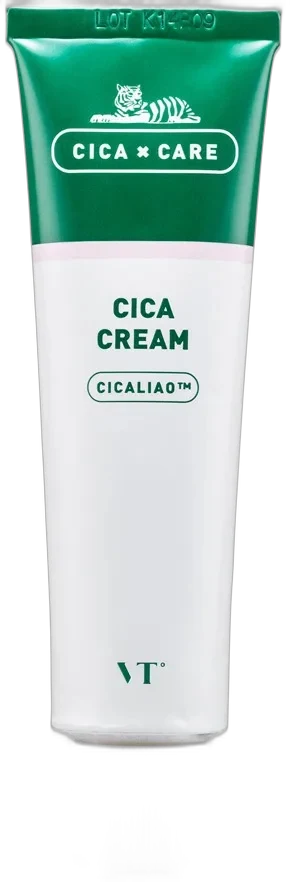
Cica Cream
Winter Cica Hero
 Verified reviewer
Pros & cons.
- +Isolated Centella triterpenoid complex delivers reliable soothing
- +Rich shea butter and squalane base for dry and barrier-compromised skin
- +Fragrance-free and alcohol-free, safe for reactive skin
- +Visible redness reduction within first use
- +Adds adenosine for a mild wrinkle-smoothing bonus
- +Comfortable rich texture without greasy residue
- +Established 2016 formulation with long track record
- −Too rich for oily skin in warm weather
- −50ml size smaller than the Calming Cream variant
- −Contains shea butter — not ideal for very acne-prone skin
- −Jar packaging exposes formula to air and fingers
- −Not certified vegan despite clean formulation
The full review.
About VT Cosmetics
VT Cosmetics is one of those K-beauty brands that built a whole international identity around a single ingredient, and this is the cream that started it. Released in 2016, the Cica Cream was the product that convinced Korean beauty retailers in the US and Europe that Centella asiatica was the next major soothing active. What separates it from the dozens of copycats that followed is the same thing that makes the newer Calming Cream work — it uses isolated madecassoside, asiaticoside, asiatic acid, and madecassic acid on top of the Centella extract itself. The four major triterpenoids, all present, in controlled form. What makes this version distinct from its lighter sibling is the base. Where the Calming Cream is built on a humectant-forward emulsion for combination skin, this one uses shea butter, squalane, and a more substantial lipid complex. The result is a cream that actually feels like winter moisturizer — cushiony, press-into-dry-cheeks moisturizer, the kind that makes chapped winter skin exhale. And yet, against expectations, it doesn’t feel greasy. The shea is balanced by the squalane and the hydrating glycerin-butylene glycol base, so it absorbs into a satin finish rather than sitting on the surface as a film. The calming action is where this formula shows its lineage. On reactive skin — windburned, post-shower tight, flaring, freshly over-exfoliated — the cream feels cool and comforting on first application, and visible redness tends to drop within about fifteen minutes. That’s the triterpenoid complex at work, and it’s consistent from jar to jar in a way that pure whole-plant Centella products often aren’t. Over consecutive days of use, baseline reactivity tends to calm, which is the real metric for a soothing moisturizer. The niacinamide in the formula adds a small but measurable tone-evening effect, and the adenosine contributes a mild wrinkle-smoothing angle that feels like a bonus rather than the main event. VT isn’t pretending this is an anti-aging product, but if you’re using it for barrier support on mature skin, the adenosine is a nice inclusion. Where this cream gets harder to recommend is on oily and acne-prone skin, especially in hot weather. The shea butter-forward base is genuinely rich, and while shea isn’t strongly comedogenic, layering it over serums on summer mornings can feel like too much. For oily skin types, the Calming Cream version exists for a reason, and that’s the one to default to.
Packaging
Packaging is the usual K-beauty concession: a wide-mouth jar with a plastic inner lid. Airless would be better for preserving the Centella actives over time, but the phenoxyethanol preservation system is standard and effective. Use clean hands or a spatula if you’re meticulous.
Pairs Well With
Compared to Western equivalents — Avène’s Cicalfate, La Roche-Posay’s Cicaplast Baume B5, even Dr. Jart+‘s Cicapair — this cream sits in a sensible middle ground. It’s richer than the pharmacy-brand options from La Roche-Posay, less clinical-feeling than Avène, and more sophisticated than the original Cicapair.
Pricing
Pricing at $22 for 50ml is fair; you’re not getting a bargain, but you’re not paying for brand prestige either. What you’re paying for is a properly formulated Centella cream in a rich base, which is a thing worth owning.
Best for
For dry, sensitive, winter-suffering skin, this is still one of the first products to reach for.
Ingredient analysis.
Full INCI list · pH 5.8
Water, Glycerin, Butylene Glycol, Cetyl Ethylhexanoate, Caprylic/Capric Triglyceride, Cetearyl Alcohol, Centella Asiatica Extract, Madecassoside, Asiaticoside, Asiatic Acid, Madecassic Acid, Niacinamide, Panthenol, Allantoin, Sodium Hyaluronate, Shea Butter (Butyrospermum Parkii), Squalane, Adenosine, Tocopherol, Glyceryl Stearate, PEG-100 Stearate, Carbomer, Arginine, Ethylhexylglycerin, Phenoxyethanol
Skin match.
The science.
The Science
The Centella asiatica complex anchors the formulation. The four isolated triterpenoids used here — madecassoside, asiaticoside, asiatic acid, and madecassic acid — show wound healing, barrier repair, and anti-inflammatory activity in individual and collective studies. Research on TECA (titrated extract of Centella asiatica) began in the 1960s and covers dermatologic and systemic uses. In modern skincare, madecassoside specifically affects fibroblast collagen production and inflammatory cytokine modulation. This cream differs from the lighter Calming variant in its delivery base. Shea butter provides oleic, stearic, linoleic, and palmitic fatty acids plus unsaponifiable compounds like triterpenes and phytosterols, which have mild anti-inflammatory activity. Squalane, from olive or sugarcane, mimics natural sebum to provide non-comedogenic lipid replenishment. These lipids form a soft occlusive layer that reduces transepidermal water loss while the triterpenoids and niacinamide work at the cellular level. Adenosine is Korea's MFDS-approved functional ingredient for wrinkle care, included here at the regulated concentration. Research shows adenosine stimulates collagen synthesis and improves skin elasticity, though the effect is subtle compared to retinoids. Its presence in this soothing cream adds a mild anti-aging benefit without risking irritation.
Dermatologist Perspective
Dermatologists often recommend Centella asiatica-based creams for patients with barrier dysfunction, rosacea, and post-procedure recovery; isolated triterpenoids often mark more sophisticated cica formulations. The shea butter-enriched base suits dry, mature, or winter-compromised skin, where pure humectant-based moisturizers often fail. Board-certified dermatologists note Centella-based creams are among the most universally tolerated soothing options, and adding niacinamide and adenosine offers modest anti-aging and tone benefits without risking irritation. This cream is generally not the first choice for oily, acne-prone patients who prefer lighter formulations.
Where it fits in your routine.
Apply this as the final hydration step in your evening routine on clean skin after serums and essences. Warm a pea-sized amount between fingertips and press into face and neck instead of rubbing. For AM use, apply before sunscreen. Use only at night during summer or humid days if your skin feels overloaded. Focus on dry patches, cheeks, and reactive areas.
At $22 for 50ml, this cream costs less than Western pharmacy-brand equivalents per milliliter and fits the K-beauty soothing category price point. The ingredient list justifies the cost. However, the Cica Calming Cream at $24 for 150ml offers better per-milliliter value; choose that version if you do not need a thick base. This cream's value lies in its texture—if you need thick, this version earns its price. Users prioritizing the best dollar-per-ml math will prefer the larger jar.
Use this for dry, sensitive, or winter-battered skin that needs occlusion and the Centella calming effect. It works for compromised barriers, mature skin seeking a soothing cream with mild anti-aging benefits, and anyone who found the lighter Calming Cream insufficient.
Use this for oily or acne-prone skin in warmer climates, or anyone wanting a lightweight daily moisturizer. The Calming Cream variant fits those cases better.
Product details.
Rich, cushiony cream that melts on contact
Fragrance-free, faint herbal undertone
Wide-mouth jar with plastic inner lid
Warms fast on skin and presses in smoothly. Leaves a slight sheen that fades within minutes. Feels comforting on dry or flared areas immediately. No stinging.
2-3 months with nightly full-face use
12 months
fall winter
The backstory.
The Cica Cream was VT Cosmetics' first major international hit and the product that established the brand's Cica line identity in 2016. It predates the lighter Calming Cream variant and became a cult purchase through Korean beauty importers and YesStyle before VT expanded to global retailers.
About VT Cosmetics
Established Brand (5–20 years)VT Cosmetics launched in 2013 and built its reputation on the Cica product line, featuring this cream as the original hero. The brand has spent over a decade in the K-beauty soothing category.
Common myths.
Rich creams always break out oily skin.
Thick texture does not mean a product is comedogenic. This cream uses shea butter and squalane to create its feel—squalane is non-comedogenic and shea is low on the comedogenic scale. Oily skin can tolerate it during cooler months, but a lighter option works better for daily summer use.
All the VT cica products are the same formula in different containers.
The Cica Cream and Cica Calming Cream use the same active complex but different emulsion bases. The thicker Cica Cream works for dry, barrier-compromised skin, while the Cica Calming Cream suits combination and oily skin.
FAQ.
What's the difference between VT Cica Cream and Cica Calming Cream?
Both use the same Centella asiatica complex with isolated madecassoside and asiaticoside, but this one has shea butter and a richer emulsion base for dry and compromised skin, while the Calming Cream is lighter-weight and better suited for combination or oily skin.
Is VT Cica Cream good for winter skin?
Yes — the shea butter and squalane base provides occlusion that prevents transepidermal water loss in cold, dry air. It is a popular K-beauty pick for winter barrier support.
Can I use VT Cica Cream on my body?
At $22 for 50ml, this is an expensive body moisturizer. Use it on your face and neck, then use a dedicated body cream for larger areas.
Does this cream cause breakouts?
Most users tolerate this despite the shea butter and do not breakout. Acne-prone skin may find the texture too thick for daily use; use the Calming Cream version instead or apply this one only in the evenings.
Is this cream pregnancy-safe?
Yes. The formula lacks retinoids, salicylic acid, and essential oils. Adenosine, niacinamide, and Centella asiatica are generally pregnancy-compatible.
What the community says.
"Rich but non-greasy"
"Reliable winter moisturizer"
"Calms reactive skin fast"
"Long-lasting hydration"
"Too rich for oily skin"
"Small 50ml size compared to Calming Cream"
"Jar packaging"