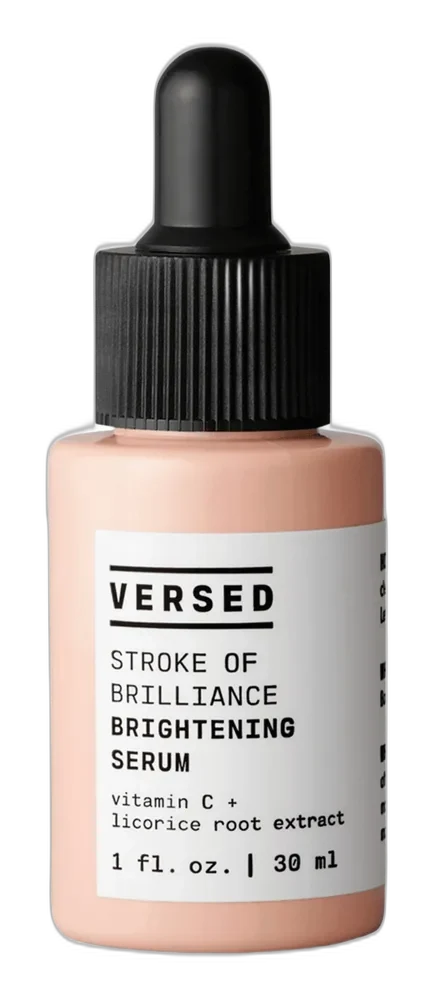
Stroke of Brilliance Brightening Serum
Drugstore Brightening Stack
 Verified reviewer
Pros & cons.
- +Five complementary brightening actives in one affordable formula
- +Lightweight, fragrance-free texture absorbs without pilling
- +Pregnancy-compatible active profile for expecting users
- +Multi-pathway pigment approach addresses both melanin and inflammation
- +Gentle enough for sensitive skin with bisabolol and allantoin
- +Works AM or PM and layers easily with retinoids
- +Clean Leaping Bunny certification and vegan formulation
- −30ml size runs out quickly with twice-daily application
- −Results are gradual — needs 6+ weeks for visible spot fading
- −Uses vitamin C derivative rather than more potent L-ascorbic acid
- −Dropper can drip with the slightly viscous texture
- −Modest active concentrations compared to prescription options
The full review.
Some skincare products exist to answer one question: how cheap can an effective tranexamic acid serum be? Versed’s Stroke of Brilliance is a strong answer. The formula combines niacinamide, alpha-arbutin, tranexamic acid, sodium ascorbyl phosphate, and licorice root in one bottle for under-$20, which is rare. Most brands pick one brightening ingredient for a single SKU. Versed, launched in 2019 by Who What Wear’s parent company, puts several brightening actives together. The texture is a thin, slightly slick serum that layers under moisturizer without pilling or leaving a tacky glycerin film. It absorbs in under a minute, leaves no cast, and disappears into the skin—essential for daytime use with sunscreen. It has no fragrance, no essential oils, and no cooling alcohol. It is a functional serum. Performance expectations require calibration. Concentrations are modest: roughly 5% niacinamide, 2% alpha-arbutin, 3% tranexamic acid, and supporting ingredients. This provides a multi-angle attack on pigmentation, but it does not replace prescription hydroquinone. It works on slow, cumulative discoloration from sun exposure and inflammation—like mid-cheek shadows, old bug-bite marks, or uneven tone in your thirties. After four weeks of twice-daily use, skin tone looks more consistent. By six to eight weeks, dark spots soften. This serum does not provide dramatic overnight change, and nothing at this price point does. The formulation shows intent. Using sodium ascorbyl phosphate instead of L-ascorbic acid keeps the pH compatible with niacinamide, avoiding debunked concerns about mixing them. Bisabolol and allantoin buffer irritation, as tranexamic acid can react with sensitive skin. Panthenol and sodium hyaluronate add humectant support to prevent the dry, tight feeling some active serums cause. It is a well-behaved formula. Limitations include the 30ml bottle, which runs out fast with morning and night use on the face and neck. The dropper tip can get messy with the slightly thicker consistency. Also, this product uses a vitamin C derivative rather than L-ascorbic acid; if you prioritize antioxidant protection, use a separate vitamin C serum. While the brand uses clean-beauty coding, the formula is not radical; the value lies in the affordability and breadth of actives, not proprietary technology. Recommend this to beginners, budget-conscious users targeting dark spots, or anyone with an existing vitamin C and retinol who needs a gentle brightening layer. It is also a good way to test tranexamic acid without a $65 commitment. Versed puts many effective ingredients in one bottle at drugstore prices, creating a serum that punches above its price tag.
Formula
Ingredient analysis.
Full INCI list · pH 6
Water/Aqua/Eau, Niacinamide, Glycerin, Butylene Glycol, Propanediol, Sodium Ascorbyl Phosphate, Alpha-Arbutin, Tranexamic Acid, Licorice Root Extract (Glycyrrhiza Glabra), Bisabolol, Allantoin, Panthenol, Sodium Hyaluronate, Hydroxyethylcellulose, Xanthan Gum, Disodium EDTA, Phenoxyethanol, Ethylhexylglycerin
Skin match.
The science.
The Science
This serum brightens by targeting melanin production through several documented pathways. Niacinamide inhibits melanosome transfer from melanocytes to keratinocytes. A 2002 British Journal of Dermatology study by Hakozaki and colleagues shows 5% niacinamide reduces hyperpigmentation over 8 weeks. Alpha-arbutin, a refined version of beta-arbutin, acts as a reversible tyrosinase inhibitor and irritates less than hydroquinone. Tranexamic acid—once a hemostatic drug—is a promising topical melasma treatment. Studies show topical 2-5% tranexamic acid yields results comparable to hydroquinone over 12 weeks. Sodium ascorbyl phosphate, a phosphorylated vitamin C ester, provides antioxidant support stable at neutral pH. This stability allows formulation with niacinamide without the old concerns about niacin formation (concerns modern formulation science has largely re-examined). Licorice root extract contains glabridin, which inhibits tyrosinase at micromolar concentrations in vitro. The multi-target strategy makes this formulation scientifically interesting. Pigmentation rarely uses one pathway; hitting melanin synthesis, melanosome transfer, and inflammatory mediators simultaneously matches modern dermatology's approach to melasma and post-inflammatory hyperpigmentation management.
Dermatologist Perspective
Dermatologists often recommend multi-active brightening serums like this one alongside sunscreen and prescription pigmentation therapy. Dermatology literature cites the niacinamide, tranexamic acid, and alpha-arbutin combination as a sensible over-the-counter stack for mild melasma and post-inflammatory hyperpigmentation, especially for patients avoiding hydroquinone or seeking non-prescription options. Board-certified dermatologists note that topical brighteners rarely show meaningful results before 8-12 weeks of consistent daily use. This serum works for sensitive skin and for patients who are pregnant or breastfeeding and must avoid retinoids—groups with few active brightening options.
Where it fits in your routine.
Apply 3-4 drops to clean, damp skin every morning and evening. Pat the serum in gently before you apply your moisturizer. Always use SPF 30+ in the AM. Brightening actives require daily sunscreen because UV exposure undoes progress. If layering with other actives, apply this after water-based essences but before oils and creams. To avoid over-layering sensitive skin, use this in the morning and the retinoid at night. Stop use if you notice persistent irritation, though the fragrance-free buffered formulation makes reactions uncommon.
At $19.99 for 30ml, this serum offers unusual value. Most serums with this many brightening actives cost between $45 and $80. The trade-off involves a smaller bottle and modest active concentrations, but the cost-per-actually-effective-application stays below the category average. Versed does not offer this in a larger size; this is a fair criticism for a twice-daily product. Even with the small bottle, you must go significantly upmarket to find a comparable multi-ingredient approach. For a brand without decades of clinical validation, the price justifies the purchase. You pay for the ingredients rather than brand trust, which is what budget-conscious shoppers want.
This serum works for people on a tight budget seeking a credible multi-active brightening serum. It suits those new to actives wanting a gentle introduction to tranexamic acid and alpha-arbutin, and sensitive skin types that cannot tolerate aggressive brightening options. It is also an excellent pregnancy-friendly choice.
Prescription therapy usually handles rapid, dramatic results for stubborn melasma. Skip this if you prefer L-ascorbic acid vitamin C serums or need a larger-format bottle for high-volume use.
Product details.
Thin, watery serum with a slightly slick glide
Fragrance-free, faint herbal note from botanicals
Frosted glass bottle with glass dropper
Absorbs fast without tingling or stinging. The first week shows a subtle glow and better hydration; dark spots fade gradually with patience rather than overnight.
2-3 months with twice-daily full-face application
12 months
All Year
The backstory.
Versed was launched in 2019 by Clique Brands (Who What Wear's parent company) to fill the gap between drugstore simplicity and Sephora-shelf actives. Stroke of Brilliance was developed as the brand's answer to the expanding tranexamic acid category, aiming to pack a full brightening cocktail into a price tier that wouldn't scare off first-time active users.
About Versed
Emerging Brand (2–5 years)Versed launched in 2019 as a Who What Wear-incubated clean beauty brand. It offers affordable, dermatologist-vetted formulas. Instead of proprietary clinical research, the brand uses recognizable actives at drugstore-friendly prices.
Common myths.
Niacinamide and vitamin C can't be used together.
This formula uses sodium ascorbyl phosphate, a stable vitamin C derivative. It works with niacinamide at skin-friendly pH without forming niacin.
Tranexamic acid only works for melasma.
Tranexamic acid works best for melasma, but it also treats post-inflammatory hyperpigmentation and UV-induced discoloration. This makes it a standard brightener in this list.
FAQ.
How long does it take Versed Stroke of Brilliance to fade dark spots?
Most people see even skin tone at 4 weeks with twice-daily use and measurable fading of discrete dark spots around 6-8 weeks. The formula uses niacinamide, alpha-arbutin, and tranexamic acid at modest concentrations, so results are gradual rather than aggressive.
Can I use this serum with retinol?
Yes. The formula is fragrance-free, alcohol-free, and uses bisabolol and allantoin to buffer, so it works well with nightly retinol. Apply this in the AM and your retinol in the PM to minimize layering irritation.
Is Versed Stroke of Brilliance safe during pregnancy?
The actives in this serum — niacinamide, alpha-arbutin, tranexamic acid, and sodium ascorbyl phosphate — are generally pregnancy-compatible. This formula lacks retinoids and salicylic acid. As always, confirm with your OB before adding new actives during pregnancy.
Does this serum replace a vitamin C serum?
This works for brightening, as the sodium ascorbyl phosphate provides antioxidant and pigmentation support. For stronger environmental antioxidant protection, a dedicated 10-20% L-ascorbic acid serum outperforms this derivative.
Will this help with melasma?
Tranexamic acid has the strongest clinical evidence for melasma among these ingredients. Pairing it with niacinamide and alpha-arbutin makes a reasonable at-home stack. Stubborn melasma often requires dermatologist-supervised treatment, but this serum works as a sensible supporting player.
What the community says.
"Visible brightening within a month"
"Lightweight non-sticky texture"
"Affordable entry into actives"
"Plays well with other serums"
"Slower results than prescription options"
"Small 30ml size for daily twice-use"
"Dropper can be messy"
People also looked at.