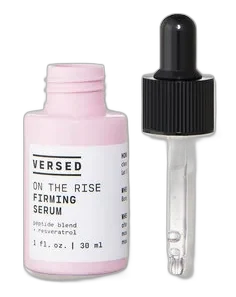
On the Rise Firming Serum
Beginner-Friendly Firming Serum
 Verified reviewer
Pros & cons.
- +Peptide duo at a reasonable INCI position for a budget firming serum
- +Resveratrol at the sixth slot contributes meaningful antioxidant support
- +Retinyl palmitate is gentle enough for sensitive beginners
- +Fragrance-free and alcohol-free base
- +Lightweight texture layers cleanly under moisturizer and sunscreen
- +Well-suited to users who have been irritated by traditional retinols
- −Retinyl palmitate is the weakest form of topical vitamin A
- −Peptide and resveratrol dosing not disclosed
- −Results are slow and subtle compared to a real retinol or adapalene
- −PEG-40 hydrogenated castor oil makes it not fungal-acne-safe
- −Not pregnancy-safe due to the vitamin A derivative content
- −Propylene glycol high on the INCI list may sensitize some users
The full review.
Anti-aging skincare has a recurring problem: the ingredients with the best evidence for results—tretinoin, adapalene, well-formulated retinol, and high-strength acids—often cause irritation and peeling, driving new users away. The industry responds with ‘gentle anti-aging’ products using peptides, resveratrol, and milder vitamin A derivatives. These are tolerable for most but deliver smaller results. On the Rise sits in this tier. It is a coherently-built example of the genre, but you must understand its function before buying.
The active story starts with a peptide duo—palmitoyl tripeptide-1 and palmitoyl tetrapeptide-7—commonly sold as Matrixyl 3000 in firming serums. These signal peptides mimic broken collagen fragments to trigger fibroblasts to produce new collagen, and some evidence shows they reduce inflammatory signaling in the dermis. Published research on this combination is modest but real: several studies show measurable improvements in fine lines and skin firmness after several months of daily use, usually at concentrations around three percent in finished products. Versed does not disclose the exact dosing, which is a valid complaint, but the peptides appear high enough on the INCI list to suggest they are not cosmetic window dressing.
Resveratrol is the next interesting inclusion, sitting at the sixth position on the list. Resveratrol is a polyphenol antioxidant from red grapes with growing evidence for topical photoprotection and anti-inflammatory activity. Its concentration, plus the supporting vitamin E duo of tocopherol and tocopheryl acetate, gives the formula a small multi-antioxidant defense system. It is not a blockbuster result, but it is a thoughtful supporting layer.
Then comes retinyl palmitate, where the assessment must get sharper. Retinyl palmitate is the gentlest topical vitamin A available and is several metabolic steps removed from the active form, retinoic acid. When you apply retinyl palmitate, your enzymes must convert it to retinol, then to retinal, and finally to retinoic acid before it performs anti-aging work. Each conversion step loses efficacy, so a retinyl palmitate serum at a given percentage delivers substantially less active retinoid than a retinol or prescription retinoid at the same percentage. Published research shows retinyl palmitate has the weakest anti-aging evidence of any vitamin A derivative; dermatologists often view it as a ‘marketing retinoid’ that stays on the label for association without doing heavy lifting.
That does not make On the Rise a bad product; it makes it a specific kind of product. If you are new to anti-aging, have sensitive or reactive skin that reacts to previous retinols, or want a fragrance-free daily firming step that layers with other products, On the Rise is a reasonable, well-tolerated option. It produces mild texture improvements, a subtle plumping effect from humectants, and—after two to three months of daily use—a gentle firming effect that is likely real but not dramatic. For users who want ‘something’ rather than ‘nothing’ and value comfort over dramatic results, this is a fair product.
If you have normal-to-tolerant skin and want visible anti-aging results within a few months, On the Rise is a soft pick in a price range where harder-working products exist. A well-formulated adapalene 0.1 percent gel is available over the counter for a similar price and has decades of clinical evidence for acne and photoaging. A drugstore retinol at 0.5 to one percent produces visibly more effect than retinyl palmitate. Prescription tretinoin is the most-studied anti-aging ingredient in dermatology history and is not dramatically more expensive with insurance. None of these are gentle or right for every skin type, but for users wanting results, they outperform peptide-plus-retinyl-palmitate serums on the same timeline. Knowing where On the Rise sits on this spectrum is key to deciding if it is the right purchase.
Application is unremarkable. The serum is a clear, thin gel that sinks in within about a minute without tingling, residue, or pilling, and it layers under moisturizer and sunscreen. There is no fragrance. Used twice daily, it delivers a soft, hydrated finish that stacks well with other products. For pregnancy, the retinyl palmitate disqualifies it; vitamin A derivatives of any form are generally avoided during pregnancy, even though systemic absorption from daily topical use is small. For acne-prone fungal skin, the PEG-40 hydrogenated castor oil and polysorbate 20 mean this is not a fungal-acne-safe product.
At twenty-two dollars for one fluid ounce, the price is fair for a gentle daily firming serum. One bottle lasts two to three months with twice-daily use. It is significantly cheaper than expensive department-store firming serums with similar formulations and holds its own on gentleness. Against better-performing retinol or adapalene products at the same price, it is the softer, slower, and less effective choice. Both positions are valid; which is right for you depends on your goals.
Ingredient analysis.
Full INCI list
Water, Propylene Glycol, Glycerin, Propanediol, Butylene Glycol, Resveratrol, Palmitoyl Tripeptide-1, Palmitoyl Tetrapeptide-7, Retinyl Palmitate, Tocopheryl Acetate, Tocopherol, Sodium Hyaluronate, Citric Acid, Phenoxyethanol, PEG-40 Hydrogenated Castor Oil, Polyacrylate Crosspolymer-6, Sodium Ascorbyl Phosphate, Xanthan Gum, Trisodium Ethylenediamine Disuccinate, 1,2-Hexanediol, Carbomer, Sodium Metabisulfite, Polysorbate 20, Sodium Lactate
Skin match.
The science.
The Science
The peptide combination in On the Rise — palmitoyl tripeptide-1 and palmitoyl tetrapeptide-7, known as Matrixyl 3000 — has research supporting improvements in fine lines and skin firmness. A study in the International Journal of Cosmetic Science, cited in dermatology reviews, shows Matrixyl 3000 improves wrinkle depth and skin tonicity after several months of daily use. The mechanism uses signal-peptide mimicry of broken collagen fragments to stimulate fibroblast activity and new collagen synthesis; it is one of the best-documented peptide approaches in cosmetic science.
Resveratrol has growing research for topical photoprotection and anti-inflammatory activity. Studies in Experimental Dermatology and other journals show topical resveratrol provides antioxidant protection against UV-induced free radicals and reduces inflammatory signaling in photoaged skin. Its sixth-slot position in this formula is high for a resveratrol-containing serum, suggesting a functional rather than decorative inclusion.
The retinyl palmitate evidence base is the weakest among vitamin A derivatives. Comparative research on topical vitamin A forms shows retinoic acid is most effective, retinol is the best-studied over-the-counter option, retinaldehyde is an intermediate, and retinyl palmitate is the gentlest but significantly less efficacious on anti-aging endpoints. The FDA recognizes retinol for OTC cosmetic use, but dermatology literature views retinyl palmitate as a weak anti-aging ingredient. This inclusion fits a gentle beginner positioning rather than a serious anti-aging mechanism.
The overall formulation — peptides plus antioxidants plus a gentle vitamin A derivative in a humectant-heavy base — is coherent for a soft-introduction firming serum. This formulation strategy will not match the results of a well-formulated retinol or a prescription retinoid; the science shows it is more supportive than transformative.
Dermatologist Perspective
Dermatologists view peptide-and-retinyl-palmitate serums like Versed On the Rise as reasonable soft-introduction products for patients new to anti-aging actives, those with sensitive or reactive skin, or those uncomfortable with the irritation of stronger retinoids. Board-certified dermatologists note that retinyl palmitate is the weakest topical vitamin A and that meaningful anti-aging results in clinical populations typically come from retinol, retinaldehyde, tretinoin, or adapalene rather than retinyl palmitate. Clinical guidance suggests a product like this works for daily maintenance and gentle early-stage use, but patients seeking significant improvement in photoaging, fine lines, or skin laxity should move to a retinol or prescription retinoid when their skin tolerates it. Dermatologists also emphasize that peptide serums work on a multi-month timeline and require calibrated expectations. This product is avoided during pregnancy because of the vitamin A derivative content.
Where it fits in your routine.
Apply three to five drops to clean, dry skin after cleansing. Pat evenly across the face, but avoid the eye area. Follow with moisturizer. In the morning, always use a broad-spectrum sunscreen because vitamin A derivatives increase photosensitivity. Use twice daily; once-daily evening use works as a starting point. Do not layer with a stronger retinol on the same night. Do not use during pregnancy or breastfeeding. Store away from direct sunlight and heat. Patch test on the jawline before the first full-face application.
At about twenty-two dollars per fluid ounce, On the Rise is fairly priced for a gentle daily firming serum using peptide and resveratrol. One bottle lasts two to three months with twice-daily use. The value issue is opportunity cost: for the same price, a well-formulated drugstore retinol or an over-the-counter adapalene gel gives stronger anti-aging results for skin that can tolerate them. Also, a fragrance-free ceramide moisturizer with niacinamide covers most of what On the Rise does for sensitive skin without the vitamin A concern. On the Rise works as a dedicated pick for sensitive beginners, but it is hard to justify as an upgrade for anyone using a more active routine.
Users with normal, combination, or dry skin who want a gentle, daily-use firming serum without stinging or peeling. This is a good choice for sensitive-skinned users irritated by traditional retinols who want a softer vitamin A derivative, or anyone seeking a beginner-friendly introduction to the category.
Users with normal, tolerant skin seeking anti-aging results—a proper retinol, over-the-counter adapalene, or prescription tretinoin works better for similar or lower prices. Anyone pregnant or breastfeeding. Users managing fungal acne, because PEG-40 hydrogenated castor oil and polysorbate 20 are present.
Product details.
Clear, lightweight gel-serum that spreads easily and absorbs without residue.
Fragrance-free with a faint neutral scent.
1 fl oz glass dropper bottle.
The first use provides a thin, clear gel-serum that sinks in within about a minute. It has no tingling, no scent, and no immediate drama. After one week of daily use, skin feels marginally softer and looks slightly more hydrated. Consistent use for two to three months shows meaningful changes in firmness or fine lines.
A 1 fl oz bottle typically lasts 2-3 months with daily morning and evening use.
12 months
All Year
The backstory.
On the Rise launched as part of Versed's original 2019 catalog as the brand's answer to users who wanted to start using firming ingredients but didn't want to commit to a stinging retinol or an irritating acid. Its layered peptide-and-gentle-vitamin-A approach was pitched as a daily-use alternative to stronger products, and the formula has remained in the brand's core lineup largely unchanged.
About Versed
Established Brand (5–20 years)Versed launched in 2019, including On the Rise as an original firming serum. The brand does not publish peer-reviewed efficacy data. This formula uses peptides, resveratrol, and a gentler retinyl palmitate instead of aggressive retinoids. The ingredients work well for the price, but the peptide and vitamin A dosing is not listed.
Common myths.
Retinyl palmitate works the same as retinol.
It doesn't. Retinyl palmitate requires several metabolic steps to become retinoic acid — the active form of vitamin A — converting through retinol and retinal first. This conversion reduces the effective dose compared to a retinol product with the same labeled strength. It is gentler and less effective.
Daily serum peptides deliver visible anti-aging results.
Daily use of peptides over months shows modest improvements in skin firmness and fine lines. They lack the evidence base of tretinoin, adapalene, or well-formulated retinols for serious anti-aging endpoints. Peptide serums support skin; they do not transform it.
FAQ.
Does Versed On the Rise Firming Serum actually work?
Daily use for two to three months produces subtle, cumulative improvements in skin texture, hydration, and perceived firmness. These results are real but modest. This is not a substitute for a well-formulated retinol or a prescription retinoid for meaningful anti-aging effects.
Is Versed On the Rise a retinol serum?
No. It contains retinyl palmitate, the gentlest and least potent topical vitamin A. Retinyl palmitate requires several metabolic steps to convert to active retinoic acid. This makes its effect much milder than retinol or prescription retinoids of the same labeled strength.
Can I use Versed On the Rise during pregnancy?
No. The retinyl palmitate content makes this serum unsuitable for pregnancy. If you are pregnant or breastfeeding and want a firming serum, choose a peptide-only formulation without vitamin A derivatives, or ask your obstetrician for guidance.
How long does Versed On the Rise take to work?
Most users see mild improvements in skin texture and hydration within two weeks. Meaningful firmness and fine-line results require 8-12 weeks of consistent twice-daily use. Peptide serums work slowly and cumulatively — patience is the point.
Can I use Versed On the Rise with retinol?
You can, but not on the same night. Layering a retinyl palmitate serum with a retinol increases vitamin A exposure and irritation risk. If you use a retinol, On the Rise is unnecessary or works best on alternating nights.
Is Versed On the Rise good for sensitive skin?
Yes, relatively. The retinyl palmitate is the gentlest vitamin A derivative. The formula is fragrance-free and alcohol-free. At this price point, it is one of the more forgiving anti-aging serums for sensitive skin, but users still need to patch test before daily use.
What is the difference between Versed On the Rise and a retinol?
On the Rise uses retinyl palmitate, which is gentler but less potent than retinol. Retinol is one step closer to the active form of vitamin A and produces stronger anti-aging effects but causes more irritation. On the Rise is a soft introduction; a retinol is the next step for dramatic results.
What the community says.
"Gentle enough for daily use"
"Nice texture and layers well"
"Fragrance-free formula"
"Affordable firming serum option"
"Results are subtle and slow to appear"
"Retinyl palmitate is a weak form of vitamin A"
"Peptide concentration is not disclosed"
"Not suitable during pregnancy because of the vitamin A content"
People also looked at.