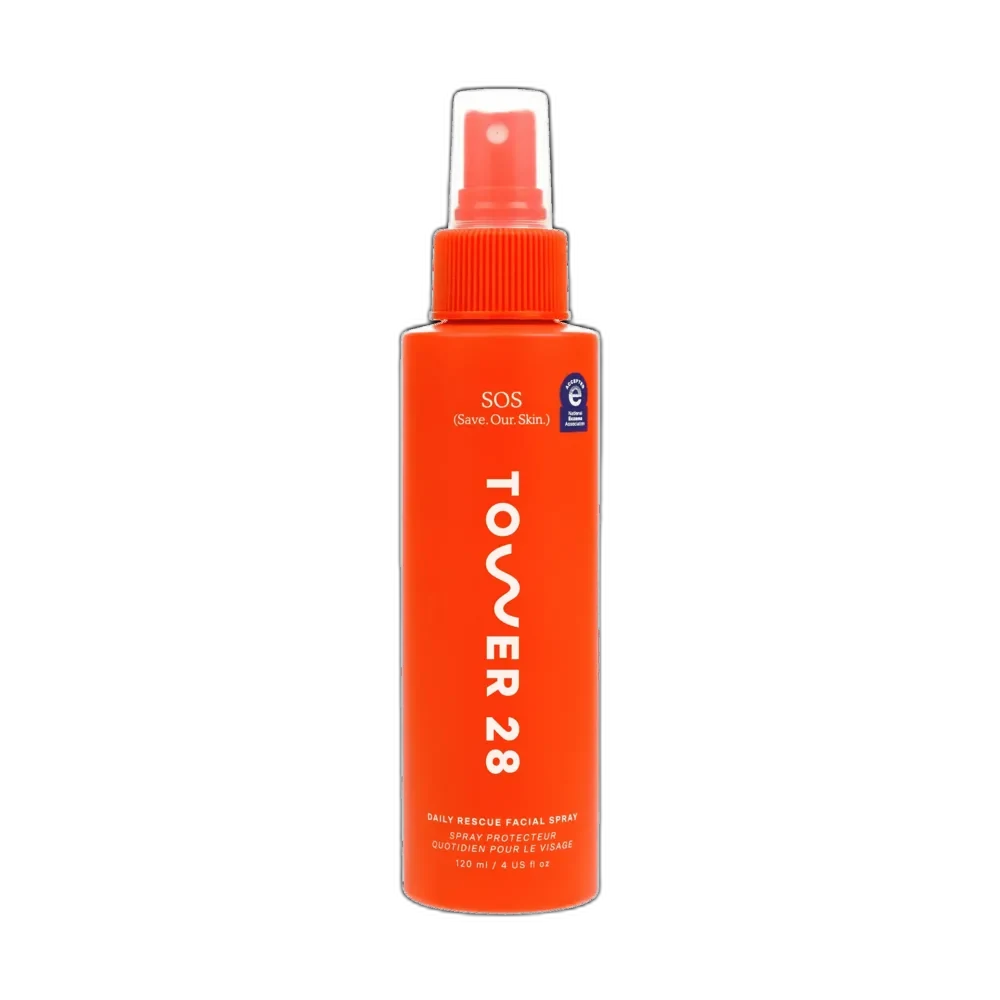
SOS Daily Rescue Facial Spray
Hypochlorous Acid Original
 Verified reviewer
Pros & cons.
- +Four-ingredient formula — essentially hypochlorous acid in saline
- +Clinically validated antimicrobial active with decades of wound-care use
- +Safe on broken skin, sensitive skin, eczema, and post-procedure recovery
- +Pregnancy-safe and gentle enough for children
- +Calms inflammatory acne, rosacea flushing, and barrier-related redness
- +Universal compatibility with other skincare actives, including retinol
- +National Eczema Association accepted and Allure Best of Beauty winner
- −Expensive for what amounts to saltwater plus an antimicrobial
- −Subtle, cumulative effect — not a dramatic single-step treatment
- −Faint chlorine note bothers some users
- −Aluminum aerosol nozzle can leak in transit
The full review.
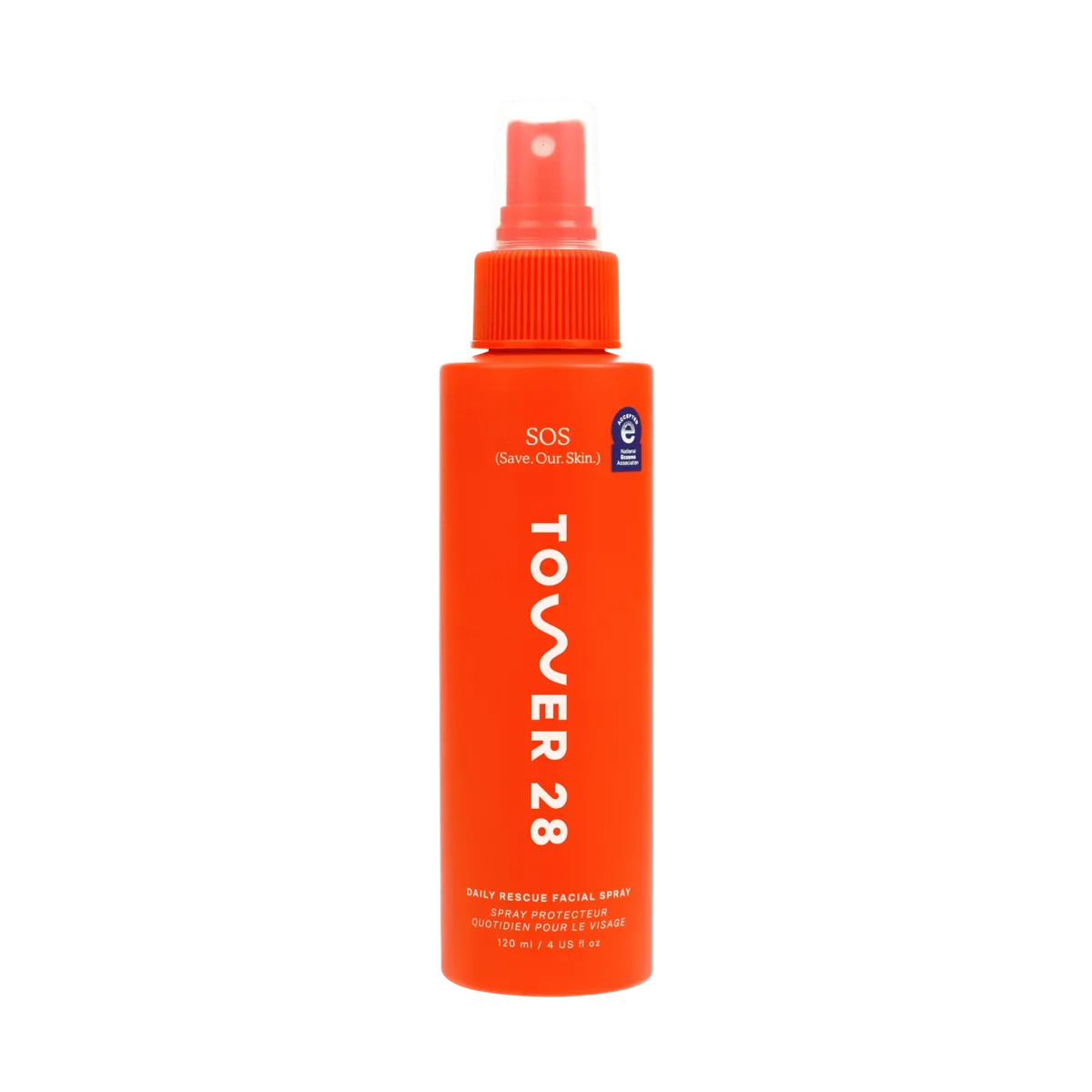
Some skincare products become culturally important because they are correct, not complicated. The Tower 28 SOS Daily Rescue Facial Spray is one of them. The formula contains only four ingredients: electrolyzed water, sodium chloride, sodium hypochlorite, and hypochlorous acid. That is it. It has no glycerin, no botanical extract, no preservative system, and no fragrance. It is essentially saltwater processed to generate hypochlorous acid; this minimalism is the actual product, not a marketing tactic. Amy Liu founded Tower 28 in 2019 because her eczema made most cosmetics unwearable. She used clinical hypochlorous acid wound-care products and wanted a version that did not look like it came from a hospital supply catalog.
The ingredient deserves its own paragraph. Hypochlorous acid (HOCl) is the antimicrobial molecule human neutrophils produce during the immune response to bacterial infection. Clinical use dates to the early 1900s—Dakin’s solution, a hypochlorous acid preparation used for World War I wound cleaning—and modern formulations like Vashe, Vetericyn, and Hocl are FDA-cleared for wound care. In dermatology, studies cover atopic dermatitis (linked to S. aureus colonization), inflammatory acne (linked to C. acnes overgrowth), seborrheic dermatitis, and post-procedure recovery. Unlike alcohol, which kills indiscriminately and disrupts the barrier, hypochlorous acid is selective enough to suppress problematic bacteria without wiping out the skin microbiome. Benzoyl peroxide kills C. acnes effectively but causes irritation and bleaching. HOCl works without collateral damage, which is why it belongs in wound clinics.
The spray is unremarkable in the right way. It mists on cool, absorbs almost instantly, has a faint clean chlorine note, and does not sting, even on broken or sensitized skin. The instructions are ‘spray two to three times on cleansed skin, let air dry, continue with your routine.’ You can also use it throughout the day to refresh after a workout, after a mask, after sun exposure, or during an active breakout. Effects are subtle and cumulative. After one to two weeks of consistent twice-daily use, people with sensitive-acne overlap typically see breakouts settle faster and chronic redness around the cheeks and jawline soften. Rosacea-prone users often see shorter flushing episodes. Eczema sufferers report fewer flare-ups, especially when using the spray for daily maintenance.
The limitations are clear. Price is the main criticism—$28 for 120ml of saltwater feels expensive. Brands like Briotech and SkinSmart offer generic hypochlorous acid sprays at lower per-ml prices; if you do not care about Tower 28 packaging or design, those alternatives use the same active ingredient. The aluminum aerosol nozzle can leak slightly if the bottle jostles during transit. Also, the effect is subtle; this is a foundational maintenance product, not a transformative single-step treatment. Users expecting a dramatic acne or eczema cure may be underwhelmed.
The recommendation rests on its wide use cases and safety profile. Few products can be used on broken skin, during pregnancy, on kids, on body breakouts, after retinol, after laser, over rosacea, and on sensitive-acne overlap without adverse effect concerns. The SOS Daily Rescue Facial Spray covers all these uses. The cumulative benefit on inflammation-driven conditions is well-documented in dermatology literature, even if this cosmetic-grade product lacks its own published clinical trial. This product built Tower 28’s reputation and introduced US consumers to a wound-care active. For a sensitive-skin household, it is one of the most useful bottles on the shelf.
Ingredient analysis.
Full INCI list · pH 4.5
Electrolyzed Water, Sodium Chloride, Sodium Hypochlorite, Hypochlorous Acid
Skin match.
The science.
The Science
Hypochlorous acid is a widely studied antimicrobial molecule in clinical use. Neutrophils produce it endogenously during the innate immune response. For decades, burn units, chronic wound clinics, and dermatology offices have used FDA-cleared hypochlorous acid wound-care preparations. A 2018 review in Clinical, Cosmetic and Investigational Dermatology surveyed HOCl dermatologic applications; it noted efficacy against C. acnes, S. aureus, and other skin bacteria, with high tolerability and no documented allergic contact dermatitis from the active. A 2017 study in the Journal of Drugs in Dermatology evaluated topical hypochlorous acid spray in atopic dermatitis patients, reporting significant reductions in S. aureus colonization and clinical severity scores after 4 weeks of daily use. Other clinical work shows HOCl helps post-procedure recovery (e.g., after fractional laser, microneedling, and chemical peels) by reducing infection risk and accelerating barrier recovery without irritation. Mechanistically, HOCl oxidizes bacterial cell proteins and lipid membranes at concentrations too low to damage human skin cells, creating a wide therapeutic window. The Tower 28 spray is a cosmetic-grade product, not an FDA-cleared medical device, but the active concentration and saline carrier match clinical dermatology formulations. No published trial has tested SOS Daily Rescue Facial Spray specifically.
Dermatologist Perspective
Dermatologists have used hypochlorous acid in clinical practice for decades, mainly for wound care and atopic dermatitis management. Board-certified dermatologists often recommend HOCl sprays for patients with eczema, sensitive-acne overlap, post-procedure recovery, and inflammatory rosacea, especially when patients cannot tolerate stronger antimicrobials like benzoyl peroxide or topical antibiotics. This product is a common consumer entry point to the ingredient and often serves as a daily maintenance step in pediatric atopic dermatitis routines. Dermatologists note HOCl works best as a foundational supportive product rather than a primary treatment for severe disease, and consistent daily use matters more than any single application.
Where it fits in your routine.
Spray 2-3 times onto cleansed skin from 6-8 inches away. Let it air dry instead of patting it in. Apply the rest of your skincare routine once the spray absorbs fully. Use it throughout the day to refresh skin after workouts, mask use, sun exposure, or breakout flares. It is safe for broken skin, eczema patches, post-procedure skin, and body breakouts. The formula is pregnancy-safe and gentle for children. Replace 12 months after opening per the standard PAO marking.
At $28 for 120ml, the spray costs a lot for its simple ingredients. A 75ml travel size exists, which works better to test the product before buying the full bottle. Generic hypochlorous acid sprays from brands like Briotech and SkinSmart provide the same active at lower per-ml prices; these are valid alternatives if cost is the priority. The Tower 28 premium price reflects the brand's positioning, the National Eczema Association heritage, and how this product popularized the ingredient in mainstream US skincare. The price is defensible for users who want brand integration with the rest of the SOS line or value the formulation discipline. For users interested only in the active, alternatives at half the cost exist.
This works for sensitive, eczema-prone, rosacea-prone, or sensitive-acne overlap skin needing antimicrobial maintenance; people recovering from in-office procedures or barrier damage; pregnant or breastfeeding users seeking safe acne care; parents with kids who have eczema; and anyone trying cosmetic hypochlorous acid for the first time.
Users on a budget who can use generic hypochlorous acid sprays from Briotech or SkinSmart; people seeking a single-step transformation instead of cumulative maintenance; anyone bothered by the faint chlorine note; users with severe acne who require prescription therapy as their primary intervention.
Product details.
Watery mist — sprays as a fine even cloud
Faint clean chlorine note
Aluminum aerosol bottle with fine mist nozzle, 120ml (also available in 75ml travel size)
This weightless, cooling mist absorbs almost immediately. It does not sting or tingle, even on broken or sensitized skin. Consistent use for 1-2 weeks reduces visible surface inflammation near active breakouts and barrier-related redness.
About 2-3 months with twice-daily use
12 months
All Year
The backstory.
Amy Liu founded Tower 28 partly because she had severe eczema and could not find color cosmetics that didn't trigger flares. Hypochlorous acid had been used in clinical wound care for decades — derm offices already used it on patients, and Liu's own dermatologist had recommended it to her. She built the SOS Daily Rescue Facial Spray as the consumer-friendly version of that clinical product, and it launched in 2020. The spray is widely credited with introducing hypochlorous acid to mainstream US skincare, and the ingredient has since become a recognized name across sensitive-skin dermatology.
About Tower 28
Emerging Brand (2–5 years)Amy Liu founded Tower 28 in 2019 using National Eczema Association acceptance standards. The SOS Daily Rescue Facial Spray is the brand's signature product. It first popularized cosmetic hypochlorous acid in the US, an ingredient now widely recognized in sensitive-skin dermatology.
Common myths.
Hypochlorous acid is bleach.
Hypochlorous acid (HOCl) and household bleach (sodium hypochlorite at high concentration) are different molecules with different effects. The immune system produces HOCl to fight infection; at cosmetic concentrations, HOCl is gentle and non-damaging.
Products containing only water and salt lack efficacy.
Electrolysis of saline generates the active hypochlorous acid. The formula is minimal, but the active is a clinically validated antimicrobial used in wound care.
Facial sprays are just expensive water.
Most are. This one is an exception — the formulation has a documented antimicrobial active, not just thermal water for marketing.
FAQ.
What does Tower 28 SOS Spray actually do?
It delivers hypochlorous acid — a gentle antimicrobial used in clinical wound care — to the skin. This targets the bacterial overgrowth in acne, eczema flares, post-procedure recovery, and post-workout flushing. It does not disrupt the broader skin microbiome like alcohol or benzoyl peroxide.
Is hypochlorous acid safe?
Yes. Hypochlorous acid is the same molecule your immune system uses to fight infection. The FDA has cleared it for wound care products for decades. At cosmetic concentrations, it is gentle, non-irritating, and safe for daily use even on broken skin.
Does it actually work on acne?
Yes, but use it as a supportive product, not a primary treatment. It reduces the bacterial component of inflammatory acne and calms surface inflammation around active breakouts. For severe or cystic acne, it works best with a prescription treatment plan.
Can I use this with retinol?
Yes. Spray it on clean skin before your retinol. The spray soothes skin and reduces retinoid irritation. Use it after retinoid application as a mid-day calming refresh.
Is it safe for kids and pregnancy?
Yes. The formula is saline and hypochlorous acid. It has no pregnancy-cautious ingredients and is gentle enough for children. Many parents use it on kids with eczema or post-bug-bite irritation.
What's the difference between the spray and the rest of the SOS line?
The spray contains only hypochlorous acid in saline—a minimalist antimicrobial baseline. The Clear Skin Serum, Clay Mask, and Cleanser add niacinamide, azelaic acid derivatives, and other actives to that hypochlorous acid foundation for more complete daily care.
What the community says.
"Calms breakouts overnight"
"No sting"
"Useful for post-workout flushing"
"Safe for kids"
"Works on body breakouts"
"Faint chlorine smell"
"Pricey for what's essentially saltwater"
"Spray nozzle can leak"
"Subtle effect on its own"
Featured in.
People also looked at.