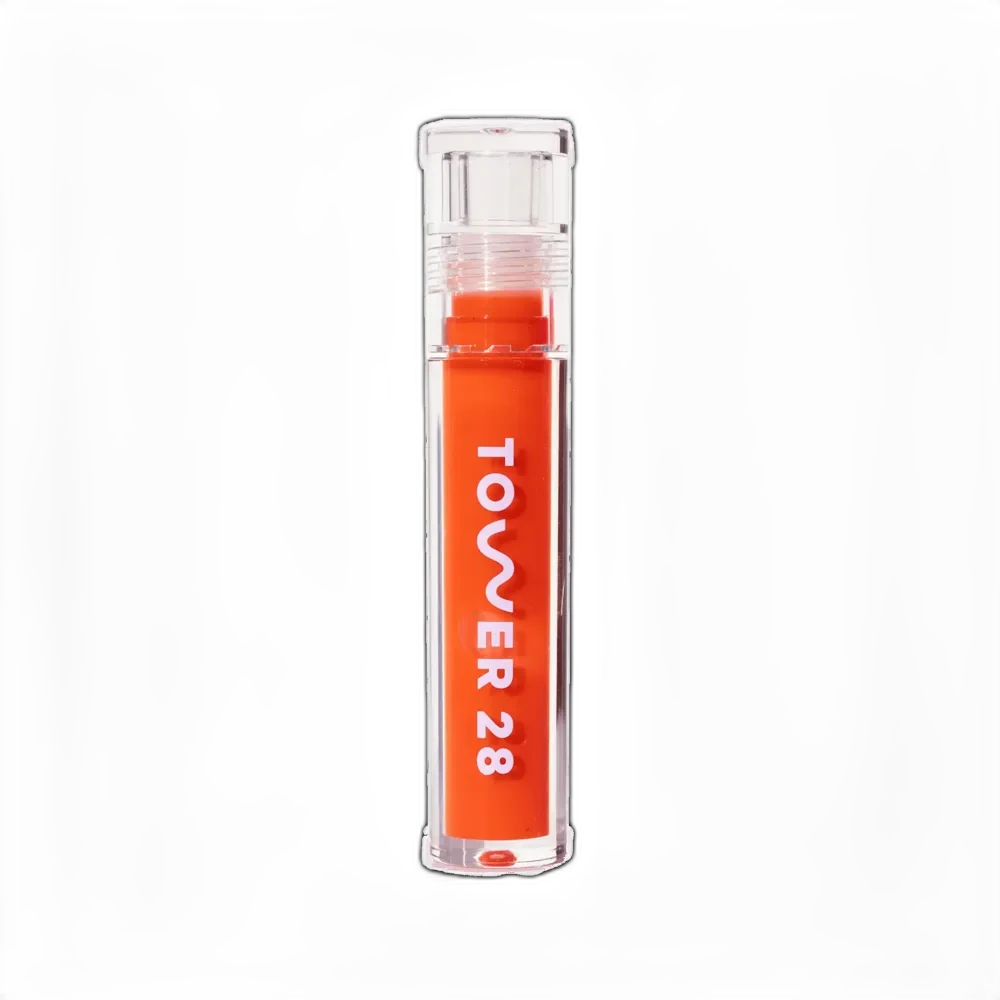
ShineOn Lip Jelly
Sensitive-Skin Gloss MVP
 Verified reviewer
Pros & cons.
- +Genuinely fragrance-free, dye-free, lanolin-free formulation
- +Squalane and jojoba ester base delivers gloss without stickiness
- +Iron oxide pigments are eczema-safe in tinted shades
- +Builds the kind of cushioned, non-tacky finish that high-end glosses chase
- +Layers cleanly over matte lipsticks as a glossy top coat
- +National Eczema Association-accepted brand standards
- +Vegan and cruelty-free with clean tocopherol antioxidant support
- −Pigment in tinted shades is very sheer — not a real color payoff
- −Wears off relatively quickly and needs frequent reapplication
- −Per-ml cost is higher than drugstore non-sticky glosses
- −Wand applicator can get messy in warm weather
The full review.
Few cosmetic products stem from a specific personal frustration. Amy Liu spent years in beauty watching new lip launches arrive while her own eczema flared from fragrance, lanolin, or essential oils—three of the four most common ingredients in “natural” lip products. Tower 28 launched in 2019 to fix this, and ShineOn Lip Jelly arrived a year later to establish the brand. The hook isn’t a flashy delivery system or an exotic active. It is that a tinted, glossy, cute lip product is also safe for skin that reacts to almost everything.
The formulation shows the brand’s constraints. It has no fragrance, no flavor, no essential oils, no lanolin, no parabens, and no synthetic dyes. It uses a clean lipid base of hydrogenated polyisobutene for structure, squalane for slip, jojoba esters for conditioning, and vitamin E for stability. The tinted shades use iron oxides and titanium dioxide instead of dye-based pigments, making them safe for the sensitive-skin demographic Tower 28 targets. The brand follows National Eczema Association acceptance standards, a constraint almost no color cosmetic brand follows. If “natural” lip products have caused you cracked corners or a perioral rash, you know why this matters.
Texturally, ShineOn achieves what high-end glosses have sought since the early 2000s: genuine wet-look shine without the polybutene drag found in early Lip Glass or MAC glosses. Squalane is the key. It carries the gloss, conditions the lips, and absorbs differently than polybutene-based glosses. The doe-foot wand applies a smooth, cushioned layer in one swipe. It sets into a glossy, non-tacky finish within seconds so your lips do not stick when pressed together. The clear shade acts as a treatment gloss; the tinted shades provide a sheer flush of color that looks “just bitten” rather than made-up. This look built TikTok’s clean-girl aesthetic.
The limitations are predictable. The pigment in tinted shades is sheer; for real lip color, use the brand’s lipstick range instead. Wear time is short, as with every gloss; reapply after eating or drinking. The wand applicator can get messy if the formula thins in summer heat. At $16 for 9.6ml, the per-ml cost is high for a non-treatment lip product. Tower 28 is a young indie brand with Sephora pricing, so you pay for the formulation philosophy alongside the raw materials.
The reason to buy it matches the reason the brand exists. Few major-distribution lip products use the rigor Tower 28 applies. If you have eczema-prone or reactive lips, if “clean” brands have burned you with peppermint oil, or if you want a non-sticky, sheer gloss without playing formulation roulette, ShineOn Lip Jelly is the safest choice. It is one of the few lip products you can give a friend with sensitive skin without a mental ingredient audit. That is the small thing the brand was built to deliver.
Ingredient analysis.
Full INCI list
Hydrogenated Polyisobutene, Diisostearyl Malate, Octyldodecanol, Polyisobutene, Squalane, Jojoba Esters, Hydrogenated Castor Oil, Tocopherol, Tocopheryl Acetate, Caprylic/Capric Triglyceride, Iron Oxides (CI 77491, CI 77492, CI 77499) \[in tinted shades only\], Titanium Dioxide (CI 77891) \[in tinted shades only\], Mica
Skin match.
The science.
The Science
ShineOn Lip Jelly uses established principles of sensitive-skin cosmetic chemistry. Fragrance is the most documented contact allergen in cosmetics; the American Contact Dermatitis Society identifies fragrance mix as a leading cause of allergic contact dermatitis in patch testing. Removing it is a safety choice, not a marketing gesture. Lanolin moisturizes but also acts as a known sensitizer, so NEA-accepted products exclude it. Squalane is a non-comedogenic, non-sensitizing emollient with a long safety record; a 2018 Journal of Cosmetic Dermatology paper documented its use in dermatologically tolerant formulations for sensitive skin. Iron oxide pigments are inert mineral colorants with no known sensitization profile, unlike azo dyes and synthetic lakes which are documented occasional contact allergens. Vitamin E (tocopherol) provides antioxidant stability and skin-conditioning benefits at typical lip product concentrations. The National Eczema Association's acceptance program reviews formulations for sensitization risk, and Tower 28's brand-wide acceptance shows ongoing compliance with those criteria. No published clinical trial has specifically tested ShineOn Lip Jelly, but the formulation aligns with the evidence base for sensitive-skin-safe lip cosmetic design.
Dermatologist Perspective
Dermatologists treating chronic eczema, perioral dermatitis, or fragrance allergies often struggle to recommend tinted lip products because most lip cosmetics contain common contact sensitizers. Board-certified dermatologists frequently cite Tower 28 as one of the few major-distribution color cosmetic brands they can recommend without caveats, due to the National Eczema Association acceptance and the consistent fragrance-free, lanolin-free formulation philosophy. Doctors often suggest ShineOn Lip Jelly for patients wanting a wearable cosmetic lip product that doesn't trigger flares, or as a glossy top coat for patients using prescription tretinoin who experience perioral dryness. Dermatologists note that while the product won't 'treat' eczema, it lets patients wear lip makeup without making it worse — a meaningful clinical outcome.
Where it fits in your routine.
Swipe the doe-foot wand once or twice over clean lips for full coverage. Reapply after eating, drinking, or as desired. Layer it over a treatment lip balm in winter for extra protection, or use it as a glossy top coat over matte lipstick. The clear shade works as a gloss-only treatment; tinted shades add a subtle wash of color. It is safe during pregnancy and breastfeeding. Replace 12 months after opening per the standard PAO marking.
At $16 for 9.6ml, ShineOn Lip Jelly sits at the top of the lip gloss price range. Drugstore glosses with similar non-sticky finishes cost $5-10, but few meet these fragrance-free, allergen-conscious formulation standards. No alternate sizes exist. Value depends on your needs—for sensitive lips that react to almost everything, this is one of the only viable options, making the cost justified. If you lack sensitivities and want a fun gloss, cheaper options exist. The brand is relatively young, so you pay partly for the founding mission rather than legacy validation, but the formulation execution is strong.
This works for eczema-prone, allergy-prone, or reactive lips that cannot tolerate fragrance, lanolin, or essential oils. It suits people seeking a non-sticky tinted gloss with a clean, well-vetted ingredient list. It also fits sensitive-skin makeup wearers burned by "natural" brands and anyone wanting a gloss to use as a top coat over matte lipsticks.
Users seeking full-coverage lip color instead of a sheer wash; budget-focused shoppers without skin sensitivities; people wanting flavored or scented lip products; users preferring thick, occlusive balm-format lip products over fluid wand-applied glosses.
Product details.
None — truly fragrance-free
Clear glass tube with doe-foot wand applicator, 9.6ml
The texture is cushioned and slick without stickiness. Tinted shades have sheer color, while the clear shade is a full gloss. It has no tingling or plumping sensation; this is a comfort gloss, not a stinger.
About 4-6 months with regular daily use
12 months
All Year
The backstory.
Tower 28 was founded by Amy Liu, a beauty industry veteran with severe eczema, after years of being unable to wear most makeup without flaring. The line launched in 2019 with the explicit goal of building National Eczema Association-accepted color cosmetics. ShineOn Lip Jelly came in 2020 and quickly became the brand's signature product, partly because it solved a genuine market gap — most 'clean' lip products still relied on essential oils or natural fragrances that triggered reactive lips.
About Tower 28
Emerging Brand (2–5 years)Amy Liu founded Tower 28 in 2019 in Los Angeles. As someone with sensitive skin, she built Tower 28 to create National Eczema Association-accepted color cosmetics. The brand formulates products to be fragrance-free, dye-free, and allergen-conscious. Sephora sells the line globally.
Common myths.
Clean beauty lip products are always less effective.
"Clean" is a loose marketing term, but Tower 28 excludes ingredients with documented sensitization risk. The squalane-jojoba base is treatment-grade, not a downgrade.
All lip glosses are sticky.
Modern formulations use squalane and lightweight esters to deliver glossy finishes without the sticky polybutene drag of older glosses.
FAQ.
Is Tower 28 ShineOn Lip Jelly sticky?
No. The squalane-and-jojoba base provides slip and gloss without the polybutene drag that makes traditional lip glosses sticky. Most reviewers praise it as one of the least sticky glosses they've used.
Is this lip jelly safe for eczema-prone skin?
Yes — Tower 28 formulates specifically for eczema-prone and sensitive skin. The brand follows National Eczema Association acceptance standards. This fragrance-free, dye-free, lanolin-free formula is one of the safest tinted lip products available.
Does the tinted version stain lips?
No. The pigment is sheer and washes off with normal removal. The tinted shades use iron oxides and titanium dioxide instead of dye-based colorants, so they do not stain.
How does this compare to Glossier Balm Dotcom?
Balm Dotcom is a thick occlusive balm with a wax base. ShineOn is a fluid jelly-oil hybrid that uses a wand applicator. ShineOn has more gloss and slip; Balm Dotcom has more occlusive cushion. ShineOn is fragrance-free, but Glossier offers scented variants.
Is this jelly safe during pregnancy?
Yes. The formula has no retinoids, salicylic acid, or other pregnancy-cautious ingredients. It is fragrance-free and safe during pregnancy and breastfeeding.
Can I wear ShineOn over lipstick?
Yes — it works well as a glossy top coat over matte lipsticks, which often dry out lips. The squalane base softens the matte texture without changing the underlying color.
What the community says.
"Non-sticky"
"Subtle wash of color"
"Comfortable for sensitive lips"
"Vanilla-free"
"Works as a top coat over lipstick"
"Pigment is very sheer"
"Wears off quickly"
"Pricey for the size"
"Wand applicator can be messy"