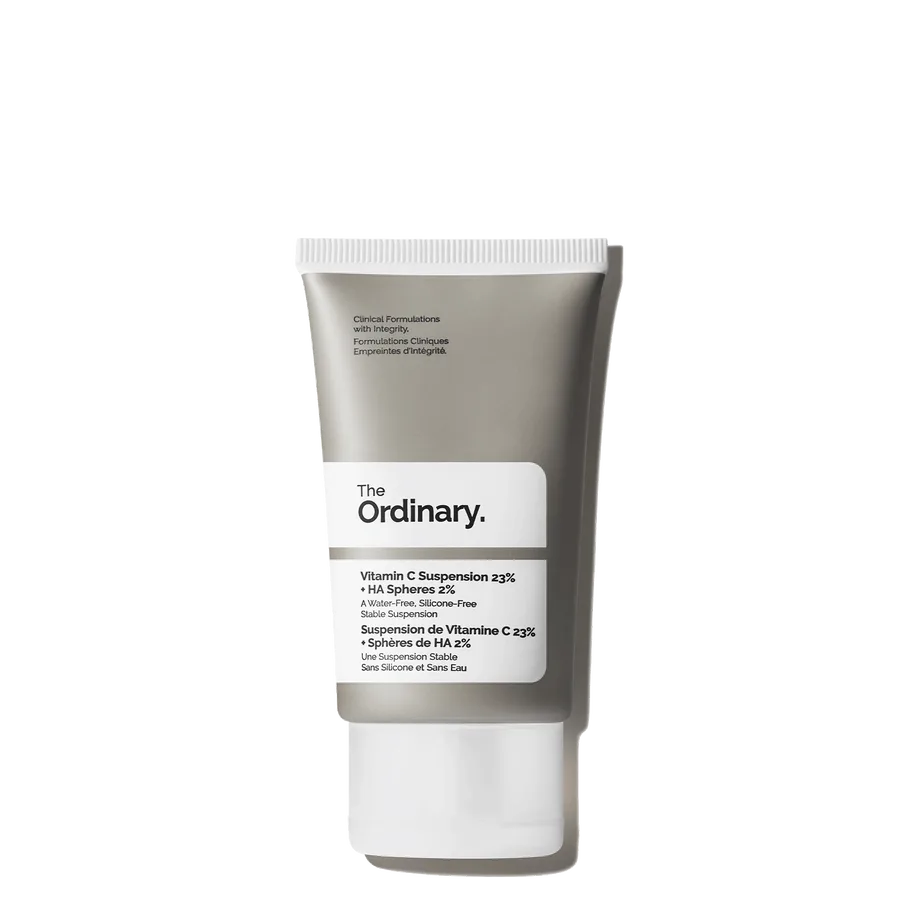
Vitamin C Suspension 23% + HA Spheres 2%
Budget Vitamin C Powerhouse
 Verified reviewer
Pros & cons.
- +23% pure L-ascorbic acid — among the highest concentrations available in any product
- +Under $6 makes it the most affordable high-concentration vitamin C on the market
- +Water-free suspension prevents oxidation and extends shelf life significantly
- +Genuine brightening and dark spot fading results reported by persistent users
- +HA Spheres provide targeted hydration to counteract the drying effects of the acid
- +Fragrance-free, vegan, and Leaping Bunny certified cruelty-free
- −Gritty, sand-like texture makes application unpleasant for the first 30 seconds
- −Intense stinging and tingling from the extreme acidity — unsuitable for sensitive skin
- −Strong metallic-chemical odor that can linger on skin and hands for hours
- −Lacks vitamin E and ferulic acid for the synergistic photoprotection supported by research
- −Very slow absorption — 10+ minute wait before layering moisturizer
- −Incompatible with niacinamide, retinoids, and other common actives in the same step
The full review.
Some products exist because someone asked: what if we didn’t make this nice to use? What if we took the active ingredient, concentrated it beyond most formulations, used the cheapest stable base, and let results justify the experience? The Ordinary’s Vitamin C Suspension 23% + HA Spheres 2% is that product. It forces an honest conversation about what you will endure for your skin.
The numbers are impressive. Twenty-three percent pure L-ascorbic acid is a concentration that would make most luxury brands’ formulation chemists nervous. Clinical literature puts the optimal range at 10-20%, where irritation increases and returns diminish above that threshold. The Ordinary pushed past it anyway, likely because their customers prioritize potency over comfort.
The water-free suspension format solves vitamin C’s main problem. L-ascorbic acid degrades rapidly in aqueous formulations—it oxidizes, turns brown, and becomes useless, sometimes within weeks of opening. By suspending the vitamin C particles in an anhydrous squalane base, The Ordinary avoids this. The trade-off is that undissolved particles give the product its gritty texture. When you squeeze this from the tube and apply it, it feels like spreading an expensive exfoliant paste. The grains dissolve within about thirty seconds of massaging, but those thirty seconds are unpleasant.
Then comes the tingling. For some, it is a mild, warm sensation that fades quickly. For others, it is a sting that makes eyes water and prompts a reach for the faucet. The cause is simple: when this product hits your skin, it drops the local pH below 3.5. That is acidic enough to cause irritation, especially on compromised or sensitive skin. The brand suggests building tolerance gradually, which is sound advice many users ignore while chasing maximum results.
The scent is remarkable. Pure L-ascorbic acid at this concentration has a sharp, metallic odor described as chemical, potato-like, or like cleaning products. It is not added fragrance; it is the smell of concentrated ascorbic acid. Unlike most scents that fade after application, this one lingers on skin and hands for hours. This is a PM-only product not because of photosensitivity, but because nobody wants to smell like a science lab at work.
What does this suffering buy? Genuine results. L-ascorbic acid at this concentration is a powerhouse for brightening, dark spot reduction, and collagen stimulation. Users who persist through the sensory gauntlet report visible improvements in skin luminosity within the first two weeks, with meaningful fading of hyperpigmentation and dark spots by the four-to-eight-week mark. The vitamin C does real work.
The formulation has a gap, however. Sheldon Pinnell’s landmark vitamin C research showed that vitamin C works much better when combined with vitamin E and ferulic acid. This product contains neither. The squalane base provides some antioxidant support and the HA spheres add hydration, but without the classic C+E+ferulic triad, this product lacks the maximal photoprotective benefit the science supports. For a brand that follows research, this omission is notable.
The Ordinary has sold this since its 2016 launch, providing a decade of market feedback. The 3.4-star average rating across major retailers shows how the experience divides users: those who tolerate the texture and scent swear by the results, while those who cannot handle the sensory experience abandon it within a week. This product does not earn tepid four-star reviews. You either endure it and love the outcomes, or you cannot stand to use it.
At under six dollars, the value is almost absurd. Prestige vitamin C serums with lower concentrations cost $50-150. You could buy twenty-five tubes of this for the price of one SkinCeuticals C E Ferulic. Whether that comparison matters depends on if you value C+E+ferulic synergy and elegant texture, or raw concentration and cost efficiency.
This product works best as an evening treatment in a simple routine. Apply to clean, dry skin, wait ten minutes for absorption and for the tingling to subside, then seal with a moisturizer. Keep it away from niacinamide and retinoids in the same routine step. Know what you are getting into: this is a results-first product that makes no concessions to the user experience. For those who can handle it, the brightening payoff is real.
Ingredient analysis.
Full INCI list
Ascorbic Acid, Squalane, Isodecyl Neopentanoate, Isononyl Isononanoate, Coconut Alkanes, Ethylene/Propylene/Styrene Copolymer, Ethylhexyl Palmitate, Silica Dimethyl Silylate, Sodium Hyaluronate, Glucomannan, Coco-Caprylate/Caprate, Butylene/Ethylene/Styrene Copolymer, Acrylates/Ethylhexyl Acrylate Crosspolymer, Trihydroxystearin, BHT
Skin match.
The science.
The Science
L-ascorbic acid is the most studied topical vitamin C. Decades of research show it works in collagen synthesis, free radical neutralization, and melanin inhibition. A review in the Journal of Clinical and Aesthetic Dermatology confirmed that topical L-ascorbic acid at 10-20% concentrations stimulates collagen production, provides photoprotection, and reduces hyperpigmentation. The review says formulations must keep a pH below 3.5 so the uncharged ascorbic acid penetrates the stratum corneum — this product meets that requirement, but causes significant sensory irritation.
The 23% concentration exceeds the standard optimal range. Pinnell and colleagues published research in Dermatologic Surgery in 2001 showing L-ascorbic acid skin saturation occurs at about 20%. Above this, higher concentrations offer diminishing returns while increasing irritation risk. This suggests the extra 3% above the 20% threshold adds more stinging than skin benefit.
This formulation lacks vitamin E and ferulic acid, which is a meaningful limitation. Pinnell's 2005 study in the Journal of Investigative Dermatology showed that adding 1% vitamin E and 0.5% ferulic acid to a 15% L-ascorbic acid solution doubled its photoprotective capacity and improved stability. The synergistic interaction between these three antioxidants is a well-documented finding in cosmetic chemistry; formulations without the full triad lack the same UV protection.
The 2% sodium hyaluronate spheres provide localized hydration via a time-release mechanism — the dehydrated HA microspheres absorb moisture gradually to buffer the drying effect of the acidic L-ascorbic acid. This does not replace the vitamin E and ferulic acid synergy, but it addresses immediate comfort during application.
References
- Topical Vitamin C and the Skin: Mechanisms of Action and Clinical Applications — Journal of Clinical and Aesthetic Dermatology (2017)
- Ferulic Acid Stabilizes a Solution of Vitamins C and E and Doubles its Photoprotection of Skin — Journal of Investigative Dermatology (2005)
Dermatologist Perspective
Dermatologists usually recommend starting with 10-15% vitamin C concentrations before using 23%, because high acidity can compromise the skin barrier in sensitive individuals. Board-certified dermatologists note that while L-ascorbic acid is established for brightening and collagen stimulation, clinical literature caps the optimal concentration at 20% — the extra 3% in this product may increase irritation without increasing benefit. Dermatologists often recommend the C+E+ferulic combination over vitamin C alone because the synergistic formulation has stronger clinical support for photoprotection. This product is typically for patients with resilient, non-sensitive skin who have built tolerance to vitamin C and want maximum potency at a minimal price.
Where it fits in your routine.
Apply a pea-sized amount to clean, dry skin at night. Massage gently for 30 seconds until the gritty particles dissolve. Tingling lasts 2-5 minutes; this is normal and not painful. Wait 5-10 minutes for full absorption before you apply moisturizer. Use 2-3 times per week initially, then increase frequency as tolerance builds. Always use sunscreen SPF 30+ the next morning. Do not mix with niacinamide, retinoids, or AHA/BHA products in the same routine step.
At about $5.80 for 30ml, this product has a price-to-concentration ratio no competitor in any price bracket matches. Prestige L-ascorbic acid serums usually cost $50-165 for lower concentrations, so this is roughly 10-25 times more affordable per milligram of active ingredient. However, those expensive formulations typically include vitamin E and ferulic acid for enhanced efficacy, plus vastly superior textures and fragrances. Whether the trade-off works depends on your budget and tolerance for sensory discomfort — if you can handle the texture and smell, the active ingredient does the same work.
Experienced skincare users with resilient, non-sensitive skin want maximum vitamin C potency at the lowest price. This suits those comfortable with active acids who prioritize measurable brightening and dark spot reduction over product elegance.
Avoid this concentration if you have sensitive, rosacea-prone, or barrier-compromised skin. First-time vitamin C users should use gentler formulations. Users who prioritize texture, scent, and application experience will find this product intolerable despite its effectiveness.
Product details.
All Year Certifications Leaping Bunny certifiedPETA certified vegan
The backstory.
This product embodies The Ordinary's founding thesis in its purest form: take a clinically proven active, deliver it at a potent concentration, strip away everything non-essential, and price it so accessibly that the luxury vitamin C market looks absurd by comparison. The trade-off — texture that most prestige brands would never ship — is the cost of that radical transparency.
About The Ordinary
Established Brand (5–20 years)The Ordinary launched in 2016 under DECIEM. It became an influential skincare brand by offering clinical-grade ingredients at transparent, accessible prices. This Vitamin C Suspension was in the brand's original 27-product debut lineup.
Common myths.
The tingling means the product is working
The tingling comes from the 23% concentration of L-ascorbic acid, not from the vitamin C working. Efficacy does not require discomfort. Lower concentrations (10-15%) provide benefits without stinging. The sting shows barrier irritation instead of productive activity.
Higher concentration vitamin C always means better results
Clinical research shows topical L-ascorbic acid efficacy plateaus at 20%. Concentrations above 20% increase irritation without increasing benefits. The 23% concentration in this product is slightly above the optimal range in published studies.
FAQ.
Why does The Ordinary Vitamin C Suspension feel gritty?
Undissolved L-ascorbic acid particles in the anhydrous (water-free) base cause the grittiness. This formula keeps the vitamin C in a solid state for stability, unlike dissolved vitamin C serums. The particles dissolve on your skin within 30 seconds of massaging. This formulation trade-off is deliberate — the grit shows the vitamin C hasn't degraded.
Can I use The Ordinary Vitamin C with niacinamide?
Do not use these in the same routine step. L-ascorbic acid at this concentration (pH below 3.5) reacts with niacinamide, which causes flushing and reduces the efficacy of both ingredients. Use this vitamin C in your PM routine and niacinamide in your AM routine, or on alternating days.
Is The Ordinary Vitamin C 23% too strong for beginners?
Yes — 23% exceeds the clinically optimal range and causes stinging, especially for vitamin C newcomers. Start with The Ordinary's lower-concentration options (Ascorbyl Glucoside 12% or Ascorbyl Tetraisopalmitate 20%) and work up. If you use this, start 2-3 times per week and build tolerance gradually.
Why does The Ordinary Vitamin C Suspension smell bad?
The metallic-chemical odor is the natural scent of highly concentrated pure L-ascorbic acid; no added fragrance masks it. This 23% concentration makes the smell more noticeable than lower-dose products. Apply it at night and use moisturizer over it to contain the odor.
How long does The Ordinary Vitamin C Suspension take to absorb?
Wait 5-10 minutes for absorption before you apply moisturizer. The anhydrous squalane base absorbs slower than water-based serums. Mix 2-3 drops with a small amount of moisturizer to speed up absorption, but this dilutes the concentration.
What the community says.
"Noticeable skin brightening and improved radiance within weeks"
"Effective at fading dark spots and post-inflammatory hyperpigmentation"
"Incredibly affordable for a 23% L-ascorbic acid product"
"Water-free formula prevents oxidation and extends shelf life"
"Visible improvement in fine lines with consistent long-term use"
"Gritty, sandy texture that makes application unpleasant"
"Intense stinging and tingling, especially on sensitive or compromised skin"
"Strong metallic-chemical odor that lingers for hours"
"Very slow absorption — takes 10+ minutes before layering is possible"
"Tube packaging prone to leaking product"
"Cannot be used with niacinamide or other popular actives in the same routine"
Featured in.
People also looked at.