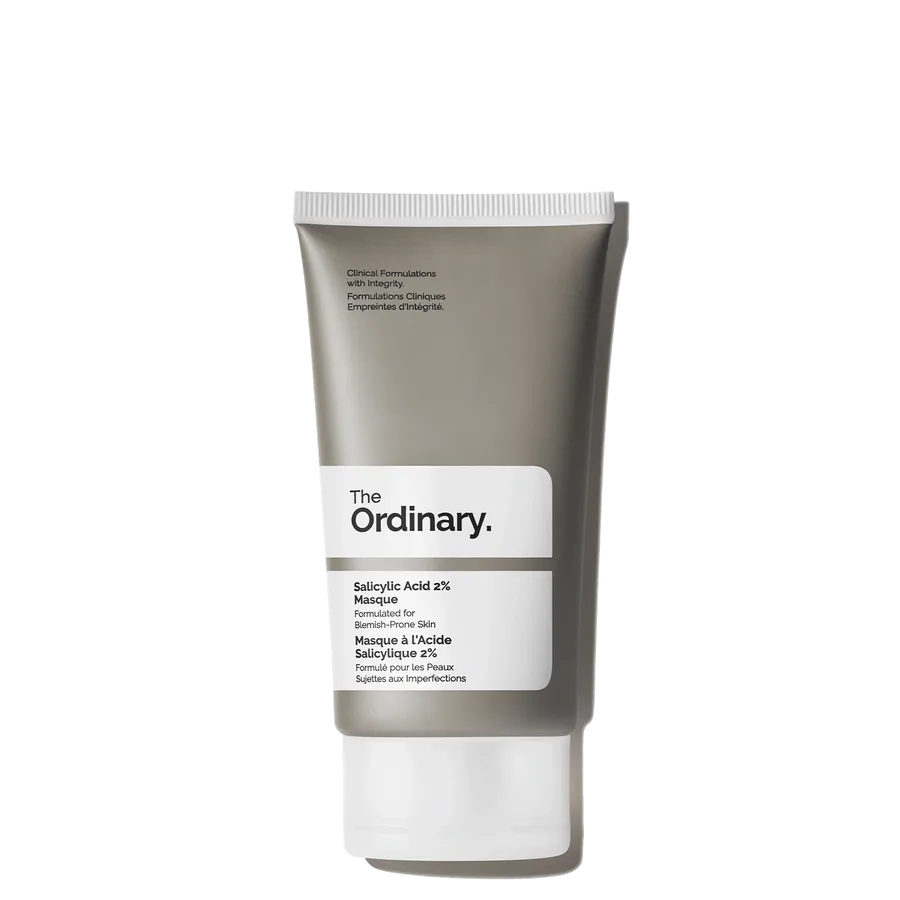
Salicylic Acid 2% Masque
Weekly Pore Reset
 Verified reviewer
Pros & cons.
- +Combines BHA chemical exfoliation with clay and charcoal physical oil absorption
- +Squalane and glycerin prevent the dehydrated, stripped feeling common with clay masks
- +10-minute contact time gives salicylic acid more penetration time than daily cleansers
- +Anti-sting compound makes the BHA contact comfortable during the treatment
- +Immediate post-mask smoothness and mattifying visible after first use
- +Available in 50ml and 100ml sizes for better long-term value
- +Cruelty-free, vegan, and fragrance-free
- −Once-weekly format limits cumulative exfoliation compared to daily BHA products
- −Charcoal can stain towels, washcloths, and light-colored clothing
- −Too drying for dry and sensitive skin types despite the hydrating ingredients
- −Charcoal's pore-clearing claims are overstated — the BHA does the real work
- −Tube packaging makes it difficult to assess remaining product
The full review.
Clay masks have a dirty secret, and it’s not the kind you wash off. Most of them are essentially engineered to dehydrate your skin. They absorb oil — which is the point — but they also pull water from the upper epidermis as they dry, leaving that tight, shrunken feeling that many users mistake for cleanliness. It’s not clean. It’s dehydrated. And for acne-prone skin that’s already dealing with a compromised barrier, it can make things worse.
The Ordinary’s Salicylic Acid 2% Masque is quietly different. It still uses kaolin clay and charcoal for oil absorption, and it still contains 2% salicylic acid for chemical exfoliation — but it also includes squalane and glycerin, two ingredients that actively fight the dehydration cycle. The result is a mask that clears pores without scorching the earth around them, which is a more radical proposition than it sounds.
The texture is a thick, dramatically dark paste — charcoal will do that. It spreads smoothly with fingertips and sets within a couple of minutes to a semi-matte finish that, notably, never gets brick-hard the way traditional clay masks do. That flexibility is the squalane at work, maintaining moisture contact with the skin throughout the treatment rather than pulling away as the mask dries. After ten minutes and a lukewarm rinse, the difference from a standard clay mask is immediately obvious: skin feels smooth and mattified, but not tight. Not stripped. Not parched.
The salicylic acid here benefits from an underappreciated advantage — time. In a daily cleanser, BHA has maybe sixty seconds of skin contact before it’s rinsed away. In this masque format, the 2% salicylic acid has a full ten-minute window to penetrate pores and dissolve the sebum plugs that create blackheads and congestion. The formula enhances this with dimethyl isosorbide, a penetration enhancer that helps the acid reach deeper into the pilosebaceous unit where congestion originates.
Results are immediate and cumulative. After the first use, pores look temporarily smaller, the skin surface is visibly smoother, and there’s a matte glow that lasts several hours. After three or four weekly sessions, the cumulative BHA exfoliation starts showing real improvement in blackhead density and overall texture. The T-zone, in particular, responds well — the combination of chemical exfoliation and physical oil absorption addresses the dual problems of congestion and excess sebum simultaneously.
The sensory experience is designed with the same thoughtfulness. The inclusion of 4-t-butylcyclohexanol — the same anti-sting compound found in the Anhydrous Solution — dampens the tingling that salicylic acid can cause during extended contact. Most users report either no tingling or a very mild sensation in the first minute that quickly subsides. This makes the mask significantly more approachable than BHA peels or high-concentration leave-on treatments.
Honesty check: charcoal’s contribution to this formula is primarily aesthetic and surface-level. While activated charcoal can adsorb oils and debris on contact, it doesn’t reach into pores the way salicylic acid does. The real work is being done by the BHA and the kaolin. The charcoal adds a satisfying visual element — the dark paste, the dramatic before-and-after of rinsing it off — and some supplementary oil control, but it’s the supporting actor here, not the lead.
The main limitation is one of format. A once-or-twice-weekly mask simply cannot deliver the consistent exfoliation of a daily BHA product. If your congestion is persistent and widespread, a daily salicylic acid solution or serum will produce faster, more thorough results. This mask is best positioned as a weekly reset — a deeper treatment that complements a daily routine rather than replacing it.
For dry and sensitive skin types, even the squalane and glycerin may not fully compensate for the combined drying potential of clay and BHA. Stick to once weekly, and follow immediately with a hydrating routine. If your skin feels tight or irritated afterward, this product isn’t for you — the Anhydrous Solution would be a gentler daily alternative.
At $13.80 for 50ml (with a 100ml option available for better per-unit value), this sits slightly higher in The Ordinary’s range than their serums — a reflection of the more complex formulation. It’s still remarkably affordable for a BHA mask with this ingredient quality, and the weekly-use format means a single tube lasts months.
The Ordinary took a category known for dehydrating skin and made a version that actually cares about what happens after you rinse. It’s not revolutionary in its ingredients — salicylic acid, kaolin, and charcoal are well-trodden ground. But in its formulation philosophy — the insistence that clearing pores shouldn’t come at the cost of skin hydration — it sets a standard that most clay masks still don’t meet.
Texture
The texture is a thick, dramatically dark paste — charcoal will do that. It spreads smoothly with fingertips and sets within a couple of minutes to a semi-matte finish that, notably, never gets brick-hard the way traditional clay masks do. That flexibility is the squalane at work, maintaining moisture contact with the skin throughout the treatment rather than pulling away as the mask dries. After ten minutes and a lukewarm rinse, the difference from a standard clay mask is immediately obvious: skin feels smooth and mattified, but not tight. Not stripped. Not parched.
Scent
The sensory experience is designed with the same thoughtfulness. The inclusion of 4-t-butylcyclohexanol — the same anti-sting compound found in the Anhydrous Solution — dampens the tingling that salicylic acid can cause during extended contact. Most users report either no tingling or a very mild sensation in the first minute that quickly subsides. This makes the mask significantly more approachable than BHA peels or high-concentration leave-on treatments.
Best for
The T-zone, in particular, responds well — the combination of chemical exfoliation and physical oil absorption addresses the dual problems of congestion and excess sebum simultaneously.
Works for
Results are immediate and cumulative. After the first use, pores look temporarily smaller, the skin surface is visibly smoother, and there’s a matte glow that lasts several hours. After three or four weekly sessions, the cumulative BHA exfoliation starts showing real improvement in blackhead density and overall texture.
Not ideal for
For dry and sensitive skin types, even the squalane and glycerin may not fully compensate for the combined drying potential of clay and BHA. Stick to once weekly, and follow immediately with a hydrating routine. If your skin feels tight or irritated afterward, this product isn’t for you — the Anhydrous Solution would be a gentler daily alternative.
Ingredient analysis.
Full INCI list
Aqua (Water), Kaolin, Squalane, Glycerin, Dimethyl Isosorbide, Silica Cetyl Silylate, Salicylic Acid, Sodium Polyacrylate, Pentylene Glycol, Charcoal Powder, 4-t-Butylcyclohexanol, Sclerotium Gum, Acacia Senegal Gum, Xanthan Gum, Phytic Acid, Polysorbate 20, Trisodium Ethylenediamine Disuccinate, Chlorphenesin, Phenoxyethanol
Skin match.
The science.
The Science
The masque format improves salicylic acid pharmacokinetics. Rinse-off products like cleansers limit BHA contact time to 30-60 seconds, which restricts penetration into the pilosebaceous unit. A 10-minute leave-on window lets more acid reach the follicular keratinocytes where comedones form. Dimethyl isosorbide acts as a penetration enhancer to optimize this delivery. Dimethyl isosorbide is an established pharmaceutical excipient that increases skin permeation of various actives by disrupting the organized lipid structure of the stratum corneum.
The formula uses chemical (salicylic acid) and physical (kaolin clay) methods to manage pores via two mechanisms. Salicylic acid uses desmolytic action to dissolve the intercellular cement between corneocytes and promote exfoliation, while also reducing sebocyte lipogenesis (oil production) at a cellular level. Kaolin, a hydrated aluminum silicate, uses surface adsorption to physically bind to sebum and draw it out of pores. These complementary mechanisms produce additive benefits compared to using either approach alone.
A 2020 multicenter prospective observational study in Clinical, Cosmetic and Investigational Dermatology showed that salicylic acid-based product combinations effectively reduced comedonal and papular acne lesions with good tolerability over 56 days of treatment. This study did not test the specific masque format, but it supports the cumulative efficacy of regular salicylic acid application for acne management. The phytic acid in this formula provides mild chelating and exfoliating functions, helping to even skin tone by interfering with melanin transfer—a secondary benefit for post-inflammatory hyperpigmentation.
References
- Effectiveness of a combination of salicylic acid-based products for the treatment of mild comedonal-papular acne: a multicenter prospective observational study — Clinical, Cosmetic and Investigational Dermatology (2020)
- Treatment of acne vulgaris with salicylic acid pads — Clinical Therapeutics (1992)
Dermatologist Perspective
Board-certified dermatologists view this mask as a well-formulated introductory salicylic acid product. Dermatologists note the masque format provides controlled, time-limited exposure to BHA, which reduces the risk of over-exfoliation compared to leave-on products that stay on the skin indefinitely. The formula includes hydrating ingredients alongside the exfoliating and oil-absorbing components. Dermatologists commonly advise patients that the biggest mistake with clay masks is allowing excessive dehydration, which can trigger compensatory oil production and paradoxically worsen congestion. Board-certified dermatologists recommend patch testing before full-face application and note this product should not replace prescription acne treatments for moderate to severe acne.
Where it fits in your routine.
Apply an even layer to clean, dry skin at night. Avoid the eye area and broken or irritated skin. Leave on for 10 minutes maximum; do not let the mask dry or crack. Rinse well with lukewarm water. Follow immediately with a hydrating toner or serum, then moisturizer. Use once or twice per week. Do not use other exfoliating acids or retinoids the same evening. Apply SPF 30+ the next morning.
At $13.80 for 50ml, this is priced slightly above The Ordinary's serums but remains a strong value for a combination BHA-clay mask. With once-weekly use, a 50ml tube lasts approximately 2-3 months, bringing the per-use cost to around $1-$1.50. The 100ml option offers better per-unit value for those who plan to make this a routine staple. Comparable BHA clay masks from other brands typically range from $25-$50, making this product less than half the price with similar or better ingredient quality.
Oily and combination skin types need a weekly deep-cleaning treatment for blackheads, enlarged pores, and congestion. This works for users wanting both BHA and clay in one product. It suits anyone who likes a weekly mask ritual but wants real skin health improvements instead of just a temporary tightening sensation.
Dry and sensitive skin types risk over-stripping from the clay and acid combination. This includes anyone with active eczema, rosacea, or a compromised skin barrier. For daily acne treatment, a leave-on BHA serum or solution delivers more consistent results than a weekly mask.
Product details.
spring summer
The backstory.
Released in 2020, this masque filled a gap in The Ordinary's lineup — a treatment-format product for people who wanted more intensive weekly pore care than a daily serum could provide. The inclusion of charcoal was a rare aesthetic concession for The Ordinary, a brand known for clinical minimalism, and it quickly became one of their most visually distinctive and Instagram-friendly products.
About The Ordinary
Established Brand (5–20 years)The Ordinary launched in 2016 under DECIEM (now wholly owned by Estée Lauder Companies as of 2024) and became the most recognized name in affordable, no-nonsense skincare. The brand's transparent ingredient concentrations and pricing earned a massive following and widespread dermatologist acknowledgment, though its products use well-studied ingredients instead of proprietary clinical trials.
Common myths.
Leave clay masks on until they are completely dry and cracking for maximum effect.
Leaving this mask on longer than 10 minutes does not improve results; it only increases irritation and drying. The salicylic acid works within the contact window, and the kaolin absorbs excess oil quickly. Over-drying the mask pulls moisture from the skin instead of pores, leaving skin dehydrated without additional benefit.
Charcoal pulls toxins and impurities from deep within your pores.
Charcoal adsorbs primarily at the skin surface, binding to oils and debris on contact. It does not pull impurities from deep within pores; salicylic acid does that. The charcoal in this formula adds surface-level oil control, but the BHA and clay combination does the heavy lifting.
FAQ.
How often should I use The Ordinary Salicylic Acid 2% Masque?
The Ordinary recommends use once or twice per week. Start once weekly and move to twice weekly if your skin tolerates it. Using this mask more than twice weekly risks over-exfoliating, which damages your skin barrier and worsens the congestion you treat. Continue your regular skincare routine on non-mask days.
Can I leave The Ordinary Salicylic Acid Masque on overnight?
No — leave this mask on for at most 10 minutes, then rinse well with lukewarm water. Leaving it on longer increases irritation and dryness risks without improving results. The salicylic acid, clay, and charcoal work within the 10-minute window.
Does The Ordinary Salicylic Acid Masque help with blackheads?
Yes — this is a top affordable option for blackheads. The 2% salicylic acid enters sebum-filled pores to dissolve the oxidized oil plugs that form blackheads, while the kaolin clay and charcoal absorb excess surface oil. Most users see blackhead reduction after 2-3 weekly applications.
Why does my skin tingle when I use this mask?
Mild tingling for the first few minutes is a normal response to 2% salicylic acid touching your skin. The formula uses 4-t-butylcyclohexanol to minimize this sensation. If tingling is intense, burns, or lasts longer than a few minutes, rinse immediately — your skin may be too sensitive for this product or your barrier may be compromised.
Can I use The Ordinary Salicylic Acid Masque with retinol?
Yes, but not on the same evening. Use this mask on a night when you skip your retinol — for example, mask on Monday evening, retinol on Tuesday through Saturday evenings. Combining BHA exfoliation and retinol in the same session can over-stress the skin barrier, leading to excessive irritation and dryness.
Community
What the community says.
"Visibly smoother and clearer skin after first use"
"Doesn't leave skin feeling tight or stripped like other clay masks"
"Effectively reduces blackheads with weekly use"
"Charcoal gives a satisfying deep-clean feel"
"Affordable enough to use generously"
"Can be drying if left on longer than 10 minutes"
"Charcoal can stain light-colored towels and washcloths"
"Some users expected more dramatic results from a 2% BHA mask"
"Tube packaging makes it hard to get remaining product out"
"Not suitable for sensitive or dry skin despite the squalane"
Featured in.
People also looked at.