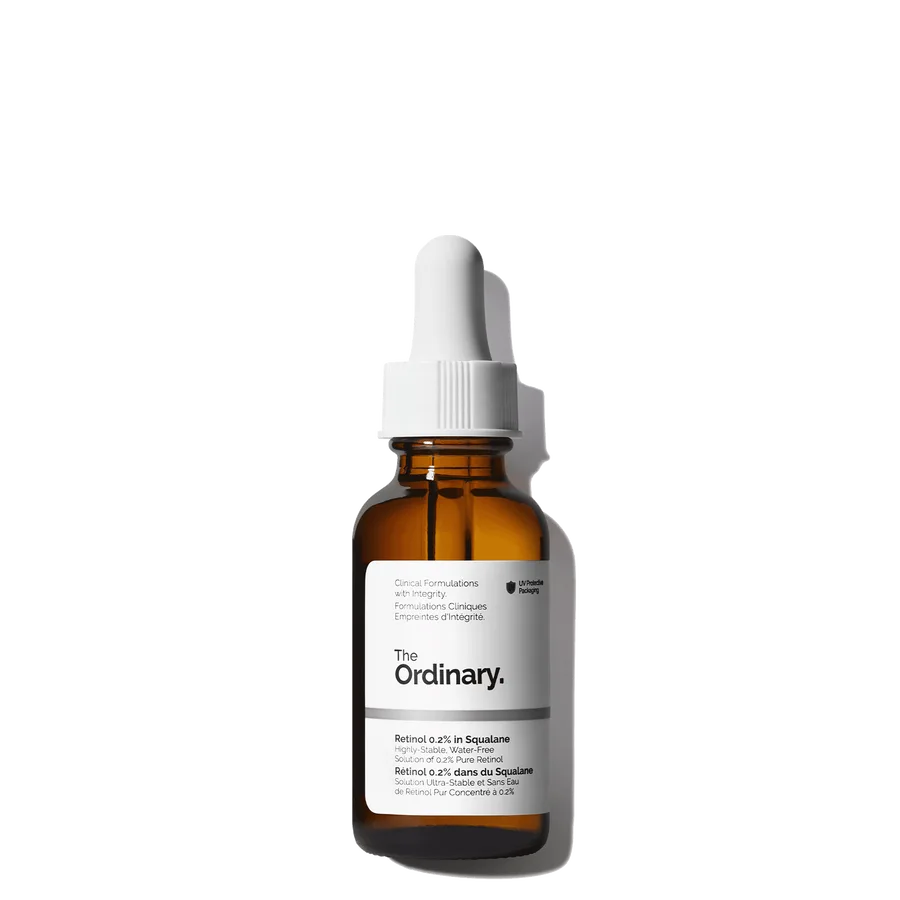
Retinol 0.2% in Squalane
Best Budget Retinol Starter
 Verified reviewer
Pros & cons.
- +Exceptionally affordable at $8.10 for a clinically relevant retinol concentration
- +Ultra-short ingredient list minimizes risk of adverse reactions from unnecessary additives
- +Anhydrous squalane vehicle improves retinol stability and reduces irritation potential
- +Designed as part of a progressive strength system for easy dose escalation
- +Lightweight oil texture absorbs quickly without feeling greasy or heavy
- +Fragrance-free, alcohol-free, and silicone-free formula suits sensitive routines
- +Vegan and cruelty-free with Leaping Bunny certification
- +Three to four months of product life per bottle at recommended usage
- −Results are noticeably slower than higher-concentration retinol or prescription retinoids
- −Dropper packaging exposes retinol to air degradation with each use
- −Three-month post-opening shelf life requires refrigeration and timely use
- −Oil base may feel too heavy for oily skin types in humid conditions
- −No additional barrier-support ingredients like ceramides or peptides
- −Contains BHT, a synthetic antioxidant some users prefer to avoid
The full review.
The skincare industry flinched when The Ordinary launched in 2016. The brand sold clinical actives at prices that made established companies look like scams. The Retinol 0.2% in Squalane was part of that launch, and nearly a decade later, it proves effective skincare can cost less than a morning coffee.
The formula is simple. It has eight ingredients. Squalane forms the base, while caprylic/capric triglyceride and jojoba oil provide lipid support. The retinol concentration is 0.2%—the gentlest level in The Ordinary’s three-step retinol ladder. A trio of antioxidants (tomato fruit extract, rosemary leaf extract, and hydroxymethoxyphenyl decanone) plus BHT stabilize the retinol and prevent degradation.
This minimalism defines the product; it is either its greatest strength or its main limitation. There are no peptides, no ceramides, and no hyaluronic acid—none of the extras found in retinol serums costing five to twenty times more. You get pure retinol in a logical vehicle. Squalane delivers lipophilic actives like retinol effectively because it mimics skin lipids, helping the retinol penetrate while preventing the dryness that often stops retinol beginners.
On the skin, it feels like a lightweight oil. A few drops spread easily, absorb within one to two minutes, and leave a slight dewy finish that works under a moisturizer. It has no scent, no tingling, and no irritation. This restraint is refreshing for a category often linked to redness and peeling.
The 0.2% concentration works well for beginners. Research, including a study in the Journal of Cosmetic Dermatology comparing retinol concentrations, shows that concentrations below 0.5% improve fine lines, texture, and photodamage over time. The tradeoff is speed. While prescription tretinoin might show changes in four weeks, this product works on a gentler timeline. Most users report smoother skin texture within two to three weeks, and fine line improvement appears around the six-to-eight-week mark. Do not expect dramatic results in one month.
The anhydrous (water-free) formulation is a strength. Retinol degrades with water, light, and oxygen. By removing water, The Ordinary helps the retinol stay potent. The amber glass bottle protects against light, though the dropper introduces air with each use. The brand addresses this by recommending refrigeration and a three-month use-after-opening window.
This product has limits. It won’t repair a damaged skin barrier, provide deep hydration for dry skin, or deliver the rapid transformation of prescription retinoids. It is a beginner tool with beginner limitations, and the price reflects that.
The texture suits most but not everyone. If you have oily skin in a humid climate, the oil base may feel heavy in an evening routine. If you avoid BHT (a synthetic antioxidant preservative), this formula lacks an alternative stabilizer.
At $8.10 for 30ml, the value is high. This provides three to four months of a clinically relevant retinol concentration for less than a fancy latte. You can buy all three strengths in The Ordinary’s retinol line—moving from 0.2% to 0.5% to 1%—for less than one bottle of most prestige retinol serums. This is a different philosophy regarding access to effective skincare.
The product is a top recommendation for beginner retinols for a reason. It does exactly what it promises at a price that removes financial barriers. In a market of luxury pricing and aspirational marketing, The Ordinary’s version proves the ingredient matters more than the story.
Formula
Ingredient analysis.
Full INCI list
Squalane, Caprylic/Capric Triglyceride, Simmondsia Chinensis (Jojoba) Seed Oil, Retinol, Solanum Lycopersicum (Tomato) Fruit Extract, Rosmarinus Officinalis (Rosemary) Leaf Extract, Hydroxymethoxyphenyl Decanone, BHT
Skin match.
The science.
The Science
Retinol is a top-tier topical anti-aging ingredient. Decades of research show it stimulates collagen synthesis, accelerates epidermal turnover, and improves photodamaged skin. This 0.2% formula uses a lower concentration than many clinical studies, but it still works. A 2015 double-blind randomized study in the Journal of Cosmetic Dermatology compared a 0.2% retinol formulation against 0.025% tretinoin in 120 women. The results showed comparable improvements in wrinkles, mottled pigmentation, and overall photodamage, though the retinol formulation was better tolerated. A 2015 study in the Archives of Dermatological Research shows that 0.1% stabilized retinol applied over one year improved crow's feet by 44% and mottled pigmentation by 84%. This confirms low-concentration retinol delivers results with extended use.
The anhydrous delivery system in this product is scientifically noteworthy. Retinol is unstable and degrades quickly when exposed to water, oxygen, and UV light. The Ordinary uses squalane to suspend the retinol. Squalane is a hydrocarbon that does not undergo oxidation reactions like water-based vehicles. Squalane also acts as a skin penetration enhancer for lipophilic compounds, so it may deliver retinol into the stratum corneum more efficiently than water-based formulations.
A 2022 systematic review in the Journal of Cosmetic Dermatology examined nine randomized, double-blind, vehicle-controlled trials of over-the-counter retinol products. While evidence quality varied, multiple studies showed mild to moderate improvements in fine lines with consistent use. The review notes that OTC retinol works, but more gradually and subtly than prescription retinoids.
References
- A double-blind randomized study comparing the association of Retinol and LR2412 with tretinoin 0.025% in photoaged skin — Journal of Cosmetic Dermatology (2015)
- One-year topical stabilized retinol treatment improves photodamaged skin in a double-blind, vehicle-controlled trial — Archives of Dermatological Research (2015)
- Evidence for the Efficacy of Over-the-counter Vitamin A Cosmetic Products in the Improvement of Facial Skin Aging: A Systematic Review — Journal of Cosmetic Dermatology (2022)
Dermatologist Perspective
Dermatologists often recommend The Ordinary Retinol 0.2% in Squalane as a first retinol for patients intimidated by prescription-strength retinoids or those prone to retinol irritation. Board-certified dermatologists say the low concentration and lipid-rich vehicle make it a good starting point to build retinol tolerance, especially for patients in their late twenties to early thirties starting preventative anti-aging. The progressive strength system (0.2% → 0.5% → 1%) follows clinical guidance to titrate slowly and minimize barrier disruption. Dermatologists stress that users must use daily broad-spectrum sunscreen because retinol increases photosensitivity — a fact The Ordinary states on their packaging and product page.
Where it fits in your routine.
Apply 4-5 drops to clean, dry facial skin at night. Use 2-3 nights per week for the first month, then increase to nightly use as tolerated. Avoid the eye area and corners of the mouth where skin is thinnest. Follow with a moisturizer to seal in hydration. Do not use AHAs, BHAs, vitamin C, or copper peptides in the same routine. Apply broad-spectrum SPF 30+ every morning. Refrigerate after opening and use within 3 months. If irritation occurs, reduce frequency or mix drops into your moisturizer before applying.
At $8.10 for 30ml, this is one of the most affordable pure retinol formulations available. Nightly use costs roughly $2-3 per month, making the skincare expense negligible. The Ordinary's pricing philosophy — transparent ingredient sourcing, minimal marketing spend, functional packaging — shows here. While the formula lacks the thick feel and supporting ingredients of retinol serums costing $40-$100+, the core active is identical. If you are starting a retinol journey, there is no financial reason to begin elsewhere.
First-time retinol users seeking the lowest-risk retinoid introduction. Budget-conscious skincare enthusiasts who won't overpay for one active ingredient. People in their mid-twenties to thirties starting a preventative anti-aging routine.
Retinol aggravates active eczema, rosacea flares, or a compromised skin barrier, no matter the concentration. For fast results, start at 0.5% or ask a dermatologist about prescription retinoids. Pregnant or breastfeeding individuals must avoid all retinol products.
Product details.
Lightweight oil with a smooth, non-sticky feel. The squalane base provides silky slip and absorbs quickly without a heavy residue.
Virtually unscented. Some users notice a faint, neutral oil smell that vanishes immediately upon application.
Amber glass bottle with a dropper cap. The tinted glass protects the photosensitive retinol from light, but the dropper design lets air in with each use.
Most users report no irritation at this concentration during week 1. Some feel slight warming or tingling on first application, but this subsides quickly. Mild dryness or flaking often occurs in weeks 2-3 as skin acclimates to retinol; this is normal and typically resolves. The oil texture feels comfortable immediately and layers well under moisturizer.
3-4 months with nightly facial application using 4-5 drops per use
3 months
All Year
The backstory.
Launched as part of The Ordinary's original wave of products that disrupted the skincare industry by offering clinical-grade actives at drugstore prices, this retinol trio (0.2%, 0.5%, 1%) was designed as a progressive system. The 0.2% was specifically created as the on-ramp — a way to introduce retinol-naive skin to the gold standard of anti-aging without the sticker shock or the intimidation factor.
About The Ordinary
Established Brand (5–20 years)The Ordinary launched in 2016 under DECIEM (now wholly owned by Estée Lauder Companies as of 2024). It is the most recognized name in affordable, no-nonsense skincare. The brand's transparent ingredient concentrations and pricing earned a massive following and widespread dermatologist acknowledgment. Its products use well-studied ingredients instead of proprietary clinical trials.
Common myths.
Higher retinol percentages work better; 0.2% is too weak to have a meaningful effect.
Research shows low retinol concentrations (0.1-0.25%) improve fine lines and skin texture over time. The 0.2% concentration in this formula is clinically relevant. It builds tolerance so users can move to higher strengths without damaging their skin barrier.
The oily texture clogs pores and causes breakouts.
Squalane has a 0-1 comedogenic rating and mimics human sebum. This formula's oil vehicle works well for most skin types, including combination skin. Retinol accelerates cell turnover to cause purging, not the oil base.
FAQ.
Is The Ordinary Retinol 0.2% in Squalane good for beginners?
Yes — this is an entry-level retinol. The 0.2% concentration in a squalane base delivers enough retinol for visible results while minimizing the irritation, peeling, and dryness higher-strength formulas cause. The Ordinary designed The Ordinary retinol line as a progression system, starting with 0.2% before moving to 0.5% and then 1%.
Can I use The Ordinary Retinol 0.2% every night?
Use this 2-3 nights per week, then increase frequency as skin builds tolerance. Most users reach nightly application within 3-4 weeks due to this gentle concentration. If redness, flaking, or stinging persists, use it every other night and apply a good moisturizer afterward.
Why does this retinol need to be refrigerated?
Pure retinol is unstable and degrades from heat, light, and air. The Ordinary recommends refrigeration to slow degradation and keep the 0.2% concentration for the 3-month post-opening life. The anhydrous squalane base helps stability, but cold storage adds protection.
Can I mix The Ordinary Retinol 0.2% with my moisturizer?
Yes — mixing a few drops into your moisturizer uses a technique called buffering to reduce irritation. This works well during your first few weeks of retinol use. The squalane vehicle in this formula blends with most cream and lotion textures without pilling.
How long before I see results from The Ordinary Retinol 0.2%?
Skin texture feels smoother within 2-4 weeks. Fine lines, uneven tone, and radiance show improvement around 6-8 weeks. Consistent use for 3-6 months yields anti-aging results like reduced wrinkle depth and improved firmness. At 0.2%, this concentration works more slowly than higher-strength retinols but causes less irritation.
What should I not use with The Ordinary Retinol 0.2%?
Do not use this product with direct acids (AHA/BHA/glycolic/lactic), pure vitamin C (L-ascorbic acid), copper peptides, or other retinoid products. These combinations cause irritation or lower efficacy. Use these actives on alternate nights or in your morning routine, and keep retinol for evenings.
Is The Ordinary Retinol 0.2% safe during pregnancy?
No. All retinol and retinoid products, including this one at 0.2%, are unsafe during pregnancy or breastfeeding. The Ordinary states this on their product page. Ask your healthcare provider for pregnancy-safe alternatives — bakuchiol-based products often substitute for retinol during this time.
What the community says.
"Exceptional value for a pure retinol product"
"Gentle enough for retinol beginners"
"Minimal irritation compared to higher-strength options"
"Simple, short ingredient list is reassuring"
"Oil texture absorbs well without feeling greasy"
"Results are slow and subtle at this concentration"
"Oily texture not ideal for acne-prone skin in humid climates"
"Dropper packaging exposes retinol to air over time"
"Some users outgrow it quickly and need to move up in strength"
People also looked at.