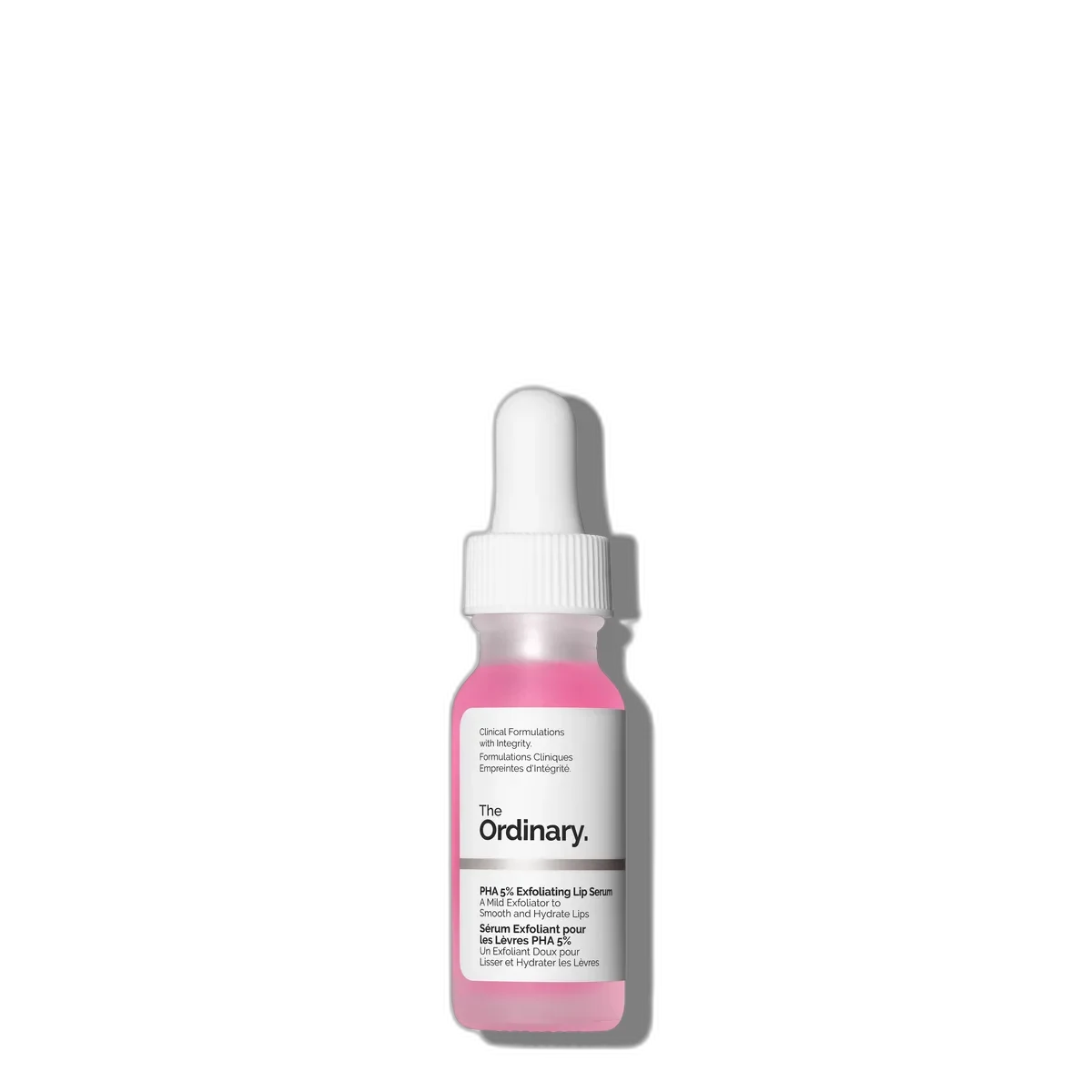
PHA 5% Exfoliating Lip Serum
Overnight Flake Eraser
 Verified reviewer
Pros & cons.
- +PHA lead is the correct acid choice for thin lip tissue
- +Glycerin-first base keeps the acid experience comfortable
- +Ectoin adds a lip-appropriate secondary hydrator
- +Doe-foot applicator is more controlled than a dropper
- +Measurable smoothing after 1–2 weeks of nightly use
- +Under $10 in a category that usually charges $20+
- +Fragrance-free, vegan, pregnancy-compatible
- +Layers cleanly under an occlusive balm for very dry lips
- −Mild tingle the first few nights for reactive lips
- −Still needs an occlusive balm on top for very chapped skin
- −Not safe on cold sores, cracked corners, or broken lip skin
- −15 mL is a small bottle, even at nightly use cadence
- −Black carrot juice is cosmetic filler, not therapeutic
The full review.
Lip exfoliation has lacked good options for a long time. Most choices fall into two camps: drugstore sugar-and-oil scrubs that require careful, gentle application to avoid tearing lips, or luxury lip treatments that put a face AHA in expensive packaging for thirty dollars. Neither solves the core issue: lip vermillion behaves differently than facial skin and needs a formula built for its specific biology. This PHA serum is the first widely available attempt to address that need at an affordable price.
The formulation is unusually thoughtful for a product under ten dollars. The choice of gluconolactone is intentional. PHAs have larger molecular weights than glycolic or lactic acid, so they do not penetrate deeply into thin tissue. While this is a limitation for facial skin, it is the goal for lip vermillion. The acid loosens the surface flake layer without reaching reactive tissue underneath. A shared AHA load of about one and a half percent — citric, malic, and tartaric — acts as a secondary polish and brings the pH to around four.
The ingredient deck is primarily glycerin. This is a glycerin-first product with exfoliating properties rather than an acid with added hydration. On the lips, the first sensation is a slick, cushioned feel rather than a sting. This inversion — humectant primary, acid secondary — makes the experience gentler than using a face toner on the mouth. Ectoin acts as a secondary hydrator to help cells hold water under stress, which suits skin that sheds and cracks. Black carrot juice provides a small antioxidant contribution and a faint pink color that is purely cosmetic.
The packaging is another upgrade. The Ordinary usually uses droppers, but droppers are poor for lip products because they run and make dosing difficult. A doe-foot applicator is more hygienic and controlled. This detail matters for nightly use, which the brand expects.
Daily use shows results quickly. Most users feel a faint, short-lived tingle that fades in under a minute — the feedback of a well-calibrated acid, not a burn. By morning, lips that were flaky for weeks look smoother. The effect builds over ten days of nightly use. The baseline lip texture improves: less chronic flaking, better lipstick color payoff, and a plumper appearance from the combination of exfoliation and heavy glycerin hydration. These are small, real improvements that change how makeup sits and how lips look in the morning.
The product does not solve every lip problem. If flaking comes from a dehydrated stratum corneum — common in winter or for mouth-breathers — the serum exfoliates the surface but won’t restore the tissue. In those cases, sealing with a plain petrolatum or ceramide balm is the correct move. This serum is also not for actively cracked corners, cold sores, or open lip splits; the acid stings broken tissue. You should heal those areas before exfoliating. Do not pair it with strong retinoids around the mouth on the same night.
The serum earns its place through its price-to-formulation ratio. At eight dollars and fifty cents for fifteen milliliters, it costs three or four times less than luxury lip treatments while doing better work. It is more effective for chronic flakiness than sugar scrubs that cost a third as much, as scrubs require specific technique while this only requires application. The 15 mL bottle lasts three to four months with nightly use, making the weekly cost negligible.
Deciem did not overbuild this. There is no added retinol, no mint, and no unnecessary peptides. The formulation does one thing — gently exfoliate and hydrate lip skin — with a short ingredient deck. This restraint makes it a clean recommendation: users wanting chemical lip exfoliation get a competent, cheap version, and others can skip it. In a category driven by aesthetics, this is a useful reset.
Ingredient analysis.
Full INCI list · pH 4
Glycerin, Aqua/Water/Eau, Gluconolactone, Ectoin, Daucus Carota Sativa (Carrot) Juice, Citric Acid, Malic Acid, Tartaric Acid, Sodium Hydroxide, Xanthan Gum, Potassium Sorbate, Sodium Benzoate
Skin match.
The science.
The Science
The formulation logic here rests on the well-characterized behavior of polyhydroxy acids on thin and reactive skin. Gluconolactone is larger and more hydrophilic than the classic AHAs, which means slower penetration into the epidermis and a lower likelihood of stinging on compromised tissue — properties that have made PHAs a standard recommendation for rosacea and post-procedure skin, and that translate naturally to lip vermillion where the barrier is functionally thinner than on the cheeks. The 5% gluconolactone load is consistent with published work on PHA tolerance in sensitive-skin contexts, and the 1.5% shared load of citric, malic, and tartaric acid is small enough to sit within the buffering capacity of the formula's glycerin base without pushing the pH below around four. Ectoin is the most interesting supporting choice — it is an osmolyte originally isolated from halophilic bacteria that helps cells maintain hydration under osmotic stress, and a growing body of skincare research supports its use in barrier-compromised and reactive skin, including inflammatory conditions like atopic dermatitis. On lip skin, which has no stratum corneum lipid barrier in the traditional sense and is constantly losing water to the environment, an osmolyte pairing with a humectant is mechanistically coherent. The AHA component provides additional keratolytic activity at a level that would be negligible on thick facial skin but meaningful on the thinner vermillion. The science section on a product like this is less about exotic evidence and more about the discipline of picking the right molecules for the tissue — which is what makes the formulation stand out.
Dermatologist Perspective
Dermatologists generally favor chemical over mechanical exfoliation on lip tissue for the same reasons they favor it on the face: less unintentional trauma, more consistent results, and fewer microtears that can act as entry points for irritation or infection. PHAs specifically are frequently recommended for patients with rosacea, sensitive skin, or compromised barrier function, where a glycolic or stronger AHA would be too harsh. That case-finding pattern maps cleanly onto lip vermillion. Board-certified dermatologists note that chronic lip flakiness is often a combination of dehydration and accumulated dead cell buildup, and treating only the surface flake without addressing the underlying hydration usually leads to rebound dryness. A formula that leads with glycerin and adds a supporting osmolyte addresses that hydration side in the same step as the exfoliation, which is a reasonable clinical approach. The main cautions dermatologists flag are avoiding use on actively chapped or split lip skin until it has healed, not combining with prescription topical retinoids in the same session if those retinoids reach the lip border, and stopping use if any persistent stinging or redness develops rather than pushing through.
Where it fits in your routine.
At night, cleanse your face and apply moisturizer, then use the doe-foot applicator to spread a thin coat of the serum over your lips, corners, and outer border. Wait 30 seconds for absorption before closing your mouth. For very dry lips, apply a bland petrolatum or ceramide-based balm to seal in hydration overnight. Your lips will look smoother in the morning; rinse or wipe any residue, then apply balm and sunscreen as usual. Use the serum every night for the first two weeks to see results, then switch to nightly or every-other-night use based on lip response. Skip use if you have cracked corners, cold sores, or recently applied a strong retinoid to the mouth area.
At $8.50 for 15 mL, this is one of the easiest value calls in the entire lip care category. Comparable chemical lip treatments from other brands commonly sit at $22–$30 for similar or smaller sizes, and many of those are essentially repurposed face AHAs rather than lip-specific formulations. The Ordinary's price isn't just cheap — it is low enough that buying the product to test whether chemical lip exfoliation works for you becomes a no-brainer experiment. Nightly use runs the bottle down in about three to four months, so the per-week cost is well under a dollar even at committed use. The only size note worth flagging is that there is no larger version available, so if you love it you'll be reordering every quarter.
This works for people with chronically flaky, dull, or textured lips who found sugar scrubs ineffective. It also suits frequent matte lipstick wearers wanting better texture for color payoff. It is a strong pick for anyone who finds face AHAs too harsh for the lip area and needs a PHA-led alternative built for thin skin.
Skip if very reactive lips flare from glycerin-heavy products, if you have active cold sores or cracked lip corners, or if you regularly use a prescription retinoid near the mouth area. Also skip if you use petrolatum-heavy occlusive balms exclusively and have no flaking — you don't need an exfoliant.
Product details.
Essentially fragrance-free — a very mild neutral note from the acid blend.
15 mL frosted glass bottle with a doe-foot applicator, a departure from the standard dropper Deciem usually defaults to. Finish non-greasylightweight
The first night usually causes a short, mild tingle that fades within a minute as the acid blend settles. Most people wake up with softer, less textured lips after one use. A two or three night adjustment period is normal for very chapped lips — use a bland occlusive balm during that window to increase comfort.
Roughly 3–4 months with nightly use.
12 months
fall winter
The backstory.
The Ordinary expanded into lip care meaningfully in 2024–2025, adding a squalane-amino-acid balm and then this PHA serum to a line that had previously stayed face-only. The lip serum is notable for being one of the first chemical-exfoliant lip products at a sub-$10 price — a category that had otherwise drifted toward luxury positioning with brands charging $20 or more for similar mechanics.
About The Ordinary
Established Brand (5–20 years)The Ordinary launched in 2016 and has nearly a decade of history selling studied actives at accessible prices. The brand's lip line is newer than its face products. Individual lip launches have less accumulated review data, though the underlying formulation philosophy is the same.
Common myths.
Physical lip scrubs work better than chemical exfoliants.
Mechanical scrubs cause microtears on lip skin and leave dead flakes partially attached. A PHA-led chemical exfoliant at this pH dissolves dead cell bonds without abrading the tissue beneath. This is why people with chronically flaky lips see better results with a chemical formula than a sugar scrub.
Exfoliating lips makes them drier.
Exfoliant-treated lips get dry because users apply acid without a humectant or occlusive. This formula solves half the problem with its glycerin-heavy base; use a plain balm after to seal the rest.
FAQ.
Does this sting?
Most people feel nothing or a faint one-minute tingle during the first few uses; this fades as lips adjust. The glycerin-heavy base buffers the acid load. PHA molecules are too large to penetrate thin lip skin deeply, so The Ordinary chose it as the lead acid here.
Can I use it every night?
Yes — the formula works for nightly use. Most people see the best flake pattern changes after 1–2 weeks of consistent overnight application. If lips feel over-exfoliated, use it every other night and seal with a plain petrolatum-based balm.
How does it compare to a sugar lip scrub?
A sugar scrub physically abrades the surface. It relies on hard rubbing to detach dead cells, which can create microtears on already-compromised lips. This chemical serum dissolves the bonds of dead cells without friction. This method is gentler and more consistent on chronically flaky lips.
Can I wear it under lipstick the next day?
Yes — the serum absorbs fully overnight. By morning, lips are smoother and lipstick applies better. To use it as a daytime primer under a matte lip, apply it, wait two minutes to sink in, then layer your balm and color.
Is it safe while pregnant?
The acid system here — PHA plus low-dose AHAs — is generally pregnancy-safe because it lacks salicylic acid or retinoids. As always, ask your OB or dermatologist about specific concerns.
Why does the bottle look faintly pink?
Black carrot juice provides that tint and a small antioxidant load. The pink color is cosmetic and does not affect exfoliation; it fades from the lips seconds after application.
Can I use it on cold sores or broken skin?
No — skip it on active cold sores, cracked mouth corners, or broken lip skin. The acid load stings compromised tissue. Let those areas heal fully before you reintroduce exfoliation.
What the community says.
"Genuinely smooths flaky lips overnight"
"Doesn't sting like scrub-based lip exfoliants"
"Under $10 for a category that usually costs $20+"
"Faint tingle the first few uses"
"Still need a balm on top if lips are very dry"
"Small bottle size"
Featured in.
People also looked at.