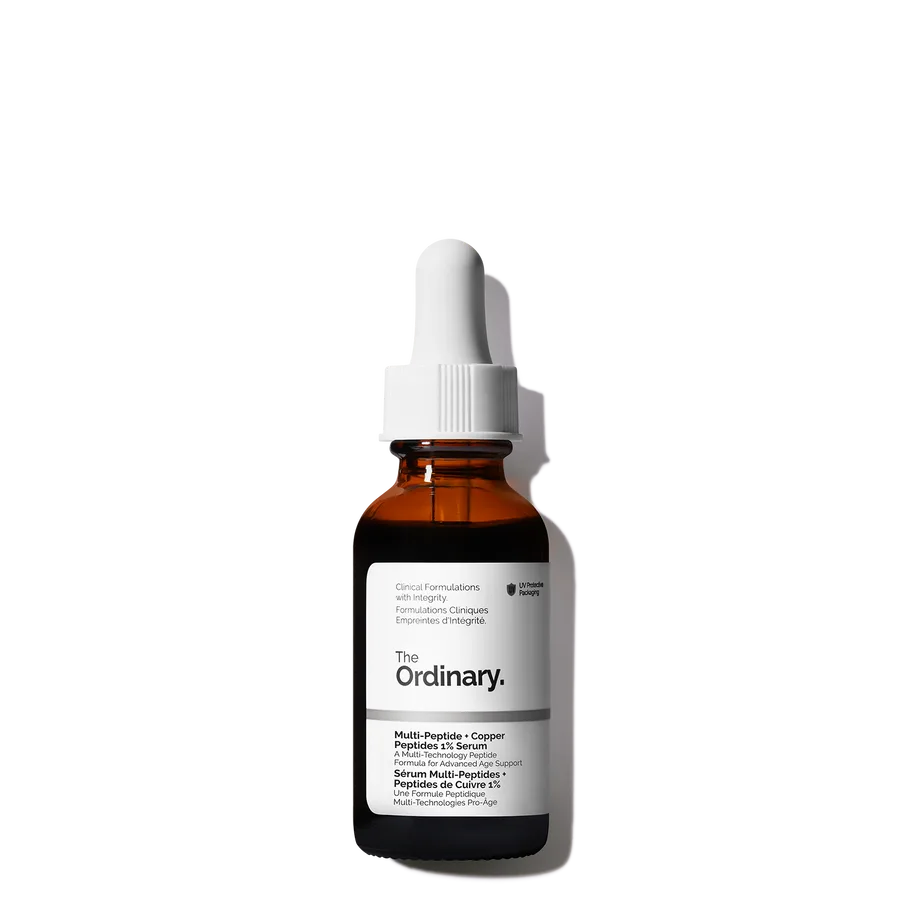
Multi-Peptide + Copper Peptides 1% Serum
The Peptide Powerhouse
 Verified reviewer
Pros & cons.
- +Six peptide technologies including 1% copper tripeptide-1 at a fraction of competitor pricing
- +Comprehensive approach targeting multiple aging mechanisms simultaneously from different pathways
- +Backed by a full amino acid complex, NMF components, and dual hyaluronic acid forms
- +Lightweight, non-oily texture that absorbs cleanly without residue or blue tint transfer
- +Probiotic-derived Lactococcus Ferment Lysate enhances the formula's repair-supporting profile
- +Genuine visible improvements in firmness and fine lines with consistent 8-12 week use
- −Extensive use restrictions — cannot combine with acids, vitamin C, retinoids, or strong antioxidants
- −Distinctive metallic/meat-like odor from copper peptides that some users find off-putting
- −Results require 4-12 weeks of patience — no immediate visible anti-aging effects
- −At $32, significantly more expensive than typical The Ordinary products
- −Some users with sensitive skin report itching, redness, and burning reactions
The full review.
The first thing you notice about The Ordinary’s Multi-Peptide + Copper Peptides 1% Serum is the color. It’s blue. Not faintly-tinted-if-you-squint blue, but genuinely, visibly blue — a shade somewhere between a robin’s egg and a science experiment. The second thing you notice, if you bring the dropper close enough, is the smell. Metallic, faintly biological, like a very clean penny or a steak that’s been sitting in a copper pan. Neither of these qualities screams “luxury skincare,” and yet this $32 bottle contains more peptide technology than most $150 serums dare to attempt.
The story of copper peptide-1 — or GHK-Cu, as the research papers call it — is one of the more genuinely interesting narratives in cosmetic science. Discovered by biochemist Loren Pickart in the 1970s, GHK-Cu is a naturally occurring tripeptide that declines with age (your body contains about 200 ng/mL at age 20 and roughly 80 ng/mL by age 60). Research has shown it stimulates collagen and glycosaminoglycan synthesis, promotes wound healing, and has antioxidant and anti-inflammatory properties. It’s not a marketing invention — it’s a biological molecule with decades of published research behind it.
The Ordinary puts GHK-Cu at a declared 1% concentration, which is notable for transparency and ambition. Most brands that include copper peptides use trace amounts — enough to appear on the label, not enough to matter. One percent is a working concentration that places this product in the therapeutic range documented in the research literature.
But this isn’t just a copper peptide serum. It’s a peptide cocktail. Alongside the GHK-Cu, the formula contains Acetyl Hexapeptide-8 (better known as Argireline, a peptide that reduces expression line depth by modulating neurotransmitter release), Palmitoyl Tripeptide-38 (Matrixyl synthe’6, which stimulates six major structural proteins), the Palmitoyl Tripeptide-1/Tetrapeptide-7 duo (Matrixyl 3000, which boosts collagen while reducing collagen-degrading inflammation), Pentapeptide-18 (which complements Argireline’s neuromuscular action), and Dipeptide Diaminobutyroyl Benzylamide Diacetate (Syn-Ake, which mimics the muscle-relaxing effect of waglerin-1 peptide from temple viper venom). Each of these peptides targets a different mechanism of aging — expression lines, structural protein loss, inflammation-driven collagen degradation, and environmental damage. Together, they represent a multi-pronged approach to skin aging that’s as comprehensive as anything available without a prescription.
The supporting cast deserves mention. Lactococcus Ferment Lysate sits high in the INCI, providing a probiotic-derived matrix of amino acids and peptide fragments that support the skin’s repair processes. A full amino acid complex (eleven amino acids plus NMF components like urea, sodium PCA, and sodium lactate) replenishes the skin’s natural moisturizing factor. Dual-form hyaluronic acid (standard sodium hyaluronate plus the sustained-release crosspolymer) provides immediate and long-lasting hydration. This isn’t a bare-bones formula with peptides floating in water — it’s a thoughtfully constructed vehicle designed to support the actives and the skin simultaneously.
In use, the serum applies cleanly. The texture is lightweight and aqueous, with enough slip to spread easily without any oily or sticky residue. The blue tint doesn’t transfer to skin or clothing. The metallic scent fades within minutes. Under moisturizer and sunscreen, it layers without pilling for most users — though a significant minority reports that certain moisturizer formulations cause balling, which suggests some silicone or polymer incompatibility.
Results from peptides are inherently gradual. This is not a product that delivers overnight transformation or even two-week visible changes beyond improved hydration. Peptides work by signaling biological processes — collagen synthesis, glycosaminoglycan production, structural protein assembly — that operate on cellular timelines measured in weeks and months. Expect meaningful fine-line reduction at four to eight weeks and firmness improvements at eight to twelve weeks of consistent twice-daily use. Users who stick with it generally report genuine satisfaction; those who expect acid-like immediate results are consistently disappointed.
The most significant practical limitation is the conflict list. Copper peptides cannot be used with direct acids, L-ascorbic acid vitamin C, retinoids, or strong antioxidants like EUK 134. For many people, this means reorganizing their entire routine to accommodate one product. If you use a vitamin C serum in the morning and retinoid at night — a common and effective protocol — there’s literally no slot in which copper peptides fit without sacrificing something else. This restriction alone makes this product a poor choice for people with established, effective routines unless they’re willing to restructure around it.
Some users with sensitive skin report itching, redness, or burning — likely a response to the copper ions, which can be irritating at higher concentrations. If you have reactive skin, patch test carefully and introduce gradually.
At $32, this is The Ordinary’s most expensive product by a significant margin — more than three times the cost of most items in their lineup. But context matters. Comparable multi-peptide formulations with copper tripeptide-1 at 1% typically run $80-200 from competitors. The Ordinary’s version contains more peptide technologies than most of those competitors include, in a more comprehensive formula. If you’ve decided that peptide-based anti-aging is your approach, this is objectively the best value in the category.
The Multi-Peptide + Copper Peptides 1% Serum isn’t for everyone. It requires patience, routine restructuring, and acceptance of a peculiar smell and color. But for those willing to work with its requirements, it delivers a peptide payload that has no equal at this price point. The blue serum that smells like pennies might just be the most underrated product in The Ordinary’s entire range.
Ingredient analysis.
Full INCI list
Aqua (Water), Glycerin, Lactococcus Ferment Lysate, Copper Tripeptide-1, Acetyl Hexapeptide-8, Pentapeptide-18, Palmitoyl Tripeptide-1, Palmitoyl Tetrapeptide-7, Palmitoyl Tripeptide-38, Dipeptide Diaminobutyroyl Benzylamide Diacetate, Acetylarginyltryptophyl Diphenylglycine, Sodium Hyaluronate Crosspolymer, Sodium Hyaluronate, Allantoin, Glycine, Alanine, Serine, Valine, Isoleucine, Proline, Threonine, Histidine, Phenylalanine, Arginine, Aspartic Acid, Trehalose, Fructose, Glucose, Maltose, Urea, Sodium PCA, PCA, Sodium Lactate, Citric Acid, Hydroxypropyl Cyclodextrin, Sodium Chloride, Sodium Hydroxide, Butylene Glycol, Pentylene Glycol, Acacia Senegal Gum, Xanthan Gum, Carbomer, Polysorbate 20, Dimethyl Isosorbide, Sodium Benzoate, Caprylyl Glycol, Ethylhexylglycerin, Phenoxyethanol, Chlorphenesin
Skin match.
The science.
The Science
Copper Tripeptide-1 (GHK-Cu) has extensive research among cosmetic peptides. Loren Pickart discovered GHK-Cu, a naturally occurring tripeptide that drops significantly with age. A review by Pickart et al. in the International Journal of Molecular Sciences (2012) shows GHK-Cu stimulates collagen synthesis in human dermal fibroblasts, promotes glycosaminoglycan production, and shows antioxidant activity by modulating iron and copper ion levels to prevent free radical generation.
The Matrixyl peptides in this formula have clinical backing. Sederma published a study on Palmitoyl Tripeptide-38 (Matrixyl synthe'6) showing the peptide stimulates six major components of the skin matrix and dermal-epidermal junction: collagen I, III, and IV, fibronectin, hyaluronic acid, and laminin-5. This broad matrix stimulation complements the focused collagen-synthesis action of GHK-Cu.
Acetyl Hexapeptide-8 (Argireline) targets a different aging mechanism. A study by Blanes-Mira et al. in the International Journal of Cosmetic Science (2002) shows this peptide modulates SNARE complex formation, reducing catecholamine exocytosis at the neuromuscular junction. This decreases muscle contraction intensity in expression-line areas—a topical method for the same dynamic wrinkle mechanism targeted by injectable neurotoxins, but with lower efficacy.
Combining these peptide technologies creates a multi-target approach to skin aging: GHK-Cu and Matrixyl stimulate new structural protein production, Argireline and Pentapeptide-18 reduce expression-line depth, and Matrixyl 3000's anti-inflammatory component (Palmitoyl Tetrapeptide-7) protects existing collagen from degradation. No clinical trial has validated this specific combination at these concentrations, but the individual mechanisms are well-documented and theoretically complementary.
References
- GHK Peptide as a Natural Modulator of Multiple Cellular Pathways in Skin Regeneration — BioMed Research International (2015)
- A synthetic hexapeptide (Argireline) with antiwrinkle activity — International Journal of Cosmetic Science (2002)
Dermatologist Perspective
Dermatologists view peptide serums as a reasonable complement to retinoids and sunscreen in an anti-aging regimen, though peptides alone stimulate less collagen than retinoids. Board-certified dermatologists note copper tripeptide-1 has more research than most cosmetic peptides, and the 1% concentration in this formula is a meaningful amount. The multi-peptide approach—targeting expression lines, structural protein loss, and inflammatory collagen degradation simultaneously—is pharmacologically sound, even if clinical validation of this specific combination is limited. Dermatologists caution patients about interaction restrictions with common actives like vitamin C and retinoids, noting that routine restructuring is essential for safe use.
Where it fits in your routine.
Apply a few drops to a clean face morning and evening before moisturizer. Avoid using copper peptides with direct acids (AHAs, BHAs), L-ascorbic acid (vitamin C), retinoids, or strong antioxidants like EUK 134. If you use these actives, apply copper peptides in the morning and acids/retinoids in the evening, or alternate days. Let the serum absorb for 1-2 minutes before applying moisturizer to prevent pilling. Patch test before first use, especially if you have sensitive or reactive skin.
At $32, The Ordinary's most premium product requires context against competitors. Comparable copper peptide serums with 1% GHK-Cu concentration usually cost $80-200, and few use as many peptide technologies in one formula. Applying it twice daily costs about 50-55 cents per use, which is low for this complexity tier. The main caveat is that if use restrictions force you to drop or change other effective products (like vitamin C or retinoids), your total routine cost may not decrease despite the relative affordability of this product.
This works for anyone using a peptide-based anti-aging approach who can adjust their routine for copper peptide restrictions. It suits people in their 30s-50s targeting fine lines, loss of firmness, and skin aging without retinoids, or as a morning addition to an evening retinoid routine.
Users with established vitamin C, retinoid, and AHA routines who won't restructure fit here. People with sensitive or reactive skin should use this with caution. This product rewards patience; those seeking immediate visible results will be disappointed.
Product details.
This lightweight, slightly blue-tinted aqueous serum feels smooth and non-oily. The copper peptide content causes the blue color.
The copper tripeptide has a distinct, faint metallic or meat-like smell. This scent fades within minutes of application but can be off-putting at first.
A frosted glass dropper bottle has a white pipette cap; the serum's blue hue shows through the glass.
The blue color and faint metallic scent stand out from other serums in The Ordinary's lineup. It applies smoothly and most users feel no stinging. Users with sensitive skin may feel mild tingling or warmth. No purging occurs. Hydration improves within the first few days, but peptide-driven collagen and elasticity benefits take time — expect 4-8 weeks for meaningful anti-aging results.
2-3 months with twice-daily use on face
6 months
All Year
The backstory.
This product evolved from The Ordinary's original 'Buffet + Copper Peptides 1%' — their most complex and expensive serum. The reformulation under the Multi-Peptide name consolidated the peptide technologies, updated the delivery system, and streamlined the formula while retaining the 1% copper tripeptide concentration that set the original apart. It represents The Ordinary's most ambitious attempt to compete with high-end peptide serums at a fraction of the price.
About The Ordinary
Established Brand (5–20 years)The Ordinary launched in 2016 under parent company DECIEM. It is now a top name in affordable, ingredient-focused skincare. The brand does not run proprietary clinical trials on its specific formulations, but it uses well-studied actives at transparent concentrations. This approach earns widespread dermatologist acknowledgment.
Common myths.
Copper peptides replace the need for retinoids.
Copper peptides and retinoids use different mechanisms. Retinoids increase cell turnover and regulate gene expression for collagen production. Copper peptides signal collagen synthesis via a growth-factor pathway. These technologies complement each other, but copper destabilizes retinoids, so do not use them together in the same routine. Alternate morning and evening if using both.
The blue color means the product has gone bad.
Copper ions in copper tripeptide-1 naturally produce a blue hue. This color shows the copper peptide is present and active. The product is bad only if the color changes significantly from its original blue shade or develops an unusual smell beyond the expected faint metallic note.
FAQ.
Can I use The Ordinary Copper Peptides with retinol?
Do not use these in the same routine. Retinoids destabilize copper peptides, which reduces the efficacy of both. Use this serum in the morning and your retinoid in the evening, or alternate days. Do not layer them directly.
Can I use this copper peptide serum with vitamin C?
No. Copper ions react with L-ascorbic acid (vitamin C) to create free radicals instead of neutralizing them. Use this serum in the morning and vitamin C in the evening, or on alternate days. Vitamin C derivatives like ascorbyl glucoside react less but work best separately.
Why does this serum smell like meat?
The faint metallic or meat-like odor comes from the copper tripeptide-1 (GHK-Cu). Copper ions produce this scent, which exists in all copper peptide products regardless of brand. The smell disappears minutes after application and does not mean the product has degraded.
How long before I see results from copper peptides?
Peptides signal your skin to produce more collagen and structural proteins. This biological process takes time. Expect subtle hydration and texture improvements within 2 weeks, visible fine line reduction at 4-8 weeks, and firmness and elasticity improvements at 8-12 weeks of consistent twice-daily use.
Is this the same as the old Buffet + Copper Peptides?
This is the reformulated successor. The Multi-Peptide + Copper Peptides 1% Serum keeps the 1% copper tripeptide concentration and core peptide technologies from the original Buffet + Copper Peptides, but uses an updated delivery system and refined formula. The active ingredient profile is similar, but the base formulation is improved.
Why is this product so much more expensive than other The Ordinary serums?
Copper tripeptide-1 (GHK-Cu) is a high-cost raw material in cosmetic formulation. With a declared 1% concentration and five other peptide technologies, the ingredient cost exceeds that of simpler serums. At $32, this price is a fraction of comparable copper peptide formulations from other brands.
What the community says.
"Excellent balance of collagen-supporting and signaling peptides in one formula"
"Smooth, non-oily texture that applies well under moisturizer"
"Noticeable improvement in skin firmness and fine line appearance with consistent use"
"Affordable relative to other multi-peptide and copper peptide serums on the market"
"Minimal visible results reported by some users even after extended use"
"Tendency to pill when layered under certain moisturizers"
"Some users experience itching, redness, or burning — particularly those with sensitive skin"
"Distinctive meat-like odor from the copper peptides that some find unpleasant"
"Extensive use restrictions limit what other actives can be used alongside it"
People also looked at.