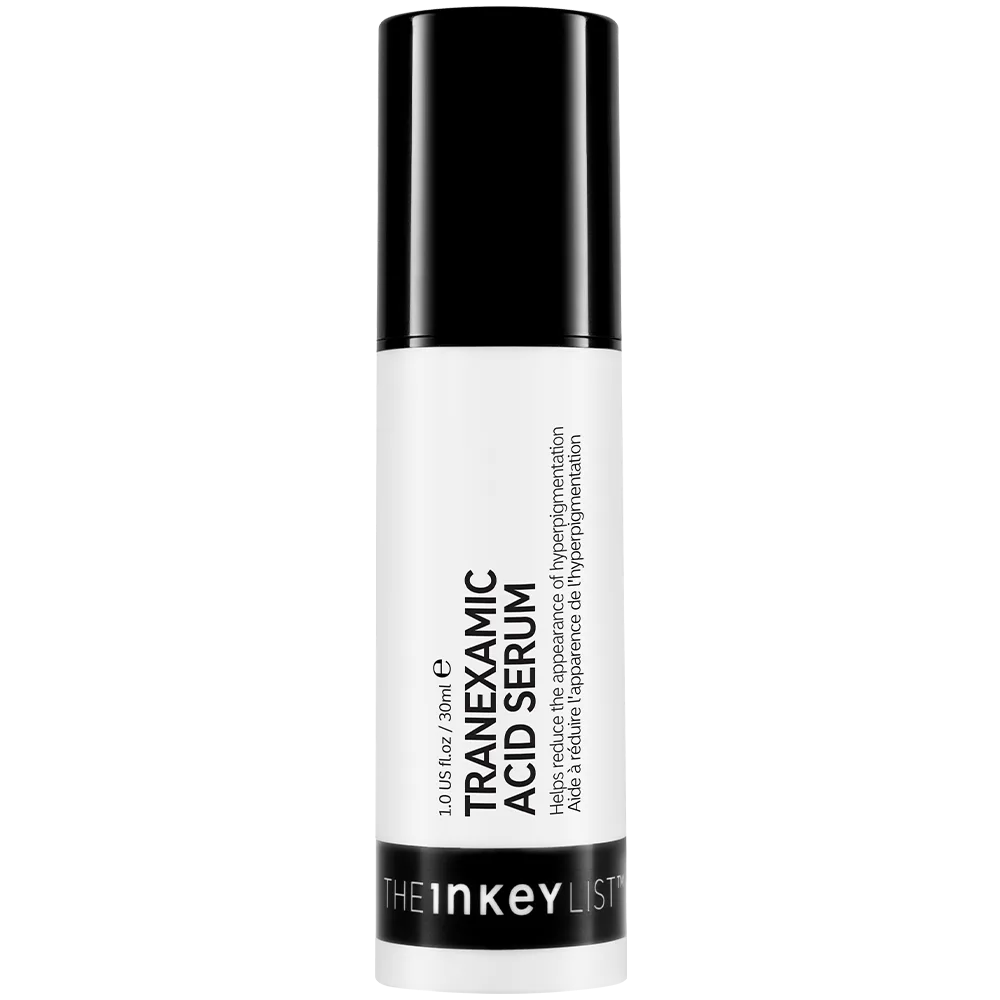
Tranexamic Acid Night Treatment
Budget Brightening Workhorse
 Verified reviewer
Pros & cons.
- +Disclosed 2% tranexamic acid concentration matching clinical study levels
- +Dual-pathway brightening with vitamin C derivative for complementary action
- +Genuinely affordable at $18 for a treatment with proven actives
- +Fragrance-free and largely gentle formula suitable for sensitive-leaning skin
- +Photostable formula works effectively for both AM and PM application
- +Lightweight gel texture layers well under most moisturizers and sunscreens
- +Leaping Bunny and Vegan Society certified for ethically minded consumers
- +Airless pump packaging preserves active ingredient stability
- −Tacky finish can cause pilling under makeup or heavier products
- −Results require 8-12 weeks of patience with no immediate visible payoff
- −30 mL bottle feels small — frequent repurchasing needed with twice-daily use
- −Contains 1-methylhydantoin-2-imide, a formaldehyde-releasing preservative
- −Faint chemical scent may bother those with fragrance sensitivity
The full review.
Before tranexamic acid became a skincare buzzword, it was quietly doing the unglamorous work of stopping bleeding in operating rooms and managing heavy menstrual flow. The discovery that it could also interrupt the melanin production cascade was one of those delightful accidents of dermatological research — doctors noticed patients taking oral tranexamic acid for other conditions were developing more even-toned skin. The INKEY List, a brand built on the principle that clinical actives shouldn’t require a clinical budget, saw the opportunity in 2020 and released one of the first affordable topical formulations at a disclosed 2% concentration.
The formula itself is deceptively simple. Tranexamic acid at 2% sits at the concentration range used in published clinical studies, where it works by blocking plasminogen activation in keratinocytes — essentially intercepting the distress signal that UV exposure sends to melanocytes telling them to ramp up melanin production. It’s an upstream approach, targeting the messenger rather than the factory, which is why it tends to be gentler than ingredients like hydroquinone that directly suppress melanin synthesis.
Pairing it with 2% ascorbyl glucoside was a smart formulation choice. This stable vitamin C derivative attacks hyperpigmentation from a different angle — tyrosinase inhibition — meaning you get two distinct mechanisms of action in a single product. The ascorbyl glucoside also brings antioxidant protection, which matters because UV-generated free radicals are one of the triggers that start the whole pigmentation cascade in the first place. The inclusion of acai fruit extract at 2% rounds out the antioxidant profile without overcomplicating the formula.
Texture
Texturally, this is a lightweight gel with a barely-there yellow tint. It applies smoothly with a thin consistency that sits somewhere between water and a traditional serum. Absorption takes about sixty seconds, and here is where the product shows its one consistent weakness: it can leave a slightly tacky film. For PM use, this is barely noticeable under a moisturizer. For AM use under makeup, you’ll want to give it a full minute to set and apply your next steps with pressing motions rather than rubbing to avoid pilling.
Scent
The fragrance-free formula is genuinely minimal on the irritation front, though it’s worth noting the inclusion of 1-methylhydantoin-2-imide, a preservative in the formaldehyde-releaser family. At the concentration present here, it’s well within safety guidelines, but consumers who specifically avoid this preservative category should be aware. Benzyl alcohol also appears as a preservative, which is an EU-listed allergen — again, at low concentrations, but transparency matters.
Performance-wise
Performance-wise, this is a marathon runner, not a sprinter. The most consistent feedback across nearly two thousand reviews is that results are real but require patience. The first two to four weeks may bring subtle brightening — a slight evening of overall tone that’s hard to pinpoint. The real payoff arrives around the eight to twelve week mark, when post-inflammatory hyperpigmentation from acne and sun spots begin visibly fading. This timeline aligns perfectly with what clinical studies on topical tranexamic acid demonstrate, so temper your expectations accordingly.
How to Use
The product was originally named the Tranexamic Acid Night Treatment, suggesting PM-only use. In 2022, The INKEY List renamed it to simply Tranexamic Acid Serum — a change driven by the reality that both tranexamic acid and ascorbyl glucoside are photostable and work during the day. Using it AM and PM with consistent sunscreen application is the approach most likely to deliver visible results.
Packaging
At $18 for 30 mL, the per-milliliter cost is reasonable for a treatment serum with disclosed active concentrations. The airless pump packaging protects the formula and dispenses cleanly, though the bottle is admittedly compact — expect to replace it every two to three months with twice-daily use. For a brand that has only been around since 2018, The INKEY List doesn’t have the decades of clinical heritage that backs legacy brands, but their commitment to ingredient transparency and realistic concentrations lends genuine credibility to this particular product.
Best for
This is the kind of treatment that doesn’t wow you on day one. There’s no tingle, no visible glow, no immediate gratification. What it offers instead is a quietly effective, evidence-based approach to fading dark spots that respects your skin’s tolerance threshold. For anyone dealing with post-acne marks, sun spots, or early melasma who wants to start treatment without risking irritation, this is one of the smartest $18 you can spend in skincare.
Ingredient analysis.
Full INCI list
Aqua (Water/Eau), Butylene Glycol, Glycerin, Ascorbyl Glucoside, Tranexamic Acid, Euterpe Oleracea Fruit Extract, 1-Methylhydantoin-2-Imide, Sodium Acrylates Copolymer, Phenoxyethanol, Carbomer, Sodium Hydroxide, Cetearyl Olivate, Benzyl Alcohol, Sorbitan Olivate, Hydroxyethyl Acrylate/Sodium Acryloyldimethyl Taurate Copolymer, Lecithin, Squalane, Ethylhexylglycerin, Sodium Gluconate, Polysorbate 60, Dehydroacetic Acid, Lactobacillus Ferment, Sorbitan Isostearate
Skin match.
The science.
The Science
Topical tranexamic acid has a strong evidence base from the last decade, especially for melasma and post-inflammatory hyperpigmentation. A 2014 study in the Journal of Research in Medical Sciences showed that 3% topical tranexamic acid applied twice daily for 12 weeks reduced melasma severity scores (MASI) similarly to a combination of 3% hydroquinone and 0.01% dexamethasone, but with significantly fewer side effects. This matters because hydroquinone is the long-standing gold standard for hyperpigmentation but carries risks of irritation and ochronosis during prolonged use.
The mechanism is clear: tranexamic acid is a synthetic lysine analog that blocks plasminogen converting to plasmin in keratinocytes. UV exposure triggers this conversion, which activates prostaglandin and arachidonic acid pathways to signal melanocytes to increase melanin production. By interrupting this cascade at the plasminogen level, tranexamic acid hits pigmentation at its trigger point instead of the melanin synthesis stage.
A 2022 systematic review in Clinical, Cosmetic and Investigational Dermatology (Alsharif et al.) analyzed nine studies with 196 participants. It found 2-3% topical tranexamic acid concentrations effective for post-inflammatory hyperpigmentation with minimal transient side effects. The review noted that intradermal delivery showed the strongest results, but topical application remains effective and much more practical for daily use.
Combining ascorbyl glucoside in this formula adds a second evidence-backed pathway. A 2014 study in Skin Research and Technology (Lee et al.) showed that 2% niacinamide plus 2% tranexamic acid significantly reduced facial pigmentation after 8 weeks compared to vehicle control. This product pairs tranexamic acid with a vitamin C derivative instead of niacinamide, but the principle of multi-pathway targeting — blocking melanocyte activation while inhibiting tyrosinase — matches the combinatorial approach research supports.
The 2% concentration used here is within the effective range in clinical literature, supporting the formulation's potential efficacy when used consistently with sun protection.
References
- Topical tranexamic acid as a promising treatment for melasma — Journal of Research in Medical Sciences (2014)
- Reduction in facial hyperpigmentation after treatment with a combination of topical niacinamide and tranexamic acid: a randomized, double-blind, vehicle-controlled trial — Skin Research and Technology (2014)
- Efficacy and Best Mode of Delivery for Tranexamic Acid in Post-Inflammatory Hyperpigmentation: A Systematic Review — Clinical, Cosmetic and Investigational Dermatology (2022)
Dermatologist Perspective
Dermatologists increasingly use topical tranexamic acid as a versatile brightening agent, especially for patients who cannot tolerate hydroquinone or need long-term maintenance. Board-certified dermatologists note that tranexamic acid's mechanism — targeting plasminogen-mediated melanocyte signaling rather than direct melanin inhibition — works well in combination protocols with retinoids, vitamin C, or azelaic acid. This product's 2% concentration and gentle formulation offer an accessible entry point for patients starting hyperpigmentation treatment. Dermatologists emphasize that consistent sunscreen use is non-negotiable when using any brightening active, as UV exposure directly triggers the pigmentation pathway that tranexamic acid interrupts.
Where it fits in your routine.
Apply one to two pumps to clean, dry skin after cleansing and water-based toners. Press the formula into dark spots, acne marks, or uneven tone. Wait 30-60 seconds for absorption before your next step. Use AM and PM. In the morning, follow with a broad-spectrum SPF 30 or higher. At night, layer it under a retinoid. Do not apply immediately after strong AHA or BHA exfoliants in the same routine.
At $18 for 30 mL, this treatment hits a sweet spot for active-driven skincare. It costs much less than prescription options or most prestige brightening serums and uses disclosed concentrations that match clinical research. Monthly costs run about $6-9 depending on usage frequency, making this treatment serum affordable. The INKEY List is a young brand without decades of clinical validation like legacy names, but the formulation uses well-studied ingredients at documented concentrations. The compact bottle size is the only value concern; heavy users may repurchase it more often.
People with post-acne marks, sun spots, or early melasma want an affordable, gentle brightening treatment with clinically backed actives. This works well for oily and combination skin types needing a lightweight formula that avoids grease or congestion.
Users avoiding formaldehyde-releasing preservatives should note 1-methylhydantoin-2-imide. The 8-12 week payoff period may frustrate those needing rapid brightening for an event. Very dry skin types may find it insufficient without significant moisturizing layers on top.
Product details.
All Year Certifications Leaping Bunny CertifiedVegan Society Certified
The backstory.
The INKEY List launched this treatment in 2020 as part of their mission to make clinical-grade actives accessible at drugstore prices. Originally called the 'Night Treatment,' it was renamed to 'Tranexamic Acid Serum' in 2022 to reflect that dermatologists and users found it equally effective for AM use — a move that highlights how consumer feedback shaped the product's positioning.
About The INKEY List
Emerging Brand (2–5 years)Colette Laxton and Mark Curry founded The INKEY List in 2018 to provide affordable, transparent, and effective skincare. The brand has Leaping Bunny certification and Vegan Society certification. It builds credibility through ingredient transparency, but independent clinical validation of its specific formulations is limited.
Common myths.
Tranexamic acid works only for melasma; it does not help acne scars or sun spots.
Research shows topical tranexamic acid at 2-3% concentrations treats multiple hyperpigmentation types, including post-inflammatory hyperpigmentation from acne, sun damage, and melasma. It works by inhibiting plasminogen activation in keratinocytes, a pathway common to all UV-triggered pigmentation.
Use this product only at night because of the vitamin C derivative.
Ascorbyl glucoside is a stable vitamin C form that resists sunlight degradation. The brand changed this product's name from 'Night Treatment' to 'Serum' because it is safe and effective for daytime use with sunscreen.
FAQ.
How long does it take to see results from tranexamic acid?
Most users see subtle brightening in 2-4 weeks. Dark spots fade meaningfully after 8-12 weeks of consistent use. The 2% concentration matches levels used in clinical studies, but skin cell turnover takes time. Using daily sunscreen improves results.
Can I use The INKEY List Tranexamic Acid Night Treatment in the morning?
Yes — despite the original 'Night Treatment' name, this formula stays stable for AM use. The ascorbyl glucoside is a photostable vitamin C derivative, and tranexamic acid helps counteract UV-triggered melanin production. The brand renamed it to 'Serum' in 2022 because of this. Always follow with SPF 30+ when using it during the day.
Can I use this with retinol or vitamin C serums?
Yes to both. Tranexamic acid pairs well with retinoids—apply this serum first, then your retinoid. It contains ascorbyl glucoside (a vitamin C derivative), so layering another vitamin C serum isn't necessary but won't cause issues. Avoid using strong AHA/BHA exfoliants in the same routine to prevent irritation.
Is The INKEY List Tranexamic Acid safe during pregnancy?
Topical tranexamic acid has low systemic absorption. Some dermatologists view it as a safer alternative to hydroquinone during pregnancy. However, topical use in pregnancy lacks enough specific clinical data for a definitive recommendation. Consult your OB-GYN or dermatologist before use.
What's the difference between tranexamic acid and hydroquinone for dark spots?
Both target hyperpigmentation using different mechanisms. Hydroquinone inhibits melanin production directly and works faster, but has usage limits and potential side effects. This product's tranexamic acid blocks UV-triggered signaling that tells melanocytes to overproduce melanin. This upstream approach is gentler and safe for long-term use without cycling off.
What the community says.
"Affordable entry into tranexamic acid at $18"
"Visible fading of post-acne marks with consistent use"
"Lightweight gel texture absorbs well"
"Fragrance-free and generally gentle"
"Layers nicely under other products"
"Transparent ingredient concentrations"
"Tacky finish that can cause pilling under makeup"
"Results require patience — 8-12 weeks minimum"
"Small 30 mL bottle at $18 feels pricey per mL"
"Faint chemical scent despite being fragrance-free"
"Some users report no visible improvement"
Featured in.
People also looked at.