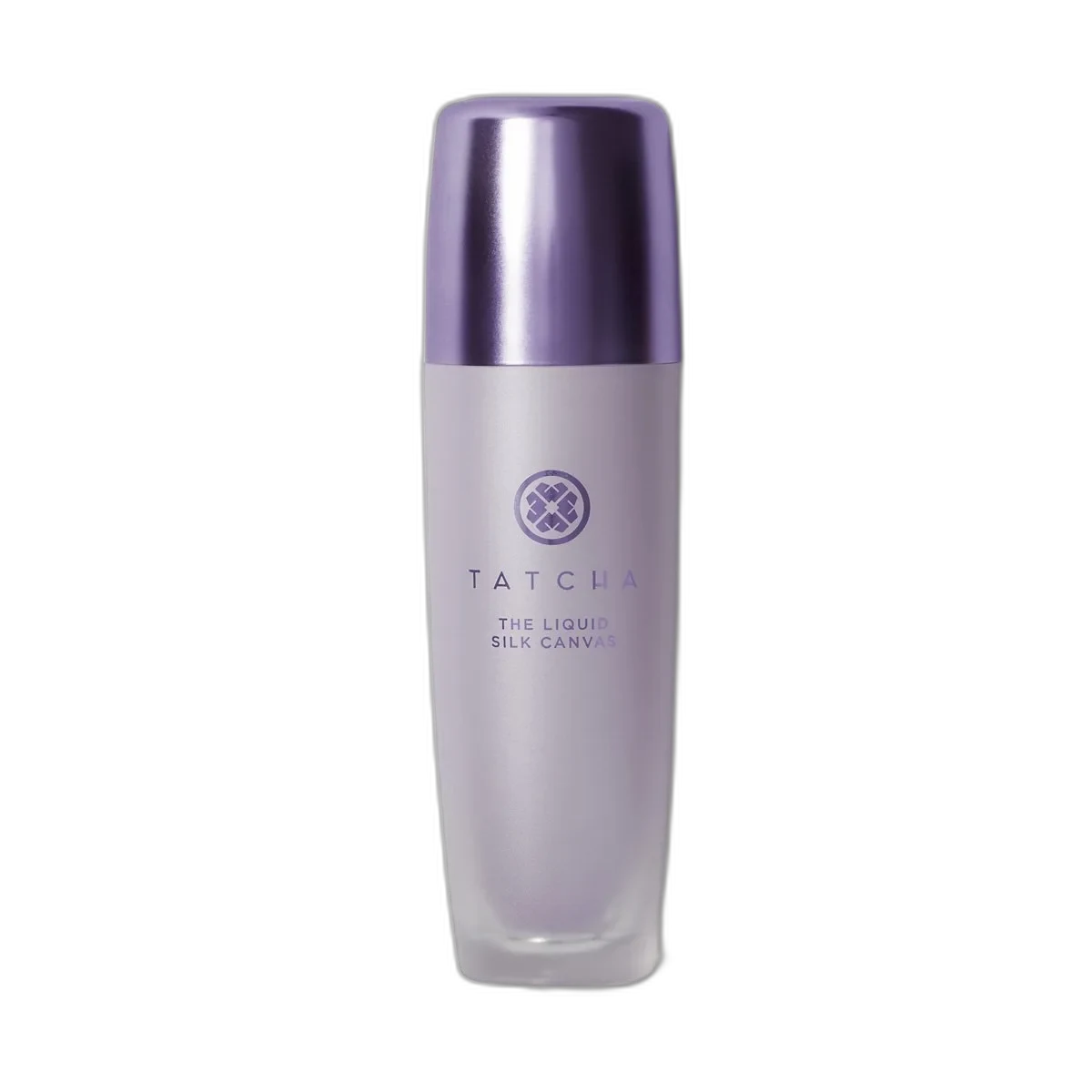
The Liquid Silk Canvas
Silk-Smooth Primer
 Verified reviewer
Pros & cons.
- +Rice ferment filtrate base delivers mild skincare conditioning during all-day wear
- +Triple silk technology (powder + sericin + hydrolyzed) provides multi-level smoothing
- +Featherweight liquid texture feels like almost nothing on skin
- +Genuinely extends makeup wear by several hours with reduced touch-ups needed
- +Oil-free formula helps control T-zone shine throughout the day
- +Can be worn alone for a refined, poreless look on minimal-makeup days
- +Pump dispenser controls amount precisely, preventing waste
- −Contains fragrance, isopropyl alcohol, citral, limonene, and linalool
- −May pill or separate under water-based foundations due to high silicone content
- −Expensive at $55 for a primer when effective options exist at all price points
- −Pore-blurring effect is optical and cosmetic — does not treat underlying pore concerns
- −Not suitable for sensitive, eczema-prone, or reactive skin types
- −Not vegan due to silk-derived ingredients
The full review.
The first ingredient in this primer marks a shift. While most primers use water or dimethicone as a base, the Tatcha Liquid Silk Canvas uses Saccharomyces rice ferment filtrate. This means the liquid carrying the smoothing silicones and silk proteins is an active, nutrient-rich ferment—the same Hadasei-3 complex Tatcha sells for $110 as The Essence. Whether this changes skin results during a day of wear is debatable, but the formulation philosophy is more thoughtful than the industry standard.
The Liquid Silk Canvas is the lighter version of Tatcha’s Silk Canvas balm, which launched in 2018 and became a staple on beauty forums. The original balm was thick and putty-like, creating a porcelain-smooth finish that some users loved and others found too heavy for daily wear. The liquid version, launched in 2020, uses that technology in a serum-like fluid that feels more like a lightweight moisturizer than a traditional primer.
The triple-silk technology is the main feature. Three forms of silk protein—at different molecular weights and physical states—address smoothing at different levels. Silk powder provides immediate optical blurring by scattering light across pores and fine lines. Sericin, the protein that makes silk cocoons water-resistant, forms a thin moisture-retaining film to keep skin hydrated under makeup. Hydrolyzed silk, broken into smaller peptide fragments, absorbs into surface layers to condition the skin.
The silicone system is sophisticated. Dimethicone provides the primary slip and fill, reinforced by polymethylsilsesquioxane (spherical silicone particles for soft-focus blurring), dimethicone/vinyl dimethicone crosspolymer (an elastomer for a smooth, bouncy feel), and trimethylsiloxysilicate (for long-wearing resistance to sebum and sweat). This is a carefully engineered matrix of different silicones designed for multi-scale smoothing.
Caesalpinia spinosa fruit extract from the tara tree adds a botanical film-forming layer to the silicone matrix. This natural polymer provides a flexible grip that helps the primer adhere to skin and anchor makeup without the tight, mask-like feeling of synthetic film formers. Kappaphycus alvarezii extract, a red algae, adds more film-forming and hydrating properties.
In practice, the primer performs as advertised. A pea-sized pump dispenses a milky liquid that spreads easily and sets in seconds to a velvety, semi-matte finish. Pores visually diminish and texture smooths. Foundation glides on more evenly and lasts longer—roughly three to four extra hours of wear without touch-up compared to foundation applied to moisturized-only skin. The finish is natural enough to wear alone for a polished look.
The drawbacks are typical for Tatcha products in this tier. Fragrance—parfum, citral, limonene, linalool—is present, along with isopropyl alcohol. For a product worn 10-14 hours daily, this fragrance load is a concern for sensitive skin. The primer is oil-free but not silicone-free, which matters for users who avoid silicones. At $55 for 30g, this is a premium-priced primer.
The silicone-heavy formula also has compatibility constraints. Water-based foundations may pill or separate over the dimethicone matrix. The primer works best with silicone-based foundations or powder products—test this before buying the full-size bottle.
Value depends on your goals. If you want a functional cosmetic to smooth skin and extend makeup wear, $55 is expensive when effective silicone primers exist at every price point. If you want a hybrid skincare-and-cosmetic step, the ferment base and triple-silk conditioning add value cheaper alternatives lack. The primer will not treat pores, clear skin, or replace targeted skincare. It will make skin look better for the twelve hours you wear it, and the Hadasei-3 base attempts to be kind to the skin.
The Liquid Silk Canvas fits a specific niche: it is for people with established skincare routines who want a primer that complements their effort. It is thoughtfully formulated, well-textured, and effective at its primary job. The fragrance is the most frustrating part of an otherwise intelligent formula—remove it, and this would be one of the best primers on the market. As it stands, it is one of the best primers for people whose skin can tolerate it.
Ingredient analysis.
Full INCI list
Saccharomyces/Rice Ferment Filtrate, Dimethicone, Aqua/Water/Eau, HDI/Trimethylol Hexyllactone Crosspolymer, Propanediol, Glycerin, Polymethylsilsesquioxane, Dimethicone/Vinyl Dimethicone Crosspolymer, Parfum/Fragrance, Camellia Sinensis Leaf Extract, Cladosiphon Okamuranus Extract, Serica/Silk Powder/Poudre De Soie, Sericin, Hydrolyzed Silk, Caesalpinia Spinosa Fruit Extract, Kappaphycus Alvarezii Extract, Yeast Extract, PEG/PPG-18/18 Dimethicone, Polyglyceryl-2 Diisostearate, Dimethicone/PEG-10/15 Crosspolymer, Distearyldimonium Chloride, Trimethylsiloxysilicate, Silica, Zinc Stearate, Aluminum Hydroxide, Ethylhexylglycerin, 1,2-Hexanediol, Caprylyl Glycol, Biosaccharide Gum-4, Isopropyl Alcohol, Dipropylene Glycol, Sodium Citrate, Tocopherol, Phenoxyethanol, Citral, Limonene, Linalool, Mica, Tin Oxide, Titanium Dioxide (CI 77891), Iron Oxides (CI 77491)
Skin match.
The science.
The Science
The Liquid Silk Canvas uses silicone-based optical blurring, silk protein conditioning, and ferment-based hydration for extended daily wear.
Dimethicone and its crosspolymer derivatives fill surface irregularities—pores, fine lines, and textural unevenness—with a transparent, flexible silicone matrix. Polymethylsilsesquioxane, a spherical silicone powder, scatters light across skin imperfections to create a soft-focus optical effect like portrait photography filters. Decades of formulation research back this cosmetic technology.
Silk proteins provide cosmetic and conditioning benefits. Sericin, the water-soluble protein that cements silk fibers, forms a breathable film on skin that reduces transepidermal water loss, according to research in the International Journal of Biological Macromolecules. Hydrolyzed silk (silk fibroin fragments) has a lower molecular weight, so it penetrates outer skin layers to deliver amino acids like glycine, alanine, and serine that support the skin's natural moisturizing factor. Silk powder provides immediate tactile and visual smoothing via light diffusion.
The ferment filtrate base (Saccharomyces/rice ferment filtrate) sets this formula apart from conventional primers. Research shows Saccharomyces ferment filtrates contain beta-glucans, amino acids, and organic acids that provide humectant hydration and mild antioxidant activity. Using this as the primary vehicle instead of water delivers these conditioning compounds to skin with every application—a key choice for a product worn 10-14 hours daily.
Caesalpinia spinosa fruit extract, a galactomannan-rich natural polymer, forms a flexible film that improves primer adhesion without the tightness of synthetic film formers. Brands increasingly use this as a natural alternative to PVP and acrylate-based polymers.
Dermatologist Perspective
Dermatologists usually see primers as cosmetic products with little skincare relevance, but the Liquid Silk Canvas's ferment-first formula requires a more nuanced assessment. Board-certified dermatologists would note the rice ferment filtrate base is a more skin-friendly vehicle than water alone, delivering amino acids and humectants during wear. However, dermatologists would worry about the fragrance, isopropyl alcohol, and allergen content in a product for all-day wear; prolonged contact increases cumulative exposure to potential sensitizers. The dimethicone-heavy formula is non-comedogenic, but thorough evening cleansing is essential so silicone residue does not trap makeup and debris against skin overnight. Dermatologists would recommend this primer mostly for patients with non-sensitive skin who want pore blurring and makeup longevity.
Where it fits in your routine.
Apply a pea-sized amount to fingertips after moisturizer and sunscreen. Press it into the face, focusing on visible pores in the T-zone, cheeks near the nose, and chin. Let the primer set for 30-60 seconds before using foundation or concealer. On minimal-makeup days, use it alone over sunscreen to smooth and refine skin. Use silicone-based or powder foundations for best compatibility.
At $55 for 30g, this primer has luxury pricing. The 10g mini at $25 allows for a lower-risk trial. A pea-sized amount covers the full face, making the bottle last 3-4 months with daily use — about $14-18 per month. The ferment base and triple-silk technology provide formulation sophistication that cheaper primers lack. However, silicone primers achieve the primary function — pore blurring and makeup wear extension — at a quarter of the price. The premium price buys ferment-based conditioning, the silk luxury experience, and the Tatcha branding. For dedicated makeup wearers who want their primer to improve skin health instead of just cosmetic smoothing, the value is real. For occasional makeup users, the cost is harder to justify.
Daily makeup wearers want a primer that smooths and conditions skin during wear. This works for combination to oily skin types with visible pores and texture. It is a lightweight, oil-free primer that controls shine and extends foundation wear without feeling heavy.
People with sensitive, reactive, or eczema-prone skin should avoid this due to the fragrance and alcohol content. Users who only wear water-based foundations may see pilling. Non-makeup-wearers have no use for a primer. This is not for anyone seeking targeted pore treatment rather than cosmetic blurring.
Product details.
A lightweight, silky liquid with a slightly milky appearance that sheers out when applied. It is thinner than the original Silk Canvas balm and has a serum-like fluidity. It sets to a smooth, velvety matte finish within seconds.
Added parfum gives this a light floral fragrance with citral and linalool notes. It is subtle but detectable when applied; it fades within minutes as the primer sets.
A frosted glass bottle uses a pump dispenser, matching Tatcha's luxury packaging aesthetic. The pump dispenses a controlled amount to prevent waste. The glass is elegant but heavy for daily use.
The first pump is more liquid than expected; it flows easily and spreads with little effort. It sets to a smooth, velvety surface within seconds, blurring pores and refining texture. Foundation glides more evenly over it. The effect shows immediately in the mirror. There is no adjustment period or breakout risk, aside from fragrance sensitivity.
3-4 months with daily use, using a pea-sized amount for the full face
12 months
All Year
The backstory.
The Liquid Silk Canvas is the lighter, more fluid sibling of Tatcha's cult-favorite Silk Canvas balm primer, which launched in 2018 and quickly became one of the brand's bestsellers. Users loved the original but wanted a version that felt less heavy for daily wear and worked better in warmer weather. The liquid version launched in 2020, translating the same triple-silk technology and ferment base into a featherweight format.
About Tatcha
Established Brand (5–20 years)Vicky Tsai founded Tatcha in 2009, using traditional Japanese beauty rituals. Unilever acquired Tatcha in 2019. The brand has a loyal following because its formulations use Japanese botanical ingredients and fermentation science, but it relies on traditional knowledge instead of peer-reviewed clinical trials for its specific products.
Common myths.
Silicone-based primers clog pores and cause breakouts
Dimethicone and its crosspolymer variants are non-comedogenic; they sit on the skin surface instead of penetrating pores. This oil-free primer prevents makeup from settling into pores. You must cleanse thoroughly at the end of the day to remove the silicone film and trapped makeup.
Primers are purely cosmetic and offer no skincare benefits
Most primers are cosmetic, but this formula uses a ferment filtrate base (listed first) to deliver amino acids, beta-glucans, and antioxidants from the Hadasei-3 complex. The silk sericin also retains moisture. This is not a treatment product, but it provides mild conditioning beyond simple smoothing.
FAQ.
What is the difference between Tatcha Silk Canvas and Liquid Silk Canvas?
The original Silk Canvas is a thick balm-to-powder primer. It gives heavier smoothing and an opaque, porcelain-like finish. The Liquid Silk Canvas is a lightweight liquid that feels like a serum and blurs pores more subtly and naturally. Both use the triple silk technology and Hadasei-3 ferment base. Use the liquid for daily wear and warmer weather; use the balm for fuller coverage.
Does Tatcha Liquid Silk Canvas work with all foundations?
This primer works best with silicone-based and powder foundations. High dimethicone content creates an incompatible base that causes pilling or separation under water-based foundations. Check if water or aqua is the first ingredient in your foundation, then test the combination on a small area first.
Is Tatcha Liquid Silk Canvas good for oily skin?
Yes — the oil-free, dimethicone-based formula controls shine and creates a matte finish to manage oil under makeup. Clinical testing shows 97% of panelists agree their T-zone is less oily after one week of use. However, it contains fragrance and alcohol, so oily-but-sensitive skin needs careful testing.
Can Tatcha Liquid Silk Canvas be used without makeup?
Yes — the pore-blurring and smoothing effect works on bare skin, and the Hadasei-3 ferment base hydrates. Used alone, it leaves skin with a refined, velvety texture and mild luminosity. It works as a lightweight, smoothing treatment step, but the primary design intent is makeup prep.
Does Tatcha Liquid Silk Canvas contain fragrance?
Yes — the formula contains Parfum/Fragrance, citral, limonene, and linalool, which are EU-regulated fragrance allergens. It also contains isopropyl alcohol. This makes it unsuitable for fragrance-sensitive or reactive skin types.
What the community says.
"Creates an incredibly smooth, poreless canvas for makeup"
"Weightless texture feels like nothing on skin despite visible smoothing"
"Makeup lasts noticeably longer with less touch-up needed"
"The ferment base keeps skin hydrated under makeup all day"
"Works beautifully under both liquid and powder foundations"
"Contains fragrance and multiple allergens"
"Can pill with certain water-based foundations"
"Expensive for a primer at $55"
"The smoothing effect is mostly optical — does not treat pores"
"Not suitable for sensitive or reactive skin types"
People also looked at.