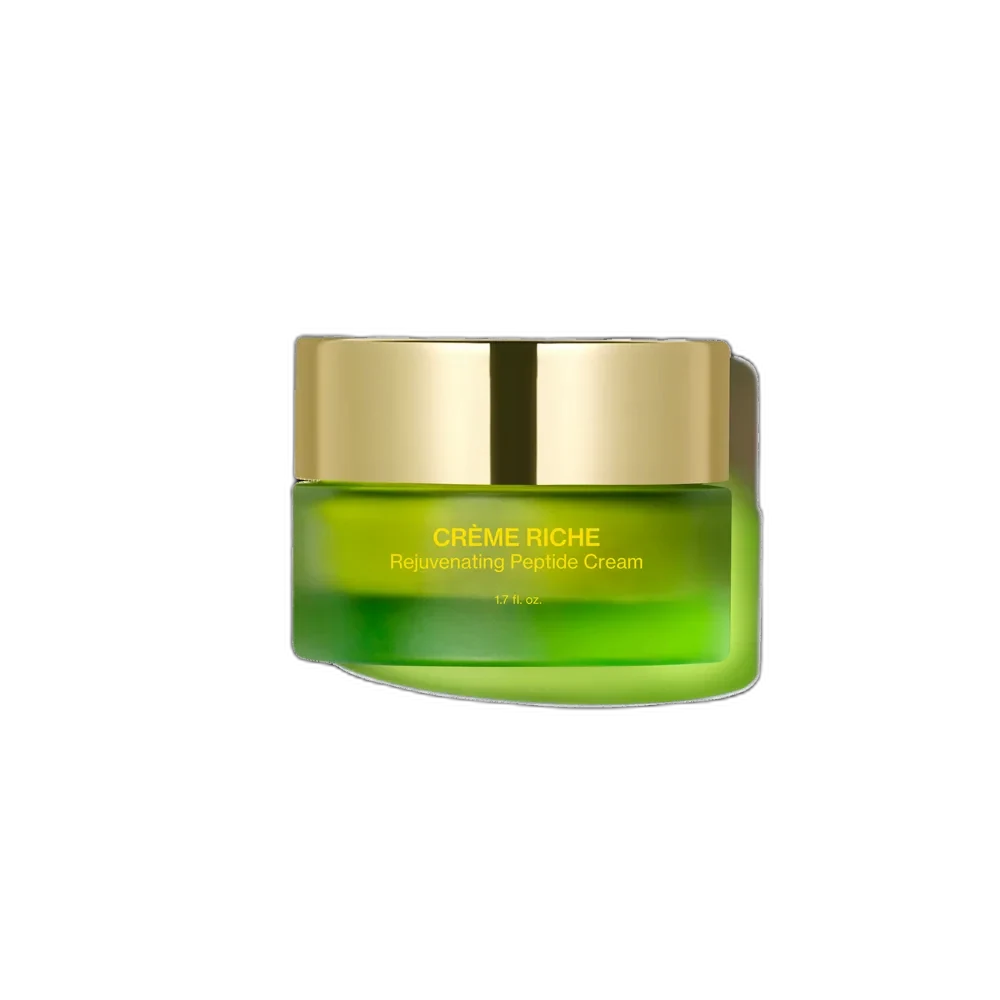
Crème Riche Anti-Aging Peptide Night Cream
Luxury Night Cream
 Verified reviewer
Pros & cons.
- +Substantive three-peptide complex with a legitimate anti-aging rationale
- +Rich shea-butter-based texture that feels genuinely luxurious
- +Farm-to-skincare manufacturing and vertical integration uncommon at this tier
- +Cruelty-free and vegan certified
- +Beautiful natural scent profile for users who enjoy essential-oil-based fragrance
- +Immediate softening and overnight plumping that users reliably notice
- −$240 price is not justified by ingredient content on clinical grounds
- −Heavy essential oil load rules it out for sensitive or reactive skin
- −Peptide-and-botanical anti-aging is meaningfully less effective than retinoids
- −Narcissus-as-natural-retinol marketing claim has weak evidence support
- −Jar-style packaging (even with airless improvements) less ideal for peptide stability than airtight tubes
The full review.
Every $240 moisturizer review must address a specific question, and Crème Riche is no exception. The question isn’t whether the cream is good—most luxury moisturizers are well-formulated, and this one exceeds adequacy. The question is what you pay for, because the ingredient list alone does not justify the price on clinical grounds. You cannot find a molecule in the Crème Riche INCI deck that isn’t available in a mid-tier cream at a quarter of the price. You pay for the brand story, the farm-to-skincare sourcing, the Vermont manufacturing, the sensory experience, the jar, and the essential oil profile that smells like a Tata Harper facial. Whether those things merit $240 depends on the buyer.
To the brand’s credit, the formulation is not a scam. Tata Harper built her company in 2010 on a working Vermont farm, and every Tata Harper product is still formulated and manufactured on-site—a level of vertical integration almost no luxury skincare brand maintains. The peptide complex in Crème Riche is substantive. Three peptides—palmitoyl tripeptide-5 for collagen signaling, acetyl hexapeptide-8 for mild muscle relaxation, and palmitoyl tetrapeptide-7 for anti-inflammatory activity—form a reasonable anti-aging active deck. None are novel, but the combination is coherent and the concentrations are adequate for the peptide class. The shea butter base gives the cream its thick, velvety texture, and the squalane prevents the formula from feeling occlusive despite the high emollient load. The narcissus bulb extract is the brand’s natural-retinol-alternative; the evidence base is thinner than the marketing implies, but it is a reasonable botanical addition and not harmful.
The inactive deck is more complicated. Crème Riche contains substantial essential oils—rose, lavender, geranium, orange peel—and fragrance allergen markers including linalool, limonene, citronellol, geraniol, and citral. For users who tolerate natural fragrance, this defines the product’s sensory identity. The scent is unmistakably Tata Harper—it smells like a spa facial and is lovely if you prefer that profile. For users with sensitive skin, rosacea, eczema, or a history of essential-oil reactions, this formula is a hard stop. Tata Harper has never been a sensitive-skin brand, and Crème Riche loads the botanical scent profile more than most Tata Harper products. A $240 cream you cannot use on reactive skin is an incoherent concept; the brand’s positioning and the clinical reality of its customer base do not overlap.
Skin performance is pleasant but not transformative. Skin feels softer and visibly plumper overnight. Fine lines look modestly softened over weeks of use. Firmness and texture improve gradually—the changes are real but modest, consistent with peptide-and-botanical formulations. Crème Riche will not match the effects of a retinoid. If you want to reverse photoaging, tretinoin or a well-formulated over-the-counter retinol outperforms this product at a fraction of the cost. Crème Riche belongs to the comfort-and-support school of anti-aging, not the active-intervention school, and the price does not correlate with clinical strength.
The value assessment is mixed. For someone who wants natural, botanical, farm-sourced skincare with high sensory craftsmanship and values the brand experience, $240 is spendable for a product that delivers on its own terms. For those shopping on ingredients-per-dollar or clinical efficacy, this is not a smart buy—La Roche-Posay, CeraVe, Paula’s Choice, and The Ordinary all offer more active content for less money. The product’s main limitation is its cost; this is a feature for luxury customers and a bug for everyone else.
The right user is narrow: someone with normal-to-dry mature skin, a preference for natural skincare, a tolerance for essential oil scent, and the disposable income to ignore the price. That user understands they are buying an experience and a brand ethos as much as a cream. For them, Crème Riche is a fair luxury purchase. For everyone else, it is a beautiful product in a beautiful jar that costs several times what the formulation justifies on clinical metrics. Both can be true.
Ingredient analysis.
Full INCI list
Water, Glycerin, Caprylic/Capric Triglyceride, Butyrospermum Parkii (Shea) Butter, Cetearyl Olivate, Sorbitan Olivate, Cetyl Alcohol, Squalane, Persea Gratissima (Avocado) Oil, Palmitoyl Tripeptide-5, Acetyl Hexapeptide-8, Palmitoyl Tetrapeptide-7, Sodium Hyaluronate, Tocopherol, Bisabolol, Beta-Glucan, Narcissus Tazetta Bulb Extract, Boswellia Serrata Extract, Centella Asiatica Extract, Camellia Sinensis Leaf Extract, Rosa Damascena Flower Oil, Lavandula Angustifolia (Lavender) Oil, Citrus Aurantium Dulcis (Orange) Peel Oil, Pelargonium Graveolens Flower Oil, Glyceryl Stearate, Xanthan Gum, Sodium Phytate, Benzyl Alcohol, Dehydroacetic Acid, Linalool, Limonene, Citronellol, Geraniol, Citral
Skin match.
The science.
The Science
The peptide evidence base here is the most substantive part of the formulation story. Palmitoyl tripeptide-5 (also known as Syn-Coll) has published research in cosmetic science journals documenting its ability to upregulate fibroblast collagen production in in vitro and limited in vivo studies. Acetyl hexapeptide-8 (Argireline) has been studied for its mechanism as a muscle-relaxing peptide that competes with SNAP-25 in the acetylcholine release pathway, with published work in journals including the International Journal of Cosmetic Science showing modest reductions in expression lines in human studies. Palmitoyl tetrapeptide-7 (Rigin) has a smaller but supporting evidence base for interleukin modulation and anti-inflammatory activity. The combination of these three peptides is a coherent anti-aging active system, though it's worth noting that the clinical effect sizes for peptides are consistently documented as smaller than those for retinoids on matched endpoints. Shea butter contributes a well-supported emollient and occlusive base with research in cosmetic science showing barrier-supportive effects. Squalane has been extensively studied as a non-comedogenic lipid that mimics natural sebum. The more marketing-forward ingredients — narcissus tazetta bulb extract as a 'natural retinol,' boswellia serrata as an anti-inflammatory — have thinner evidence bases. Narcissus bulb extract in particular is positioned by the brand as a cell-cycle-regulating alternative to retinol, but the published work supporting that claim is limited, primarily brand-commissioned, and not widely validated in independent literature. Boswellia has somewhat better support for topical anti-inflammatory activity through its boswellic acid content. The overall assessment is that the peptide-and-emollient foundation of this cream is reasonably well-supported, while the natural-retinol-alternative marketing claim is not.
Dermatologist Perspective
Board-certified dermatologists generally view luxury peptide-and-botanical creams like Crème Riche as pleasant adjuncts to an anti-aging routine rather than primary interventions, and they typically recommend retinoids — whether prescription tretinoin or over-the-counter retinol — as the most evidence-supported topical anti-aging treatment. Dermatologists caution against essential-oil-heavy formulations for patients with rosacea, eczema, perioral dermatitis, or any history of contact dermatitis, which makes this formula unsuitable for a meaningful subset of mature-skin patients who would otherwise be interested in its premium positioning. Clinicians also note that the comparative benefit of natural-retinol-alternative ingredients over well-formulated OTC retinol is not supported by published clinical evidence, and they would not typically recommend replacing a retinoid routine with a botanical night cream on efficacy grounds. For patients who are unable or unwilling to use retinoids and who specifically want a natural peptide cream, this is a reasonable option, though they would generally consider less expensive alternatives equally effective on clinical endpoints. The overall clinical view is that Crème Riche is a comfort-and-sensory product at a price that reflects brand positioning more than clinical differentiation.
Where it fits in your routine.
Apply this as the final step of your evening routine after cleansing and any serums. Warm a pea-sized amount between your fingertips and press it into the face and neck, avoiding the immediate eye area. Use on alternating nights with retinoid products instead of layering them to avoid irritation from the essential oil content. Use the cream nightly for 8-12 weeks before evaluating the long-term peptide benefits. Store in a cool, dark location to preserve the peptide activity — heat and light exposure degrade peptides faster.
At $240 for 50ml, Crème Riche competes in the luxury tier with La Mer, Sisley, and Augustinus Bader. The value is questionable. Mid-tier formulations at $40-80 can replicate the peptide and emollient system — Paula's Choice Peptide Booster, Olay Regenerist, and various K-beauty peptide creams provide similar active content for much less. The extra $160-200 pays for the brand experience, the farm-to-skincare manufacturing story, the sensory and packaging craftsmanship, and the luxury retail positioning. If users value those attributes and treat the cream as a premium ritual product, the price makes sense. For users shopping for clinical performance per dollar, the value score is poor — less expensive retinoid-based products offer better anti-aging performance, and cheaper alternatives provide comparable hydration and peptide performance. Crème Riche is good skincare priced at a luxury premium that the formulation does not justify on clinical grounds.
Mature, normal-to-dry skin users who prefer natural skincare, tolerate essential oil scents, and can afford luxury prices for the brand experience and sensory quality. This is a reasonable pick for those committed to Tata Harper's farm-to-skincare ethos seeking a substantive night cream from the brand.
Use for sensitive, rosacea-prone, eczema-prone, or essential-oil-reactive skin. Skip this if you prioritize clinical efficacy per dollar, retinoid-level anti-aging performance, or if a $240 cream feels wrong when $40-80 options work the same. You buy this for the brand and experience, not the science.
Product details.
Thick, velvety cream with body — sits on the skin briefly before absorbing and leaves a cushioned finish.
Rose, lavender, geranium, and citrus oils create a spa-like scent that is unmistakably Tata Harper.
Newer versions use a glass jar with pump-activated airless dispensing. This protects the peptide content from oxidation better than traditional jar formats.
The cream feels cushioning on first application and has a pronounced essential oil scent. Skin looks visibly plumped and softer the next morning. It causes no stinging or purging; consistent use over 8-12 weeks is required for long-term firmness and line benefits.
About 2-3 months with nightly application.
6 months
All Year
The backstory.
Tata Harper founded her brand in 2010 on a Vermont farm after what she describes as a frustrated search for natural, high-performance skincare. The brand's entire manufacturing operation sits on the farm, which is unusual for luxury skincare and is part of what the price premium is meant to fund. Crème Riche launched in 2013 as the brand's night-cream flagship, positioned as the deepest-conditioning product in the Tata Harper range.
About Tata Harper
Established Brand (5–20 years)Tata Harper launched in 2010 with a farm-to-skincare ethos. The brand formulates and manufactures all products at its Vermont facility. Tata Harper has a reputation for natural, high-ingredient-count luxury formulations, but specific products have less independent clinical validation than established derm-developed brands.
Common myths.
Natural peptide-and-botanical creams work as well as retinoid-based anti-aging creams.
They don't, and clinical literature is clear. Retinoids are the gold standard for reversing photoaging. Peptide-and-botanical creams provide hydration, mild firming, and comfort, but they do not replace prescription or OTC retinoids for efficacy.
A $240 luxury cream has ingredients you won't find in cheaper options.
Most luxury skincare formulations use ingredients you can replicate for less. The retail price covers brand, sourcing, manufacturing standards, packaging, and positioning—not exclusive molecules.
FAQ.
Is Crème Riche worth $240?
Yes, if you value natural formulations, farm-to-skincare sourcing, and a specific sensory experience. No, on pure ingredient-for-dollar terms — other formulations replicate the peptide and emollient content at a fraction of the price. Value depends on your priorities.
Is it safe for sensitive skin?
No — the formula contains multiple essential oils (rose, lavender, geranium, citrus) and fragrance allergens like linalool and limonene. Sensitive, rosacea-prone, or eczema-prone skin should avoid this product.
Can I use it with retinol?
Use on alternating nights instead of layering. Combining essential-oil-rich botanical creams with strong retinoids increases barrier irritation risk.
How does it compare to La Mer?
Both share a similar luxury price tier but use different philosophies. La Mer centers on its Miracle Broth marketing ingredient; Tata Harper Crème Riche uses peptides, botanicals, and a farm-to-skincare brand story. Both face the same skepticism regarding value-proposition when viewed on pure clinical grounds.
Is it pregnancy-safe?
This formulation lacks retinoids or salicylic acid and is generally pregnancy-safe. If you are pregnant and sensitive to essential oils, consult your dermatologist before use.
What the community says.
"Luxurious texture"
"Skin feels softer and plumper immediately"
"Beautiful sensory experience"
"Genuine attention to formulation quality"
"Extremely expensive"
"Essential oil scent is polarizing"
"Not safe for sensitive skin"
"Real-world results don't match the price premium"