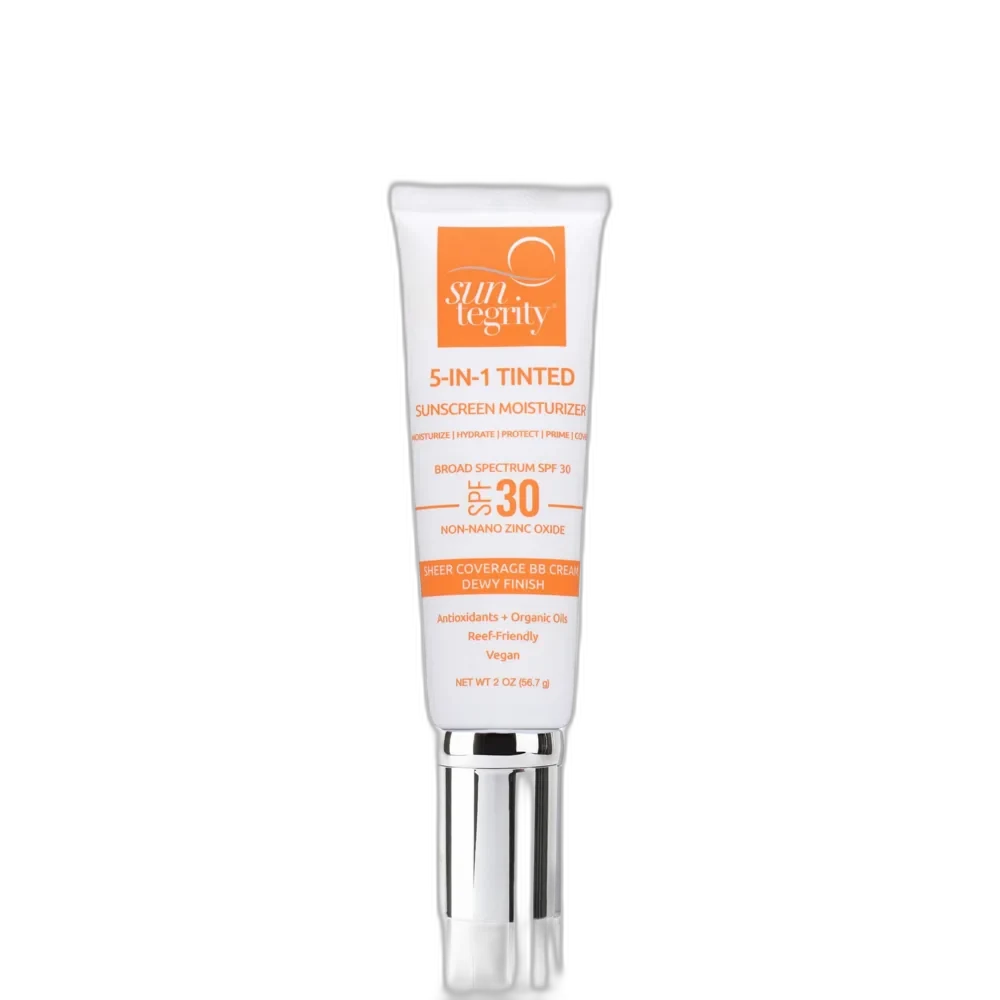
5 in 1 Natural Face Sunscreen SPF 30 Tinted
Clean Beauty Mineral Staple
 Verified reviewer
Pros & cons.
- +20% non-nano zinc oxide — unusually high for a cosmetically elegant mineral SPF
- +Iron oxides provide visible-light protection relevant for melasma
- +Universal tint neutralizes zinc white cast on fair-to-medium skin
- +Dewy, hydrating finish — no chalky tightness common in mineral sunscreens
- +Safe for pregnancy, post-procedure, and reactive skin
- +EWG Verified and consistent formulation for over a decade
- +Antioxidant stack adds free-radical protection beyond baseline SPF
- −Premium pricing — roughly double the per-ounce cost of drugstore mineral SPF
- −Single tint shade may not work on deeper skin tones
- −Dewy finish reads as shiny on very oily skin
- −1.7oz tube runs out quickly with daily face-and-neck use
- −SPF 30 rather than SPF 50 will disappoint users who equate higher numbers with better protection
The full review.
Suntegrity is a rare clean beauty brand with a logical founding story. Tricia Trimble launched the line in 2011 after her husband’s melanoma diagnosis. The brand’s philosophy—100% mineral, high zinc concentration, and no chemical filters—shows a refusal to compromise on sun protection. The 5 in 1 Natural Face Sunscreen SPF 30 Tinted launched shortly after and has stayed nearly unchanged for over a decade. It repeatedly earns Allure Best of Beauty recognition in a category where brands usually reformulate for marketing. This continuity suggests the formula was right from the start.
The main fact is simple: 20% non-nano zinc oxide. This concentration is high. Most tinted mineral sunscreens top out at 12-15% zinc and often use a chemical filter backup. Suntegrity uses zinc as the sole active at 20%—the limit before a product becomes cosmetically unworkable. This matters because zinc oxide provides broad-spectrum UVA and UVB protection. At high concentrations, it provides a more even protection curve without the gaps seen in some mineral-chemical hybrid formulations. For those with melanoma risk, a family history of skin cancer, or melasma, this higher zinc dose is a key difference.
The second important feature is iron oxides. These pigments do two jobs. First, they provide a universal tint that neutralizes the white cast zinc leaves on the skin. This is why old mineral sunscreens looked bad while tinted versions look fine. Second—a fact the market is just now adopting—iron oxides absorb high-energy visible light. These blue-violet wavelengths can trigger pigmentation in melanin-rich skin and worsen melasma. Most standard SPF labels ignore HEV. If your hyperpigmentation worsens despite SPF use, the iron oxide in this product likely helps more than the SPF number suggests.
The texture and finish of the 5 in 1 have improved over time. It blends from a faint grayish cast into a neutral, warming tint for fair to medium-tan skin tones in 30-60 seconds. A hyaluronic acid and glyceryl stearate base prevents the 20% zinc from feeling chalky or tight. The finish is skin-like: dewy but not slick, comfortable under makeup, and calming on reactive skin. Users with rosacea, recent procedures, or pregnancy-triggered melasma stay loyal because the formulation doesn’t sting, doesn’t fragrance-react, and doesn’t pill over other products.
The drawbacks are price and range. At $45 for 1.7 ounces, this is a premium product; the per-ounce cost is roughly double a drugstore mineral SPF. This reflects the clean beauty premium, the high zinc concentration, and the antioxidant package—astaxanthin, vitamin E, and red algae extract—which adds to photoprotection but also serves as branding. The tint is a single shade. While designed for many tones, users with deeper skin may see a subtle ashy cast or poor color match. For very oily skin, the dewy finish may look shiny by midday; this is not a mattifying sunscreen.
Regarding the SPF number: SPF 30 is not inadequate compared to SPF 50. SPF 30 blocks about 97% of UVB rays, while SPF 50 blocks about 98%. Application amount and reapplication matter more than that difference. For daily urban use—indoors, commuting, or working in coffee shops—SPF 30 is appropriate. For beach days and extended outdoor time, reapply every two hours regardless of the SPF number on the tube.
It is expensive, mineral-only, and tinted in one shade, but it earns its reputation. For the right user, it is one of the best-constructed tinted mineral sunscreens available.
Formula
Ingredient analysis.
Full INCI list
Active: Zinc Oxide (Non-Nano) 20%. Inactive: Aloe Barbadensis Leaf Juice, Caprylic/Capric Triglyceride, Cetyl Dimethicone, Glyceryl Stearate SE, Hyaluronic Acid, Tocopherol, Cucumis Sativus (Cucumber) Fruit Extract, Jasminum Officinale (Jasmine) Flower Extract, Echinacea Purpurea Extract, Astaxanthin, Red Algae Extract, Pomegranate Sterols, Glycerin, Sorbitan Stearate, Cetearyl Glucoside, Sucrose Stearate, Lecithin, Iron Oxides (CI 77491, CI 77492, CI 77499), Xanthan Gum, Sodium Phytate, Glyceryl Caprylate, Benzyl Alcohol, Salicylic Acid, Sorbic Acid
Skin match.
The science.
The Science
The foundational evidence for zinc oxide sunscreens is well-established in photobiology. Zinc oxide provides broad-spectrum protection across UVA1, UVA2, and UVB wavelengths through a combination of reflection, scattering, and absorption — research published in the Journal of the American Academy of Dermatology and elsewhere has documented that higher zinc concentrations produce more even protection curves across the UVA range, which is clinically relevant because UVA penetrates more deeply and contributes significantly to photoaging and melasma. The 20% zinc concentration in this product sits near the practical upper limit of cosmetically acceptable mineral formulations. More recently, a growing body of research — including work in Pigment Cell & Melanoma Research and the Journal of Investigative Dermatology — has identified high-energy visible light (HEV, roughly 400-500nm) as a contributor to melanogenesis in melanin-rich skin, which explains why some melasma patients see worsening pigmentation despite diligent UV sunscreen use. Iron oxides have been shown in published work to attenuate visible light, making tinted mineral sunscreens more effective for melasma than equivalent untinted formulas. This is now considered a best-practice recommendation in dermatology for pigmentation-prone patients. The antioxidant additions — astaxanthin, tocopherol, botanical polyphenols — have a smaller but supportive evidence base for quenching UV-induced free radicals; published studies on astaxanthin have documented its capacity to protect against UV-induced oxidative damage in in vitro and some in vivo models, though as a secondary mechanism rather than a primary sunscreen function. The composition as a whole reflects current photobiology thinking: a high zinc dose for UV coverage, iron oxides for HEV coverage, and antioxidants as a supporting layer.
Dermatologist Perspective
Dermatologists and cosmetic chemists widely regard tinted mineral sunscreens with iron oxides as the gold standard for melasma and pigmentation-prone skin, and 20% zinc oxide is considered a high-end formulation by industry standards. Board-certified dermatologists frequently recommend tinted mineral options to patients with rosacea, post-procedure skin, pregnancy-related melasma, and sensitivity to chemical filters. This product is commonly recommended in oncology esthetics practices because of its fragrance-free, fully mineral composition. Dermatologists generally emphasize that any sunscreen — mineral or chemical — only works if applied in adequate quantity, with the standard recommendation being approximately a quarter teaspoon for the face. The formulation here supports that guideline by being cosmetically elegant enough that users are likely to actually apply the full amount, which matters more than any marginal SPF number difference. For patients seeking a 100% mineral sunscreen without compromising on elegance, it is a reasonable clinical recommendation.
Where it fits in your routine.
Apply this as the final morning skincare step, after moisturizer absorbs and before makeup. Use a quarter teaspoon for the face, or half a teaspoon for the face and neck. Most users apply mineral sunscreen 50-70% less than needed, which lowers the actual protection factor. Press and blend into the skin; do not rub aggressively, as this streaks the iron oxides. Wait 30-60 seconds for the grayish cast to turn into the universal tint. Reapply every two hours during direct sun exposure or after swimming and sweating.
At $45 for 1.7oz, Suntegrity 5 in 1 costs the same as Allure Best of Beauty peers and more than drugstore mineral SPF options like CeraVe Hydrating Mineral Sunscreen or Neutrogena Sheer Zinc. The higher zinc concentration, the well-executed iron oxide tint, and the antioxidant additions justify the premium; clean beauty brand positioning also plays a part. Only one size is available — there is no travel format or larger value bottle — so daily users on a budget will spend more quickly. For users who specifically need a high-zinc tinted mineral for melasma, rosacea, or post-procedure skin, the price is reasonable compared to similar options. For general daily SPF needs without those specific concerns, more affordable alternatives exist.
This high-concentration mineral sunscreen provides visible-light protection. It works for sensitive, rosacea-prone, post-procedure, pregnant, or melasma-prone skin. It also suits users who want 100% mineral filters and pay for a well-executed clean beauty formulation.
Users with very oily skin needing a matte finish, people with deeper skin tones who find the single tint insufficient, and budget shoppers seeking a drugstore mineral SPF for daily use. It is also not the best choice if you want SPF 50 on the label for peace of mind.
Product details.
Lightweight tinted lotion has a creamy, slightly slippy texture. It blends easily without the drag of old-school zinc sunscreens.
Plant extracts leave a faint herbal-botanical note; it is essentially fragrance-free.
The squeeze tube has a fine nozzle. This design is hygienic, travel-friendly, and prevents antioxidant oxidation.
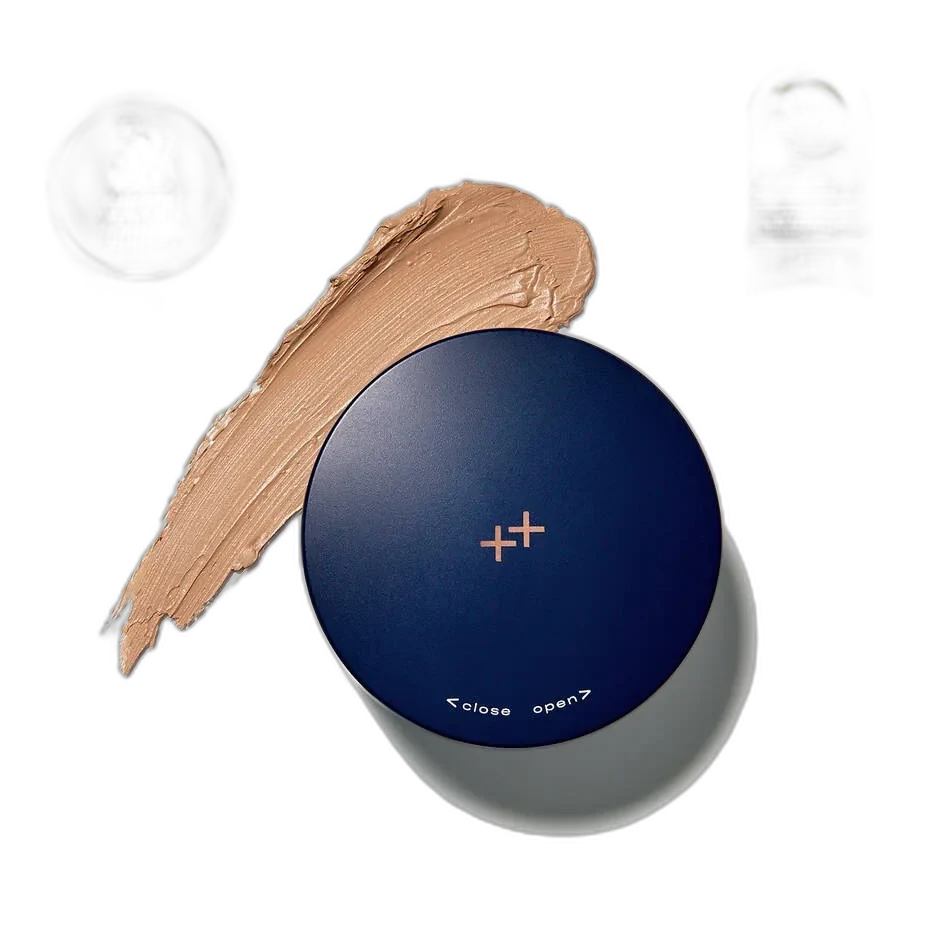
The first application shows a brief grayish cast that warms and blends into a universal tint within 30-60 seconds. This light, neutral tint works on fair to medium skin tones and reads as a soft glow on medium-deep skin. The finish stays comfortable and does not feel tight throughout the day.
Used daily on the full face for about 2 months at 1/4 teaspoon. Use less if applying to both face and neck.
12 months
All Year
The backstory.
Suntegrity was founded in 2011 by Tricia Trimble after her husband was diagnosed with melanoma. The 5 in 1 launched shortly after and became one of the defining tinted mineral sunscreens of the clean beauty era, earning Allure Best of Beauty recognition repeatedly over the years. The formula has remained largely consistent, which is unusual in an industry that constantly reformulates for marketing reasons.
About Suntegrity
Established Brand (5–20 years)Suntegrity launched in 2011 as a clean beauty brand focused on mineral sunscreens. The 5 in 1 is one of the most enduring tinted mineral SPF formulas in clean beauty, earning a consistent following and Allure Best of Beauty recognition over multiple years.
Common myths.
Mineral sunscreens always leave a white cast.
Iron oxides in the tint neutralize the zinc's optical white-cast. Properly micronized non-nano zinc blends cleanly on most skin tones when paired with a universal tint.
SPF 30 isn't strong enough for daily use.
SPF 30 blocks about 97% of UVB rays. The gap between SPF 30 and SPF 50 is small for daily use if you apply enough. Consistent application matters more than the number on the tube.
FAQ.
Does Suntegrity 5 in 1 work on deeper skin tones?
The universal tint works for fair to medium-tan skin tones. Deeper skin tones may see a subtle ashy cast or poor color match and may prefer a sunscreen with a deeper tint or no tint.
Is it safe after a chemical peel or laser treatment?
Yes — oncology estheticians commonly recommend this 100% mineral, fragrance-free formulation for post-procedure skin. It is also pregnancy-safe.
Is SPF 30 enough for melasma?
SPF 30 offers strong UVB protection. The iron oxides in this formula also block visible light, which matters for melasma since HEV light and UV both trigger it. For severe melasma, use physical shade and reapply.
Can I use it as a foundation replacement?
The tint provides light evening for users who prefer a no-makeup look without looking like foundation. For fuller coverage, use it as a sunscreen base under regular makeup.
How much should I apply?
Use at least 1/4 teaspoon (about 1.25ml) for the face, or 1/2 teaspoon for the face and neck. Most users apply too little mineral sunscreen, which lowers the protection factor.
What the community says.
"Universal tint that works on a wide range of skin tones"
"No white cast"
"Comfortable under makeup"
"Calms and hydrates rather than drying"
"Safe after procedures and in pregnancy"
"Expensive per ounce"
"Only one shade may not work for deeper skin tones"
"Tube is small for daily use on face and neck"
"Dewy finish not ideal for very oily skin"
People also looked at.