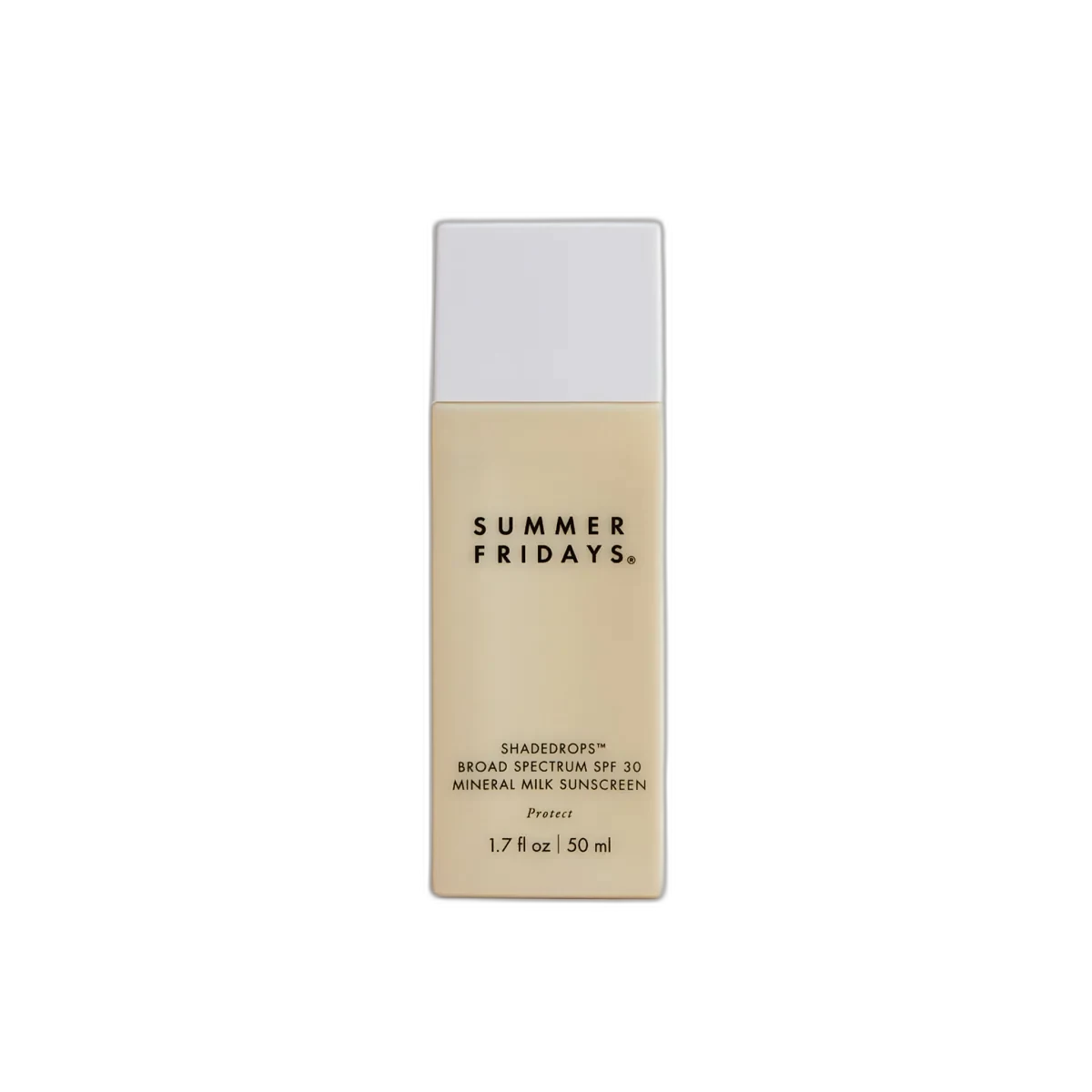
ShadeDrops Mineral Milk Sunscreen SPF 30
Mineral Sunscreen Made Wearable
 Verified reviewer
Pros & cons.
- +Milky serum-like texture is dramatically more wearable than typical mineral sunscreens
- +Caramel tint effectively neutralizes zinc oxide white cast on most skin tones
- +Fragrance-free formula that does not smell like sunscreen — ideal for daily wear
- +Antioxidant complex of vitamin E and ethyl ferulate extends photoprotection beyond UV filtering
- +Excellent as a hydrating makeup primer with a natural, blurring finish
- +Zinc oxide is gentle for sensitive skin and safe during pregnancy
- +Reef-friendly formula meets Hawaii sunscreen requirements
- −Sole reliance on zinc oxide at 9.4% raises concerns about UVA protection adequacy
- −SPF 30 only — no SPF 50 option for those wanting higher protection
- −Formula separates and requires shaking before every use
- −One bottle lasts only 1-2 months with proper daily application amounts
- −Contains shea butter and oils that may trigger breakouts in acne-prone skin
- −Texture becomes thicker and clumpier toward the end of the tube
The full review.
Mineral sunscreens have an image problem. For years, the category conjured images of lifeguards with white-smeared noses and moisturizers that felt like spackle. The zinc oxide and titanium dioxide that make these products gentle and reef-friendly also made them cosmetically punishing — thick, chalky, and impossible to blend into anything darker than a sheet of paper. Summer Fridays bet that the delivery format was the problem, not the active ingredient, and ShadeDrops is the result: a liquid mineral ‘milk’ that behaves nothing like a traditional mineral sunscreen.
Texture
The texture is the first thing you notice. ShadeDrops flows from the tube like a lightweight serum — thin, milky, almost watery. You need to shake it before each use because the zinc oxide particles settle (this is normal physics, not a formulation flaw). On the skin, it blends with almost no effort. There is no dragging, no chalky residue, no desperate rubbing to eliminate white streaks. Within thirty seconds, the formula disappears into the skin, leaving behind a natural, soft-focus finish that genuinely functions as a makeup primer. If you have tried and rejected mineral sunscreens because of their texture, this product exists to change your mind.
Scent
The fragrance-free formulation deserves praise. Many sunscreens — mineral and chemical alike — add fragrance to mask the base formula’s smell, creating an additional irritation vector for sensitive skin. ShadeDrops smells like nothing, which is exactly what a product going on your face every morning should aspire to. The fact that it also avoids the typical sunscreen-y chemical smell is a bonus.
Reality
The caramel in the formula is a subtle but important inclusion. It provides a very sheer, naturally-derived tint that counteracts the white cast inherent to zinc oxide. On light to medium skin tones, the result is essentially invisible — no white cast, no orange tint, just skin that looks like skin with a slightly more even tone. The product is not marketed as a tinted sunscreen, and it does not provide coverage in the traditional sense. It simply neutralizes the chalkiness that makes most mineral sunscreens unwearable.
Works for
The supporting ingredients show genuine formulation thought. Squalane and argan oil deliver lightweight hydration that prevents the drying, tight feeling that zinc oxide formulas often produce. Bisabolol — derived from chamomile — adds anti-inflammatory soothing. An antioxidant trio of tocopherol, tocopheryl acetate, and ethyl ferulate provides free-radical defense that extends the photoprotection beyond what the UV filter alone delivers. This is a sunscreen that treats your skin while protecting it, and for dry or sensitive skin types, that combination is genuinely valuable.
Not ideal for
Now for the uncomfortable conversation about protection adequacy. ShadeDrops relies on a single UV filter: zinc oxide at 9.4%. This is a relatively low concentration for a standalone mineral sunscreen claiming SPF 30 broad-spectrum protection. For comparison, many mineral sunscreens use zinc oxide at 15-25%, often supplemented with titanium dioxide for additional UVB coverage. The Environmental Working Group has flagged this product’s UV protection as “significantly lower than the SPF value would indicate,” with an unbalanced UVA/UVB ratio.
This matters because UVA rays are the primary drivers of photoaging, hyperpigmentation, and the kind of cumulative sun damage that shows up as wrinkles and dark spots decades later. A sunscreen can pass the FDA’s SPF test primarily on UVB protection while offering modest UVA coverage — and at 9.4% zinc oxide as the sole broad-spectrum filter, this is a legitimate concern. For daily commuting, office work, and incidental sun exposure, ShadeDrops likely provides adequate protection. For extended outdoor exposure, beach days, or anyone managing melasma, rosacea, or post-procedure skin that demands robust UVA defense, this should not be your only sunscreen.
Common Complaints
The practical reality of a $36 bottle that lasts one to two months with proper daily application is worth addressing. Sunscreen is the one skincare product where you cannot skimp on amount — a quarter teaspoon for the face, applied generously and reapplied every two hours during sun exposure. At these recommended amounts, 50 mL depletes quickly. The annual cost of daily ShadeDrops use runs $216-432, which places it firmly in the premium daily-wear category.
Best for
For the consumer who has struggled to find a mineral sunscreen that does not feel like a compromise — too heavy, too white, too drying — ShadeDrops delivers the texture breakthrough they have been waiting for. It is one of the most wearable mineral SPFs on the market, and the antioxidant support and hydrating ingredients make it a genuinely pleasant daily experience. The protection question remains, and informed consumers should weigh whether the elegant delivery of a modest zinc oxide concentration meets their specific UV defense needs. As an everyday office SPF with beautiful cosmetic properties, it excels. As serious sun protection for extended exposure, the single-filter, moderate-concentration formula leaves room for doubt.
Ingredient analysis.
Full INCI list
Active Ingredient: Zinc Oxide 9.4%. Inactive Ingredients: Water, C12-15 Alkyl Benzoate, Sorbitan Oleate Decylglucoside Crosspolymer, Argania Spinosa Kernel Oil, Tocopheryl Acetate, Ammonium Acryloyldimethyltaurate/VP Copolymer, Glycerin, Caramel, Polyester-5, Squalane, Butyrospermum Parkii (Shea) Butter Extract, Bisabolol, Phospholipids, Tocopherol, Ethyl Ferulate, Urea, Ethylhexylglycerin, Gluconolactone, Triethoxycaprylylsilane, Dimethicone, Sodium Chloride, Benzyl Alcohol, Sodium Benzoate, Sorbic Acid, Chlorphenesin, Phenoxyethanol
Skin match.
The science.
The Science
Zinc oxide is a broad-spectrum UV filter. It protects against UVA and UVB radiation by scattering and absorbing light. ShadeDrops uses 9.4% zinc oxide, which is lower than the 15-25% zinc oxide found in many dermatologist-recommended mineral sunscreens, which sometimes include titanium dioxide. This concentration reaches SPF 30 in lab tests, but the Environmental Working Group notes the UVA protection may be less robust than the UVB protection.
The antioxidant complex adds photoprotection. Research in the Journal of Photochemistry and Photobiology shows ethyl ferulate — a stabilized ester of ferulic acid — absorbs UV and scavenges free radicals. Combined with vitamin E (in tocopherol and tocopheryl acetate forms), this antioxidant network neutralizes reactive oxygen species from UV exposure that the zinc oxide filter misses. This combination complements the UV filtration rather than replacing it to defend against photodamage.
Bisabolol, a chamomile-derived anti-inflammatory, reduces UV-induced erythema and inflammation, which soothes the formula's protective profile.
Dermatologist Perspective
Board-certified dermatologists often recommend mineral sunscreens with zinc oxide for patients with rosacea, sensitive skin, or during pregnancy because it is non-irritating and non-absorbing. However, many dermatologists note that 9.4% zinc oxide alone may not provide enough UVA protection for patients with melasma, hyperpigmentation, or post-procedure skin. Dermatologists who prioritize cosmetic elegance acknowledge that ShadeDrops solves a compliance problem — patients who dislike mineral sunscreens will not use them consistently. Consistent use of a moderate-protection sunscreen outperforms sporadic use of a higher-SPF product. The antioxidant support works as a well-regarded, complementary photoprotection strategy.
Where it fits in your routine.
Shake well before each use. Apply a generous amount to face and neck (about 1/4 teaspoon for the face) as the last step in your morning skincare routine, after moisturizer. Let the formula set for 1-2 minutes before applying makeup. Reapply every 2 hours during extended sun exposure. Use a separate, higher-volume sunscreen for the body. Remove thoroughly with double cleansing in the evening.
At $36 for 1.7 fl oz, ShadeDrops is moderately priced for a clean beauty mineral sunscreen. However, the rapid depletion rate (1-2 months with proper daily application) makes the annual cost $216-432, a premium price for a daily-wear SPF. No larger size or multipack exists to lower the per-ounce cost. As an emerging indie brand, the price reflects clean beauty positioning and Sephora distribution, not clinical backing. The cosmetic elegance and antioxidant formula justify a modest premium, but consumers seeking robust UVA protection may find better value in mineral sunscreens with higher zinc oxide concentrations at comparable prices.
People who reject mineral sunscreens because of white cast, heaviness, or chalkiness. It works for normal, dry, and sensitive skin types wanting an elegant daily SPF that also acts as a makeup primer. It is an excellent fragrance-free mineral option for pregnant individuals.
People needing robust UVA protection for melasma, post-procedure skin, or long outdoor exposure. Acne-prone users who react to shea butter and plant oils. Budget-conscious users needing high-volume daily sunscreen. Very oily skin types preferring a fully matte mineral finish.
Product details.
This lightweight, milky, serum-like liquid is thinner than most mineral sunscreens. Shake before each use because the formula separates. It applies and blends easily with a natural, skin-like finish.
Fragrance-free and has no detectable sunscreen smell. This mineral sunscreen avoids both added fragrance and the typical zinc oxide odor.
A squeeze tube with a small opening controls dispensing. The milky formula flows easily when fresh but thickens toward the end. Summer Fridays has a packaging recycling program.
The first application has a lightweight milky texture that blends easier than typical mineral sunscreens. A subtle caramel tint neutralizes the white cast zinc oxide usually produces. It feels neither heavy nor chalky. The skin looks naturally even-toned with a soft-focus quality. Wait 1-2 minutes for the formula to set before touching the face or applying makeup.
1-2 months with daily facial application at recommended amounts
12 months
All Year
The backstory.
ShadeDrops launched in May 2022 to address what Summer Fridays' co-founders identified as the central complaint about mineral sunscreens: they are cosmetically unpleasant. The 'mineral milk' format — a thin, milky liquid rather than a thick cream — was designed to make zinc oxide wearable for people who had tried and rejected mineral sunscreens because of white cast, heaviness, and chalkiness. The product quickly gained celebrity visibility when Hailey Bieber featured it in her skincare routines.
About Summer Fridays
Emerging Brand (2–5 years)Summer Fridays was co-founded in 2018 by influencers Marianna Hewitt and Lauren Gores Ireland. The brand is Leaping Bunny certified and meets Sephora's Clean + Planet Positive standards. While the brand lacks dermatological research backing, ShadeDrops is FDA-regulated as an OTC sunscreen drug.
Common myths.
All mineral sunscreens leave a visible white cast, particularly on darker skin tones.
ShadeDrops uses caramel as a naturally-derived tint to mask zinc oxide's white cast. Most reviewers see no visible white cast on light to medium skin tones. On deeper skin tones, the tint works better than untinted mineral sunscreens, though it may not be invisible on very dark complexions.
SPF 30 provides nearly the same protection as SPF 50, so the difference is not meaningful.
SPF 30 blocks about 97% of UVB rays, while SPF 50 blocks 98%. This product relies only on 9.4% zinc oxide for UVA and UVB protection. Higher zinc concentrations or adding titanium dioxide would increase broad-spectrum coverage, especially for UVA rays that cause photoaging.
FAQ.
Does Summer Fridays ShadeDrops leave a white cast?
The formula uses caramel as a naturally-derived tint to neutralize the white cast from zinc oxide. Most users with light to medium skin tones see no visible white cast. For deeper skin tones, the tint helps but may not be completely invisible — it works better than untinted mineral sunscreens.
Is SPF 30 with only zinc oxide 9.4% enough protection?
Zinc oxide at SPF 30 provides adequate protection for daily office use with minimal sun exposure. But a 9.4% concentration as the only filter lacks deep UVA protection; the EWG flagged its unbalanced UVA/UVB ratio. Use a higher SPF product for extended outdoor exposure, beach days, or melasma that requires robust UVA defense.
Can I use ShadeDrops as a makeup primer?
Yes — users praise this quality most. The milky texture creates a smooth, hydrated base that naturally blurs and lets foundation glide over. Wait 1-2 minutes after application for the formula to set before applying makeup to prevent pilling.
Is Summer Fridays ShadeDrops reef-safe?
The formula uses zinc oxide as its only UV filter. It lacks oxybenzone and octinoxate, the two UV filters most linked to coral reef damage. It meets Hawaii reef-safe sunscreen requirements. 'Reef-safe' is not a regulated term, but this product avoids the primary chemicals of concern.
Why does ShadeDrops separate and need to be shaken?
The milky liquid formula separates naturally as zinc oxide particles settle. Shaking before each use re-disperses the zinc oxide evenly. This ensures consistent sun protection with every application. This is normal for liquid mineral sunscreens and not a defect.
Is Summer Fridays ShadeDrops safe during pregnancy?
Yes. Zinc oxide is one of the safest sunscreen ingredients during pregnancy because it sits on the skin surface and does not absorb systemically. The formula is fragrance-free and lacks chemical UV filters like oxybenzone, which some OB-GYNs recommend avoiding during pregnancy.
What the community says.
"Minimal to no white cast thanks to the caramel tint — works on most skin tones"
"Lightweight milky texture that feels nothing like a typical mineral sunscreen"
"Excellent as a makeup primer with a natural, blurring finish"
"Fragrance-free and gentle enough for sensitive skin and around the eyes"
"Hydrating without feeling greasy or heavy"
"Does not sting eyes like many chemical sunscreens"
"Single UV filter (zinc oxide 9.4%) raises concerns about UVA protection adequacy"
"SPF 30 only — many users want SPF 50+ for daily wear"
"Formula becomes thicker and clumpier toward the end of the tube"
"Liquid texture requires shaking before each use and can drip"
"One bottle lasts only 1-2 months with proper application amounts"
"Some users experienced breakouts from the shea butter and oil content"
Featured in.
People also looked at.