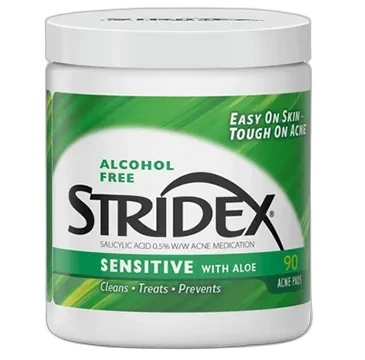
XtraCare Sensitive Pads with Aloe
Budget BHA Starter Pad
 Verified reviewer
Pros & cons.
- +Exceptionally affordable at under $0.10 per treatment pad
- +0.5% salicylic acid is the gentlest BHA concentration for acne-prone beginners
- +Alcohol-free formula avoids the aggressive drying of older acne treatments
- +Aloe vera provides genuine anti-inflammatory soothing alongside the BHA treatment
- +Convenient pad format takes 30 seconds and eliminates measuring or cotton rounds
- +HSA/FSA eligible — can be purchased with pre-tax healthcare funds
- −Contains menthol and fragrance that contradict the 'Sensitive' positioning
- −Ammonium lauryl sulfate surfactant can be drying for truly sensitive or compromised skin
- −0.5% salicylic acid is too low for moderate to severe acne
- −Witch hazel may aggravate very sensitive or eczema-prone skin
- −Packaging is basic plastic with no seal — pads can dry out if lid isn't closed tightly
The full review.
Stridex is endearing. While Korean beauty brands launch ceramide-infused, pH-optimized, centella-enriched exfoliating treatments in frosted glass bottles, Stridex sits in its plastic tub on the drugstore shelf looking exactly as it did when your mother was a teenager. The brand that invented the medicated acne pad in 1959 does not seek reinvention. It offers reliability, accessibility, and a price point that makes BHA experimentation virtually risk-free.
The Sensitive version is the gentlest product in the Stridex lineup. It uses 0.5% salicylic acid—the lowest concentration the FDA recognizes as effective for OTC acne treatment. While the red-box Maximum Strength pads use 2% salicylic acid, the green-box Sensitive version takes the opposite approach: enough active ingredient to work, but not enough to overwhelm skin that reacts to chemical exfoliation.
The mechanism is straightforward. Salicylic acid is oil-soluble, so it penetrates the pore lining where acne begins. At 0.5%, it mildly dissolves the dead skin cells and sebum that clog pores and form comedones. This is maintenance-grade treatment—effective for preventing new blackheads and small blemishes, clearing very mild acne, and maintaining skin clarity for those whose skin is already controlled by stronger treatments.
The pad format is a genuine advantage for Stridex. There is no measuring, no dripping, and no cotton round waste. You pull a pre-soaked pad from the tub, swipe it across your face, and you are done. The textured surface provides mild physical exfoliation alongside the chemical treatment to help dislodge surface debris. The pad format works for teens learning skincare basics, people wanting a simple one-step addition, and anyone who wants a treatment they can use in thirty seconds.
The aloe vera addition is the primary reason the product claims to be sensitivity-friendly. Decolorized aloe barbadensis leaf juice provides anti-inflammatory properties that counterbalance the mild irritation from the salicylic acid and the formula’s surfactant. Research supports aloe’s skin-soothing capabilities; here, it has a functional purpose beyond marketing.
However, the ‘Sensitive’ label is aspirational rather than accurate. The formula contains menthol—a known skin irritant that produces a cooling sensation some consumers mistake for efficacy. Using menthol in a product marketed for sensitive skin is contradictory. It also contains fragrance, which adds irritation risk and is unnecessary in a treatment product. Finally, it contains ammonium lauryl sulfate, a surfactant that can still be drying and irritating for compromised skin barriers, even if it is milder than sodium lauryl sulfate.
The witch hazel water also splits opinion. Traditional dermatological guidance considers witch hazel an acceptable mild astringent, and its tannins provide some anti-inflammatory benefit. But for truly sensitive, compromised, or eczema-prone skin, witch hazel can be drying and aggravating. Its inclusion suggests this product is designed for mildly sensitive skin rather than clinically sensitive skin.
In practice, the product works for its intended audience. Users with mild acne, occasional breakouts, or oily zones needing gentle BHA maintenance report satisfactory results. Blackheads diminish over two to three weeks of daily use. Skin texture improves slightly. Small blemishes resolve faster. The alcohol-free formula avoids the aggressive drying of older acne treatments, and for most users, the 0.5% concentration provides enough activity without triggering irritation.
This product will not work for moderate to severe acne. The 0.5% concentration is too low to provide the deep pore-clearing activity required for persistent breakouts. Users with active inflammatory acne should use the Maximum Strength version or a dedicated BHA treatment at 2% concentration.
The value is undeniable. At around $9 for 90 pads—under 10 cents per treatment—this is one of the most affordable BHA products available. HSA/FSA eligibility adds practical value for those using pre-tax healthcare dollars. As a starter BHA for someone who has never used a chemical exfoliant, the low concentration and low price make experimentation essentially free of financial risk.
Stridex Sensitive pads are not a sophisticated product. They are not beautifully formulated. They contain ingredients that undermine their sensitivity claims. But they work for what they are: an accessible, affordable, entry-level BHA treatment that helps millions manage mild acne for pocket change.
Formula
Ingredient analysis.
Full INCI list
Active Ingredient: Salicylic Acid 0.5%. Inactive Ingredients: Aloe Barbadensis Leaf Juice (Decolorized), Ammonium Lauryl Sulfate, Ammonium Xylenesulfonate, Citric Acid, Ethylhexylglycerin, Fragrance, Hamamelis Virginiana (Witch Hazel) Water, Menthol, Phenoxyethanol, Purified Water, Simethicone, Sodium Borate, Tetrasodium EDTA
Skin match.
The science.
The Science
Salicylic acid is one of the most well-studied OTC acne ingredients, with FDA recognition as a safe and effective acne treatment at concentrations of 0.5% to 2%. As a beta-hydroxy acid (BHA), salicylic acid is lipophilic — able to penetrate into the lipid-rich environment of the pore lining where it dissolves the keratin plugs that form comedones. A landmark review published in Clinical Therapeutics confirmed salicylic acid's efficacy in reducing both inflammatory and non-inflammatory acne lesions.
At 0.5%, the concentration in these pads represents the lowest FDA-recognized effective dose. Research in the Journal of the American Academy of Dermatology has established that lower BHA concentrations are appropriate for mild acne and maintenance therapy, particularly on sensitive or dry skin where higher concentrations risk barrier disruption.
The aloe vera component (Aloe barbadensis) has demonstrated anti-inflammatory properties in dermatological research, including a study in Skin Pharmacology and Physiology showing reduction in UV-induced erythema and improved wound healing markers. In this context, the aloe serves to mitigate the mild irritation associated with acid treatment.
Hamamelis virginiana (witch hazel) provides astringent and mild anti-inflammatory effects from its tannin content, though dermatological opinion is divided on its suitability for truly sensitive skin due to potential drying effects.
Dermatologist Perspective
Dermatologists view 0.5% salicylic acid pads as an appropriate entry-level treatment for patients with mild, non-inflammatory acne or those who have previously experienced irritation from higher-strength BHA products. Board-certified dermatologists note that the pad delivery format ensures consistent application and mild physical exfoliation. However, dermatologists frequently flag the menthol and fragrance content as counterproductive for patients with genuinely sensitive or compromised skin barriers, and may recommend fragrance-free alternatives for these patients. For mild acne maintenance therapy between dermatology appointments, products like these serve a practical role in the patient's home care regimen.
Where it fits in your routine.
Swipe one pad across your face after cleansing, targeting breakout-prone areas. Avoid the immediate eye area. Do not rinse. Wait 1-2 minutes for absorption, then apply a non-comedogenic moisturizer. Use once daily (preferably PM) and increase to twice daily if tolerated. Use broad-spectrum sunscreen during the day because salicylic acid increases sun sensitivity.
At approximately $8.99 for 90 pads, the Stridex Sensitive Pads cost under $0.10 per treatment. This makes the Stridex Sensitive Pads one of the most affordable acne treatments. A 55-count option costs even less. HSA/FSA eligibility adds value. The formulation is simple and the concentration is low, but the price-to-performance ratio works well for mild acne maintenance. Even with the product's limitations, the cost to try it is negligible.
Teens and beginners starting BHA. People with mild, occasional breakouts seeking easy maintenance. Dry or mildly sensitive skin types that find 2% salicylic acid too harsh. Budget-conscious consumers wanting an effective acne pad at the lowest price.
People with moderate to severe acne needing higher-concentration treatment. People with sensitive, eczema-prone, or rosacea-affected skin who react to menthol, fragrance, and surfactant. Those seeking a premium, clean-formula BHA treatment — the ingredient list shows drugstore priorities.
Product details.
All Year
The backstory.
Stridex revolutionized acne care in 1959 by introducing the first OTC medicated acne pad, eliminating the mess of applying creams and lotions. The Sensitive with Aloe variant was developed to extend the brand's reach to consumers who found the Maximum Strength (red box) too harsh — particularly teens with dry or sensitive skin who still needed BHA treatment for mild breakouts.
About Stridex
Legacy Brand (20+ years)Stridex launched in 1959 as the first over-the-counter acne treatment pad. Blistex, Inc. acquired the brand in 1996. Stridex has been a drugstore staple for over six decades, and its medicated pads are among the most recognized OTC acne treatments in the United States.
Common myths.
Stridex pads are identical — buy the red box for better results.
The Sensitive pads use 0.5% salicylic acid, compared to 2% in the Maximum Strength. For mild acne on sensitive or dry skin, this lower concentration maintains skin without the irritation a higher dose causes. More active ingredients are not always better.
Alcohol-free means this product won't dry out your skin.
The formula is alcohol-free but contains ammonium lauryl sulfate (a surfactant), witch hazel, and menthol. These ingredients cause dryness and irritation. Follow with a moisturizer.
FAQ.
What's the difference between Stridex Sensitive (green) and Maximum Strength (red)?
The Sensitive pads contain 0.5% salicylic acid with aloe vera for soothing, while the Maximum Strength pads contain 2% salicylic acid with menthol. The Sensitive version is designed for mild acne on dry or easily irritated skin, while the Maximum Strength targets moderate acne on oilier skin types.
Are Stridex Sensitive pads actually good for sensitive skin?
The 0.5% salicylic acid concentration and aloe vera are gentler than the Maximum Strength version. But the formula has menthol, fragrance, and ammonium lauryl sulfate — ingredients that irritate sensitive or compromised skin. Patch test before daily use.
How often should I use Stridex Sensitive pads?
Use once daily, ideally in the evening after cleansing. If your skin shows no excessive dryness or irritation after 1-2 weeks, use it twice daily. Always follow with a moisturizer to maintain hydration.
Can I use Stridex Sensitive pads with retinol?
Yes, but introduce carefully. Use the Stridex pad in the morning and retinol at night so you do not layer both actives at once. If your skin shows signs of over-exfoliation (dryness, flaking, redness), use Stridex every other day instead.
Are Stridex pads FSA/HSA eligible?
Yes — Stridex medicated acne pads are FSA and HSA eligible. They contain salicylic acid, an FDA-recognized OTC acne active ingredient. You can buy them with pre-tax healthcare dollars.
What the community says.
"Very affordable acne treatment"
"Gentle enough for daily use on most skin types"
"Alcohol-free formula doesn't dry out skin"
"Convenient pad format for on-the-go use"
"Good entry-level BHA for teens and beginners"
"0.5% salicylic acid may be too weak for moderate to severe acne"
"Contains menthol and fragrance that can irritate truly sensitive skin"
"Pads can feel slightly drying despite alcohol-free claim"
"Witch hazel and menthol contradict the 'sensitive' positioning"
People also looked at.