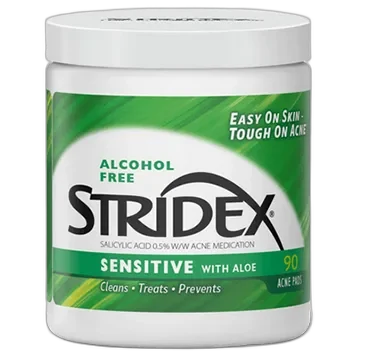
Salicylic Acid Pads Sensitive 0.5%
Beginner BHA Entry Point
 Verified reviewer
Pros & cons.
- +0.5% salicylic acid provides meaningful BHA exfoliation with minimal dryness and purging risk
- +Decolorized aloe vera adds genuine soothing benefits absent from the Maximum Strength formula
- +Remarkably affordable at under $5 for 90 pads — roughly $0.05 per treatment
- +Softer pad texture is more comfortable on reactive or already-irritated skin
- +Ideal low-risk entry point for BHA beginners testing their skin's tolerance
- +Updated formula replaces the controversial DMDM Hydantoin preservative
- +HSA/FSA eligible as an FDA-regulated OTC acne medication
- −Contains fragrance, menthol, and a sulfate surfactant — contradicting the 'sensitive' positioning
- −0.5% concentration is too mild for moderate to severe acne or oily skin
- −Results develop much more slowly than with 2% salicylic acid products
- −Pads foam up during use due to surfactant content, which some users find unexpected
- −Older stock with DMDM Hydantoin preservative may still be on some store shelves
The full review.
Marketing a skincare product as gentle while it contains fragrance, menthol, and a sulfate surfactant is a contradiction. The Stridex Sensitive Pads occupy a strange middle ground. They are gentler than the Maximum Strength version in important ways, yet they still contain ingredients a dermatologist reviewing for reactive skin would flag. This tension makes the product either pragmatic or dishonest.
The answer depends on your definition of the customer. If “sensitive skin” means skin that is clinically reactive—prone to rosacea flares, contact dermatitis, or barrier compromise—then this product fails that definition. Dermatologist Brooke Jeffy has noted that the fragrance, witch hazel, and menthol in this formula are questionable for truly sensitive skin. She is right.
However, if the target customer is someone whose skin finds the 2% Maximum Strength too aggressive, or who gets dry and flaky from standard BHA concentrations, then the Sensitive formula makes sense. This broader audience is the one actually buying these pads.
The formula uses 0.5% salicylic acid, the lowest effective concentration for BHA exfoliation. At this level, the acid still acts as a desmolytic agent—penetrating lipid-rich pores and dissolving the intercellular cement holding dead skin cells together—but with less potential for the dryness, peeling, and purging seen with 2% concentrations. For general textural smoothing, occasional blackheads, and mild comedonal acne, 0.5% works, though it requires a longer timeline.
The key difference from the Maximum Strength version is decolorized aloe barbadensis leaf juice. Aloe vera has documented anti-inflammatory and skin-soothing properties that buffer the exfoliation. The Maximum Strength formula lacks this; it contains only salicylic acid, surfactant, menthol, and little else. The Sensitive formula also includes witch hazel water for mild astringent and oil-controlling effects. This combination of lower-dose BHA and botanical soothers changes the skin experience.
The Sensitive pads feel softer than the Maximum Strength version upon application. The textured surface is less aggressive and the menthol cooling sensation is milder. There is minimal tingling, unlike the sometimes-startling sting the Maximum Strength can cause on active breakouts. The pads may foam slightly because the ammonium lauryl sulfate is working as a surfactant. This is a normal characteristic of the formula, not a defect.
Results with the Sensitive formula require patience. While Maximum Strength can show visible oil reduction and pore clearing within one week, the 0.5% concentration typically takes two to three weeks to show changes. Blackhead improvement takes three to four weeks, and full results for mild acne generally require eight to twelve weeks of consistent daily use. Purging—the initial breakout surge as BHA brings clogs to the surface—is less common and less severe at this concentration, which benefits anxious first-time BHA users.
Dermatologists rightly flag one limitation: if you need soothing properties so badly that Maximum Strength is too much, the fragrance and menthol in the Sensitive formula may also be problematic. The product is a middle ground, not the truly minimal formula reactive skin types need. A fragrance-free, menthol-free version—low-dose salicylic acid on a soft pad with aloe—would be nearly perfect. This version is close, but not quite there.
The reformulation history matters. Older versions of this product contained DMDM Hydantoin, a formaldehyde-releasing preservative that caused consumer backlash. The current formula uses phenoxyethanol and ethylhexylglycerin, a more consumer-friendly preservative system. This is a meaningful improvement, though some older stock may remain on shelves. Check the inactive ingredients list before you buy.
At approximately four to five dollars for a 90-count jar, the value is remarkable. You get three months of daily chemical exfoliation for less than the price of a coffee. Even if your skin does not tolerate it—unlikely at 0.5%, but possible—the financial risk is negligible. This makes it an ideal testing ground for BHA exfoliation. If the Sensitive formula works, you have a sustainable long-term treatment at a low price. If it is too mild, you know your skin can handle the Maximum Strength.
The Stridex Sensitive Pads are not the best BHA product for sensitive skin; fragrance-free liquid BHA formulations at low concentrations hold that title. But they may be the best first BHA product for someone unsure of their skin’s limits. The low concentration, aloe buffer, soft pad texture, and low price create the lowest-risk entry point into chemical exfoliation in the American drugstore aisle. The imperfections exist, but at this price, they are easy to forgive.
Formula
Ingredient analysis.
Full INCI list
Active Ingredient: Salicylic Acid 0.5%. Inactive Ingredients: Aloe Barbadensis Leaf Juice (Decolorized), Ammonium Lauryl Sulfate, Ammonium Xylenesulfonate, Citric Acid, Ethylhexylglycerin, Fragrance, Hamamelis Virginiana (Witch Hazel) Water, Menthol, Phenoxyethanol, Purified Water, Simethicone, Sodium Borate, Tetrasodium EDTA
Skin match.
The science.
The Science
Salicylic acid at 0.5% sits at the low end of the effective BHA exfoliation range. A 1992 review by Zander and Weisman in Clinical Therapeutics studied 0.5% and 2% salicylic acid pad formulations across four clinical studies. Both concentrations beat placebo in reducing acne lesion counts, but the 2% concentration works more strongly. The mechanism is the same at both levels: salicylic acid acts as a desmolytic agent, dissolving intercellular bonds between corneocytes within the follicle. Its lipid solubility—unique among common hydroxy acids—lets it penetrate sebum-filled pores.
The addition of aloe barbadensis leaf juice adds anti-inflammatory support. A 2008 review in the Indian Journal of Dermatology showed aloe vera inhibits cyclooxygenase and reduces thromboxane B2 production. These anti-inflammatory effects help offset irritation from the acid and surfactant. Witch hazel (Hamamelis virginiana) provides tannin-based astringent properties, but dermatologists note that witch hazel preparations with fragrance or alcohol can increase inflammation in sensitive skin.
References
- Treatment of acne vulgaris with salicylic acid pads — Clinical Therapeutics (1992)
Dermatologist Perspective
Board-certified dermatologists generally recommend low-concentration salicylic acid for patients new to chemical exfoliation or those with mild comedonal acne. The 0.5% concentration in this formula is the minimum effective dose for BHA exfoliation. However, dermatologists specializing in sensitive skin note a contradiction in this formula's positioning—Dr. Brooke Jeffy has publicly flagged the fragrance, menthol, and witch hazel as questionable for a product targeting reactive skin. Dermatologists often suggest patients with truly sensitive skin use fragrance-free BHA options, though they acknowledge this product's low concentration and aloe content make it acceptable for skin that simply finds standard BHA strengths too aggressive.
Guidance
Where it fits in your routine.
After cleansing, swipe one pad across your face. Use the soft side for general application or the textured side for blackhead-prone zones. Do not rinse. Wait 10-15 minutes before applying moisturizer so the salicylic acid works at its effective pH. Use it every other day for the first week, then use it daily in the evening if tolerated. Always use SPF 30+ sunscreen during the day. For body use, swipe across affected areas after showering.
At about $4.47 for 90 pads, Stridex Sensitive costs roughly $0.05 per treatment. This makes it one of the cheapest chemical exfoliants at any strength. Daily use costs about $18 annually. Other sizes (55, 70, 110 count) exist. As an FDA-regulated OTC drug that is HSA/FSA eligible, insured consumers may pay zero. The value matches its performance, and the low price makes Stridex Sensitive a nearly risk-free trial for BHA beginners.
First-time BHA users testing skin tolerance at the lowest effective concentration, people who found Stridex Maximum Strength too aggressive, and anyone with mild acne or occasional blackheads seeking a gentle, budget-friendly daily exfoliant.
This is for people with moderate to severe acne needing 2% salicylic acid, those with clinical sensitivities to fragrance or menthol, people with rosacea or severely compromised skin barriers, and anyone seeking a minimal-ingredient sensitive skin product.
Product details.
Textured soft-touch pads feel gentler than the Maximum Strength version. Ammonium lauryl sulfate in the clear solution causes slight foaming during use. These pads feel less tingly and cooling than the red box.
It has a mild medicinal scent and a slight chemical note. The fragrance is detectable, though less menthol-forward than the Maximum Strength pads.
A round plastic jar has a twist-off green lid. This green color separates it from the Maximum Strength (red) and Essential (blue) variants. The standard drugstore packaging contains stacked pads.
The menthol provides a mild cooling sensation on first use, less intense than the Maximum Strength pads. The aloe vera component feels slightly soothing. The 0.5% concentration causes minimal tingling. Dryness and purging occur less often than with the 2% version, though some mild adjustment is normal during the first week.
3 months with once-daily facial use (90-count jar)
12 months
All Year
The backstory.
The Sensitive variant was born from a straightforward market need: many consumers who tried Stridex's Maximum Strength pads found the 2% concentration too aggressive for their skin. Rather than losing those customers entirely, Stridex created a lower-dose option with aloe vera — maintaining the iconic pad format and alcohol-free positioning while dialing back the intensity for reactive skin types.
About Stridex
Legacy Brand (20+ years)Stridex launched in 1959 as the first OTC acne treatment pad and Blistex Inc. owns it now. The brand has over six decades of market presence and sits in the Smithsonian Institution's permanent collection. Its salicylic acid formulas are FDA-regulated OTC drugs.
Common myths.
The 0.5% concentration is too low to treat acne.
Clinical research shows salicylic acid pads work at 0.5% and 2% concentrations. The 0.5% concentration provides desmolytic exfoliation; it works slower but still penetrates pores and dissolves sebum plugs. This concentration suffices for mild comedonal acne.
'sensitive' labels do not guarantee safety for truly sensitive skin.
This formula contains fragrance, menthol, and ammonium lauryl sulfate. Dermatologists often flag these ingredients as irritants for sensitive or reactive skin. The 'sensitive' label refers to the lower salicylic acid concentration, not the removal of all potential sensitizers.
FAQ.
Is Stridex Sensitive actually safe for sensitive skin?
Partially. The 0.5% salicylic acid concentration is gentler than the 2% Maximum Strength, and aloe vera adds soothing benefits. However, the formula contains fragrance, menthol, and ammonium lauryl sulfate—ingredients that irritate sensitive or reactive skin. Patch test before daily use.
Should I use Stridex Sensitive or Maximum Strength?
Use Sensitive if your skin is dry, sensitive, or easily irritated, or if you are new to BHA. The 0.5% concentration tests your skin's tolerance before you move to the 2% Maximum Strength. For oily skin with moderate to severe acne, the Maximum Strength works faster and shows more noticeable results.
Can I use Stridex Sensitive pads every day?
Most users tolerate the 0.5% concentration daily. Use it every other day for the first week to check your skin's response. If you have no dryness or irritation, use it daily in the evening after cleansing. Always follow with moisturizer and use sunscreen during the day.
Why do Stridex Sensitive pads foam up when I use them?
Ammonium lauryl sulfate, a surfactant in the formula, creates the foam and dissolves oil and debris. This foam is a normal characteristic of the product, not a defect. The foam adds cleansing action as you swipe the pad across your skin.
Does the Stridex Sensitive formula still contain DMDM Hydantoin?
The current formula uses phenoxyethanol and ethylhexylglycerin instead of DMDM Hydantoin (a formaldehyde-releasing preservative). Older stock with the previous formulation may still be on store shelves. Check the inactive ingredients on the packaging to confirm which version you buy.
What the community says.
"Gentle enough for easily irritated skin without severe drying"
"Effective at reducing mild breakouts with less harshness than the red box"
"Aloe vera helps prevent the dryness common with BHA products"
"Very affordable entry point for BHA beginners"
"Soft pad texture is more comfortable than the Maximum Strength version"
"0.5% salicylic acid is too mild for moderate to severe acne"
"Contains fragrance and menthol despite being marketed for sensitive skin"
"Pads can foam up during use due to the surfactant content"
"Slight chemical smell that some users find unpleasant"
"Many users outgrow it quickly and switch to the Maximum Strength"
People also looked at.