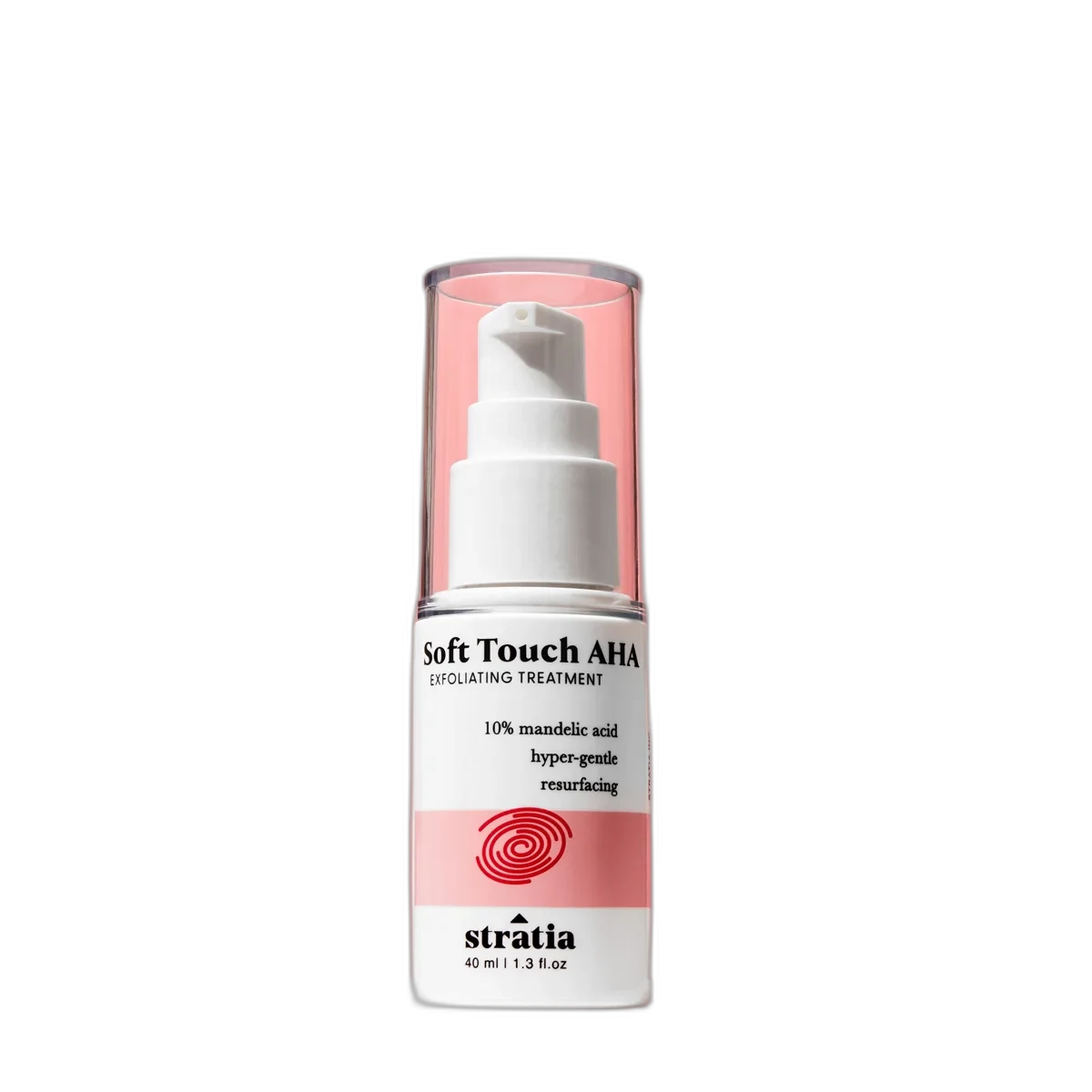
Soft Touch AHA
Gentlest AHA on the Shelf
 Verified reviewer
Pros & cons.
- +Genuinely zero irritation — no stinging, tingling, or redness even on sensitive skin
- +10% mandelic acid provides effective exfoliation with the gentlest AHA molecule available
- +Soothing support ingredients (chamomile, panthenol, aloe, allantoin) actively calm the skin
- +Short 13-ingredient list with no fragrance, oils, or silicones
- +Addresses multiple concerns: texture, dark spots, pore size, dullness, and fine lines
- +Lightweight gel absorbs instantly with no residue or stickiness
- +Vegan and cruelty-free formula
- −Results develop more slowly than stronger AHAs like glycolic acid
- −Small 1.3 oz bottle doesn't last long with daily application
- −May not satisfy experienced acid users seeking intense exfoliation
- −Derived from bitter almonds — potential concern for tree nut allergy sufferers
- −Contains diazolidinyl urea preservative, which some users prefer to avoid
The full review.
The skincare community has a complicated relationship with AHAs. Chemical exfoliation works well for texture, brightness, and pore clarity. However, glycolic acid serums often irritate sensitive skin. This cycle repeats daily in skincare forums: a user tries a glycolic product, feels stinging and redness, and decides chemical exfoliation isn’t for them.
Stratia’s Soft Touch AHA targets those users. The exfoliating active is 10% mandelic acid. Choosing mandelic acid over glycolic or lactic acid is the formulation’s most important decision. Mandelic acid is the largest commonly used AHA molecule. While glycolic acid (the smallest AHA) penetrates quickly and deeply—causing a tingle-to-burn sensation—mandelic acid moves through the stratum corneum slowly and evenly. The mechanism and end result are the same, but the experience differs.
The practical difference is striking. A typical 10% glycolic acid serum likely causes tingling, warmth, or stinging in reactive skin. Soft Touch AHA feels like a gel that absorbs and then leaves no sensation. There is no tingling, warmth, or redness. This doesn’t mean it isn’t working; mandelic acid dissolves intercellular bonds between dead skin cells just like glycolic acid. You simply don’t feel it because slower penetration doesn’t trigger the nerve endings that register irritation.
The supporting ingredients show Stratia’s thoughtful formulation. Panthenol (vitamin B5) provides soothing humectant support. Chamomile extract delivers anti-inflammatory calming. Aloe vera juice adds immediate hydration. Allantoin promotes healing. Sodium hyaluronate ensures the freshly exfoliated skin stays hydrated. Most exfoliants spend their budget on additional actives, but this product uses an unusual amount of soothing infrastructure.
The gel texture is clean. It has no grit, tackiness, or residue. It absorbs in seconds and disappears, leaving only the knowledge that mandelic acid works beneath the surface. You can apply moisturizer immediately without a “neutralization” step.
Results come gradually, which is the trade-off for gentleness. A glycolic acid product might show visible changes in a week alongside irritation, but Soft Touch AHA reveals smoother texture and brighter tone over three to four weeks. Pore clarity improves. Rough bumps soften. Post-inflammatory dark spots fade. The timeline is slower, but the process is painless and the destination is the same.
Experienced acid users who want the intensity of glycolic acid may find Soft Touch AHA underwhelming. This product is not for people who equate sensation with efficacy. It is for those who tried acids, hated the experience, and assumed chemical exfoliation wasn’t for them. It is for sensitive skin types who want a glowing complexion without the irritation, and for beginners who want to introduce exfoliation without risking a reaction.
The ingredient list is short—thirteen ingredients total, with no fragrance or essential oils. One caveat: mandelic acid comes from bitter almonds. Anyone with a tree nut allergy should consult a doctor before use. This is a legitimate allergen concern.
At $18 for 1.3 ounces, the price is fair for a well-formulated mandelic acid treatment, though the small bottle won’t last long with daily use. The value lies in the formulation: an exfoliant designed to be tolerable, using ingredients that actively soothe rather than just acting as a vehicle for the acid.
Formula
Ingredient analysis.
Full INCI list
Water, Mandelic Acid, Propylene Glycol, Polyacrylate Crosspolymer-6, Panthenol, Aloe Barbadensis Leaf Juice, Matricaria Recutita (Chamomile) Flower Extract, Glycerin, Sodium Hyaluronate, Allantoin, Sodium Hydroxide, Diazolidinyl Urea, Iodopropynyl Butylcarbamate
Skin match.
The science.
The Science
Mandelic acid is gentler than other AHAs because of its molecular weight. At 152.15 g/mol, mandelic acid is much larger than glycolic acid (76.03 g/mol) and lactic acid (90.08 g/mol). A 1999 study in Dermatologic Surgery by Taylor and colleagues shows mandelic acid peels improve skin texture and pigmentation similarly to glycolic acid peels, but with significantly less post-inflammatory hyperpigmentation — which suits darker skin tones and sensitive skin types well.
Mandelic acid does more than exfoliate to treat pigmentation. Research shows mandelic acid inhibits melanin synthesis by disrupting tyrosinase, the rate-limiting enzyme in melanin production. This dual mechanism — physical removal of pigmented cells via exfoliation and biochemical inhibition of new melanin — makes mandelic acid effective for hyperpigmentation and post-inflammatory dark spots.
Evidence supports the soothing ingredients in Soft Touch AHA. Clinical studies show Panthenol (provitamin B5) accelerates epidermal regeneration and improves stratum corneum hydration. Bisabolol from chamomile extract has anti-inflammatory activity by inhibiting cyclooxygenase and lipoxygenase pathways. These ingredients do more than make the product feel gentler — they actively mitigate the low-level inflammation acid exfoliation can trigger.
References
- Mandelic acid and the treatment of hyperpigmentation — Dermatologic Surgery (1999)
Dermatologist Perspective
Board-certified dermatologists often use mandelic acid as a first-line AHA for sensitive skin types and darker skin tones, where aggressive exfoliants risk post-inflammatory hyperpigmentation. Dermatologists note mandelic acid's larger molecular size leads to more uniform penetration and less irritation than glycolic acid at comparable concentrations. For patients who failed glycolic acid treatments due to sensitivity, dermatologists often recommend mandelic acid as an alternative that delivers similar exfoliation benefits over a longer timeframe.
Where it fits in your routine.
Apply to clean, dry skin at night. Use 3 times per week, then increase to daily use as tolerated. Pump a small amount onto fingertips and spread evenly over the face, avoiding the eye area. Wait 1-2 minutes for absorption, then apply moisturizer. Do not use on broken or irritated skin. Use broad-spectrum sunscreen every morning — this is mandatory when using any AHA, as acid exfoliation increases UV sensitivity.
At $18 for 1.3 ounces, Soft Touch AHA is priced fairly for an indie brand mandelic acid treatment. The small bottle size lasts about 5-6 weeks with daily use, making the monthly cost $12-15. This price competes with drugstore AHAs but offers a better formulation with soothing ingredients most budget options lack.
Sensitive skin types want chemical exfoliation benefits without irritation. AHA beginners need a gentle introduction to acid exfoliation. People with post-inflammatory hyperpigmentation or uneven skin tone need a brightening exfoliant for consistent use without reactions.
Experienced acid users wanting the faster, more intense results of glycolic acid. Anyone with a tree nut allergy (mandelic acid comes from bitter almonds — consult your doctor). People seeking a multi-acid product with BHA for deep pore cleaning.
Product details.
All Year
The backstory.
Alli Reed developed Soft Touch AHA as a solution for the skincare catch-22 that many users face: wanting the benefits of chemical exfoliation — smoother texture, clearer pores, brighter tone — but having skin too sensitive to tolerate glycolic or even lactic acid without irritation. Mandelic acid, with its larger molecular size and slower penetration, was the answer. The 'Soft Touch' name isn't marketing — it's a literal description of the product's approach to exfoliation.
About Stratia
Established Brand (5–20 years)Alli Reed founded Stratia in 2016 with a science-first approach to skincare formulation. Soft Touch AHA follows this philosophy by delivering effective actives gently. It uses mandelic acid (the largest AHA molecule) to reduce the irritation caused by smaller AHAs like glycolic acid.
Common myths.
Stronger AHAs always give better results than gentle ones.
Daily 10% mandelic acid use yields better long-term results than 30% glycolic acid used once a month. Your skin cannot tolerate the higher concentration. Consistency beats intensity; mandelic acid is gentle enough for daily use to drive cumulative results.
If an AHA doesn't tingle, it's not working.
Tingling means irritation, not efficacy. Mandelic acid exfoliates by dissolving intercellular bonds between dead skin cells — just like glycolic acid — but its larger molecule works more slowly and evenly. It does not trigger the nerve response that causes stinging. The exfoliation happens; you just do not feel it.
FAQ.
How often should I use Stratia Soft Touch AHA?
Apply 3 times per week to clean, dry skin in the evening. If your skin tolerates it after 2-3 weeks, increase to daily use. Always follow with moisturizer and use broad-spectrum sunscreen the next morning, because AHA exfoliation increases photosensitivity.
Can I use Soft Touch AHA with retinol?
Yes, but alternate evenings when starting out. Use AHA one night and retinol the next until your skin acclimates. Once your skin tolerates both individually, you can use them in the same routine, applying the AHA first and retinol after. Always monitor for irritation.
Is mandelic acid as effective as glycolic acid?
Mandelic acid offers the same benefits — exfoliation, brightening, and collagen stimulation — but works slower because its molecular size is larger. Results take longer, but the trade-off is less irritation. For sensitive skin, consistent mandelic acid use outperforms glycolic acid that causes too much irritation for regular use.
Is Stratia Soft Touch AHA safe for people with nut allergies?
Mandelic acid comes from bitter almonds. If you have a tree nut allergy, consult your doctor before using this product. Topical application differs from ingestion, but err on the side of caution with known allergens.
What the community says.
"No stinging or redness even on sensitive skin — genuinely gentle"
"Visibly smoother and brighter skin within weeks of consistent use"
"Lightweight gel texture absorbs quickly without any residue"
"Effective at clearing texture bumps and refining pore appearance"
"Short ingredient list with no unnecessary fillers or fragrances"
"Results take longer than stronger AHAs like glycolic acid"
"Small 1.3 oz bottle doesn't last long with daily use"
"May not be strong enough for experienced acid users seeking dramatic exfoliation"
"Derived from bitter almonds — potential concern for tree nut allergy sufferers"
People also looked at.