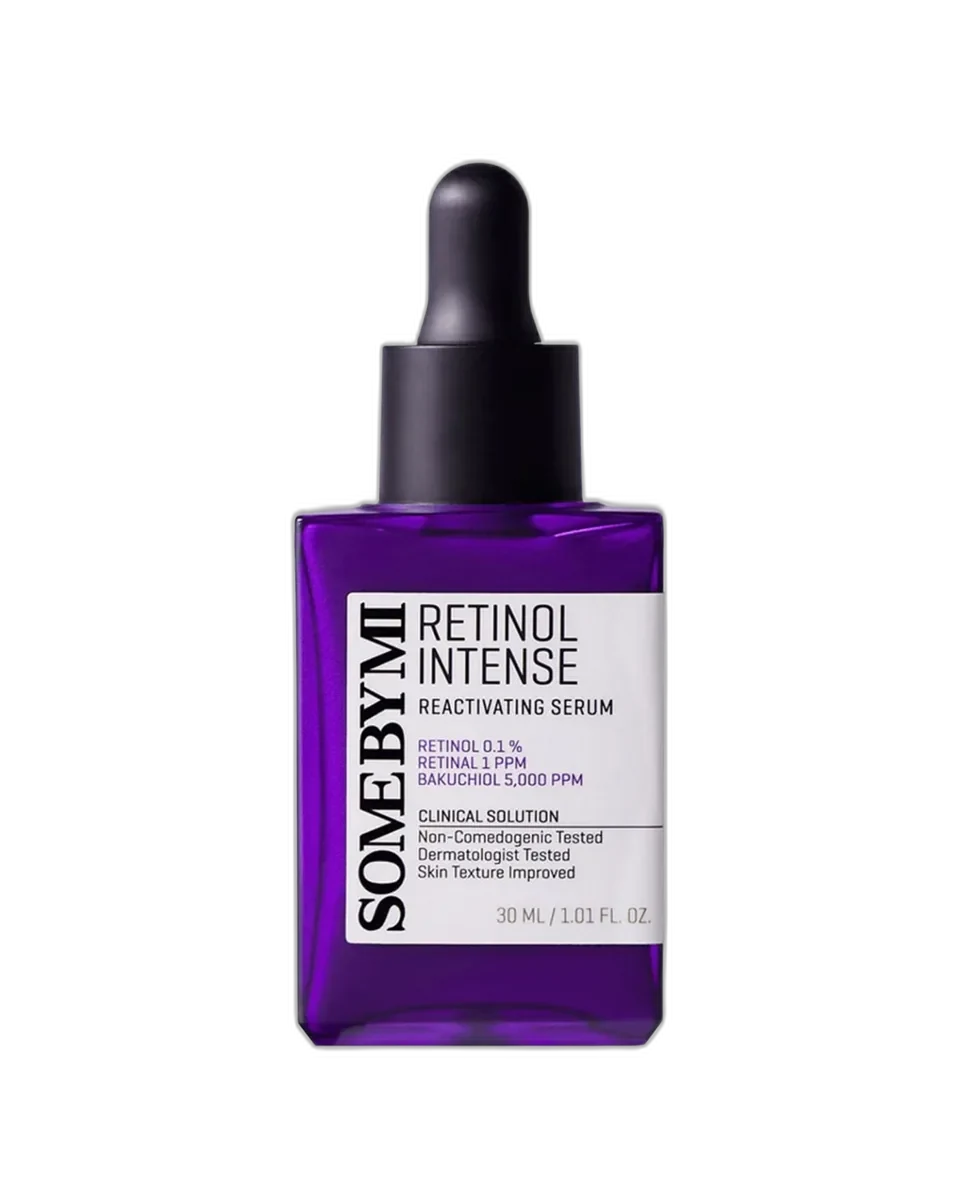
Retinol Intense Reactivating Serum
Beginner Retinol Pick
 Verified reviewer
Pros & cons.
- +Exceptionally gentle 0.1% retinol with bakuchiol creates a dual-pathway retinoid approach suitable for beginners
- +Comprehensive centella asiatica complex with all four key cica compounds for robust soothing
- +Niacinamide and ceramide NP provide clinical-grade barrier support at a K-beauty price
- +Bifida ferment lysate adds microbiome-supporting activity uncommon at this price point
- +Silky, fast-absorbing texture with no adjustment period for most users
- +Excellent value — complex multi-active formula at approximately $20
- −Added fragrance is an unnecessary sensitization risk for a product designed for sensitive skin
- −0.1% retinol is too mild for experienced retinol users or established aging concerns
- −Retinal at 1 ppm is essentially a trace amount with negligible clinical impact
- −Dropper mechanism doesn't efficiently draw up product, making dispensing frustrating
- −Contains silicones which some users prefer to avoid
The full review.
The retinol category has a concentration problem. Brands compete using higher percentages to imply better results. Some By Mi’s Retinol Intense Reactivating Serum rejects this trend. At 0.1% retinol, it is one of the gentlest retinol products on the market by design. The formula assumes retinol beginners need a product they can use consistently without skin irritation.
The retinoid strategy uses layers instead of high concentrations. The 0.1% retinol provides the main vitamin A signaling to trigger cell turnover acceleration and collagen stimulation in retinol-naive skin. Bakuchiol at 0.5% works through a parallel pathway, activating similar gene expression patterns (specifically upregulating type I, III, and IV collagen) without retinoid receptor-mediated irritation. The retinal (retinaldehyde) at 1 ppm is a negligible amount that serves more as marketing than mechanism. The retinol-bakuchiol duo drives the real retinoid action.
The centella asiatica complex makes this formula distinctly K-beauty. Some By Mi includes whole centella extract, separate leaf and root extracts, and all four primary cica actives: asiaticoside, madecassoside, asiatic acid, and madecassic acid. This is a comprehensive delivery of the ingredient’s full bioactive profile. Asiaticoside and madecassoside provide anti-inflammatory and wound-healing activity, while asiatic acid and madecassic acid stimulate collagen synthesis. The centella soothes skin from retinol’s inflammatory effects while independently supporting anti-aging goals.
Niacinamide and ceramide NP support the skin barrier. Niacinamide upregulates the skin’s own ceramide production and ceramide NP provides immediate external lipid replenishment. This two-pronged approach matches premium clinical retinol formulas like SkinMedica’s at a lower cost. Bifida ferment lysate supports the microbiome, reflecting the Korean skincare focus on skin ecosystem health.
The texture is unique. A cyclohexasiloxane base gives it a silky, primer-like feel that absorbs within a minute. It is not sticky, heavy, or film-forming. Silicone-averse consumers may dislike this, but the sensory experience is a strength for most users.
Results are modest but real. Most users see smoother texture and improved radiance within 2-3 weeks. Fine line softening appears around the 4-6 week mark, and pore refinement builds over a few months. These are steady, cumulative improvements rather than dramatic transformations.
Experienced retinol users will find this too gentle. If you use 0.5% retinol or higher without irritation, this serum won’t advance your results. It is a training-wheels product for building tolerance and introducing vitamin A signaling, meant to be graduated from eventually.
The synthetic fragrance is a frustrating choice. In a serum designed for sensitive skin, fragrance introduces an unnecessary sensitization risk. It is light and fades quickly, but this decision prevents a universal recommendation for the target audience.
At approximately $20 for 30 mL, the value is excellent. The ingredient roster—retinol, bakuchiol, full centella complex, niacinamide, ceramide NP, bifida ferment lysate, peptide, resveratrol, collagen, and adenosine—matches products three times the price. Some By Mi puts significant formulation complexity into an affordable bottle.
The dropper packaging is functional but imperfect. Some users report the dropper mechanism does not draw up product efficiently, creating a minor ergonomic issue for daily use.
This serum is a gentle on-ramp for the retinol market. For those intimidated by peeling and purging, Some By Mi’s approach offers a comfortable entry point with supporting ingredients. Use it to build retinol tolerance and graduate to stronger formulations when ready.
Ingredient analysis.
Full INCI list
Water, Cyclohexasiloxane, Dicaprylyl Carbonate, Glycerin, Methylpropanediol, 1,2-Hexanediol, Niacinamide, Hydrogenated Poly(C6-14 Olefin), Panthenol, Tocopheryl Acetate, Piper Methysticum Leaf/Root/Stem Extract, Centella Asiatica Extract, Panax Ginseng Berry Extract, Glycyrrhiza Glabra (Licorice) Root Extract, Ficus Carica (Fig) Fruit Extract, Centella Asiatica Leaf Extract, Centella Asiatica Root Extract, Melaleuca Alternifolia (Tea Tree) Leaf Extract, Artemisia Capillaris Extract, Eclipta Prostrata Extract, Melia Azadirachta Leaf Extract, Elaeis Guineensis (Palm) Oil, Hydrogenated Lecithin, Glyceryl Stearate, Bakuchiol, Palmitic Acid, Sodium Polyacrylate, Stearic Acid, Xanthan Gum, Retinol, Acrylates/C10-30 Alkyl Acrylate Crosspolymer, Butylene Glycol, Dipotassium Glycyrrhizate, Adenosine, Tromethamine, Polyquaternium-51, Beta-Glucan, Cetyl Alcohol, BHT, Collagen, Myristic Acid, BHA, Leuconostoc/Radish Root Ferment Filtrate, Tocopherol, Bifida Ferment Lysate, Ceramide NP, Saccharomyces Ferment, Retinal, Asiaticoside, Glyceryl Polymethacrylate, Madecassoside, Propylene Glycol, Polyglyceryl-10 Oleate, Glycolipids, Glycine Soja (Soybean) Peptide, Resveratrol, Sucrose Distearate, Asiatic Acid, Madecassic Acid, Palmitoyl Tripeptide-1, Moringa Oleifera Seed Oil, PEG-100 Stearate, Polysorbate 20, Fragrance, Ethylhexylglycerin
Skin match.
The science.
The Science
This formula uses a retinol-bakuchiol combination based on a 2019 British Journal of Dermatology study. That randomized, double-blind trial compared 0.5% bakuchiol to 0.5% retinol over 12 weeks. Both groups improved in wrinkle surface area, pigmentation, and photodamage, but the bakuchiol group had less scaling and stinging (Dhaliwal et al., Br J Dermatol, 2019). This serum uses lower concentrations (0.1% retinol, 0.5% bakuchiol), but the complementary pathway activation offers a theoretical additive benefit.
The centella asiatica complex is pharmacologically sound. Asiaticoside stimulates type I collagen synthesis in fibroblasts, and madecassoside downregulates pro-inflammatory cytokines like TNF-alpha and IL-1beta to provide anti-inflammatory activity. Using all four triterpene compounds instead of just centella extract maximizes bioactive potential. Research confirms individual centella compounds have distinct, complementary mechanisms of action.
At 0.1%, the retinol concentration is at the low end of the effective range. Studies show measurable improvements in photodamage markers at retinol concentrations as low as 0.025% with long-term use. For retinol-naive skin, lower concentrations work well because retinoid receptors haven't upregulated from chronic exposure; the skin responds maximally to the first retinoid signaling it encounters.
References
- Prospective, randomized, double-blind assessment of topical bakuchiol and retinol for facial photoageing — British Journal of Dermatology (2019)
Dermatologist Perspective
Dermatologists know patient compliance drives retinol therapy outcomes. Board-certified dermatologists note that a gentle, well-tolerated 0.1% retinol used every night produces better results than a 1% retinol patients stop using after two weeks of irritation. The centella asiatica complex in this formula matches current dermatological interest in pairing retinoids with anti-inflammatory botanicals to improve tolerability. Dermatologists may recommend this as a pre-conditioning step before prescribing stronger retinoids, letting the skin build tolerance while using the supporting actives.
Where it fits in your routine.
Apply 2-3 drops to clean, dry skin in the evening after cleansing and toning. Pat it into the face until absorbed. Follow with a moisturizer. Use it every other night for the first week, then use it nightly as tolerated. The gentle concentration allows most users to transition to nightly use immediately. Always apply SPF 30+ the following morning.
At about $20 for 30 mL, this offers exceptional value. The ingredient complexity — retinol, bakuchiol, full centella complex, niacinamide, ceramide NP, bifida ferment lysate, resveratrol, peptide, adenosine — costs $50-80 from a Western clinical brand. Some By Mi uses premium formulation at a K-beauty price point. Beginners who outgrow this concentration fast will need a stronger retinol within a few months, but $20 is low-risk for building retinol tolerance.
First-time retinol users can add vitamin A to their routine with low irritation risk. It works for sensitive skin types that cannot tolerate other retinol products. K-beauty enthusiasts will also like the retinol in this familiar, cica-rich, multi-active formulation.
Users who already tolerate 0.5% retinol or higher will find this too mild. It lacks the aggressive retinoid therapy needed for deep wrinkles or significant photodamage. This formula also contains silicones and is not for fragrance-free shoppers.
Product details.
This lightweight, silky serum has a slight silicone slip from the cyclohexasiloxane base. It absorbs in about a minute and leaves a smooth, non-greasy finish.
Light fragrance — noticeable when applied but fades fast. The fragrance is synthetic, not from essential oils.
Amber glass dropper bottle provides UV protection. Some users report the dropper mechanism pulls product inefficiently, so dispensing takes patience.
This retinol product is gentle; most users report no peeling, tingling, or adjustment period. The serum feels silky, goes on smooth, and absorbs quickly. The low concentration and robust soothing system prevent typical retinol adjustment drama.
2-3 months with nightly use of 2-3 drops
12 months
All Year
The backstory.
Some By Mi expanded into retinol with this serum as part of the K-beauty industry's broader move into vitamin A formulations. Rather than competing on concentration — where Western clinical brands dominate — the brand leaned into its strength of combining multiple gentle actives with botanical soothing ingredients, creating a formula designed for the retinol-curious rather than the retinol-experienced.
About Some By Mi
Emerging Brand (2–5 years)Some By Mi launched in South Korea around 2016 and grew fast internationally with its AHA BHA PHA 30 Days Miracle line. The brand uses a 'cleanical' philosophy that mixes clean ingredients with clinical results, but specific products have less independent clinical validation than established K-beauty brands.
Common myths.
A retinol serum needs at least 0.5% retinol to work.
Research shows 0.025% retinol improves skin texture and photodamage over time. This serum uses a 0.1% concentration and bakuchiol's retinoid-like activity to signal skin renewal. This works well for retinol beginners whose skin lacks tolerance and responds better to lower concentrations.
Bakuchiol works as well as retinol and can replace it entirely.
A 2019 study in the British Journal of Dermatology shows bakuchiol produces results comparable to 0.5% retinol for wrinkle improvement over 12 weeks. However, bakuchiol has a smaller evidence base than retinol's decades of research. In this formula, bakuchiol works with retinol instead of replacing it, providing complementary anti-aging signaling through a different pathway.
FAQ.
How much retinol is in Some By Mi Retinol Intense Serum?
The serum uses 0.1% retinol as the primary retinoid, with 1 ppm retinal (retinaldehyde) and 5,000 ppm (0.5%) bakuchiol. The 1 ppm retinal is a trace amount; the retinol and bakuchiol work together to provide the meaningful retinoid activity.
Can I use Some By Mi Retinol Serum every night?
Most users can transition to nightly use quickly with this gentle formula. Use it every other night for the first week to check skin tolerance, then increase to nightly. The low retinol concentration and soothing ingredients make daily use feasible for most skin types.
Does this serum work for anti-aging or is it too gentle?
It works for early anti-aging—smoothing texture, refining pores, and softening fine lines. If you have established wrinkles or significant photodamage, you will eventually need a higher retinol concentration. This product builds a foundation that prepares your skin for stronger retinoids later.
Is Some By Mi Retinol Serum fragrance-free?
No — the formula has added fragrance. This is a drawback for a product designed for sensitive skin. If you avoid fragrance, this isn't the right choice despite its gentle retinol profile.
What the community says.
"Extremely gentle for a retinol product — suitable for sensitive skin"
"Affordable entry point into retinol skincare"
"Smoother, more radiant skin within weeks"
"No significant peeling or adjustment period"
"Dropper packaging makes it difficult to dispense product"
"Contains fragrance unnecessarily"
"0.1% retinol may be too gentle for experienced retinol users"
"Retinal at 1 ppm is essentially a trace amount"
People also looked at.