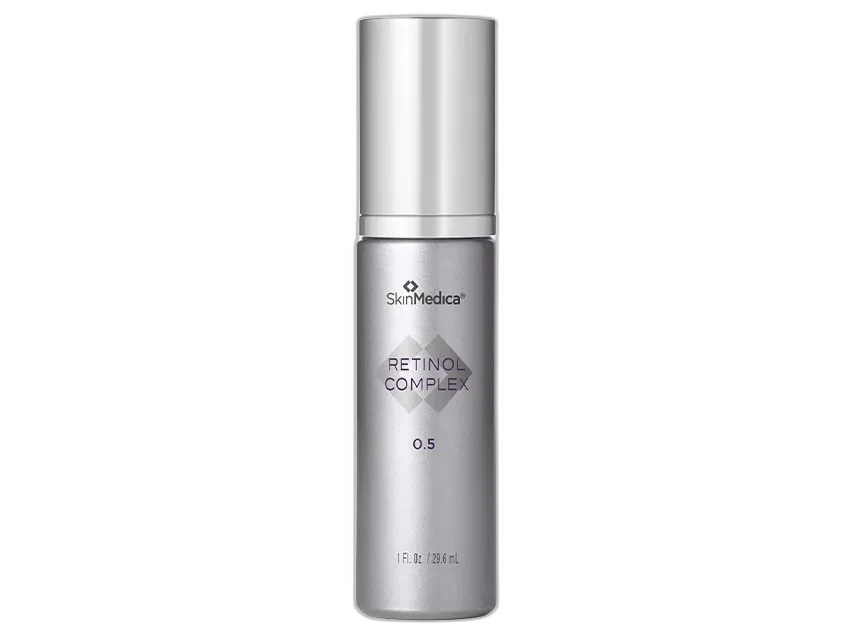
Retinol Complex 0.5
Retinol Sweet Spot
 Verified reviewer
Pros & cons.
- +Optimal balance of retinol efficacy and tolerability — strong enough for results, gentle enough for sustained daily use
- +Identical PhytoShield Complex and peptide technology as the more aggressive 1.0 version
- +Niacinamide and ceramide NP actively rebuild barrier integrity during retinol adjustment
- +Milder adjustment period than 1.0 — typically 1-3 weeks vs 2-4 weeks of peeling
- +Fragrance-free, silicone-free formulation minimizes unnecessary sensitization
- +Airless pump packaging protects retinol stability throughout the product's life
- +Many dermatologists recommend this as an ideal long-term maintenance retinol concentration
- −At $80 per ounce, it's significantly pricier than non-clinical retinol options at similar concentrations
- −Still requires prior retinol experience — not suitable for complete retinol beginners
- −Contains soybean oil that may concern those with soy sensitivities
- −Single size only — no larger value option for long-term committed users
- −Adjustment period still involves some peeling and dryness, though less than 1.0
The full review.
Skincare myths suggest more is better—that 1% retinol beats 0.5% retinol. Dermatologists disagree, and SkinMedica’s Retinol Complex 0.5 proves why. It sits in the sweet spot of the brand’s graduated retinol system: strong enough to improve fine lines, texture, and pigmentation, but gentle enough for most users to apply nightly without irritation.
The formulation is nearly identical to the 1.0 version. It uses the same PhytoShield Complex (Dunaliella salina extract and magnolia bark), the same palmitoyl tripeptide-8 neurosensory peptide, and the same ceramide NP and niacinamide for barrier support. Only the retinol concentration differs; at 0.5%, it causes less aggressive cell turnover than the 1.0, making it easier for many skin types to use daily. This is an optimized version for sustainable use, not a weaker product.
Niacinamide is placed strategically. It appears ahead of the retinol in the INCI order to boost skin ceramide production, preparing the barrier before retinol causes disruption. This differs from formulas that use calming agents reactively. SkinMedica strengthens the barrier’s defenses before the retinol arrives rather than just treating irritation.
Palmitoyl tripeptide-8 is especially effective at this mid-tier concentration. At 1%, retinol-induced inflammation can overwhelm even good irritation defense systems during adjustment. At 0.5%, the peptide’s neurosensory calming effect matches the challenge, allowing the defense system to keep up. This creates a smoother path to retinol efficacy.
The texture is a lightweight cream using the 1.0’s soybean oil and squalane base. It absorbs quickly without grease and leaves a soft, satin finish. The fragrance-free formulation lacks denatured alcohol or essential oils, making it gentle for nightly use on sensitized skin.
Results with the 0.5 build gradually. Users report smoother texture and improved brightness within 3-4 weeks. Fine line reduction appears around 6-8 weeks, with improvements continuing for months. The difference from the 1.0 is the floor of tolerability, not the ceiling of results. Most users reach nightly application faster and stay consistent, meaning the retinol works more nights per week than a stronger product they can only tolerate three times.
The 0.5% adjustment period usually lasts 1-3 weeks with mild peeling and occasional dryness—less intense than the 1.0’s sunburn-like redness. Moving up from the 0.25 is usually manageable. For those new to the SkinMedica system but experienced with other retinol brands, starting here is reasonable if you begin with twice-weekly application.
At $80 for 1 oz, this costs $16 less than the 1.0 and sits in the premium retinol category. The monthly cost of roughly $27-40 reflects SkinMedica’s physician-dispensed model. Whether the PhytoShield Complex and peptide irritation defense justify the premium over simpler retinol formulations is the key question. If budget retinol products cause irritation, SkinMedica’s engineered tolerability may be worth the investment. If your skin handles retinol easily, you are paying for engineering you do not need.
The airless pump packaging protects retinol stability. Many competing retinol products use jars or clear bottles that compromise the active ingredient before the first month ends.
SkinMedica’s retinol line uses system-level thinking. The graduated pathway from 0.25 to 0.5 to 1.0 gives dermatologists a structured framework for managing patients. Many patients settle on the 0.5 permanently, balancing visible improvement with daily wearability. In retinol therapy, consistency beats intensity—and this product makes consistency easy.
Formula
Ingredient analysis.
Full INCI list
Aqua/Water/Eau, Cetyl Ethylhexanoate, Glycine Soja (Soybean) Oil, Niacinamide, Polyacrylate-13, Caprylic/Capric Triglyceride, Glycerin, Squalane, Retinol, Palmitoyl Tripeptide-8, Dunaliella Salina Extract, Magnolia Grandiflora Bark Extract, Tocopherol, Tocotrienols, Ceramide NP, Bisabolol, Tocopheryl Acetate, Oryza Sativa (Rice) Bran Oil, Polysorbate 20, Butylene Glycol, Cetyl Palmitate, Laureth-23, Trideceth-6 Phosphate, Sodium Hydroxide, Dicaprylyl Ether, Lauryl Alcohol, Polyisobutene, Dextran, Potassium Sorbate, Disodium EDTA, Phenoxyethanol, Ethylhexylglycerin
Skin match.
The science.
The Science
0.5% retinol is well-studied in clinical literature. A controlled trial in Skin Pharmacology and Physiology compared 0.3% and 0.5% retinol serums over 12 weeks. The 0.5% concentration showed statistically significant improvements in fine wrinkles. Both concentrations improved photodamage, mottled pigmentation, and overall photodamage compared to vehicle (Tremaine et al., Skin Pharmacol Physiol, 2020). The study shows 0.5% retinol delivers clinical anti-aging effects while staying within the tolerability range for most users.
The formula's barrier-support strategy uses established dermatological science. Multiple studies confirm niacinamide upregulates serine palmitoyltransferase — the rate-limiting enzyme in ceramide biosynthesis. Combined with exogenous ceramide NP, the formula uses a two-pronged barrier repair approach: niacinamide stimulates internal ceramide production and ceramide NP provides immediate external lipid replacement. This matters during retinol use, when accelerated cell turnover can outpace natural lipid replenishment.
Retinol requires enzymatic conversion to retinoic acid via a two-step process (retinol → retinaldehyde → retinoic acid). At 0.5%, the conversion rate generates enough retinoic acid activity to increase collagen I, collagen III, and fibrillin-1 gene expression while releasing less inflammatory cytokine than higher concentrations. This balance between efficacy signaling and inflammatory signaling makes 0.5% a practical long-term choice.
References
- A Clinical Anti-Ageing Comparative Study of 0.3 and 0.5% Retinol Serums: A Clinically Controlled Trial — Skin Pharmacology and Physiology (2020)
Dermatologist Perspective
Board-certified dermatologists often see 0.5% as the concentration where most patients find long-term retinol equilibrium. Dermatologists note the graduated system allows them to titrate patients upward based on tolerance; many keep patients at 0.5% indefinitely instead of pushing to 1.0. Including niacinamide and ceramide NP follows current dermatological thinking: effective retinol therapy requires concurrent barrier maintenance, not just managing irritation after it occurs. Dermatologists also value that the formula avoids common co-irritants like fragrance and denatured alcohol, which reduces the inflammatory burden on retinol-sensitized skin.
Where it fits in your routine.
Apply a pea-sized amount to clean, dry skin at night. Use it twice weekly for the first 2 weeks. If your skin tolerates it, use it every other night during weeks 3-4, then nightly. Wait until skin is fully dry after cleansing; applying to damp skin increases retinol penetration and irritation. Apply a ceramide-rich moisturizer after 5-10 minutes. Use broad-spectrum SPF 30+ every morning.
At $80 for 1 oz ($27-40/month), this costs $16 less than the 1.0 version. It offers better value for most users because the lower concentration reduces product waste when users skip nights to avoid irritation. Dermstore's auto-replenishment drops the price to $64. The PhytoShield Complex, palmitoyl tripeptide-8, and barrier-support ingredients justify the premium over bare-bones retinol formulas, especially for users whose skin reacts to simpler formulations. However, if your skin tolerates retinol without issue, the irritation-management technology is an extra expense that adds no personal value.
This works for retinol users moving up from lower concentrations (0.25% or similar) who want anti-aging results without the 1% retinol adjustment period. It also suits those who found higher-strength retinol too irritating to use, or anyone seeking a long-term maintenance retinol with built-in barrier support.
Retinol beginners (start with 0.25%), people with active eczema or rosacea, and those pregnant or breastfeeding. It also suits budget-focused shoppers who tolerate retinol well and find effective formulations at lower price points without needing irritation-management technology.
Product details.
This lightweight, silky cream uses the same vehicle as the 1.0 version. The squalane and soybean oil base absorbs quickly and leaves a soft, non-greasy finish.
Fragrance-free. Natural oils leave a faint, neutral scent that disappears within seconds.
An opaque airless pump tube protects the retinol from light and air degradation. It has the same clinical aesthetic as the rest of the SkinMedica retinol line.
Expect mild peeling and slight dryness during the first 1-3 weeks, especially if moving up from the 0.25 concentration. This adjustment is usually less intense than the 1.0 version. Some users feel a slight warming sensation upon application that lasts for minutes. Skin normalizes within 2-3 weeks of consistent use.
2-3 months with nightly pea-sized application to face
12 months
All Year
The backstory.
SkinMedica designed their retinol line as a three-tier ladder specifically for dermatologists to prescribe graduated retinol therapy. The 0.5 is the middle rung — the concentration where most patients find their long-term maintenance dose. While the 1.0 gets the attention, dermatologists report that many patients achieve their best balance of results and tolerability at 0.5% and stay here rather than stepping up.
About SkinMedica
Legacy Brand (20+ years)Dr. Richard Fitzpatrick, a board-certified dermatologist, co-founded SkinMedica in 1999 to focus on growth-factor technology. Allergan acquired SkinMedica in 2012, and it now belongs to AbbVie's Allergan Aesthetics division. The brand has over 25 years of clinical skincare development and sells widely through dermatology practices.
Common myths.
Use the strongest retinol available for the best anti-aging results.
Higher concentration does not always mean better results; it means more side effects. Research shows that consistent use of moderate-strength retinol (like this 0.5%) over months produces cumulative improvements that approach the results of higher concentrations with better tolerability. The best retinol is the one you use consistently without skin irritation.
The 0.5 is a stepping stone to the 1.0 — everyone eventually moves up.
Many dermatologists say 0.5% retinol is the ideal long-term maintenance dose for most patients. Moving to 1.0 is optional and depends on individual tolerance and goals. Consistent, well-tolerated use at 0.5% delivers excellent long-term anti-aging benefits without the aggressive side effects of the 1.0.
FAQ.
Should I use SkinMedica Retinol 0.5 or 1.0?
Use 0.5 if you have tolerated 0.25 or another low-concentration retinol for several months. The 0.5 gives anti-aging results with a shorter adjustment period. Only move to 1.0 if you have used 0.5 consistently for months without significant irritation and want more aggressive results. Many users find 0.5% is their ideal long-term maintenance concentration.
Can beginners use SkinMedica Retinol 0.5?
The 0.5 is not ideal for retinol beginners. SkinMedica designed this as a graduated system — use the 0.25 for at least 2-3 months to build tolerance. Using 0.5% without prior retinol experience causes peeling, redness, and barrier damage that makes users abandon retinol.
How often should I use SkinMedica Retinol 0.5?
Apply twice weekly in the evening. If your skin shows minimal redness or peeling after 2 weeks, use it every other night. After one month of every-other-night use without issues, use it nightly. Always apply to clean, dry skin and follow with a moisturizer.
Is SkinMedica Retinol 0.5 worth the price?
At $80 for 1 oz, you pay for SkinMedica's PhytoShield Complex and palmitoyl tripeptide-8 to manage irritation, plus ceramide NP and niacinamide for barrier support. These ingredients make retinol more tolerable. Whether the premium over affordable retinol products is worth it depends on your skin's sensitivity to retinol side effects — if other retinols cause irritation, this formula's built-in defense system may justify the cost.
Can I use SkinMedica Retinol 0.5 with vitamin C?
Yes — use vitamin C in the morning and this retinol at night. The niacinamide in this formula adds brightening benefits, and separating them prevents pH-related interactions. This AM vitamin C / PM retinol approach is a standard dermatologist-recommended anti-aging strategy.
What the community says.
"Effective for fine lines without excessive irritation"
"Smoother, brighter skin within weeks"
"Doesn't cause the severe dryness typical of many retinol products"
"Elegant lightweight texture that absorbs quickly"
"Expensive at $80 for 1 oz compared to non-clinical retinol options"
"Still causes some peeling and adjustment period"
"Not suitable for retinol beginners — requires prior experience with lower concentrations"
"Contains soybean oil which may concern those with soy allergies"
People also looked at.