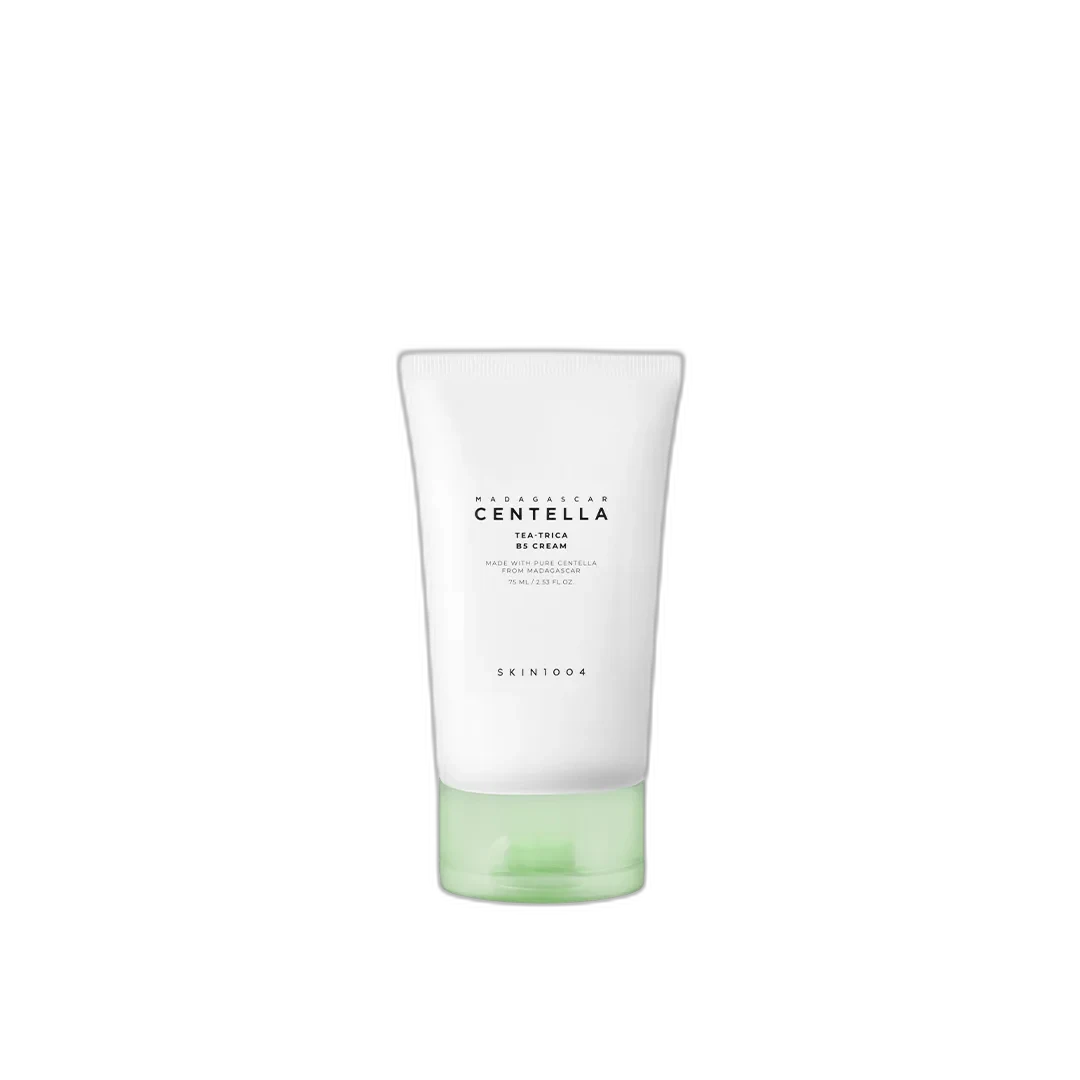
Tea-Trica B5 Cream
Acne-Prone Oil-Control Pick
 Verified reviewer
Pros & cons.
- +Full centella triterpene panel as the calming counterweight
- +Three-form tea tree complex rather than straight oil
- +Niacinamide at meaningful concentration for sebum and marks
- +Lightweight gel-cream texture with matte finish
- +Zinc PCA adds genuine oil-control support
- +Fair price for the active density
- −Not for sensitive skin or rosacea — tea tree and BHA combination is assertive
- −Not pregnancy safe due to leave-on salicylic acid
- −Not fragrance-free — noticeable tea tree herbal note
- −Salicylic acid too low to replace a dedicated BHA treatment
- −Not strictly fungal acne safe
The full review.
SKIN1004 builds its identity on gentleness. The brand’s bestsellers use centella formulas to calm, soothe, and repair. This works well for reactive, dry, or post-procedure skin. It serves less oily, acne-prone twenty-two-year-olds dealing with four new pimples a week. Previously, those users had to pair SKIN1004 centella cream with an external BHA and hope for no conflicts. The Tea-Trica B5 Cream changes this; it uses the brand’s core identity but adds more potency.
Centella remains the formula’s base. Centella asiatica leaf water sits alongside tea tree leaf water, and the INCI includes all four centella triterpenes: madecassoside, asiaticoside, asiatic acid, and madecassic acid. This matters because the aggressive actives (tea tree oil, salicylic acid) would irritate acne-prone skin without a calming counterweight. SKIN1004 uses its full centella panel as the anti-irritation layer, which allows the formula to include stronger actives.
The tea tree approach is smart. Instead of just adding tea tree oil, this product uses three forms: leaf water near the top of the INCI, leaf extract lower down, and a small percentage of leaf oil. This distribution spreads antimicrobial activity across gentler concentrations than pure tea tree oil, which often irritates skin at higher levels. Research well documents tea tree’s antimicrobial effects against acne-causing bacteria. This three-form delivery provides the benefit without the high risk of a reaction.
Salicylic acid is the other key active, likely in the sub-0.5% range typical for leave-on moisturizers. This is not a treatment dose to replace a dedicated BHA, but it helps pores turn over alongside tea tree and niacinamide. Niacinamide appears high on the INCI, likely at 2-4%, and handles sebum regulation, post-inflammatory mark support, and barrier support. Zinc PCA adds oil control, a common K-beauty ingredient Western acne brands often miss.
The texture is a lightweight gel-cream. It feels cool, absorbs in under a minute, and leaves a matte finish that isn’t chalky. Oily and combination skin will find the weight negligible. The scent is mildly herbal from the tea tree oil—noticeable at first but fades fast—and lacks the cloying ‘tea tree medicinal’ smell found in some acne products.
Honest limitations: this is not a gentle cream. Sensitive or rosacea-prone skin should skip it, as the tea tree oil and salicylic acid combination is too much for reactive skin. It is not pregnancy-safe due to the leave-on salicylic acid. It is not officially fungal acne safe because of the cetearyl alcohol and triglycerides in the base, though tea tree actives sometimes help against malassezia. For severe acne, this cream supports rather than treats; you still need a dedicated BHA or a prescription retinoid. Also, the tea tree scent is noticeable, unlike the fragrance-free SKIN1004 lines.
At around $26 for 50ml, the value is fair. It costs slightly less than the Probio-Cica Enrich Cream at the same size and is meaningfully cheaper than Western tea tree and salicylic acid formulations. It functions as a moisturizer that doubles as a quiet supporting treatment for oily, breakout-prone skin without causing irritation. For acne-prone skin wanting SKIN1004’s philosophy in a breakout-focused version, this is the right choice. For others, the original centella cream or the Probio-Cica Enrich remain better fits.
Ingredient analysis.
Full INCI list · pH 5
Centella Asiatica Leaf Water, Melaleuca Alternifolia (Tea Tree) Leaf Water, Propanediol, Glycerin, Niacinamide, Pentylene Glycol, 1,2-Hexanediol, Caprylic/Capric Triglyceride, Panthenol, Centella Asiatica Extract, Madecassoside, Asiaticoside, Asiatic Acid, Madecassic Acid, Melaleuca Alternifolia (Tea Tree) Leaf Oil, Salicylic Acid, Zinc PCA, Sodium Hyaluronate, Allantoin, Houttuynia Cordata Extract, Portulaca Oleracea Extract, Cetearyl Alcohol, Glyceryl Stearate, Polyglyceryl-3 Methylglucose Distearate, Xanthan Gum, Arginine, Carbomer, Tromethamine, Ethylhexylglycerin, Disodium EDTA
Skin match.
The science.
The Science
Three well-studied categories form the active backbone of this cream. Tea tree oil (Melaleuca alternifolia) has substantial published evidence for antimicrobial activity against Cutibacterium acnes. Clinical trials show it works as effectively as low-dose benzoyl peroxide for mild-to-moderate inflammatory acne, though tea tree works more slowly. Using leaf water and extract forms alongside the essential oil spreads antimicrobial activity across lower concentrations, which reduces the irritation risk of pure-oil formulations. Salicylic acid is the most studied leave-on BHA; decades of research support its comedolytic activity and its ability to penetrate sebum-filled pores. At the sub-0.5% leave-on concentration typical of moisturizers, it provides maintenance-level pore turnover instead of treatment strength. Niacinamide has well-documented effects on sebum regulation, post-inflammatory pigmentation, and barrier function in multiple published studies at 2-5% concentrations. The centella triterpene panel provides an anti-inflammatory counterweight; published research shows madecassoside and asiaticoside reduce pro-inflammatory cytokines and support barrier repair in compromised skin. Zinc PCA has promising but less extensive published evidence as a sebum regulator. This single leave-on cream combines antimicrobial, keratolytic, sebum-regulating, and anti-inflammatory mechanisms to manage mild-to-moderate breakouts without the irritation of higher-concentration actives.
Dermatologist Perspective
Dermatologists often recommend moisturizers combining low-dose salicylic acid with niacinamide for patients with mild-to-moderate inflammatory acne who also need hydration. Board-certified dermatologists note tea tree oil can be an effective antimicrobial adjunct at lower concentrations, especially for patients preferring plant-based actives. This type of cream often serves as a supportive moisturizer layered with prescription treatments like topical retinoids or benzoyl peroxide, rather than a primary acne treatment. Patients with sensitive skin, rosacea, or eczema typically avoid leave-on tea tree formulations.
Where it fits in your routine.
Apply this as your standard moisturizer after toner and serums. Use twice daily on oily or acne-prone skin. In the morning, follow with a broad-spectrum sunscreen because salicylic acid increases sun sensitivity. At night, it layers well under or with prescription retinoids or BHA treatments used a few nights a week. If you add it to a routine with other actives, start once daily and build up to prevent dryness.
At roughly $26 for 50ml, this cream prices competitively in the K-beauty acne category. Western tea tree and BHA moisturizers often cost $30-45 for similar sizes and have less complete ingredient lists. The cost-per-benefit is reasonable for oily or combination skin with mild-to-moderate breakouts, as the cream works as both a moisturizer and a light treatment step. For severe acne or those needing a true BHA treatment dose, use it as an add-on rather than a replacement.
Oily or combination skin with mild-to-moderate breakouts, blackheads, or large pores. It also suits anyone who likes SKIN1004's centella philosophy and wants an acne-targeted variant that stays on-brand.
The tea tree oil and salicylic acid combination is too much for sensitive skin, rosacea, or eczema types. Skip this during pregnancy. Skip this if you want a replacement for a dedicated BHA treatment — this is a supportive moisturizer, not a primary acne product.
Product details.
Lightweight gel-cream with a cool, quick-absorbing finish
Subtle tea tree herbal note from the essential oil
Opaque screw-top jar
It cools and mattifies immediately. Some users feel a faint tingle from the salicylic acid and tea tree oil during the first few uses; this usually fades within a week. Breakout reduction typically starts in week 2.
About 2-3 months with twice-daily face application
12 months
spring summer
The backstory.
The Tea-Trica line was SKIN1004's answer to the demand for an acne-targeted version of their centella formulation philosophy. The brand's older lines lean gentle and barrier-focused, but oily and acne-prone customers wanted something more assertive while still keeping the cica DNA.
About SKIN1004
Emerging Brand (2–5 years)SKIN1004 launched in 2016 using single-origin Madagascar centella. The Tea-Trica line, added in 2024, uses a tea tree complex to target acne-prone and oily skin with the brand's cica-centered approach.
Common myths.
Tea tree oil is the only ingredient you need for acne
High concentrations of pure tea tree oil irritate skin more than the acne it treats. This cream uses a three-form tea tree approach — water, extract, and a small amount of essential oil — with salicylic acid, niacinamide, and centella to spread anti-acne action across multiple gentler mechanisms.
FAQ.
How is the Tea-Trica B5 Cream different from the Probio-Cica Enrich Cream?
The Tea-Trica B5 Cream targets oily and acne-prone skin with tea tree, salicylic acid, and zinc PCA. The Probio-Cica Enrich Cream is thicker and repairs the barrier for dry or compromised skin. These two products sit at opposite ends of SKIN1004's cica line.
Is this cream pregnancy safe?
No — it uses salicylic acid as a leave-on active. Most dermatologists recommend avoiding leave-on BHAs during pregnancy. Use the Probio-Cica Enrich Cream or Madagascar Centella Cream instead.
Can I use it with retinol?
Yes, but introduce them slowly. Both retinol and tea tree/salicylic acid dry the skin. Start by using them on alternate nights and buffer with a gentler moisturizer on retinol nights.
Is it fungal acne safe?
Not strictly. It has cetearyl alcohol and caprylic/capric triglyceride, which some strict fungal acne routines exclude. Tea tree oil helps fungal acne, but the overall formula is not on standard "safe" lists.
Does it replace a dedicated BHA treatment?
No — the salicylic acid concentration is low (likely under 0.5%) since this is a leave-on moisturizer. Use a dedicated BHA treatment 2-3 nights per week alongside this cream for moderate-to-severe acne.
What the community says.
"Lightweight on oily skin"
"Reduces breakouts"
"Doesn't feel drying"
"Pairs well with other acne actives"
"Tea tree scent noticeable"
"Can be drying if layered with other BHAs"
"Not enough for severe acne"