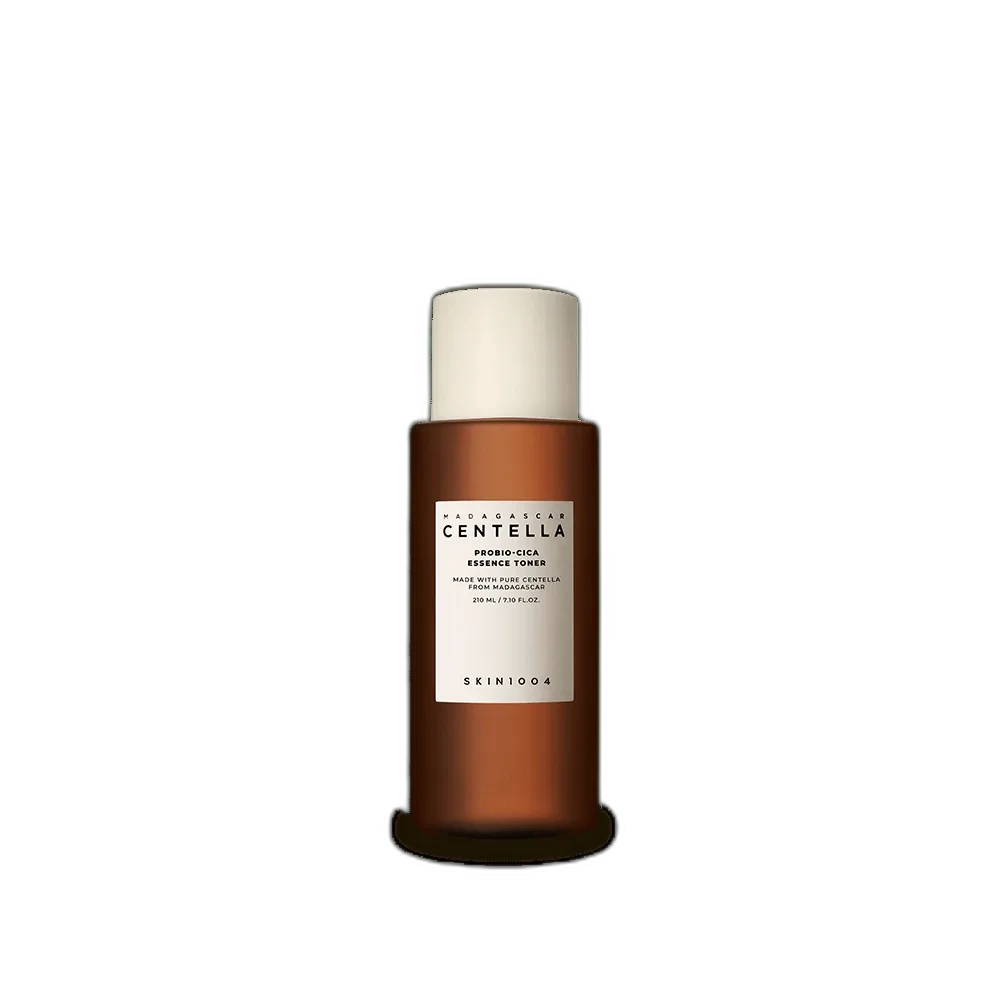
Probio-Cica Essence Toner
K-Beauty Barrier Prep Staple
 Verified reviewer
Pros & cons.
- +Centella leaf water base rather than plain aqua with added extract
- +Full four-triterpene centella panel for immediate soothing
- +Four postbiotic ferments for microbiome support
- +Polyglutamic acid plus two hyaluronic acid weights for serious hydration
- +Generous 210ml bottle at fair price
- +pH 5.5 plays well with any subsequent active
- +Fragrance-free and post-procedure friendly
- −PEG-40 hydrogenated castor oil rules it out of strict fungal acne routines
- −Screw-cap packaging rather than a pump
- −Postbiotic clinical evidence still maturing
- −Limited availability outside K-beauty specialty retailers
The full review.
Most brands cut corners on toners. They are often the first product used, sold in large bottles, and formulated with minimal actives like glycerin, a little hyaluronic acid, or a small extract. You could swap ninety percent of hydrating toners on the market and most people would not notice. SKIN1004 avoids this pattern with the Probio-Cica line, creating this essence toner as an ambitious first-step product.
The base is centella asiatica leaf water, not distilled water with centella extract added later. This means the entire toner vehicle carries phytochemicals instead of acting as a neutral carrier for a small active percentage. Four triterpenes make centella work: madecassoside, asiaticoside, asiatic acid, and madecassic acid. These compounds anchor the SKIN1004 line and have a track record of calming reactive skin, supporting collagen, and reducing transepidermal water loss. Including them in the toner step ensures skin receives calming activity seconds after application, even before using an ampoule.
The ferment stack distinguishes this as a ‘Probio-Cica’ toner. Bifida ferment lysate, lactobacillus ferment, lactobacillus/soybean ferment extract, lactococcus ferment lysate, and saccharomyces ferment filtrate all appear within the first dozen INCI slots. These postbiotic ingredients—metabolic byproducts of cultured microbes, not live bacteria—support the skin microbiome and modulate reactivity in stressed skin. While clinical evidence lags behind marketing in this category, published research suggests ferments improve barrier markers. Using four ferments is more thorough than the single-ferment toners used by less committed brands.
SKIN1004 designed this to work as an essence via its hydration backbone. Polyglutamic acid sits alongside sodium hyaluronate and hydrolyzed hyaluronic acid. Polyglutamic acid is a humectant that holds more water than HA and forms a light film to reduce evaporation. Combining it with two weights of hyaluronic acid gives the toner an immediate plumping effect that lasts longer than expected for a watery product. Panthenol, allantoin, niacinamide, and betaine add soothing and barrier support, making the formula a miniature barrier serum in toner form.
The texture is light and slightly viscous, behaving more like an essence than water. It absorbs within seconds and layers well for the 7-skin method or multiple passes on reactive skin. It has no sticky residue, no tingling, and no scent except a faint herbal note from the centella water. It works with vitamin C, niacinamide, retinoids, peptides, and exfoliating acids. The pH is around 5.5, so layering it first does not shift skin pH.
The limitations are small. The formula contains PEG-40 hydrogenated castor oil, which people managing malassezia or following ‘fungal acne safe’ routines avoid. The packaging is a standard screw-cap plastic bottle, not a pump, so you must pour it onto a cotton pad or into your palm. Finally, regarding the ‘Probio-Cica’ name, microbiome marketing slightly outpaces current clinical data; evidence for postbiotic ingredients is promising but thinner than evidence for centella.
At approximately $26 for 210ml, this offers strong value. The price-per-milliliter is about half that of most Western barrier-prep toners, and the ingredient density is higher than typical K-beauty hydrating toners. For reactive, barrier-compromised, or post-procedure skin, this is a thoughtful first-step product that earns its ‘essence’ label.
Ingredient analysis.
Full INCI list · pH 5.5
Centella Asiatica Leaf Water, Propanediol, Glycerin, 1,2-Hexanediol, Bifida Ferment Lysate, Lactobacillus Ferment, Lactobacillus/Soybean Ferment Extract, Lactococcus Ferment Lysate, Saccharomyces Ferment Filtrate, Centella Asiatica Extract, Madecassoside, Asiaticoside, Asiatic Acid, Madecassic Acid, Panthenol, Betaine, Sodium Hyaluronate, Hydrolyzed Hyaluronic Acid, Allantoin, Niacinamide, Pentylene Glycol, PEG-40 Hydrogenated Castor Oil, Polyglutamic Acid, Butylene Glycol, Arginine, Tromethamine, Carbomer, Ethylhexylglycerin, Disodium EDTA
Skin match.
The science.
The Science
The centella asiatica evidence base for this toner is substantial. Peer-reviewed research in journals like Phytomedicine and the Journal of Ethnopharmacology shows how madecassoside and asiaticoside affect fibroblast activity, collagen synthesis, and cytokine modulation. Using centella leaf water as the base instead of aqua maximizes exposure to the plant's water-soluble phytochemicals. The postbiotic ferment side — bifida, lactobacillus, lactococcus, and saccharomyces — is a newer area. Published research on topical ferment lysates and filtrates suggests they support skin barrier markers, reduce sensitivity, and modulate microbiome composition, though these studies are smaller and more preliminary than the centella literature. Polyglutamic acid has documented humectant activity greater than hyaluronic acid on a weight basis; research shows it forms an occlusive film that reduces water loss. Combining centella's well-studied triterpenes with postbiotic inputs and a humectant layer creates a coherent approach to barrier prep, even if the postbiotic half needs more clinical proof.
Dermatologist Perspective
Dermatologists often recommend centella-based products to soothe patients with rosacea, reactive skin, or post-procedure recovery. Board-certified dermatologists note that barrier-supportive toners help patients who cannot tolerate aggressive actives during flares. This fragrance-free, pH-neutral essence-toner fits dermatologist-led 'simple barrier repair' recommendations: cleanse, hydrate, soothe, moisturize, protect. Dermatological writing increasingly discusses postbiotic additions in microbiome-supportive skincare, though clinical recommendations still prioritize the centella and hydration components.
Where it fits in your routine.
Pat a small amount onto clean, slightly damp skin right after cleansing. Use your hands or a reusable cotton pad — hands waste less product. For reactive or dehydrated skin, apply two to three thin layers, pressing each layer in before the next. Follow with serums, ampoules, moisturizer, and sunscreen. Use morning and night.
At roughly $26 for 210ml, the price reflects the ingredient density. Western brand hydrating toners usually cost $30-50 for 150-200ml and have simpler formulations. One bottle lasts most users two to three months using it twice daily. The centella triterpenes, ferments, PGA, and HA provide value; it works as both a toner and a light essence.
This product works for sensitive, dehydrated, barrier-compromised, or post-procedure skin needing first-step hydration and soothing. It also fits users of SKIN1004 centella products who want to add a toner step without changing their current routine.
Strict fungal acne routines exclude PEG ingredients. This is a hydration and soothing step, not a treatment toner with exfoliating acids or brightening actives.
Product details.
Lightly viscous essence-toner — slightly slippy but not sticky
Fragrance-free with faint herbal centella note
Clear plastic bottle with screw cap — functional but not airless
Calms and hydrates immediately. No tingling. Skin looks plumper and reacts less within the first week.
About 2-3 months with twice-daily use
12 months
All Year
The backstory.
The Probio-Cica line was SKIN1004's response to the mid-2020s 'barrier crisis' wave — users who'd overexfoliated and needed something more than basic centella. This toner anchors the routine as the first leave-on step.
About SKIN1004
Emerging Brand (2–5 years)SKIN1004 launched in 2016 using single-origin Madagascar centella formulations. The Probio-Cica line, including this essence toner, shows the brand's shift to microbiome-focused barrier care.
Common myths.
Essence toners are marketing — a toner and essence are the same thing
This is a hybrid. The centella water base and ferment stack make it work more like an essence than a pH-adjusting toner, so it has both labels.
FAQ.
How is this different from SKIN1004's regular centella toners?
The Probio-Cica Essence Toner adds a four-ferment postbiotic blend and polyglutamic acid to the centella triterpene base. This hybrid essence-toner balances the microbiome and calms skin.
Can I use it in a 7-skin method layering routine?
Yes — the lightweight, non-sticky formula works well for multiple thin passes. The centella water base and PGA/HA combo hydrate better in layers than in one heavy application.
Is it fungal acne safe?
Not strictly. The formula is oil-free but uses PEG-40 hydrogenated castor oil, which some people managing malassezia avoid. It is fine for most acne-prone skin.
Is this toner pregnancy safe?
Yes. It has no retinoids, salicylic acid, or essential oils. Centella, ferments, panthenol, and hyaluronic acid are pregnancy-compatible.
Does it have a pH that affects other actives?
The pH is about 5.5 — skin-neutral. You can use vitamin C, niacinamide, retinoids, or acids after this toner without affecting their activity.
What the community says.
"Hydrating without being sticky"
"Calms irritation fast"
"Good for 7-skin layering"
"Fragrance-free"
"Contains PEG ingredient some avoid"
"Screw cap instead of pump"