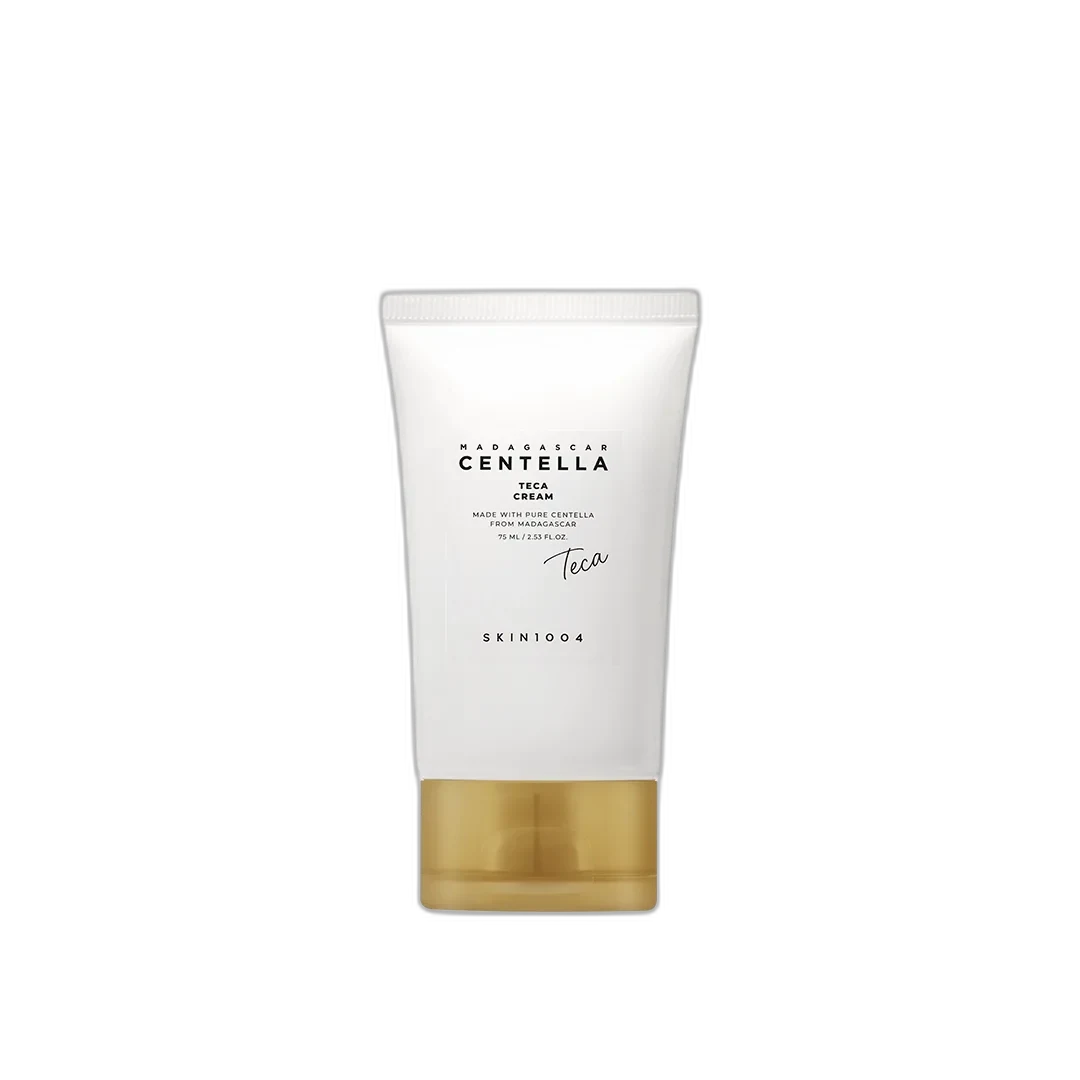
Centella Teca Cream
K-Beauty Cica-Bright Hybrid
 Verified reviewer
Pros & cons.
- +Triple brightening system (hexylresorcinol, alpha-arbutin, kojic acid) targets hyperpigmentation from multiple pathways
- +High-concentration centella TECA complex provides robust soothing while brightening actives work
- +Niacinamide at fourth INCI position bridges barrier repair and melanin regulation
- +Lightweight, fast-absorbing cream texture works well under sunscreen for daily use
- +Fragrance-free formula appropriate for sensitive, reactive skin types
- +Ectoin and PDRN add environmental protection and cellular regeneration beyond basic cica
- +Excellent value at $20 for the ingredient complexity — frequently available for even less
- −Contains alcohol denat. which may concern users with extremely sensitive or compromised skin
- −Kojic acid can cause irritation in some individuals, even at low concentrations
- −Not vegan due to salmon-derived Sodium DNA ingredient
- −Brightening results require 6-12 weeks of consistent use with diligent sunscreen application
- −Relatively new product with limited long-term user data available
The full review.
There is a particular frustration that people with sensitive, breakout-prone skin know intimately. The blemish arrives. It inflames. It eventually calms down. And then it leaves behind a dark mark that lingers for weeks or months, a stubborn souvenir of a problem that was supposed to be over. Treating that hyperpigmentation usually means reaching for brightening actives — acids, arbutin, vitamin C — but sensitive skin treats those like a provocation, flaring up and potentially creating new marks in the process. It is a cycle that can make you feel like your skin is designed to hold grudges.
SKIN1004’s Centella Teca Cream is an attempt to break that cycle, and it is a surprisingly elegant one. The formula’s architecture is built on a simple but powerful logic: soothe the inflammation and brighten the dark marks simultaneously, using a carrier system gentle enough that it does not reignite the problem it is trying to solve.
The centella asiatica extract holds the second position on the INCI list — a significant concentration that establishes this cream’s primary identity as a cica product. All four TECA triterpenoids are individually listed: madecassoside, asiaticoside, madecassic acid, and asiatic acid. This is not cosmetic dusting. The centella is here to work, calming inflammatory pathways while stimulating collagen synthesis and accelerating wound healing.
But the real talking point is the brightening trio. Hexylresorcinol, alpha-arbutin, and kojic acid each inhibit tyrosinase — the enzyme responsible for melanin production — through slightly different mechanisms. Hexylresorcinol is among the more potent tyrosinase inhibitors available in cosmetics, with research suggesting it may rival hydroquinone’s efficacy without the side effects. Alpha-arbutin provides steady, gentle melanin suppression. Kojic acid, appearing further down the INCI list at what appears to be a low concentration, adds a supporting voice rather than shouting.
Niacinamide at fourth position ties the soothing and brightening narratives together. It strengthens the lipid barrier (supporting the centella’s repair work), inhibits melanosome transfer (supporting the brightening trio), and reduces redness and blotchiness on its own. In a formula with this many complementary actives, niacinamide is the diplomatic ingredient that helps everyone get along.
The supporting cast continues to impress. Ectoin provides cellular stress protection — a natural extremolyte that shields skin cells from UV and pollution damage. Sodium DNA (PDRN) continues the regenerative theme from the Teca Ampoule. Palmitoyl tripeptide-5 addresses fine lines. Ferulic acid provides antioxidant backup. Panthenol soothes. Jojoba oil and sea buckthorn oil provide nourishing lipids. This is not a formula that ran out of ideas after the hero ingredients.
Texture
The texture is where the cream distinguishes itself from the many cica products that err on the side of heavy occlusiveness. The consistency is medium-weight — richer than a gel-cream but nowhere near the thick, balmy textures of pharmacy-style barrier creams. It spreads smoothly, absorbs within about a minute, and settles into a natural, satin finish. There is no visible residue, no greasy shine, no pilling under subsequent products. Morning use under sunscreen is comfortable and practical.
Scent
The absence of fragrance and essential oils is the right choice for a product targeting irritated, hyperpigmentation-prone skin. One ingredient that will raise an eyebrow is alcohol denat., though its position deep in the INCI list (after twenty other ingredients) suggests a minimal concentration — likely functioning as a solvent for specific actives rather than as a significant formulation component.
Results
Results unfold on two timelines. The soothing effects are nearly immediate — redness calms, tight uncomfortable skin relaxes, and the general sense of reactivity softens within the first week. The brightening benefits require more patience. Post-inflammatory marks begin to fade noticeably around the four-to-six-week mark, with more dramatic improvement continuing through twelve weeks. This dual timeline actually works in the cream’s favor: the fast soothing builds trust while you wait for the slower brightening to prove itself.
Price
At twenty dollars for 75 milliliters, frequently available for sixteen dollars on sale, the value equation is strongly in the buyer’s favor. Finding hexylresorcinol, alpha-arbutin, PDRN, ectoin, and a peptide in the same product at a prestige-brand price point would be unusual. At this price, it borders on generous.
Philosophy
The philosophical achievement here is restraint in a different direction than the brand’s minimalist origins. Where the original Madagascar Centella products showed restraint by using fewer ingredients, the Teca Cream shows restraint by combining many ingredients for one clear purpose. Nothing in this formula is decorative. Every active supports either the soothing mission, the brightening mission, or the bridge between them. That is a different kind of simplicity — not fewer ingredients, but no wasted ones.
Ingredient analysis.
Full INCI list
Water, Centella Asiatica Extract, Glycerin, Niacinamide, Cetyl Ethylhexanoate, Caprylic/Capric Triglyceride, 1,2-Hexanediol, Butylene Glycol, Polymethylsilsesquioxane, Dipropylene Glycol, Carbomer, Panthenol, Hexylresorcinol, Tromethamine, Hydroxyethyl Acrylate/Sodium Acryloyldimethyl Taurate Copolymer, Hydrogenated Lecithin, Ethylhexylglycerin, Cetearyl Olivate, Acrylates/C10-30 Alkyl Acrylate Crosspolymer, Alpha-Arbutin, Sorbitan Olivate, Alcohol Denat., Kojic Acid, Madecassic Acid, Asiaticoside, Adenosine, Disodium EDTA, Malt Extract, Sorbitan Isostearate, Asiatic Acid, Ferulic Acid, Madecassoside, Phellodendron Amurense Bark Extract, Beta-Glucan, Tocopherol, Simmondsia Chinensis (Jojoba) Seed Oil, Ectoin, Hippophae Rhamnoides Fruit Oil, Canola Oil, Beta-Sitosterol, Phytosterols, Palmitoyl Tripeptide-5, Daucus Carota Sativa (Carrot) Seed Oil, Daucus Carota Sativa (Carrot) Root Extract, Tocopheryl Acetate, Helianthus Annuus (Sunflower) Seed Oil, Beta-Carotene, Sodium DNA, Pinus Pinaster Bark Extract
Skin match.
The science.
The Science
This formula uses a triple brightening approach based on solid research. In-vitro studies in the Journal of Cosmetic Science show hexylresorcinol acts as a tyrosinase inhibitor, reducing melanin synthesis as effectively as hydroquinone but with a better safety profile. Alpha-arbutin works via competitive tyrosinase inhibition; research in the Journal of Biomedical Science shows alpha-arbutin is more stable and effective than its beta form, with less cytotoxicity than hydroquinone.
Combining multiple melanin inhibitors works because melanogenesis involves multiple steps. Each inhibitor targets a different point in the pathway: hexylresorcinol affects tyrosinase activity directly, alpha-arbutin inhibits the enzyme competitively, and niacinamide blocks melanosome transfer to keratinocytes. Dermatological research shows this multi-target approach produces better clinical outcomes than single-agent brightening.
The TECA complex adds more than just soothing. Research in Phytomedicine shows madecassoside suppresses UV-induced melanogenesis by downregulating the tyrosinase gene, so centella asiatica contributes to the brightening effect. This creates synergy between the formula's calming and brightening functions.
Ectoin, a natural extremolyte from extremophilic bacteria, protects Langerhans cells from UV-induced damage and prevents UV-induced mitochondrial DNA mutations, according to studies in Skin Pharmacology and Physiology. This environmental protection layer helps prevent new hyperpigmentation while the brightening actives address existing marks.
References
- Centella asiatica in cosmetology — Advances in Dermatology and Allergology (2013)
- Ectoin protects against UV-induced damage — Skin Pharmacology and Physiology (2008)
Dermatologist Perspective
Board-certified dermatologists know treating post-inflammatory hyperpigmentation in sensitive skin is difficult; aggressive brightening regimens can trigger inflammation and worsen pigmentation. Dermatologists note this formula aligns with best practices by combining gentle tyrosinase inhibitors (alpha-arbutin, hexylresorcinol) with anti-inflammatory centella. This multi-agent approach is better than using one high-concentration active because it suppresses melanin effectively at lower individual concentrations, which reduces irritation risk. Dermatologists emphasize that consistent broad-spectrum sunscreen use is essential to see full brightening benefits from any topical regimen.
Guidance
Where it fits in your routine.
Apply a sufficient amount to a clean face and neck after toner and serum, morning and night. In the morning, let it absorb fully before applying sunscreen — sunscreen is required when using brightening actives. You can layer this over the Centella Teca Ampoule for enhanced effects. If new to the brightening actives, use it only in the evening for the first week, then move to twice daily once tolerance is confirmed.
At $20.00 for 75mL — often $16.00 on sale — this cream has high ingredient density for the price. The mix of hexylresorcinol, alpha-arbutin, ectoin, PDRN, and a peptide with high-concentration centella usually costs $40-60 or more from Western brands. While optimal concentrations for every ingredient are unconfirmed, the formulation approach and SKIN1004's proven centella sourcing make this a strong value for soothing-brightening needs.
People with sensitive or reactive skin struggle with post-inflammatory hyperpigmentation—blemishes that leave dark marks after healing. This works for those who find standalone brightening products irritate their skin. It also combines anti-aging, soothing, and brightening benefits in one moisturizer step.
People with compromised skin barriers must stabilize the barrier before using brightening actives. Strict vegans should note the salmon-derived PDRN. Patch test carefully if you have known sensitivity to kojic acid or resorcinol compounds. Those seeking a minimalist formula may prefer SKIN1004's simpler offerings.
Product details.
Medium-weight cream with a smooth, non-greasy consistency. It blends easily and absorbs without a heavy film. It is slightly thicker than a gel-cream but lighter than traditional heavy moisturizers.
No added fragrance. Natural ingredients leave a faint neutral scent that dissipates immediately.
75mL tube uses a hygienic screw cap. The clean, minimal design matches the Centella Teca line branding.
Spreads smoothly and feels slightly cool on application. It absorbs within a minute to a comfortable, non-sticky finish. The brightening actives cause no tingling on first use. Skin feels hydrated and calm immediately.
2-3 months with twice-daily face and neck application
12 months
All Year
The backstory.
The Centella Teca Cream emerged from SKIN1004's recognition that their loyal customer base — people with sensitive, reactive skin — often struggled with post-inflammatory hyperpigmentation that basic centella products could not address. Rather than launching a separate brightening line, SKIN1004 integrated their centella expertise with proven melanin inhibitors, creating a cream that treats both the cause (inflammation) and the consequence (dark marks) simultaneously.
About SKIN1004
Established Brand (5–20 years)SKIN1004 was founded in South Korea in 2012 and built its reputation on centella asiatica sourced from Madagascar. The brand's original Madagascar Centella Ampoule became a global K-beauty bestseller, and the company has steadily expanded its centella-focused product lines with increasingly sophisticated formulations.
Common myths.
You can't use brightening actives on sensitive skin
This formula works differently. Alpha-arbutin and hexylresorcinol are gentle brightening agents, and the centella TECA complex calms irritation. The formulation context matters — soothing and barrier-supporting ingredients buffer these brighteners.
Kojic acid is too harsh for daily use
Kojic acid appears far down the INCI list in this cream. At this concentration, it brightens without the irritation risk of higher doses. Its position shows it is a supporting ingredient, not a primary active.
FAQ.
What is the difference between SKIN1004 Centella Teca Cream and Madagascar Centella Cream?
The Teca Cream is a more advanced, multi-active formula that adds brightening ingredients (hexylresorcinol, alpha-arbutin, kojic acid), PDRN, ectoin, and peptides to the centella base. The original Madagascar Centella Cream is a simpler soothing moisturizer with panthenol and shea butter. Choose Teca for combined soothing and brightening; choose the original for pure calming.
Can I use SKIN1004 Centella Teca Cream for post-acne dark spots?
Yes — this is a primary strength of the cream. The triple brightening system (hexylresorcinol, alpha-arbutin, kojic acid) targets melanin production, while the centella TECA complex addresses the inflammation that caused the hyperpigmentation. Use it consistently with sunscreen for best results.
Is SKIN1004 Centella Teca Cream safe for sensitive skin?
Yes — the centella TECA complex and niacinamide soothe and support the barrier to buffer the brightening actives. However, the formula contains alcohol denat. and kojic acid, so patch test if you have reactive skin.
Should I use the Teca Ampoule and Teca Cream together?
They pair well. The ampoule delivers concentrated actives in a lightweight serum, while the cream adds the brightening trio and emollient barrier protection. Apply the ampoule first, let it absorb, then layer the cream on top.
Does the Centella Teca Cream contain fragrance?
No — the formula is fragrance-free. It contains alcohol denat. low in the INCI list, but has no added fragrance or essential oils.
What the community says.
"Lightweight cream texture absorbs quickly"
"Visibly calms redness within days"
"Brightening effect noticeable over weeks"
"Good value for the ingredient density"
"Pairs well with the Teca Ampoule"
"Contains alcohol denat. which may concern some users"
"Brightening results require patience and sunscreen"
"Slightly too rich for very oily skin in summer"