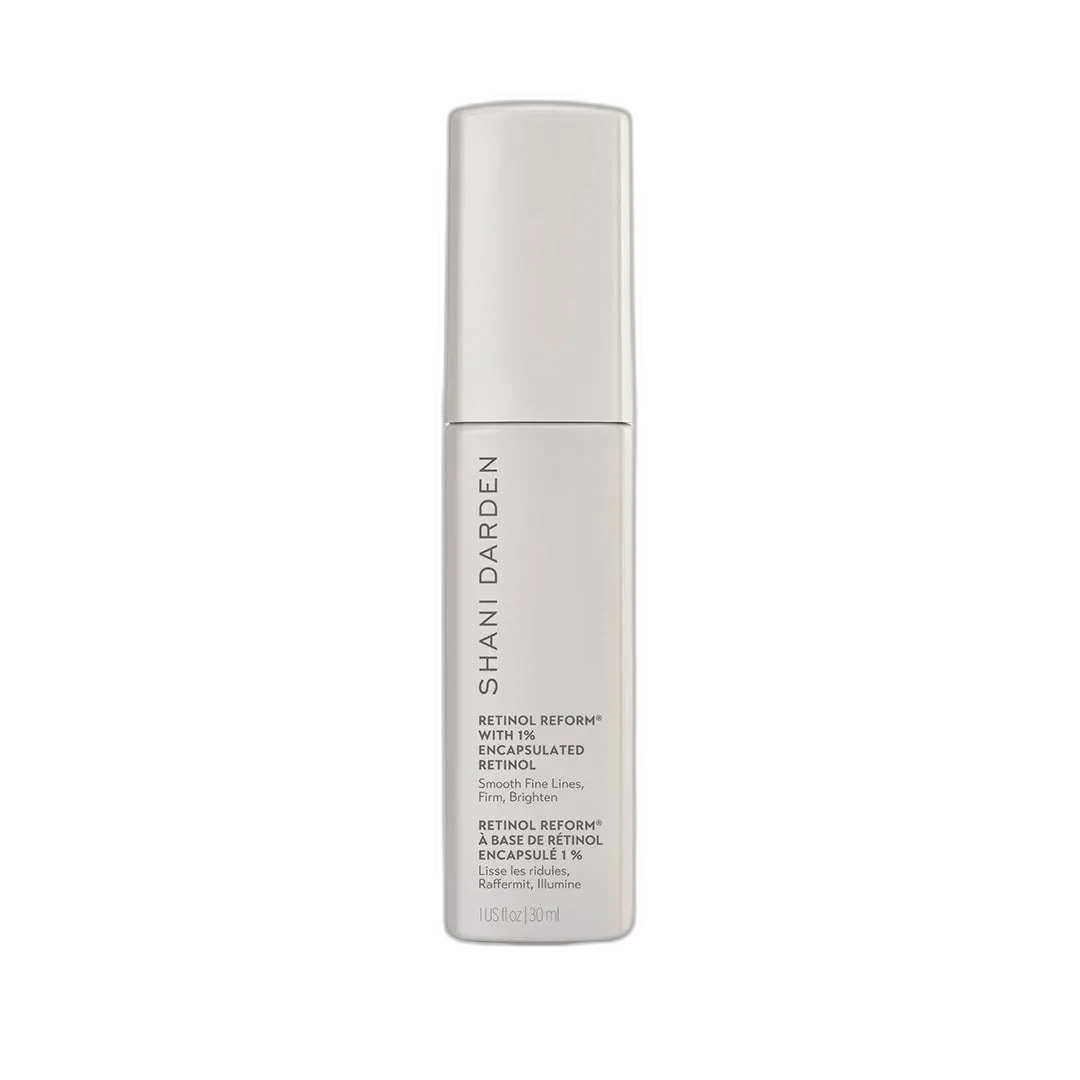
Retinol Reform with 1% Encapsulated Retinol
Celebrity Facialist Favorite
 Verified reviewer
Pros & cons.
- +1% encapsulated retinol delivers strong dose with manageable tolerance
- +Tripeptide-1 adds a second collagen-stimulation pathway beyond retinol
- +Postbiotics and phospholipid complex buffer against retinol-induced dryness
- +Airless pump packaging correctly preserves retinol stability
- +Fragrance-free and silicone-free despite premium positioning
- +Visible radiance by week four for most users
- −$88 for 30ml is premium pricing versus comparable encapsulated retinols
- −Requires 2-3 week adjustment period with mild flaking and redness
- −Not suitable for rosacea, active eczema, or severely compromised barrier
- −Contains soybean sterols, which may trigger reactions in soy-sensitive users
The full review.
Reformulating a cult-favorite product is one of the riskier moves in skincare. You either improve it and the loyalists forgive you, or you break what people loved and the forums turn on you within a week. When Shani Darden quietly updated her original Retinol Reform in 2024 — her single most recognized product, the one celebrities kept name-dropping in interviews for nearly a decade — she took the risk. The decision tells you something about what she thought the original was missing.
The original was a retinol-and-lactic-acid hybrid: roughly 0.5% retinol combined with a low dose of free lactic acid for surface smoothing. It was beloved for its fast visible radiance, but in retrospect it was fighting itself. The lactic acid amplified irritation at a time when the retinol was already doing the heavy lifting, and for users who wanted a pure retinol progression, the AHA added complications rather than benefits. The 2024 rewrite solves this by splitting the formula entirely. Free lactic acid is gone. The retinol is boosted to 1% and locked inside a slow-release encapsulation system. A tripeptide is added for a second collagen-stimulation pathway. Postbiotics, phospholipids, and plant sterols are folded in to buffer the higher dose. It’s not the same serum anymore — it’s a pure retinol treatment with a clean, intentional architecture.
The encapsulation system matters more than the percentage on the label. A 1% free retinol would be aggressive for most users outside a dermatologist’s office — the kind of thing that leaves you flaking for three weeks and red for a month. Encapsulation changes the kinetics: the retinol releases slowly across the overnight window, and the peak concentration in the skin at any given moment is closer to what a 0.3-0.5% free retinol would produce. The total dose delivered is still high, but it’s paced. Most users tolerate it within a 2-3 week adjustment period, which is comparable to starting a mid-strength free retinol for the first time.
The tripeptide-1 addition is a quiet but meaningful choice. Peptides stimulate collagen through cell signaling rather than gene expression — a completely different mechanism from retinol’s receptor-based pathway. Running both pathways simultaneously in one serum is a credible anti-aging strategy, and it’s why this formula reads as more sophisticated than a simple retinol bump.
Texture
The texture is a lightweight milky serum that absorbs cleanly and doesn’t pill under a moisturizer.
Packaging
The packaging is an opaque airless pump, which is the correct choice for retinol stability — free retinol oxidizes quickly on exposure to light and air, and droppers are notoriously bad for both.
Scent
Fragrance-free, no essential oils, and the only potential irritant flags are BHT and BHA used as retinol antioxidant stabilizers, which are functional necessities rather than red flags.
Performance
Performance: the first month is the adjustment period. Expect some flaking around the nasal folds and chin. This is not purging, it’s accelerated cell turnover revealing dry patches underneath. By week four, most users see the beginning of glow. By week eight to twelve, tone starts to even out, large pores tighten, and textural roughness softens. Full benefits — fine line reduction, firmness, the stuff that made the original famous — land around the four to six month mark. This is consistent with retinol research across the literature; no encapsulation magic speeds up the underlying biology.
Common Complaints
The honest friction is price. Eighty-eight dollars for 30ml of retinol is a premium number, and you can find pharmaceutical-grade encapsulated retinols at similar strength from Naturium, SkinCeuticals, or Paula’s Choice for $40-60. What you’re paying for here is the tripeptide addition, the full buffering support system, and the Shani Darden track record. For someone who already knows they respond well to retinol and just wants an efficacy-per-dollar optimization, this isn’t the pick. For someone building a luxury nightly anti-aging routine who wants one well-formulated serum that handles both retinol and peptide duties, it’s a reasonable commitment.
This version is better than the original in almost every way — stronger, more modern, better tolerated over time, cleaner in mechanism. Whether it deserves the emotional attachment its predecessor earned, only time tells. But judged on the formula alone, the rewrite works.
Ingredient analysis.
Full INCI list
Aqua (Water, Eau), Caprylic/Capric Triglyceride, Glycerin, Pyrus Malus (Apple) Fruit Extract, Hydroxyethyl Acrylate/Sodium Acryloyldimethyl Taurate Copolymer, Lactobacillus Ferment, Isohexadecane, Retinol, Copernicia Cerifera Cera, Glucosamine HCl, Plankton Extract, Camellia Sinensis Leaf Extract, Aloe Barbadensis Leaf Juice, Tocopheryl Acetate, Hydrogenated Lecithin, Linoleic Acid, Glycine Soja (Soybean) Sterols, Phospholipids, Propanediol, Sodium Cocoamphoacetate, Polysorbate 60, Oryza Sativa (Rice) Bran Extract, Rosmarinus Officinalis (Rosemary) Leaf Extract, Helianthus Annuus (Sunflower) Extract, Tocopherol, Cyamopsis Tetragonoloba, Guar Gum, Maltodextrin, Xanthan Gum, Lecithin, Hydrolyzed Algin, Xylitylglucoside, Anhydroxylitol, Xylitol, Tripeptide-1, Tetrasodium Glutamate Diacetate, BHT, BHA, Sodium Hydroxide, Phenoxyethanol, Caprylyl Glycol, Ethylhexylglycerin, Hexylene Glycol
Skin match.
The science.
The Science
Retinol's efficacy for photoaging, fine lines, and hyperpigmentation is a cornerstone of cosmetic dermatology. A landmark study in the Archives of Dermatology shows that topical retinol improves fine wrinkles, skin roughness, and photodamage over 24 weeks in older adults. Mechanistically, retinol converts to retinoic acid in the skin, binds to nuclear retinoic acid receptors, and upregulates collagen synthesis genes while downregulating matrix metalloproteinases that break collagen down.
The encapsulation approach used in this serum — retinol embedded in a lipid-based delivery vehicle with phospholipids and hydrogenated lecithin — improves retinol stability and reduces irritation. Research in the International Journal of Cosmetic Science shows that liposomal and phospholipid-encapsulated retinol has comparable bioavailability to free retinol and shows lower erythema and TEWL scores in controlled trials. This evidence supports the tolerance claims for this formula.
Tripeptide-1 deserves its own note. Tripeptide-1, also known as palmitoyl tripeptide-1, is a well-studied signal peptide. Research in the Journal of Cosmetic Dermatology shows modest, reproducible collagen-stimulation in vitro and improved wrinkle depth in vivo over 12-week trials. Using tripeptide alongside retinol uses two independent collagen-upregulation pathways, making it a more credible anti-aging strategy than either active alone.
What is not yet published: a head-to-head clinical trial comparing the reformulated 1% version to the original 0.5% retinol-plus-lactic version. This would settle whether the rewrite outperforms its predecessor.
Dermatologist Perspective
Dermatologists consider retinol the most evidence-backed OTC anti-aging active. Board-certified dermatologists frequently recommend encapsulated retinol formulations to patients who want results without the adjustment discomfort of a prescription tretinoin. A 1% encapsulated retinol paired with a peptide and a barrier-supporting lipid complex follows how dermatologists counsel patients to start retinol: meaningful dose, buffered delivery, and ramped frequency. Many dermatologists would note this formula works for patients transitioning from lower-strength OTC retinols who aren't ready for a prescription retinoid, serving as a stepping stone in that progression. It is not recommended for rosacea patients, anyone with active eczema, or users currently on isotretinoin.
Where it fits in your routine.
Use 2 nights per week for the first two weeks. Apply a pea-sized amount to clean, dry skin; damp skin increases retinol irritation. Wait 60 seconds before applying a ceramide-rich moisturizer. Use 3 nights per week during weeks 3-4, then nightly as tolerated. Do not use on the same night as AHAs, BHAs, benzoyl peroxide, or direct vitamin C. Always apply broad-spectrum SPF 30 or higher every morning because retinol increases photosensitivity. Pause use 48 hours before and after any professional treatment.
At $88 for 30ml, this serum costs more than most at-home retinol. Naturium or Paula's Choice 1% encapsulated retinol products offer similar doses for $30-45. The tripeptide addition, the layered buffering system, and the airless-pump stability packaging justify the premium—this is formulation value, not brand markup. The per-ounce math fails cost-sensitive buyers who can buy a retinol and peptide serum separately for less. For users wanting a single-serum nightly retinol routine and Darden's formulation approach, the price is defensible. No larger size available.
Skincare users ready for a 1% retinol dose who want one well-formulated serum combining retinol with peptide support. It works best for normal-to-oily skin targeting early aging, texture, and tone.
Retinol beginners should start at 0.25-0.5% and increase strength over time. Skip use if you are pregnant, nursing, or breastfeeding. Also skip if you have rosacea, active eczema, or a severely compromised barrier, or if you can afford a comparable encapsulated retinol at a lower price point.
Product details.
Lightweight milky serum with a slight slip
Fragrance-free with a faint base-note odor typical of retinol
Opaque airless pump bottle — important for retinol stability
Expect a 2-3 week adjustment period. Mild flaking around the nose and chin is normal; this is not purging, but retinol increasing cell turnover. If redness lasts past week 3, use it less often. First visible radiance shows at 4 weeks.
About 3 months at nightly use
6 months
All Year
The backstory.
The original Retinol Reform (launched around 2015) combined retinol with lactic acid and became Shani Darden's signature product after years of glowing celebrity testimonials. In 2024 the brand quietly reformulated — removing the free lactic acid, boosting the encapsulated retinol to 1%, and adding tripeptide. The original formula is still sold separately as the 'Treatment Serum' variant for fans who preferred the acid-retinol combination.
About Shani Darden
Established Brand (5–20 years)Shani Darden launched her brand in 2013 after years as a celebrity facialist. The original Retinol Reform became a cult favorite among beauty editors. This reformulated version with 1% encapsulated retinol shows the brand's shift toward higher-strength clinical actives.
Common myths.
1% retinol is too strong for most users
Free retinol at this concentration is aggressive. The encapsulation system in this formula slows release over hours, acting like 0.3-0.5% free retinol — most users adjust within 2-3 weeks.
If it doesn't tingle, it's not working
Retinol works via cell turnover and collagen upregulation through retinoic acid receptors. This process does not require irritation. A well-encapsulated retinol that produces results without stinging works exactly as intended.
FAQ.
How long does it take to see results?
Expect mild smoothing at 2-4 weeks, visible tone improvement at 8-12 weeks, and full wrinkle and firmness benefits at 4-6 months of consistent nightly use. This matches general retinol research — retinol is a slow-working active regardless of delivery system.
Can I use this every night?
Use 2 nights per week for the first 2 weeks, then 3 nights per week for weeks 3-4, then nightly as tolerated. The encapsulated delivery makes nightly use feasible for most users within a month, but slow ramping minimizes initial adjustment irritation.
Is this pregnancy safe?
No. All retinoids, including cosmetic retinol, are contraindicated during pregnancy and breastfeeding. If you are trying to conceive, pregnant, or nursing, use a bakuchiol or peptide-based alternative until your OB clears you.
Should I buy this or the original Retinol Reform Treatment Serum?
Choose this for pure retinol benefit and tripeptide support. If you liked the original's combined retinol-plus-lactic-acid effect and tolerated it, the original formula remains available as the Treatment Serum variant. These are different products, not successors.
Can I use this with a vitamin C serum?
Yes, but in separate routines. Use vitamin C in the morning with your SPF, and this retinol at night. Combining them in one routine increases irritation risk and destabilizes both actives.
What the community says.
"Stronger than original without more irritation"
"Visible glow within a month"
"Hydrating for a 1% retinol"
"Expensive"
"Some irritation during first 2 weeks"
"Original formula fans miss the lactic acid"
People also looked at.