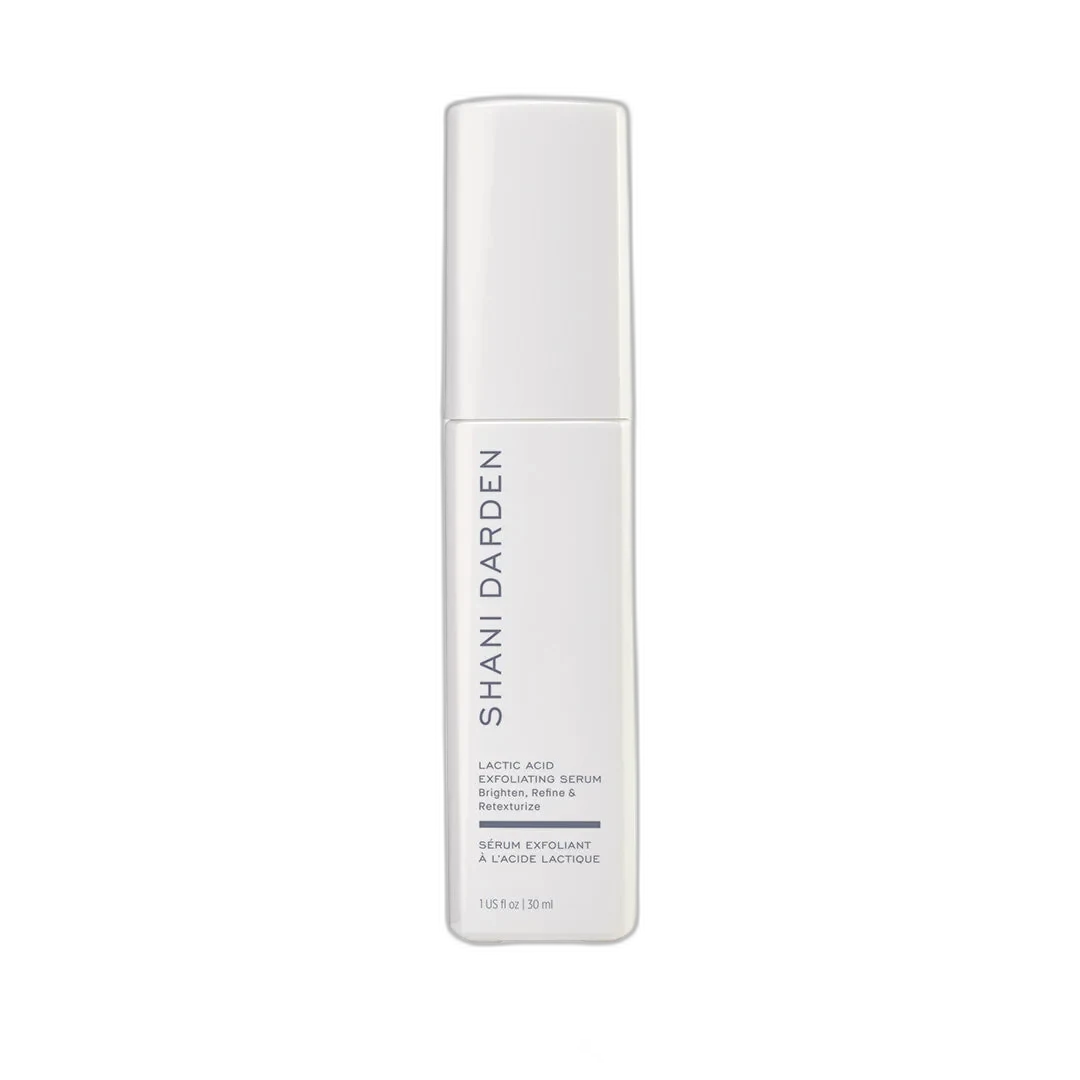
Lactic Acid Serum
Celebrity Facialist Favorite
 Verified reviewer
Pros & cons.
- +9% lactic acid delivered with one of the gentlest tolerance profiles in class
- +Three molecular weights of hyaluronic acid prevent the post-acid dehydration most AHAs cause
- +Fragrance-free, alcohol-free, and silicone-free — a rare combination in a luxury serum
- +Gluconolactone (PHA) adds an extra exfoliation layer without raising irritation
- +Visible overnight radiance and measurable tone improvement within a few weeks
- +Usable on rosacea-prone and reactive skin where stronger AHAs fail
- +Water-gel texture absorbs cleanly under any moisturizer
- −$75 for 30ml is steep versus comparable drugstore lactic acid serums
- −Not strong enough alone to meaningfully shift deep melasma or stubborn hyperpigmentation
- −Dropper seal can leak if the bottle is stored on its side
- −Citrus fruit extracts low on the INCI may bother extremely reactive users
- −Incompatible in the same routine with retinol, BPO, or direct vitamin C
The full review.
Shani Darden built her clientele through chemical peels, facial massage, and a loyal following of Hollywood actresses who credit her for their luminous complexions. When she launched this serum in 2019, the goal was specific: replicate the lit-from-within quality of her signature in-office lactic acid peel, but make it mild enough for reactive, rosacea-prone, or post-retinol skin to use before bed. Most formulators would call that impossible. She succeeded.
The serum is a 9% lactic acid treatment. While that concentration often stings, this formula usually does not. The acid’s architecture prevents irritation. Darden and her team built a three-molecular-weight hyaluronic acid scaffolding (crosspolymer, acetylated, and hydrolyzed) underneath the lactic acid so the acid lands on a cushioned, hydrated surface. They added gluconolactone, a polyhydroxy acid that exfoliates more gently than lactic acid while acting as a humectant. They also included panthenol, chamomile extract, and aloe—the same calming triad found in post-procedure skin recovery serums. The acid works, but the formula constantly buffers the skin.
The texture is a water-gel that glides rather than sinks. A full dropper absorbs in under a minute, leaves no residue, and works well under a ceramide moisturizer. The acids provide a faint tangy note, but there is no added fragrance, no alcohol bite, and no essential oils—a rare find at this price.
What are the results? On the first night, you see a mild overnight radiance—smoother, brighter skin that accepts makeup better. By week three of three-times-weekly use, skin tone evens out and dry patches disappear. By week eight, fine lines soften, skin looks more reflective, and pores appear visibly refined. It does not erase deep hyperpigmentation. For deep melasma or post-acne marks, pair it with tranexamic acid or azemaic acid. Lactic acid, even at 9%, targets tone and glow rather than deep pigment.
The price is the main drawback. Seventy-five dollars for 30ml places this in the upper tier of at-home acid serums. If your skin is not sensitive, a drugstore 10% lactic acid product gives you 70% of these results for a fifth of the cost. This serum earns its price through its tolerance profile. If your skin reacts to The Ordinary’s 10% lactic, to Sunday Riley’s Good Genes, or to anything stronger than a PHA, this may be the first real AHA serum you can use regularly. For those users, the math works. For users with resilient skin, it is a luxury rather than a necessity.
Regarding packaging: the dropper seals are imperfect, and the bottle can leak around the rim if stored on its side. Store it upright. Also, despite the clean fragrance profile, this contains citrus extracts low on the INCI. If you react to essential oils or limonene, patch test the jawline first.
This serum fits a specific routine: users with dullness, texture, or early aging concerns, skin that is reactive rather than bulletproof, and a budget that prioritizes tolerance over price-per-ounce. It is not the best lactic acid serum ever made, but it may be the gentlest 9% lactic acid serum on the market. That niche justifies its existence.
Texture
The texture is a water-gel that glides rather than sinks. A full dropper absorbs in under a minute, leaves no residue, and works well under a ceramide moisturizer.
Scent
The acids provide a faint tangy note, but there is no added fragrance, no alcohol bite, and no essential oils—a rare find at this price.
Best for
Someone with dullness, texture, or early aging concerns, skin that is reactive rather than bulletproof, and a budget that prioritizes tolerance over price-per-ounce.
Works for
It may be the gentlest 9% lactic acid serum on the market, and that niche alone justifies its existence.
Common Complaints
The price is the main drawback. Seventy-five dollars for 30ml places this in the upper tier of at-home acid serums. If your skin is not sensitive, a drugstore 10% lactic acid product gives you 70% of these results for a fifth of the cost.
Packaging
The dropper seals are imperfect, and the bottle can leak around the rim if stored on its side. Store it upright.
Conflicts With
Despite the clean fragrance profile, this contains citrus extracts low on the INCI. If you react to essential oils or limonene, patch test the jawline first.
Ingredient analysis.
Full INCI list · pH 3.8
Water/Aqua/Eau, Lactic Acid, Glycerin, Butylene Glycol, Glyceryl Oleate Citrate, Heptyl Undecylenate, Hydroxyethyl Acrylate/Sodium Acryloyldimethyl Taurate Copolymer, Tocopherol Acetate, Panthenol, Acer Saccharum (Sugar Maple) Extract, Aloe Barbadensis Leaf Juice, Calcium Gluconate, Camellia Sinensis Leaf Extract, Caprylic/Capric Triglyceride, Caprylyl Glycol, Citric Acid, Citrus Aurantium Dulcis (Orange) Fruit Extract, Citrus Limon (Lemon) Fruit Extract, Ethylhexylglycerin, Gluconolactone, Glycolic Acid, Hydrolyzed Sodium Hyaluronate, Malic Acid, Matricaria Recutita (Matricaria) Flower Extract, Pentylene Glycol, Polysorbate 60, Saccharum Officinarum (Sugarcane) Extract, Sodium Acetylated Hyaluronate, Sodium Hyaluronate, Sodium Hyaluronate Crosspolymer, Sodium Hydroxide, Sorbitan Isostearate, Tartaric Acid, Tetrasodium Glutamate Diacetate, Vaccinium Myrtillus Fruit Extract, Xanthan Gum, Phenoxyethanol, Potassium Sorbate, Sodium Benzoate
Skin match.
The science.
The Science
Dermatology literature documents how lactic acid exfoliates. A foundational study by Smith in Dermatologic Surgery shows that 5-12% lactic acid produces measurable epidermal thickening, improved dermal firmness, and pigment reduction with sustained use. Lactic acid's larger molecular size causes slower, more tolerable penetration than glycolic acid. Free lactic acid is bioavailable between pH 3.5 and 4.0; this matches the measured pH of this serum, making exfoliation effective but not aggressive.
Pairing lactic acid with the polyhydroxy acid gluconolactone is a significant formulation choice. The Journal of Cosmetic Dermatology documents that polyhydroxy acids produce photoaging benefits comparable to AHAs but with fewer reports of stinging and erythema. Gluconolactone also works as an antioxidant and humectant, explaining its dual role here.
The three-weight hyaluronic acid system is more than hydration marketing. Research on crosspolymer and hydrolyzed hyaluronic acid shows that smaller-molecular-weight HA penetrates the upper epidermis while the larger crosspolymer holds water at the surface, creating multi-layer hydration. This matters in an acid-containing formula because trans-epidermal water loss typically spikes briefly after AHA application; this HA system blunts that spike.
Peer-reviewed literature lacks a head-to-head clinical trial of this specific finished formulation. The mechanistic support for each component is solid, but the combined effect is extrapolated rather than measured.
Dermatologist Perspective
Dermatologists generally consider lactic acid a safer AHA for home use, especially for patients with sensitive or rosacea-adjacent skin who cannot tolerate glycolic acid. Board-certified dermatologists note that a buffered 8-10% lactic acid serum used 2-3 nights per week delivers meaningful radiance and mild textural benefits without the barrier disruption caused by higher-strength acids. This serum's formulation — lactic acid combined with a PHA and a multi-weight hyaluronic acid support system — aligns with how dermatologists advise layering exfoliation into a sensitive-skin routine. Clinicians often recommend it for patients wanting a visible glow without a prescription retinoid, and they often use it as an alternating partner to a retinol on non-retinol nights.
Where it fits in your routine.
Apply at night to clean, dry skin before moisturizer. Start with 2 nights per week and increase to 3-4 as tolerated. Use one full dropper on the face, neck, and décolletage. Follow with a ceramide-rich moisturizer to lock in hydration. Do not use on the same night as retinol, benzoyl peroxide, or direct vitamin C; alternate these on opposite nights. Always apply SPF 30+ the next morning, because lactic acid increases UV sensitivity for about one week after use. Avoid application over active eczema, broken skin, or within 48 hours of a professional treatment.
At $75 for 30ml, this serum costs more than most at-home AHA products. The HA scaffolding, PHA addition, and calming complex differentiate this formulation, but users with resilient skin get similar results from a $15-25 drugstore lactic acid. The price reflects the tolerance profile: for reactive skin users who cannot tolerate The Ordinary, Good Genes, or any glycolic acid product, this is often the first AHA that stays in their routine. A travel size exists to test tolerance before buying the full 30ml, which is the smartest entry point for new users.
This works for anyone with dullness, uneven tone, or early aging concerns who has reactive or rosacea-prone skin and cannot tolerate stronger AHAs. It also pairs with retinol on alternating nights without risking irritation overlap.
Users with resilient skin who do not react to standard AHAs can get similar results from a $20 drugstore lactic acid. Skip this if your primary concern is deep melasma or stubborn post-acne pigmentation; these require stronger depigmenting actives than lactic acid provides.
Product details.
Fragrance-free with a faint natural tang from the acids
Frosted glass bottle with dropper applicator Finish non-greasylightweightfast-absorbing
The first few uses cause a mild warming or light tingle that fades within a minute. Most skin types do not experience purging. Users usually see a brighter complexion by morning — the 'I slept and woke up glowy' effect is the selling point.
Roughly 3 months with 3-4 applications per week using a full dropper
12 months
All Year
The backstory.
Shani Darden built this formula in response to clients at her West Hollywood practice who wanted the visible radiance of her in-office peels without the downtime. Launched in 2019 as the second hero product after Retinol Reform, it was designed to be paired alternately with that retinol for a full weekly resurfacing routine.
About Shani Darden
Established Brand (5–20 years)Shani Darden launched her eponymous skincare line in 2013 after working over a decade as a Los Angeles celebrity facialist. The brand uses her in-practice observations instead of clinical research, but Retinol Reform is a widely referenced product and the line has steady independent review coverage.
Common myths.
9% lactic acid will thin your skin over time
Lactic acid works on the stratum corneum. At this concentration in a buffered formula, it thickens the living epidermis by stimulating collagen and cell turnover. Long-term AHA use improves skin rather than thinning it.
You need to follow this with a neutralizer
This leave-on serum is not an in-office peel. The pH and buffering calibrate so the acid self-neutralizes during absorption — no rinse or neutralizer is needed.
FAQ.
How often should I use Shani Darden Lactic Acid Serum?
Use it 2 nights per week, then increase to 3-4 nights as tolerated. The 9% concentration is well-buffered but provides a meaningful exfoliation dose; daily use is not necessary for the results this serum delivers.
Can I use this with Shani Darden Retinol Reform?
Yes, but not on the same night. Alternate nights—use lactic acid on Monday and Thursday, and Retinol Reform on Tuesday and Friday. Using them together in one routine increases irritation risk without adding benefit.
Is this serum safe for sensitive skin?
The 9% lactic acid serum is more tolerable than others because it uses hyaluronic acid scaffolding and a chamomile/panthenol calming complex. Patch test on the jawline first. If you have active rosacea or a compromised barrier, wait until skin is stable.
Can I use this in the morning?
The brand recommends PM use. Lactic acid makes skin photosensitive for about a week after use, so even with SPF, nighttime application is the smarter choice to give the acid a full overnight window to work.
Will this help with melasma or dark spots?
Lactic acid provides modest brightening for post-inflammatory hyperpigmentation and surface dullness, but it is not an aggressive depigmenting agent. For stubborn melasma, pair it with a tyrosinase inhibitor like tranexamic acid or azelaic acid.
Is this pregnancy safe?
Topical AHAs like lactic acid are generally safe during pregnancy at cosmetic concentrations. Always confirm with your OB before adding any active to your routine.
What the community says.
"Gentle enough for sensitive skin"
"Noticeable glow after first use"
"Doesn't sting or dry out"
"Price is steep for the size"
"Slow on deeper pigmentation"
"Packaging leaks if tilted"
People also looked at.