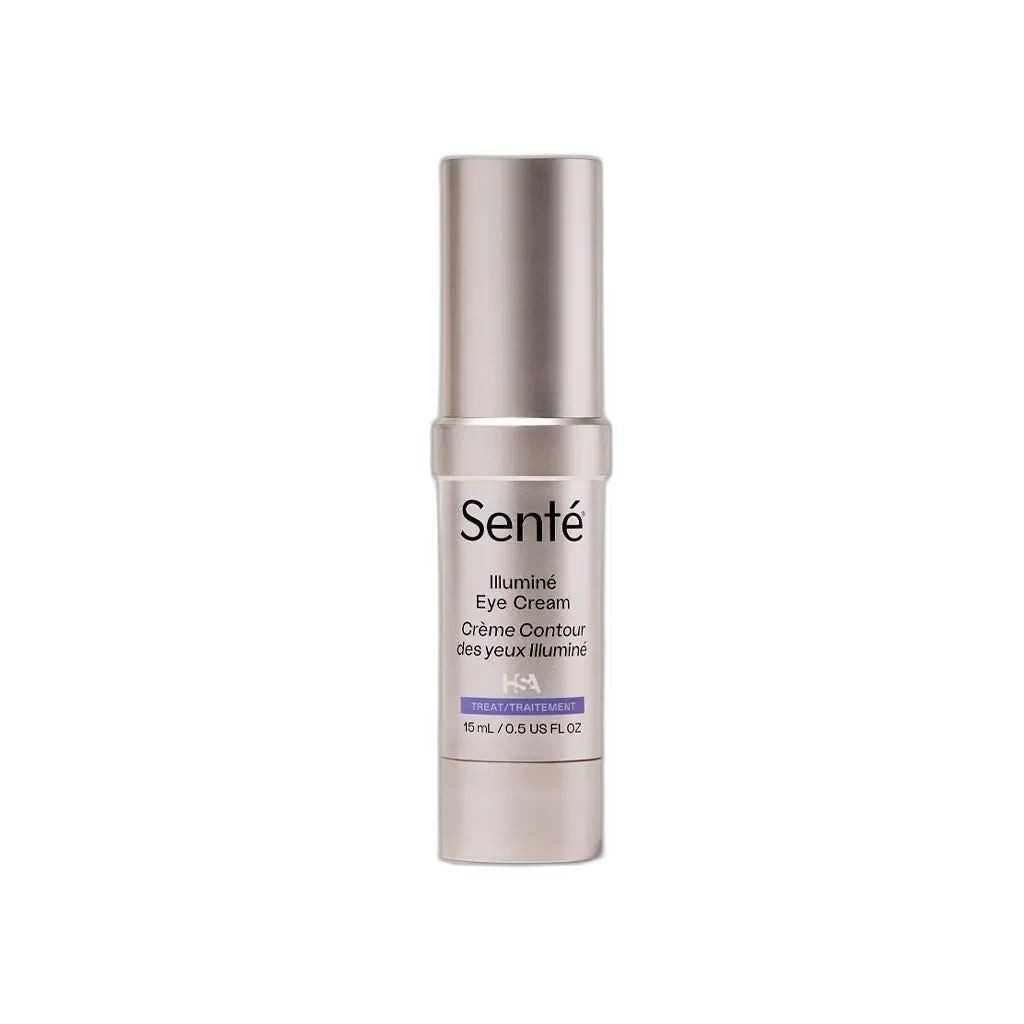
Illuminé Eye Cream
Clinical HSA Eye Cream
 Verified reviewer
Pros & cons.
- +Patented Heparan Sulfate Analog is a genuinely uncommon eye cream active
- +Dual peptides add specific collagen-signaling support
- +Niacinamide delivers noticeable brightening over 6-8 weeks
- +Fragrance-free, non-migrating, sits cleanly under concealer
- +Airless pump protects actives across the product's full life
- +Pregnancy- and breastfeeding-safe
- +Gentle enough for the most reactive eye-area skin
- +15ml tube lasts 4-6 months with twice-daily use
- −$85 for 15ml is clinical-tier pricing
- −Primarily sold through medical spa and dermatology office channels
- −Results are subtle rather than dramatic
- −Cannot address structural dark circles from anatomy or vasculature
- −Limited independent clinical validation of this specific formula
- −Small tube size looks meager next to drugstore eye creams
The full review.
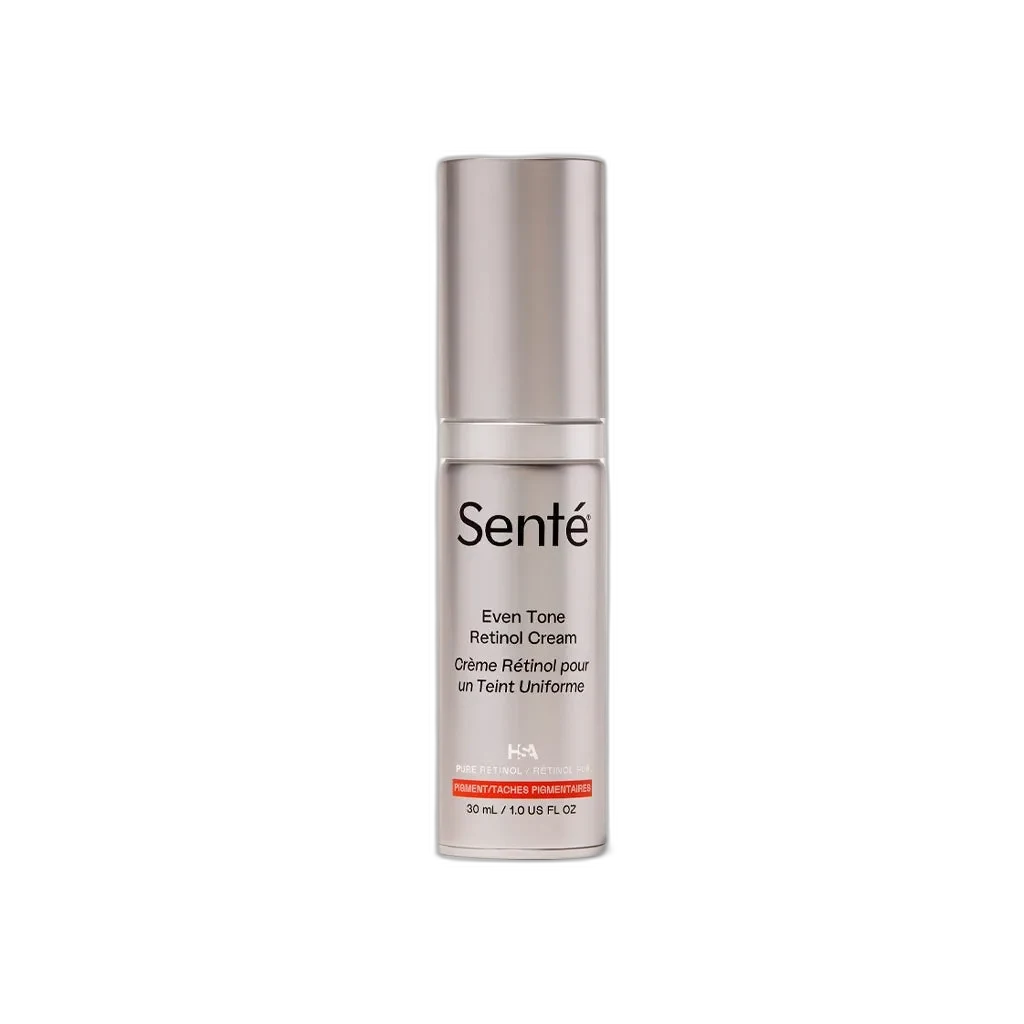
Heparan sulfate is an unusual ingredient to find in an eye cream. It is not particularly trendy. It does not come with a catchy marketing name. Most consumers have never heard of it. And yet it is, biologically, one of the more interesting glycosaminoglycans in the extracellular matrix, playing a central role in growth factor signaling and wound repair. Senté built its entire brand on a patented synthetic analog of heparan sulfate — HSA — and after nearly a decade of applying that technology to face creams, serums, and post-procedure products, the company released the Illuminé Eye Cream in 2022 to bring HSA to the thinnest and most fragile skin on the face.
The formulation reads like a clinician’s wishlist for an eye cream built from scratch. HSA sits in the mid-INCI alongside sodium dermatan sulfate and sodium chondroitin sulfate, creating a layered glycosaminoglycan complex that supports hydration and repair signaling in parallel with the cream’s other actives. Dual peptides — palmitoyl heptapeptide-18 and palmitoyl hexapeptide-52 — add collagen-signaling support specifically chosen for periorbital skin. Niacinamide, positioned high on the list, provides brightening and barrier strengthening, which is the primary driver of the ‘Illuminé’ promise. Chlorella sorokiniana extract contributes antioxidant support. Panthenol adds gentle humectant and anti-inflammatory activity. And the whole thing is delivered in a fragrance-free, non-migrating, airless-pumped cream-gel that sits cleanly on the orbital bone without wandering into the eye itself.
Texture
Texture is where the formulation’s intent becomes immediately clear. On application the cream spreads thinly and absorbs within about a minute into a silky, near-invisible finish. There is no greasy residue that makes concealer slide. There is no tackiness that makes powder cling oddly. There is no fragrance that could irritate the eye area. And crucially, the formula does not migrate — a surprising number of premium eye creams slowly inch their way toward the lash line and ultimately cause the morning-after stinging that eye creams are supposed to prevent. This one stays where you put it.
Best for
Results unfold at the pace eye creams naturally operate. In the first week the under-eye area simply looks more hydrated, softer, and less crepey — that is the HSA and niacinamide handling the immediate dryness-driven darkness that contributes to most under-eye dullness. By two to three weeks the peptides start to show their slow collagen-signaling work, with a subtle firming effect that is more visible in photographs than in the mirror. By six to eight weeks the full brightening effect becomes apparent: under-eye skin looks more even in tone, the morning puffiness is less pronounced, and the overall sense of ‘tired eyes’ diminishes. None of these changes are dramatic. All of them are the kind of subtle, sustained improvement that is honestly what eye creams should deliver.
Not ideal for
The limitations are mostly about cost and context. Eighty-five dollars for fifteen milliliters is clinical-tier pricing, and while the 15ml tube stretches to four to six months because the per-application dose is tiny, the per-ounce cost is high even by luxury eye cream standards. Distribution is primarily through medical spas and clinical retailers like Dermstore and LovelySkin rather than Sephora or Ulta, which means this is not a casual retail purchase. Results are genuinely subtle rather than dramatic — if you have severe structural dark circles from vascular or bone-related anatomy, no cream will change those, and this cream is no exception. And while the HSA technology is backed by peer-reviewed research, the specific clinical benefit of this exact formula compared to much cheaper peptide-plus-niacinamide eye creams has not been independently compared in large trials.
Who Should Buy
Who should buy it: users with sensitive eye-area skin who have reacted to fragranced or active-heavy eye creams, fans of clinical-tier formulations who value the specific HSA technology, and patients already working with dermatology offices on their skincare routines. Also a strong choice for pregnant and nursing users who want a premium eye cream without retinoids or other restricted actives.
Who should skip it
Who should skip it: budget-conscious shoppers who tolerate drugstore eye creams, users seeking dramatic results quickly, people with eye concerns caused by anatomy rather than hydration or mild pigmentation, and anyone unwilling to commit to the consistent twice-daily use that eye creams of any tier actually require to deliver results.
Ingredient analysis.
Full INCI list
Aqua (Water), Ethylhexyl Olivate, Dimethicone, Glycerin, Niacinamide, Helianthus Annuus (Sunflower) Seed Oil Unsaponifiables, Polyacrylate-13, Heparan Sulfate, Sodium Dermatan Sulfate, Sodium Chondroitin Sulfate, Polyacrylate Crosspolymer-6, Panthenol, Chlorella Sorokiniana Extract, Disodium Acetyl Glucosamine Phosphate, Sodium Glucuronate, Magnesium Sulfate, Palmitoyl Heptapeptide-18, Palmitoyl Hexapeptide-52, Sodium Carrageenan, Tocopheryl Acetate, Maris Sal (Sea Salt), Lactic Acid/Glycolic Acid Copolymer, Tocopherol, Sorbitan Isostearate, Glyceryl Caprylate, Caprylyl Glycol, Phenylpropanol, 1,2-Hexanediol, Hydroxyacetophenone, Polysorbate 20, Polyisobutene, Xanthan Gum, Polyvinyl Alcohol, Ethylhexylglycerin, Phenoxyethanol, Disodium EDTA
Skin match.
The science.
The Science
This eye cream combines established actives with the brand's Heparan Sulfate Analog technology. Niacinamide is a well-validated cosmetic active; decades of peer-reviewed research show it improves barrier function, reduces pigmentation, and brightens under-eye areas. Topical peptides like palmitoyl heptapeptide-18 and palmitoyl hexapeptide-52 affect skin firmness and wrinkle depth, with cosmetic-dermatology studies showing modest improvements over 8-12 week use periods. The core science is the HSA technology. Heparan sulfate is a natural glycosaminoglycan that manages growth factor signaling, wound repair, and extracellular matrix organization. Senté's Heparan Sulfate Analog is a patented synthetic version that mimics this signaling in topical formulations; published peer-reviewed research shows it affects hydration, barrier function, and repair markers in skin models. Periorbital skin is thin, heals slowly, and faces repeated microtrauma from rubbing and expression, so the signaling-level support from HSA offers specific benefits here. Chlorella sorokiniana extract provides antioxidant support, and panthenol adds humectant and mild anti-inflammatory activity. These components are not revolutionary, but their combination in a fragrance-free, airless-pumped eye cream creates a thoughtful clinical-tier formulation. Published clinical trials on this exact cream are limited, but every component has a credible evidence base.
Dermatologist Perspective
Dermatologists often recommend fragrance-free peptide-and-niacinamide eye creams for patients with sensitive periorbital skin, mild under-eye discoloration, and early fine lines. Board-certified dermatologists note the eye area is some of the thinnest, most reactive skin on the face; formulations using gentle signaling actives instead of harsh retinoids or acids often tolerate better here. Some dermatology discussions cite Senté's HSA technology as an interesting use of glycobiology research in cosmetic formulation, especially for post-procedure and sensitive-skin needs where repair and barrier support are priorities. Dermatologists tell patients with true structural dark circles (vascular or anatomical) that no topical product fully addresses those concerns, and suggest in-office treatments like tear-trough filler or laser for structural improvement.
Where it fits in your routine.
Apply morning and night after cleansing and facial serums, but before your face moisturizer. Dispense a rice-grain amount onto a clean fingertip, warm it briefly, and pat it around the orbital bone. Do not pull the skin or apply it to the upper lid crease or lash line. Wait 1-2 minutes for absorption before layering other products. Use it with facial retinoids, vitamin C serums, and other active treatments on the rest of the face. It is pregnancy- and nursing-safe.
At $85 for 15ml, this eye cream belongs in the clinical-professional tier. One tube lasts 4-6 months with twice-daily use. Because the per-application dose is small, the effective monthly cost is $14-20 — a significant but manageable amount when spread over six months. Only one size is offered, so there are no bulk savings. The raw price value is lower than $25-40 drugstore eye creams. However, compared to $150+ prestige eye creams from luxury brands, the value is reasonable due to the HSA technology and clinical positioning. The honest assessment: if the specific HSA mechanism and sensitive-skin formulation matter to you, the price is defensible. If you want the lowest cost per milliliter, cheaper options exist.
This eye cream works for sensitive eye-area skin users who react to fragrance or heavy actives. It suits clinical-tier fans who value the HSA technology, patients in dermatology care, and pregnant or nursing users seeking a premium eye cream without retinoids. It also pairs well with other Senté HSA-based products.
Budget-conscious shoppers who use cheaper peptide eye creams, users with structural dark circles from anatomy or vasculature that need in-office treatment, people seeking dramatic rather than subtle improvements, and anyone unwilling to use the product twice daily for the 6-8 weeks needed for full benefit.
Product details.
This lightweight cream-gel spreads thinly, absorbs within 60 seconds, and leaves a non-migrating silky finish around the eye area.
Completely fragrance-free with a neutral cosmetic note.
15ml airless pump tube — this format protects the HSA and peptides from light and oxidation. It also prevents the contamination found in traditional eye cream jars.
The first application provides immediate cooling comfort and a light, non-migrating finish that stays off the lash line. It has no stinging, no warming, and no fragrance. Most users see softer, plumper-looking under-eye skin after the first week as hydration and HSA benefits accumulate.
Use twice daily on both eyes for 4-6 months — the 15ml tube lasts longer because each application uses only a rice-grain amount.
12 months
All Year
The backstory.
The Illuminé Eye Cream was added to Senté's lineup in 2022 to bring the brand's Heparan Sulfate Analog technology specifically to the periorbital area, where the skin is thinnest and most reactive. The eye area had been underserved by the brand's earlier HSA-focused products, and dermatologist partners had been requesting an eye-specific formulation that could pair with the brand's existing face creams. The formulation was built specifically for sensitivity — no fragrance, no retinol, no strong actives that could stray into the eye.
About Senté
Established Brand (5–20 years)Senté is a clinical skincare brand founded in 2013 by glycobiology researcher Alice Chang. It uses patented Heparan Sulfate Analog (HSA) technology from academic research. The brand sells mostly through medical spas and dermatology offices. Peer-reviewed research on HSA's role in skin repair supports its formulations.
Common myths.
Eye creams are unnecessary; regular moisturizer works fine.
This is partly true for most users. However, products formulated specifically for the periorbital area add value if they address eye-specific concerns like vascular darkness, crepey thinness, or the need for fragrance-free delivery too close to the eye.
Heparan sulfate is interchangeable with hyaluronic acid.
These glycosaminoglycans are distinct and have different biological roles. HSA does more than hydrate; it works in growth factor signaling and repair. Senté's version is a patented analog with published research supporting its effects.
FAQ.
Does this eye cream actually reduce dark circles?
It reduces dullness and discoloration caused by dryness, vascular reflectance, and mild pigmentation. It does not remove true vascular or structural dark circles, which usually need in-office treatment. Users with dryness-related darkness see the most improvement.
Is it safe during pregnancy?
Yes. The formula has no retinoids, salicylic acid, or restricted ingredients. This makes it a top eye cream option for pregnant and nursing users.
Can I use it under makeup?
Yes. The cream absorbs to a non-migrating finish. It sits cleanly under concealer and eye makeup without pilling or sliding. Wait 1-2 minutes after application before adding makeup.
Why is it so expensive?
The price covers Senté's patented Heparan Sulfate Analog technology, the dual peptide combination, the dermatology-office distribution model, and the airless packaging. It costs about the same as other clinical-tier eye creams at similar retailers.
How long does the 15ml tube last?
Use twice daily on both eyes for 4-6 months. A rice-grain amount per application is enough, so the small tube lasts longer than its size suggests.
Can I use it with retinol or vitamin C?
Yes. The eye cream is gentle enough to use alongside retinol or vitamin C on the rest of the face. Some users layer this cream over a retinol eye product for dual treatments, but most users find this cream sufficient alone.
Is it worth it compared to cheaper eye creams?
Yes, if you have very sensitive skin around the eyes or want fragrance-free clinical formulations with specific HSA technology. If you have no specific eye-area concerns, cheaper drugstore eye creams provide most benefits at a fraction of the cost.
Community
What the community says.
"Hydrates without depositing under the eye"
"Visible brightening over 6-8 weeks"
"Gentle enough for the most sensitive eye skin"
"No fragrance"
"Pairs well with retinoids used elsewhere"
"Very expensive at $85 for 15ml"
"Results are subtle rather than dramatic"
"Limited availability outside clinical channels"
"Small tube size"
People also looked at.