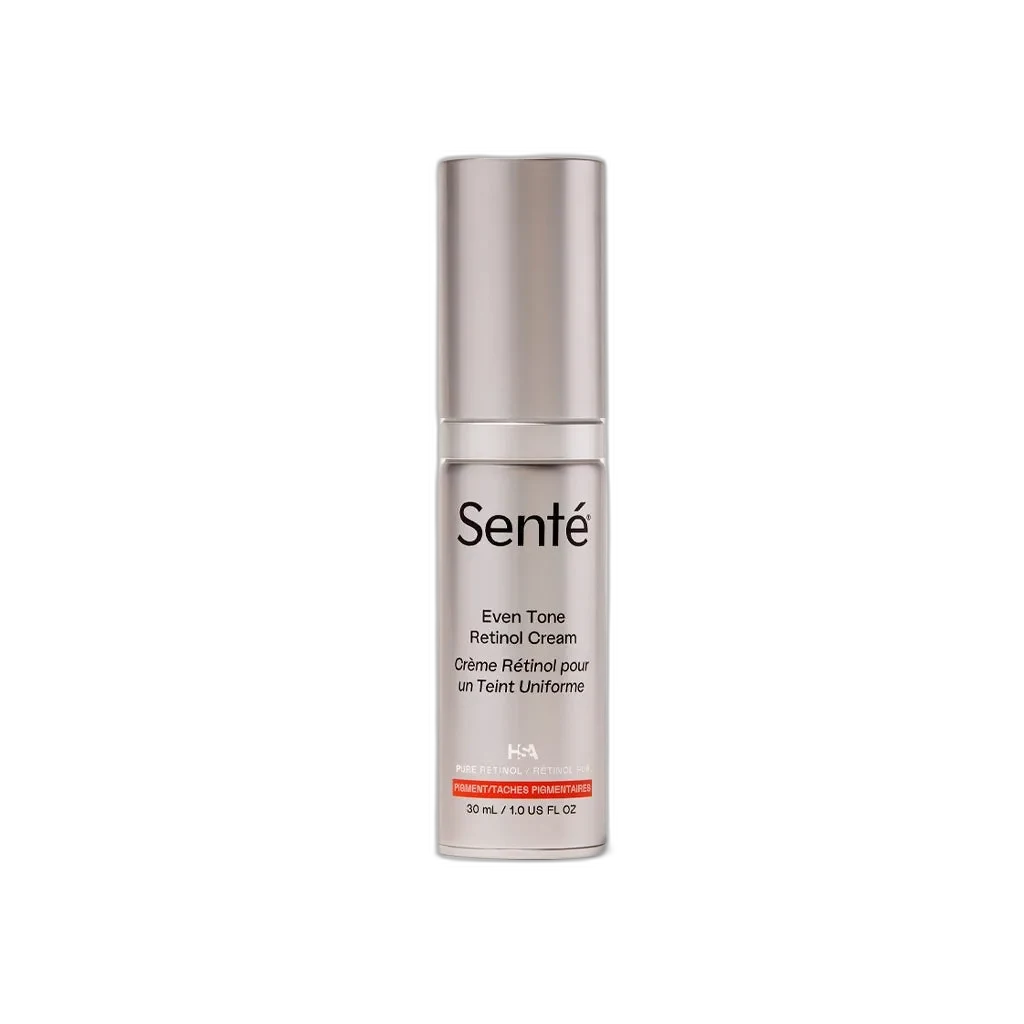
Even Tone Retinol Cream
Derm Office Retinol
 Verified reviewer
Pros & cons.
- +0.5% encapsulated retinol with exceptional tolerability
- +Patented Heparan Sulfate Analog supports skin repair in parallel with retinol
- +Hydroxymethoxyphenyl decanone adds direct clinical brightening
- +Ceramide NP and fatty acid blend build barrier support into the vehicle
- +Fragrance-free and dermatology-office recommended
- +Visible tone-evening results within 4-6 weeks
- +Airless pump tube protects actives throughout product life
- +Gentler than most 0.5% retinol products for sensitive skin
- −Very expensive at $125 for 30ml
- −Distribution limited to clinical and professional channels
- −Not pregnancy- or breastfeeding-safe
- −Ingredient list includes some fungal-acne triggers
- −Small 30ml size lasts only 2-3 months with nightly use
- −Lower independent clinical validation compared to legacy retinol brands
The full review.
Senté is not a brand most people have heard of, and that is because it was designed to live in a different part of the skincare ecosystem than the consumer internet pays attention to. The brand was founded in 2013 by Alice Chang, a glycobiology researcher, and built around the patented Heparan Sulfate Analog molecule that emerged from her academic lab’s work on skin repair signaling. Senté’s products are sold primarily through medical spas, dermatology offices, and clinical retailers, and the brand’s reputation inside those channels is built on the fact that the formulations reflect an unusual level of biochemistry literacy. The Even Tone Retinol Cream, launched in 2023, is the brand’s attempt to apply that sensibility to the notoriously difficult category of retinol-plus-hyperpigmentation treatment.
The formulation is where the cream earns its price tag. The retinol is dosed at 0.5 percent — clinically meaningful without being reckless — and delivered in an encapsulated system that releases the active gradually over hours. Alongside the retinol sits Senté’s signature HSA, working in parallel with dermatan sulfate and chondroitin sulfate as a glycosaminoglycan complex that supports the skin’s natural repair signaling. Hydroxymethoxyphenyl decanone, the cosmetic ingredient known commercially as Symwhite 377, is included for direct brightening action — it is one of the more potent non-prescription tone-evening ingredients available and is the reason this cream specifically targets even tone rather than just general anti-aging. Niacinamide adds barrier support and a second brightening mechanism. Ceramide NP and a blend of linoleic, palmitic, oleic, and stearic acids build barrier integrity directly into the retinol vehicle, rather than asking the user to layer a separate barrier product. And the whole thing sits in a fragrance-free, dimethicone-smoothed, airless-pump delivered cream.
Texture
Texture is where the formulation’s intent becomes immediately clear. The cream is rich in the pump but absorbs into a silky semi-occlusive finish that most users describe as cushioned rather than heavy. There is no grease, no tacky residue, no film under makeup the next morning. On the first application most users feel no sting, no warming sensation, and no tingling — which is remarkable for a 0.5 percent retinol product. The HSA and the ceramide-fatty acid base are the reason. Over the first two weeks, some very reactive users see mild flaking, but the rate of that classic retinol adjustment phase is noticeably lower than with comparable free-retinol creams at the same percentage.
Results
Results unfold at the expected retinol pace but with a distinctive tone-focused character. In the first two weeks skin tolerates the retinol without drama. By four to six weeks, brightening becomes visible, which is the hydroxymethoxyphenyl decanone doing its specific work alongside the retinol’s slower turnover effect. By twelve weeks, the full benefits appear: more even tone, softer fine lines, smoother texture, and the diffuse glow that good retinol use produces. This is not a cream that changes your skin overnight, but it is one that, used consistently, produces clinically meaningful improvement in tone-related concerns. For melasma patients and post-inflammatory hyperpigmentation sufferers, the cream’s specific active stack is particularly well-matched to the underlying problem.
Limitations
The limitations are real and mostly about access and cost. One hundred and twenty-five dollars for thirty milliliters is clinical-tier pricing that puts this cream beyond casual consideration for most shoppers. A tube lasts two to three months with nightly use, making effective monthly cost $40-60 — not absurd for a professional product but meaningfully higher than effective drugstore alternatives. Distribution is limited primarily to medical spa and dermatology office channels, which means you are typically buying it from Dermstore, LovelySkin, or similar clinical retailers rather than Sephora or Ulta. The ingredient list contains some items on the fungal acne trigger list, so users prone to malassezia should patch test. And because this is retinol, it is not pregnancy-safe and requires daily SPF without exception.
Who Should Buy
Who should buy it: users with hyperpigmentation, melasma, or post-inflammatory dark spots who want a clinical-tier retinol with built-in brightening support, sensitive-skin users who have failed on cheaper retinol creams, and patients working with dermatology offices on long-term tone improvement.
Who Should Skip It
Who should skip it: budget-conscious shoppers who tolerate drugstore retinols, users without specific hyperpigmentation concerns, pregnant or nursing users, and anyone who is not willing to commit to the daily SPF and consistent use that any retinol product requires. The formula is excellent. The question is only whether the specific benefits match your skin and budget.
Ingredient analysis.
Full INCI list
Water, Caprylic/Capric Triglyceride, Ethylhexyl Olivate, Dimethicone, Glycerin, Niacinamide, Acetamidoethoxyethanol, Sodium Acrylates Copolymer, Sodium Dermatan Sulfate, Sodium Chondroitin Sulfate, Heparan Sulfate, Rhodosorus Marinus Extract, Palmaria Palmata Extract, Retinol, Sodium PCA, Erythritol, Carrageenan, Lecithin, Linoleic Acid, Palmitic Acid, Oleic Acid, Stearic Acid, Tocopherol, Phytosteryl Canola Glycerides, Dimethylmethoxy Chromanol, Hydroxymethoxyphenyl Decanone, Triolein, Hydroxyacetophenone, Tocopheryl Acetate, Ceramide NP, Sodium Carrageenan, Sea Salt, Xanthan Gum, Laureth-23, Propanediol, 1,2-Hexanediol, Polyglyceryl-4 Olivate, Polysorbate 20, Cetyl Palmitate, Trideceth-6 Phosphate, Sodium Hydroxide, Phenoxyethanol, Disodium EDTA, Caprylyl Glycol
Skin match.
The science.
The Science
The formulation science is different. Retinol's ability to stimulate collagen synthesis, normalize keratinocyte turnover, and improve photoaged skin is a fact in cosmetic dermatology. Studies show clinical effects at concentrations between 0.05 and 1 percent. Encapsulation changes the delivery profile to reduce acute irritation while keeping efficacy, a method documented in cosmeceutical science. The unique science in this cream is the Heparan Sulfate Analog technology. Heparan sulfate is a natural glycosaminoglycan that governs growth factor signaling, wound repair, and extracellular matrix organization. Senté's HSA is a patented synthetic analog that mimics heparan sulfate's signaling in topical cosmetic formulations. Published peer-reviewed research shows its effects on skin hydration, barrier function, and repair markers. When paired with retinol, HSA supports the repair and signaling environment that retinol disrupts during turnover acceleration, which can reduce classic retinol side effects and enhance repair. Hydroxymethoxyphenyl decanone is a tyrosinase-inhibiting cosmetic active with documented brightening activity at cosmetic concentrations, comparable to higher-strength conventional brightening agents in some studies. Ceramide NP and the fatty acid blend provide barrier support by reinforcing the lamellar structure. This combination uses modern cosmetic biology. While no published clinical trial has tested this exact combination in this exact cream, each individual component has a credible evidence base.
Dermatologist Perspective
Dermatologists often recommend clinical-tier retinol products for patients with hyperpigmentation, melasma, and post-inflammatory dark spots, especially if patients struggle to tolerate standard retinol creams. Board-certified dermatologists note that encapsulated retinol formulations with supporting brightening actives offer a useful alternative for patients who cannot use hydroquinone or want a gentler long-term approach. Some dermatology discussions cite Senté's Heparan Sulfate Analog technology as an interesting cosmetic application of glycobiology research, specifically for sensitive skin and post-procedure recovery. Dermatologists advise pregnant and nursing patients to avoid any retinol-containing cream. They also caution patients with rosacea or active eczema to introduce retinoids slowly and under medical guidance.
Guidance
Where it fits in your routine.
Apply at night only, after cleansing. Massage a pea-sized amount from a clean fingertip into the face and neck, avoiding the immediate eye area. You usually do not need more moisturizer — the thick base works as both retinol treatment and night moisturizer. Always wear broad-spectrum sunscreen the next morning. Use every third night for 1-2 weeks, then every other night for 1-2 weeks, then nightly as tolerated. Do not use AHAs, BHAs, vitamin C, or benzoyl peroxide on the same night. If irritation occurs, use it less often and layer an additional barrier moisturizer on top.
At $125 for 30ml, this cream costs as much as clinical-professional products. One tube lasts two to three months with nightly use, making the monthly cost about $40-60. The single size option prevents bulk-purchase savings. Compared to $25-35 drugstore retinol creams, the cost per retinol dose is poor. Compared to $200+ prestige retinol creams from luxury brands, the price is reasonable because of the HSA technology and the layered active approach. The price assessment is this: if you need the specific benefits of HSA plus brightening plus gentle retinol delivery — and you fit the user profile of hyperpigmentation or sensitive-skin patient — the price is defensible. If you want the lowest cost per percent retinol, cheaper alternatives exist.
This product suits users with hyperpigmentation, melasma, or stubborn post-inflammatory dark spots seeking clinical-tier retinol with brightening. It works for sensitive-skin users who failed on standard retinol products and patients using dermatology or medical spa providers who prefer professional-channel skincare. It is also a reasonable choice for anyone investing in a premium retinol that prioritizes repair and tolerability alongside collagen work.
Budget-conscious shoppers who use drugstore retinol creams, users without specific hyperpigmentation concerns, pregnant or nursing users, very fungal-acne-prone skin that reacts to triglyceride-heavy bases, and anyone seeking a casual over-the-counter retinol for occasional use instead of a dedicated clinical treatment.
Product details.
This thick cream-gel hybrid spreads easily and absorbs into a silky semi-occlusive finish without heaviness.
Fragrance-free with a neutral cosmetic note.
30ml airless pump tube — clinical white with Senté's minimal medical-tier branding. Airless delivery protects the retinol and HSA from light and oxidation throughout the product's life.
The first application provides immediate cushioned comfort, which is rare for a 0.5 percent retinol product. Most users report no tingling, stinging, or warming. Reactive users see mild flaking during the first 1-2 weeks as skin adapts. The HSA and ceramide-fatty acid base makes this feel gentler than other retinol creams at similar percentages.
2-3 months with nightly use, stretching to 4 months if used every other night.
6 months
All Year
The backstory.
Senté was founded in 2013 by glycobiology researcher Alice Chang, building on academic research into heparan sulfate's role in skin repair. The brand became a favorite of dermatology offices and medical spas for its HSA-based products, particularly those supporting post-procedure recovery. The Even Tone Retinol Cream was added in 2023 to combine the HSA technology with encapsulated retinol and a dedicated brightening active, specifically targeting patients with hyperpigmentation who struggled to tolerate standard retinol products.
About Senté
Established Brand (5–20 years)Senté is a clinical skincare brand founded in 2013 by glycobiology researcher Alice Chang and her team. It uses patented Heparan Sulfate Analog (HSA) technology from academic biotech. Medical spas and dermatology offices primarily distribute Senté, and published peer-reviewed research on HSA backs its formulations.
Common myths.
0.5% Retinol always peels and stings, no matter the formulation.
Encapsulation, a ceramide-fatty acid base, and barrier-supporting glycosaminoglycans change tolerability. Many Senté users report no peeling during the first two weeks at this percentage.
Heparan sulfate is just marketing for hyaluronic acid.
Heparan sulfate is a distinct glycosaminoglycan. Its biological signaling roles differ from hyaluronic acid. Senté's HSA is a patented molecule with published peer-reviewed research that supports its effect on skin repair pathways.
FAQ.
What is Heparan Sulfate Analog (HSA) and does it really work?
HSA is a patented synthetic molecule from Senté. It mimics the signaling of heparan sulfate, a glycosaminoglycan found naturally in skin. Peer-reviewed research shows it aids skin repair and hydration, but no large independent trials test its specific clinical benefit when combined with retinol in this cream.
Can sensitive skin tolerate it?
Yes. The encapsulated retinol, ceramide-fatty acid base, and HSA make this a tolerable 0.5 percent retinol option. Reactive or rosacea-prone users should start every third night and build up slowly.
Is it pregnancy-safe?
No. It has 0.5 percent retinol, which is not recommended during pregnancy or breastfeeding even if encapsulated. Ask your OB or dermatologist for pregnancy-safe brightening alternatives like azelaic acid or niacinamide.
How does it compare to prescription tretinoin?
Tretinoin is a stronger retinoid that produces faster, more pronounced collagen effects. This cream uses a gentler cosmetic approach with supporting actives that tretinoin products lack. Tretinoin remains the gold standard for significant photoaging. This cream is an excellent alternative for mild-to-moderate tone and texture work with better tolerability.
Where can I buy it?
Primarily through medical spas, dermatology offices, and clinical retailers like Dermstore, LovelySkin, SkinCareRX, and the brand's own website. Availability at mass-market retailers is limited.
Can I use it with my vitamin C serum?
Use vitamin C in the morning and this retinol cream at night. Layering them in one routine reduces the efficacy of both and increases irritation risk.
What the community says.
"Gentler than expected for 0.5% retinol"
"Visible tone evening after 4-6 weeks"
"Rich but non-greasy texture"
"Works for sensitive skin users who can't tolerate other retinol creams"
"No fragrance"
"Very expensive"
"Small 30ml size"
"Limited availability outside medical spa channels"
"Contains some ingredients on the fungal-acne trigger list"
Featured in.
People also looked at.