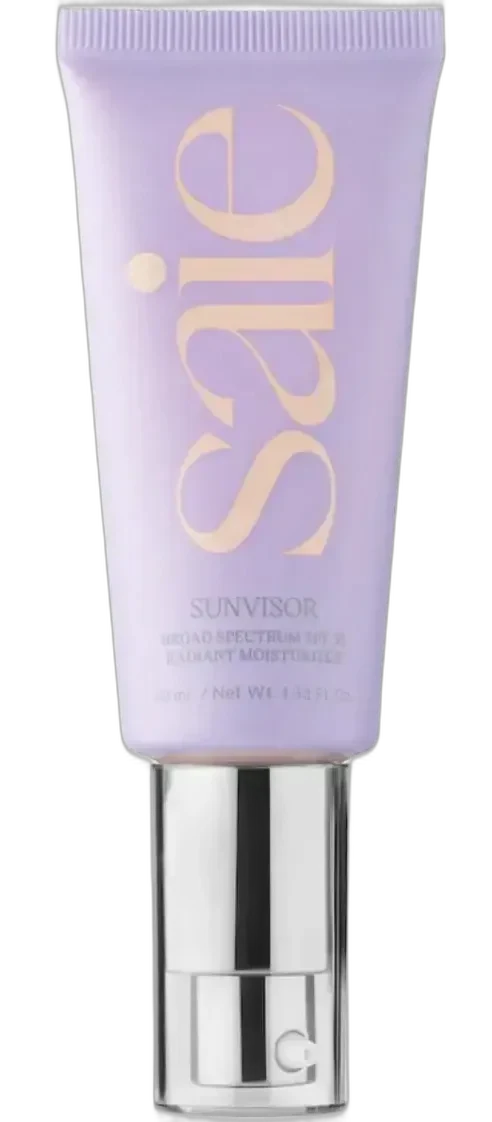
Sunvisor Radiant Moisturizing Face Sunscreen SPF 35
Iron-Oxide-Enhanced Mineral Star
 Verified reviewer
Pros & cons.
- +Iron oxides provide blue light and visible light protection
- +Universal tint minimizes white cast on most skin tones
- +Genuinely hydrating base with hyaluronic acid and glycerin
- +100% non-nano zinc oxide is sensitive-skin friendly
- +Dewy luminous finish works well under makeup
- +Vegan, cruelty-free, and reef-safe formulation
- +Bisabolol and licorice root add soothing and brightening
- −SPF 35 is lower than preferred for high-exposure days
- −Small 40ml tube at premium price point
- −Dewy finish too luminous for very oily skin in warm weather
- −Universal tint doesn't work perfectly on very deep skin tones
- −Vitamin C appears relatively low on INCI list
The full review.
About Saie Sunvisor
A clean beauty brand’s 2022 answer to the mineral sunscreen category.
Myth
There is no myth in this section.
Reality
- For twenty years, mineral sunscreen users faced a trade-off. You could choose effective, non-irritating, reef-safe UV protection from zinc oxide and titanium dioxide, OR a sunscreen without a chalky white cast. You could not have both. The white cast was the cost of clean formulations; the tint looked fine in daylight but terrible in most other lighting. Chemical sunscreens offered better cosmetics, while mineral sunscreens offered better tolerability. Formulators and users both made compromises until around 2020. Dermatologists began noting that visible light and blue light contribute to pigmentation disorders like melasma. Iron oxides—used for decades in foundations and tinted moisturizers—provide protection against these longer wavelengths that zinc and titanium dioxide do not absorb. Adding iron oxides to mineral sunscreen also counteracts the white cast because they are tinted pigments. This single formulation change improved both protection and cosmetics.
- Saie Sunvisor follows this shift. Launched in 2022, it uses non-nano zinc oxide as the sole SPF active and a trio of iron oxides (yellow, red, and black). These iron oxides provide blue light protection and a universal tint that disappears on most skin tones instead of sitting as a chalky layer. This allows you to wear Saie Sunvisor to work without looking like you applied heavy base makeup. The iron oxides also make this a top choice in melasma and hyperpigmentation management circles, as the mineral filters and visible light protection address the full spectrum of pigmentary disorder triggers beyond UVA and UVB.
- The formula is well-constructed. Water, glycerin, hyaluronic acid, aloe, coco-caprylate, argan oil, jojoba esters, and sunflower oil create a moisturizing base. For many, Saie Sunvisor replaces their morning hydration step. This differs from older mineral sunscreens that felt like spreading sand. The light cream texture blends easily, sets to a luminous glowy finish, and works under makeup. The universal undertone works for fair through medium-deep skin tones, though darker skin tones may see a mild mismatch. The formula includes 3-O-ethyl ascorbic acid as an antioxidant, plus bisabolol and licorice root extract for soothing and mild brightening. The formula is fragrance-free, vegan, cruelty-free, and free of oxybenzone and octinoxate.
- Two caveats exist. First, it is SPF 35, not SPF 50. SPF 35 blocks about 97% of UVB rays, while SPF 50 blocks about 98%. Daily protection depends on applying the correct amount (two fingers’ worth for face and neck) and reapplying. Dermatologists generally accept SPF 30 or higher for daily use. However, users with melasma, significant sun exposure, or photosensitivity concerns may prefer an SPF 50 baseline. You should reapply more often or use a powder reapplication product on high-exposure days.
- The second caveat is the price. Thirty-five dollars for 1.35 fluid ounces (roughly 40 milliliters) is expensive for a product you must apply generously and reapply. A single tube lasts about two to three months with correct application, making the per-use cost higher than La Roche-Posay Anthelios or EltaMD UV Clear. The iron oxide, hydrating base, and clean credentials justify a premium, but cheaper mineral sunscreens offer similar protection without the tint or dewy finish.
- In daily use, Saie Sunvisor is a high-quality clean mineral option. Users with sensitive skin, rosacea, or reactivity tolerate it well because the 100% mineral formulation avoids chemical filter sensitization, and bisabolol and licorice root soothe the skin. Users with dry or normal skin benefit from the hydration and glowy finish. Users with oily skin may find the dewy finish too luminous in warm weather and might prefer a matte mineral alternative. Users with melasma or post-inflammatory hyperpigmentation benefit from the iron oxide visible light protection. Users with darker skin tones should test the product in person, as the universal tint is not perfect across all skin tones.
- Saie Sunvisor succeeds because it looks and feels wearable. The best sunscreen is the one you apply daily, consistently, and in proper amounts. If the texture, finish, and tint encourage you to apply Saie Sunvisor properly when you might have skipped a chalkier product, it justifies its price through better compliance. It is a well-crafted option for established sunscreen users and a way to change the minds of those avoiding mineral sunscreens due to white cast.
How to Use
There is no “How to Use” section in this text.
Who Should Buy
- Users with sensitive skin, rosacea, or reactivity typically tolerate it extremely well.
- Users with dry or normal skin appreciate the hydration and the glowy finish.
- Users with melasma or post-inflammatory hyperpigmentation get real additional benefit from the iron oxide visible light protection.
- Users who have been avoiding mineral sunscreens because of the white cast problem.
Texture
The texture is light cream that blends easily, sets to a luminous glowy finish, and plays well under makeup.
Scent
The whole formula is fragrance-free.
Packaging
There is no “Packaging” section in this text.
Best Season
There is no “Best Season” section in this text.
Common Praise
- The iron oxide work.
- The hydrating base.
- The clean credentials.
- It actually looks and feels like something you want to wear.
Common Complaints
- SPF 35, not SPF 50.
- The price per ounce.
- Users with oily skin may find the dewy finish too luminous, especially in warm weather, and might prefer a matte mineral alternative.
- Users with darker skin tones should test in person before committing because the universal tint doesn’t universalize perfectly across the full spectrum.
Pairs Well With
There is no “Pairs Well With” section in this text.
Conflicts With
There is no “Conflicts With” section in this text.
Best for
- Users with sensitive skin, rosacea, or reactivity.
- Users with dry or normal skin.
- Users with melasma or post-inflammatory hyperpigmentation.
- Users who have been avoiding mineral sunscreens because of the white cast problem.
Works for
There is no “Works for” section in this text.
Not ideal for
- Users with oily skin may find the dewy finish too luminous, especially in warm weather, and might prefer a matte mineral alternative.
- Users with darker skin tones should test in person before committing because the universal tint doesn’t universalize perfectly across the full spectrum.
- Users with specific photosensitivity concerns, melasma, or significant sun exposure, SPF 50 is a better baseline, and this product doesn’t deliver it.
AM routine
There is no “AM routine” section in this text.
PM routine
There is no “PM routine” section in this text.
Ingredient analysis.
Full INCI list · pH 6
Active: Zinc Oxide (non-nano). Inactive: Water, Coco-Caprylate/Caprate, Helianthus Annuus (Sunflower) Seed Oil, C15-19 Alkane, Isocetyl Stearoyl Stearate, Undecane, Argania Spinosa Kernel Oil, Jojoba Esters, Tocopheryl Acetate, Tribehenin, Tridecane, Glyceryl Stearate, Leuconostoc/Radish Root Ferment Filtrate, Mica, Titanium Dioxide (CI 77891), Glycerin, Lactobacillus, Aloe Barbadensis Leaf, Acacia Senegal Gum, Xanthan Gum, Viola Tricolor Extract, Bisabolol, Glycyrrhiza Glabra (Licorice) Root Extract, Hyaluronic Acid, Glycosphingolipids, Cocos Nucifera (Coconut) Fruit Extract, Symphytum Officinale Leaf Extract, 3-O-Ethyl Ascorbic Acid, Iron Oxide (CI 77492), Iron Oxide (CI 77491), Iron Oxide (CI 77499), Tin Oxide
Skin match.
The science.
The Science
The formulation relies on iron oxides and zinc oxide, an approach backed by recent dermatological research on visible light and skin pigmentation. Published studies show visible light, specifically high-energy blue-violet light, induces and worsens hyperpigmentation in melasma-prone and darker skin. Iron oxides in tinted mineral sunscreens provide protection against these wavelengths that standard sunscreens do not. Non-nano zinc oxide is a highly studied mineral UV filter with proven efficacy across UVA and UVB ranges and a safety profile suitable for sensitive skin, pregnancy, and pediatric use. 3-O-ethyl ascorbic acid, a stable vitamin C derivative, adds antioxidant protection against free radicals from UV exposure that bypass the mineral filter. Bisabolol, from chamomile, has documented soothing and mild anti-inflammatory activity in clinical studies and reduces application reactivity. Licorice root extract contains glabridin, a polyphenol that inhibits tyrosinase and brightens skin.
Dermatologist Perspective
Dermatologists often recommend tinted mineral sunscreens with iron oxides for patients with melasma, post-inflammatory hyperpigmentation, or pigmentary disorders triggered by visible light. Board-certified dermatologists note that while high-risk patients prefer SPF 50, SPF 35 provides adequate protection for most daily use when applied and reapplied correctly, meeting FDA-recommended guidelines. Dermatologists typically view 100% mineral formulations like this one as first-line options for patients with sensitive skin, rosacea, or chemical filter reactivity. Dermatologists emphasize two rules for all products: apply the correct amount (about two fingers' worth for face and neck) to reach the labeled SPF, and reapply every two hours during continuous sun exposure.
Where it fits in your routine.
Apply two fingers' worth (approximately 1/4 teaspoon) to face and neck each morning after cleansing, serums, and moisturizer. Dispense into the palm, warm slightly, and press-and-blend into skin using upward motions until even. Wait 1-2 minutes for the sunscreen to set before applying makeup. Reapply every 2 hours of direct sun exposure, or more often after sweating or swimming. Shake the tube before use so the iron oxide pigment distributes evenly.
At about $35 for 1.35 fluid ounces, this mineral sunscreen has a high per-ounce price. The formulation quality and iron oxide inclusion justify the premium. Its cosmetic elegance helps users apply it consistently, but drugstore options like La Roche-Posay Anthelios Tinted Mineral or CeraVe Hydrating Mineral provide similar iron oxide benefits for less. The value is fair if you want this texture, tint, and dewy finish; users seeking cost efficiency will find better per-ounce alternatives.
Users with sensitive, normal, dry, or combination skin want a cosmetically elegant mineral sunscreen without a white cast. Those with melasma, hyperpigmentation, or pigmentary concerns benefit from visible light protection. Users pay a premium for a hydrating, glowy finish that works under makeup.
Users with very oily skin in hot climates who need a matte finish. Those on tight budgets who can get similar results from drugstore tinted mineral sunscreens. Users with very deep skin tones who may see a slight tint mismatch. Those who need SPF 50 specifically for high sun exposure scenarios.
Product details.
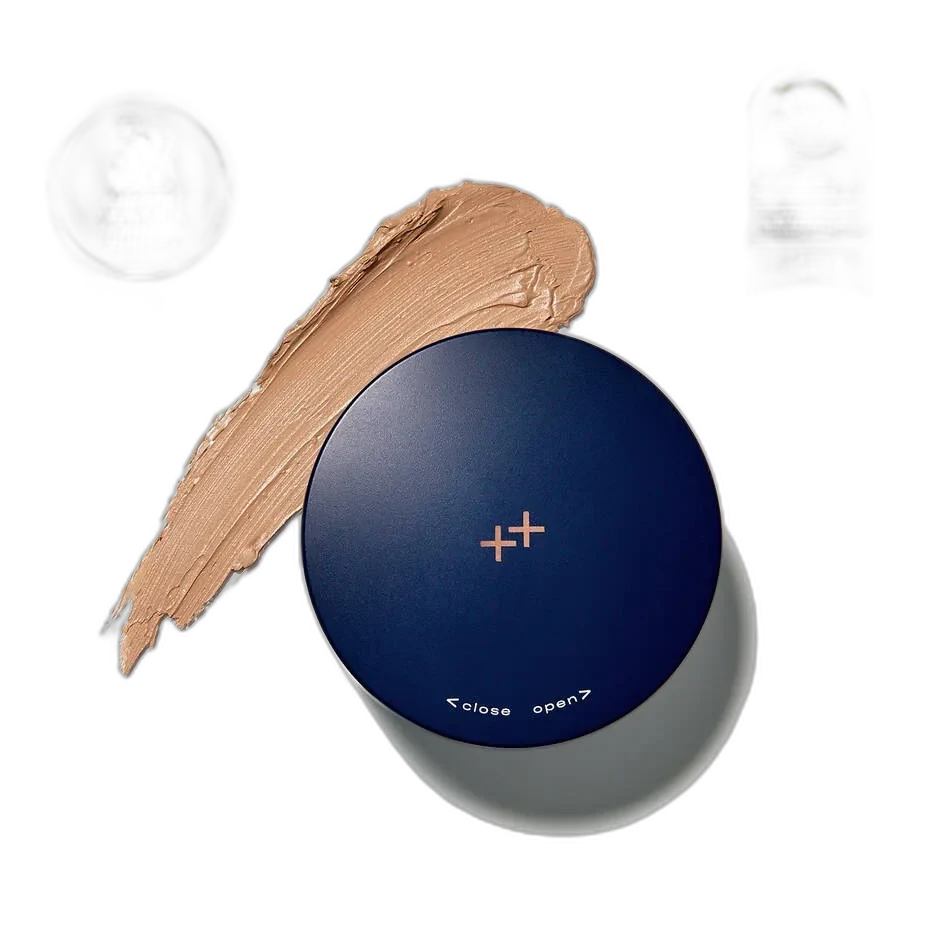
This lightweight cream has a subtle tint, spreads easily, and blends into a luminous finish
Fragrance-free — no added scent
Matte white squeeze tube with pump dispenser — hygienic and designed for accurate dosing
The tint has a universal undertone and blends into most skin tones without streaks or an orange cast. It shows an immediate glowy finish and hydration. It feels slightly sticky for the first 30 seconds before it settles. It works well as a makeup base.
Apply to face and neck twice daily for 2-3 months with proper sunscreen quantities
12 months
All Year
The backstory.
Saie was founded in 2019 by Laney Crowell, a former beauty industry executive who built the brand around the idea that clean beauty could be both effective and aesthetically sophisticated. The Sunvisor launched in 2022 as the brand's answer to the clean sunscreen category, incorporating iron oxides specifically in response to emerging research on blue light and visible light's role in pigmentation.
About Saie
Emerging Brand (2–5 years)Laney Crowell founded Saie in 2019 as a clean beauty brand. Saie focuses on minimal-ingredient color cosmetics and skincare. Sephora distribution grows Saie's presence in the clean beauty space, but Saie's track record in the sunscreen category is still building.
FAQ.
Does Saie Sunvisor leave a white cast?
The iron oxide tint works on most skin tones. It calibrates across various undertones and cancels the zinc oxide white cast. It works well on fair to medium-deep skin tones. Very deep skin tones may show a subtle tint mismatch, so test it at Sephora before buying.
Why SPF 35 instead of SPF 50?
SPF 35 blocks about 97% of UVB rays, while SPF 50 blocks 98%. This difference is small in practice. Applying the correct amount (two fingers' worth for the face and neck) and reapplying every 2 hours of sun exposure matters more. Dermatological guidelines support SPF 35 for daily wear.
Is this safe for sensitive skin?
Yes — the 100% mineral zinc oxide formulation is a gentle sunscreen option. The fragrance-free, alcohol-free base uses bisabolol and licorice root, which suits reactive skin. Bisabolol is a well-studied soothing ingredient from chamomile.
Do the iron oxides help with melasma?
Yes — new research shows visible light, especially blue light, causes melasma and pigmentary disorders. Iron oxides in tinted sunscreens protect against this wavelength range better than standard sunscreens. This makes Sunvisor a better choice for melasma-prone users than untinted alternatives.
Can I wear makeup over this?
Yes, and people often wear it as a makeup primer. The dewy finish creates a luminous base for light coverage. For heavy foundation, wait 2-3 minutes after application so the sunscreen settles, then apply makeup to prevent pilling.
Is this sunscreen reef-safe?
Yes — the non-nano zinc oxide formulation is reef-safe. It lacks oxybenzone and octinoxate, the two chemical filters most linked to coral bleaching. Saie markets this as reef-safe.
Is Sunvisor pregnancy safe?
Yes. Mineral zinc oxide sunscreens are the safest SPF choice during pregnancy and breastfeeding because zinc oxide does not enter the bloodstream. The formulation lacks retinoids or salicylic acid.
What the community says.
"No white cast on most skin tones"
"Genuinely hydrating for a mineral sunscreen"
"Glowy finish under makeup"
"Fragrance-free and sensitive-skin friendly"
"Small 40ml size for the price"
"SPF 35 instead of SPF 50"
"Can look too shiny on already oily skin"
"Tint may not work for all skin tones"
People also looked at.