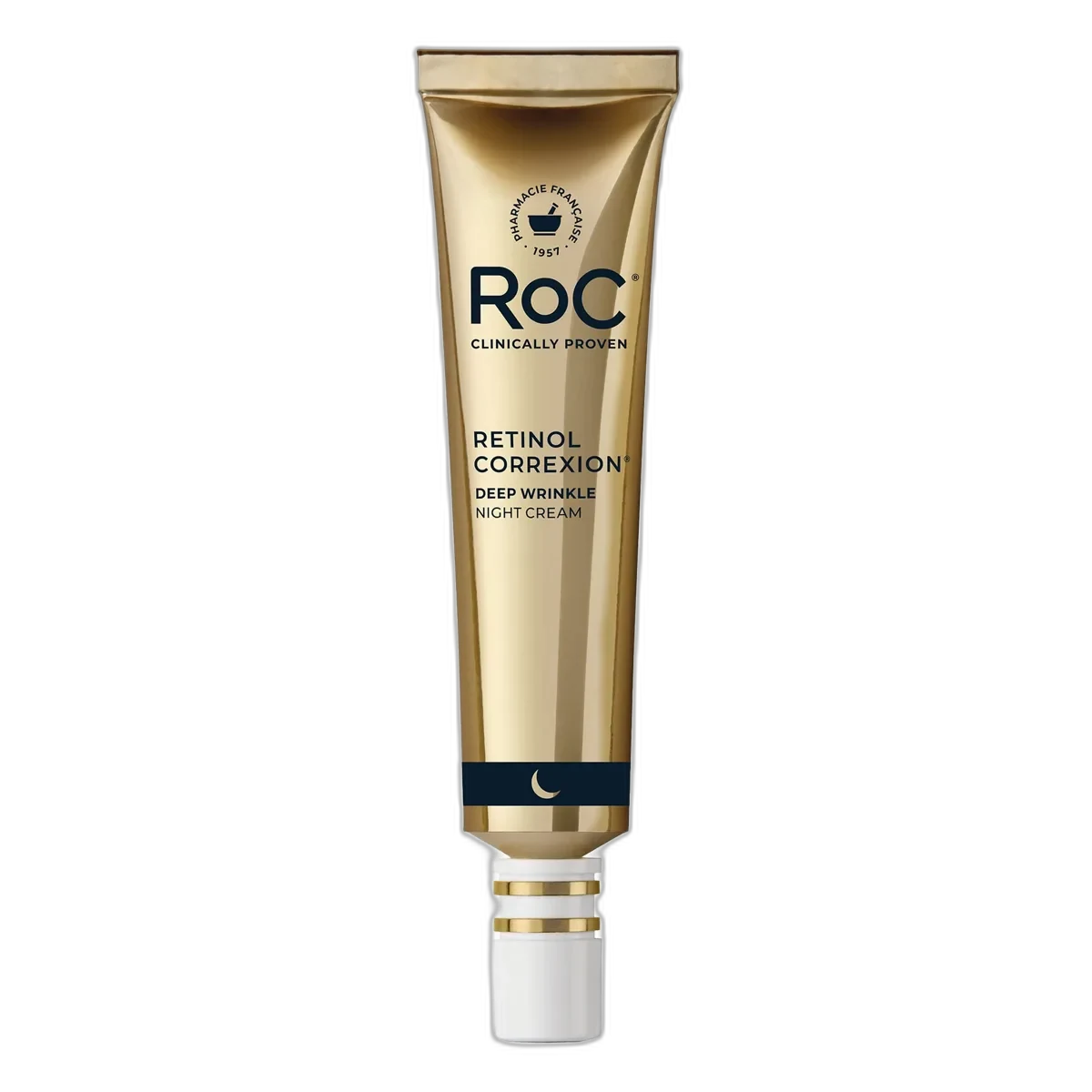
Retinol Correxion Deep Wrinkle Night Cream
OG Drugstore Retinol Cream
 Verified reviewer
Pros & cons.
- +Multi-active formula combines retinol with glycolic acid, vitamin C, and squalane for comprehensive overnight repair
- +Over two decades on market with 25,000+ reviews provides unmatched real-world validation
- +Lightweight, oil-free texture absorbs quickly and suits combination skin without added shine
- +Glycolic acid enhances retinol penetration while contributing its own mild resurfacing benefits
- +Squalane provides barrier-supportive emolliency to counterbalance retinol-induced dryness
- +Under $22 for a multi-active retinol night cream backed by published clinical data
- +Tube packaging protects retinol from air and light degradation better than jar formats
- −Contains artificial fragrance — a surprising and polarizing choice for a pharmaceutical-heritage brand
- −Retinol concentration is proprietary, making it hard to compare strength against competing products
- −Steareth-10 carries a moderate-high comedogenicity rating despite non-comedogenic labeling
- −Some long-term users report reduced efficacy after recent reformulations
- −Tube cap seal has drawn complaints about cracking and leaking during travel
- −Not suitable for sensitive skin due to the combination of fragrance, retinol, and glycolic acid
The full review.
There are products that launch with a TikTok campaign and burn bright for six months. Then there are products like the RoC Retinol Correxion Deep Wrinkle Night Cream, which has been sitting on drugstore shelves for over two decades, quietly accumulating tens of thousands of reviews while skincare trends cycled through snail mucin, jade rollers, and whatever else the algorithm served up last quarter. Twenty-five thousand reviews is not a marketing number. It is a body of evidence.
RoC’s story begins in 1957 Paris, where pharmacist Dr. Jean-Charles Lissarrague decided skincare should be held to pharmaceutical standards. That philosophy eventually led to a proprietary retinol stabilization technology that became the backbone of the Correxion line. The Deep Wrinkle Night Cream is the most accessible expression of that technology — a lightweight retinol cream that layers in glycolic acid, vitamin C, squalane, and a mineral complex for a multi-pronged approach to overnight skin repair.
About RoC
The ingredient list tells an interesting story. The retinol is supported by glycolic acid at a concentration low enough to avoid primary exfoliant territory but high enough to gently dissolve the dead cell layer that would otherwise slow retinol penetration. It is a smart formulation choice — rather than relying on retinol alone to bulldoze its way through the stratum corneum, the glycolic acid clears the path. Ascorbic acid contributes additional antioxidant protection and its own collagen-stimulating properties, while squalane — a lipid your skin recognizes as its own — works to replenish the barrier that retinol tends to disrupt.
The mineral complex of magnesium, zinc, and copper is a recurring signature across RoC’s lineup. The zinc gluconate brings anti-inflammatory benefits, copper gluconate supports collagen cross-linking, and magnesium aspartate contributes to cellular energy metabolism. Whether this trio delivers measurable benefits at the concentrations present in a night cream is debatable — the evidence is more promising than proven — but it is the kind of thoughtful addition that separates a formulation designed by people who understand skin biology from one assembled by marketers.
How to Use
Using it is straightforward and unceremonious. The cream has a lightweight texture that sits comfortably between a gel and a traditional night cream. It absorbs quickly, leaves no greasy residue, and layers well if you want to apply a heavier occlusive on top during winter months. The oil-free base makes it workable for combination skin types that need anti-aging benefits without additional shine.
Scent
And then there is the fragrance. It must be discussed because it is, genuinely, the most polarizing aspect of this product. RoC — a brand founded on fragrance-free principles — has included a noticeable artificial, floral-powdery scent in what is otherwise a serious, performance-focused night cream. It fades within minutes of application, but those minutes are enough to be a dealbreaker for scent-sensitive users. It is a puzzling choice for a brand with pharmaceutical heritage, and it is the single biggest thing holding this product back from a higher score.
Works for
Performance follows the expected retinol trajectory. The first two to four weeks may bring mild dryness, occasional flaking, and for some users a slight tingling from the glycolic acid. This is the retinization period — the skin adjusting to accelerated cell turnover — and it passes. By week eight, the payoff materializes: smoother texture, reduced appearance of fine lines, and a subtle brightness that suggests skin is actually functioning better rather than just being cosmetically smoothed over. Long-term users — and with 25,000 reviews, there are many — report sustained improvements in crow’s feet, forehead lines, and overall skin quality over months and years of consistent use.
Reality
A 2015 study published in the Journal of Drugs in Dermatology demonstrated that 0.1% stabilized retinol produced a 44% improvement in crow’s feet lines over 52 weeks, with histochemistry confirming increased procollagen production. A pooled analysis published in the same journal in 2024 looked at six vehicle-controlled trials totaling 471 participants and confirmed that stabilized retinol showed improvements in all photoaging signs as early as week four, with irritation that was rare, mild, and transient. This is not a product running on vibes.
Common Complaints
The limitations are real and worth acknowledging beyond the fragrance issue. The retinol concentration is undisclosed, which makes it difficult for experienced retinol users to gauge whether this product will challenge their skin enough to deliver meaningful results. Some long-time users have noted that recent reformulations feel less effective than earlier versions — the shift from a paraben-preserved to a paraben-free formula may have necessitated changes that affected the overall feel or perceived potency. And the tube packaging, while better than a jar for retinol stability, has drawn complaints about cap seals that crack or leak.
Best for
At under twenty-two dollars, though, the value equation is hard to fault. You get RoC’s proprietary stabilized retinol, a supporting cast of glycolic acid and vitamin C, squalane for barrier support, and a mineral complex — all in a formula backed by published clinical data rather than Instagram testimonials. This is not the most elegant retinol night cream you will ever use. It is not the best-smelling, the most luxuriously textured, or the most Instagram-friendly. But it has been quietly working for millions of people for over two decades, and that track record speaks louder than any influencer campaign.
Ingredient analysis.
Full INCI list
Water, Dimethicone, Glycerin, Ethylhexyl Hydroxystearate, Isodecyl Neopentanoate, Tetrahydroxypropyl Ethylenediamine, Stearyl Alcohol, Cetearyl Alcohol, Glyceryl Stearate, PEG-100 Stearate, Ceteareth-20, Steareth-10, Phenoxyethanol, Hydroxyethyl Acrylate/Sodium Acryloyldimethyl Taurate Copolymer, Methyl Methacrylate Crosspolymer, Caprylyl Glycol, Aluminum Starch Octenylsuccinate, Squalane, Glycolic Acid, Fragrance, Butyrospermum Parkii (Shea) Butter, Citric Acid, Xanthan Gum, Retinol, Polysorbate 20, BHT, Disodium EDTA, Polysorbate 60, Ascorbic Acid, Magnesium Aspartate, Zinc Gluconate, Copper Gluconate
Skin match.
The science.
The Science
The clinical evidence behind RoC's stabilized retinol technology is more substantial than most drugstore products can claim. A 52-week double-blind, vehicle-controlled trial published in the Journal of Drugs in Dermatology (Randhawa et al., 2015) demonstrated that 0.1% stabilized retinol produced a 44% improvement in crow's feet fine lines and an 84% improvement in mottled pigmentation, with histochemistry confirming increased type I procollagen, hyaluronan, and Ki67 expression versus vehicle control.
More recently, a pooled analysis of six vehicle-controlled trials published in the same journal (Farris, Berson, Bhatia et al., 2024) examined 471 participants treated with stabilized bioactive retinol and found statistically significant improvements in all measured photoaging parameters as early as week four, with irritation that was rare, mild, and transient across the pooled population.
The glycolic acid in this formula, while present at a supportive rather than primary concentration, contributes established exfoliating benefits. Glycolic acid's ability to disrupt corneocyte cohesion at the stratum corneum surface enhances the penetration of co-applied actives — in this case, facilitating retinol delivery into the deeper epidermal layers where it converts to retinoic acid and stimulates fibroblast activity.
The mineral complex (magnesium aspartate, zinc gluconate, copper gluconate) represents a more speculative addition. While zinc and copper both have documented roles in wound healing and collagen metabolism, the evidence for meaningful skin benefits from these trace minerals at topical cosmetic concentrations is limited. Zinc gluconate does have published anti-inflammatory properties relevant to retinol-induced irritation, and copper peptides are well-studied in wound healing contexts — but the specific mineral salt forms used here have less robust topical evidence than their peptide counterparts.
References
- One-year topical stabilized retinol treatment improves photodamaged skin in a double-blind, vehicle-controlled trial — Journal of Drugs in Dermatology (2015)
- Efficacy and Tolerability of Topical 0.1% Stabilized Bioactive Retinol for Photoaging: A Vehicle-Controlled Integrated Analysis — Journal of Drugs in Dermatology (2024)
Dermatologist Perspective
Dermatologists frequently recommend the RoC Retinol Correxion Deep Wrinkle Night Cream as an accessible entry point for patients interested in OTC retinol, particularly those who may not be candidates for prescription tretinoin. Board-certified dermatologists note that RoC's stabilized retinol technology has more published clinical validation than most drugstore competitors, and the addition of glycolic acid creates a formula that addresses multiple signs of photoaging simultaneously. However, dermatologists consistently flag the fragrance content as a drawback, especially for patients with rosacea or contact dermatitis history, and typically recommend patch testing before committing to nightly use.
Where it fits in your routine.
Apply a pea-sized amount evenly to the face and neck after cleansing and treatment serums. This is your final nighttime step; you do not need additional moisturizer unless your skin is very dry. Use it every other night for 2-3 weeks, then use it nightly as tolerated. Do not apply to wet skin, as this increases irritation from the glycolic acid. Apply SPF 30+ every morning, as both retinol and glycolic acid increase photosensitivity.
At $21.99 for a 1 oz tube that lasts 2-3 months, this is one of the most cost-effective multi-active retinol night creams available. The value includes retinol, glycolic acid, vitamin C, squalane, and a mineral complex — ingredients that often require separate products in other routines. RoC also sells a 0.5 oz size for those who want to trial it first. As a legacy pharmacy brand with nearly seven decades of retinol formulation expertise and published clinical trials for its specific stabilization technology, the under-$25 price reflects earned value, not marketing sleight of hand.
This retinol night cream works for aging, texture, and dullness using multi-active support. It suits retinol beginners on a budget seeking clinical backing at a lower price, and long-term users who prioritize consistency and track record over novelty.
People with fragrance sensitivities, active rosacea, or severely sensitive skin should avoid this. The combination of fragrance, retinol, and glycolic acid irritates reactive skin. Pregnant or breastfeeding individuals must avoid this product because it contains retinol.
Product details.
All Year
The backstory.
The Deep Wrinkle Night Cream is a cornerstone of RoC's Retinol Correxion line, which emerged from the brand's pioneering work in making shelf-stable retinol available outside of prescription settings. While the exact launch date is lost to time, this product has been a drugstore staple for over two decades, accumulating tens of thousands of reviews and becoming a gateway retinol product for a generation of skincare users.
About RoC
Legacy Brand (20+ years)Dr. Jean-Charles Lissarrague, a French pharmacist, founded RoC in 1957. The brand uses strict dermatologist testing and fragrance-free principles. RoC pioneered shelf-stable retinol and has over 250 clinical studies across its portfolio and 180+ industry awards.
Common myths.
Drugstore retinol creams lack enough retinol to work.
Multiple vehicle-controlled trials validate RoC's stabilized retinol technology. A 2015 study in the Journal of Drugs in Dermatology shows 0.1% stabilized retinol improves crow's feet lines by 44% over 52 weeks. Stability and delivery matter more than concentration—degraded retinol at any percentage is inert.
You can't combine retinol with glycolic acid — they cancel each other out.
Using a high-strength AHA peel and retinol on the same night increases irritation. However, the glycolic acid concentration in this formula enhances retinol penetration instead of competing with it. The two work synergistically when formulated together.
FAQ.
How long does it take for RoC Deep Wrinkle Night Cream to work?
Most users see softer, smoother skin in 2-4 weeks. Consistent nightly use shows visible improvement in fine lines and wrinkles at 8-12 weeks. The retinol and glycolic acid combination works slowly; patience during the initial adjustment period is key.
How to Use ---
Can I use RoC Deep Wrinkle Night Cream every night?
Use every other night for the first 2-3 weeks so your skin adjusts to the retinol and glycolic acid. Move to nightly use once your skin tolerates it without excessive dryness or irritation. If you have persistent redness or peeling, use it 2-3 nights per week.
Works for ---
Is the RoC Deep Wrinkle Night Cream good for sensitive skin?
This product contains fragrance, retinol, and glycolic acid, which can irritate sensitive skin. The formula is hypoallergenic and dermatologist-tested, but reactive or easily irritated skin types should patch test first and consider a fragrance-free retinol alternative.
Pairs Well With
Can I use vitamin C serum with RoC Deep Wrinkle Night Cream?
Yes, but use them at different times. Apply your vitamin C serum in the morning under sunscreen, and use the RoC Night Cream in the evening. This formula contains ascorbic acid, so you get vitamin C benefits at night too.
Not ideal for
Is this product safe during pregnancy?
No. This cream contains retinol and glycolic acid. Dermatologists advise avoiding both during pregnancy and breastfeeding. The retinol is the main concern because of the theoretical risk from vitamin A derivatives. Ask your OB-GYN for pregnancy-safe alternatives.
Community
What the community says.
"Visible wrinkle reduction within 8-12 weeks of consistent nightly use"
"Lightweight cream texture absorbs quickly without feeling heavy or greasy"
"Outstanding value for a multi-active retinol night cream under $25"
"Long-term users report sustained anti-aging results over years of use"
"Leaves skin noticeably smoother and more radiant by morning"
"Oil-free formula works well for combination skin that needs anti-aging care"
"Artificial fragrance is strong and a dealbreaker for scent-sensitive users"
"Initial burning and tingling during the retinization adjustment period"
"Some users feel recent reformulations are less effective than older versions"
"Tube packaging has been reported to crack or leak during travel"
"Retinol concentration may feel too mild for users with established retinol tolerance"