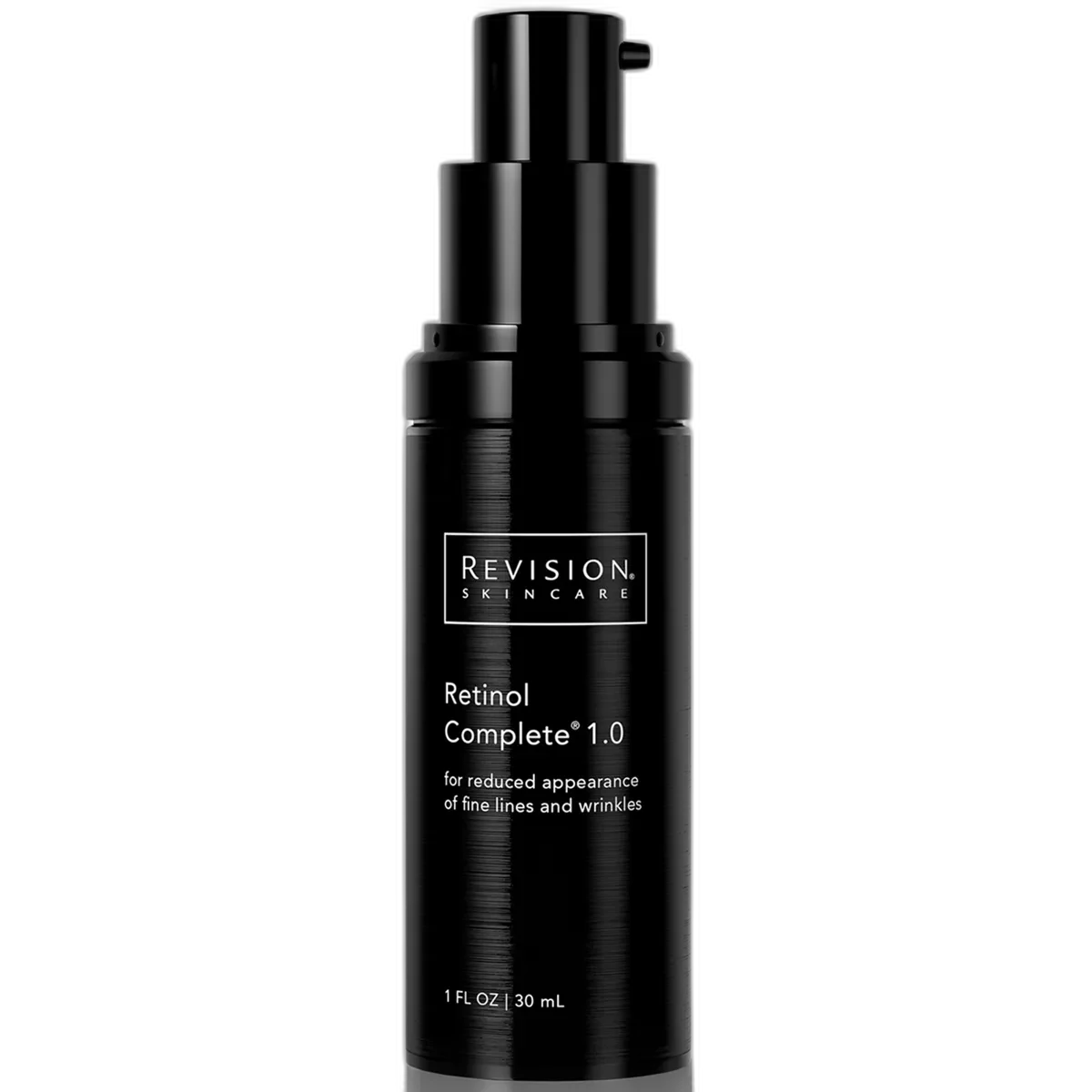
Retinol Complete 1.0
Retinol Step-Up Protocol
 Verified reviewer
Pros & cons.
- +Double-strength 1% time-released retinol for users who have outgrown the 0.5 concentration
- +Same proven bakuchiol synergy that makes the higher dose more tolerable than standard 1% retinol
- +Five-antioxidant system provides essential protection for cells under aggressive retinol-driven turnover
- +More pronounced results for wrinkle depth, firmness, and stubborn hyperpigmentation
- +Clinical protocol approach — designed as a logical step-up from an established starting point
- +Opaque airless pump protects higher-concentration retinol from light degradation
- −Contains fragrance — even less defensible at 1% retinol where barrier is more compromised
- −Premium $138 price for 1 oz — $20 more than the 0.5 for the same base formula
- −Not suitable for retinol beginners or sensitive skin types
- −Causes dryness and peeling even with time-release technology during adjustment
- −Not cruelty-free or vegan certified
The full review.
Dermatology offices follow a retinoid therapy protocol: start low, build tolerance, then step up. The Revision Skincare Retinol Complete 1.0 is that step-up. Evaluating this product requires that context; judging it in isolation misses the point.
The base formula is identical to the Retinol Complete 0.5. It uses the same time-released retinol encapsulation, the same bakuchiol co-formulation, and the same five-antioxidant system: tetrahexyldecyl ascorbate, ubiquinone, tocopherol, tocopheryl acetate, and sesame extract. It has the same hydrating agents—squalane, glycerin, and biosaccharide gum-1—and the same pump bottle. It even has the same fragrance. The only change is the retinol percentage: from 0.5% to 1.0%.
This doubling matters more than the number suggests. Retinol’s dose-response relationship is non-linear. The jump from 0.5% to 1.0% increases biological activity, cell turnover rate, and irritation potential. This is why the step-up model exists. A user who used the 0.5 for three to six months has rebuilt enough stratum corneum tolerance and cellular machinery to handle the increase. A user jumping from nothing or a 0.25% serum to 1.0% risks irritation.
Time-release encapsulation works harder at this concentration. A standard 1% retinol formula dumps a large dose onto the skin in the first hour, creating a peak concentration that overloads retinoid receptors and triggers inflammatory cytokines. The encapsulation flattens this peak into a sustained plateau, delivering the total dose over several hours. This yields comparable efficacy with a milder inflammatory response.
Bakuchiol is more important at 1%. The British Journal of Dermatology study that validated bakuchiol’s retinol-like effects also showed its anti-inflammatory properties via different receptor pathways. At 0.5%, bakuchiol provides a buffer. At 1%, it is load-bearing, sitting between tolerable adjustment and irritation-driven dropout.
The five-antioxidant system also scales in relevance. At 1% retinol, cell turnover generates enough oxidative stress to matter. The tetrahexyldecyl ascorbate, CoQ10, and dual vitamin E forms are not extras here; they are protective infrastructure for cells undergoing accelerated renewal.
Results at 1% are more pronounced than at 0.5%. Users who step up report faster, more visible improvements in wrinkle depth, skin firmness, and hyperpigmentation fading. Stubborn sun damage and age spots that plateaued on the 0.5 often respond to the higher concentration. Manufacturer clinical data tracks with these reports, showing photodamage marker improvements that exceed the 0.5.
Limitations from the 0.5 carry over and amplify. Fragrance remains in the formula—a harder choice to defend at 1% retinol when the skin barrier is under more stress and more vulnerable to sensitizers. The price is $138 for 1 fl oz, a $20 premium over the 0.5. This reflects the higher cost of pharmaceutical-grade retinol and places the product in the luxury tier. The audience is smaller; this is not for retinol beginners, sensitive skin, or anyone without tolerance from a lower concentration.
Dryness is more pronounced despite the time-release system. Users stepping up from the 0.5 should expect a one to three week recalibration period. Pairing this with a ceramide-heavy night cream is a requirement. The squalane and biosaccharide gum help, but 1% retinol needs more moisture support than any serum provides alone.
The Revision Skincare Retinol Complete 1.0 knows its purpose and its user. It is not accessible, and it does not market to retinol newcomers. It is the second step in a two-step protocol from a clinical brand that designs treatment plans rather than product launches. For users who graduated from the 0.5 and want more, this delivers. For everyone else, the 0.5 is the right choice.
Formula
Ingredient analysis.
Full INCI list
Water (Aqua), Glyceryl Stearate, Allyl Methacrylates Crosspolymer, Isosorbide Dicaprylate, Glycerin, Cyclopentasiloxane, Ethylhexyl Palmitate, Caprylic/Capric Triglyceride, PEG-100 Stearate, Bakuchiol, Biosaccharide Gum-1, Retinol, Ubiquinone, Tetrahexyldecyl Ascorbate, Squalane, Ophiopogon Japonicus Root Extract, Glyceryl Caprylate, Tocopherol, Phenoxyethanol, Disodium EDTA, Cetyl Alcohol, Sesamum Indicum (Sesame) Seed Extract, Acrylates/C10-30 Alkyl Acrylate Crosspolymer, Polysorbate 20, Butylene Glycol, Chlorphenesin, Triethanolamine, Xanthan Gum, Tocopheryl Acetate, Benzoic Acid, Sorbic Acid, Dimethyl Isosorbide, Fragrance (Parfum)
Skin match.
The science.
The Science
At 1% concentration, retinol's molecular mechanisms work at higher throughput than at 0.5%. Kang et al. published research in the Archives of Dermatology showing that increasing retinol concentrations causes dose-dependent increases in retinoid receptor activation, matrix metalloproteinase inhibition, and procollagen synthesis. Moving from 0.5% to 1.0% pushes the dose-response curve into a steeper region where small concentration increases yield larger biological effects.
The time-release encapsulation technology is more pharmacologically significant at this higher dose. Research on microencapsulated retinol in the Journal of Cosmetic Dermatology shows that sustained-release formulations maintain retinoid receptor occupancy over extended periods and avoid the peak-concentration inflammatory cascade. At 1%, sustained release versus bolus delivery determines if a user experiences tolerable retinization or barrier-compromising inflammation.
Research in the International Journal of Cosmetic Science supports Bakuchiol as an anti-inflammatory co-agent; it suppresses NF-κB activation and reduces IL-6 and TNF-α production—cytokines linked to retinol-induced dermatitis. The Dhaliwal et al. 2019 study in the British Journal of Dermatology showed Bakuchiol achieves retinol-like clinical endpoints through distinct molecular pathways, suggesting synergy rather than redundancy when combined.
The five-antioxidant system addresses oxidative stress from retinol-driven cell turnover. Ubiquinone supports the mitochondrial electron transport chain, which is relevant at 1% retinol where metabolic demands on dividing keratinocytes are higher than at lower retinol concentrations.
References
- Dose-dependent retinol effects on matrix metalloproteinase inhibition and procollagen synthesis — Archives of Dermatology (2001)
- Prospective, randomized, double-blind assessment of topical bakuchiol and retinol for facial photoageing — British Journal of Dermatology (2019)
Dermatologist Perspective
Dermatologists who carry the Retinol Complete line typically use the 1.0 as a graduation product for patients who tolerated the 0.5 for at least three to six months. Board-certified dermatologists note this step-up model mirrors clinical retinoid protocols for prescription tretinoin, where concentration increases follow demonstrated tolerance instead of patient impatience. The time-release and Bakuchiol co-formulation act as tolerance-engineering tools that make 1% retinol more accessible than raw 1% formulas. The fragrance inclusion is the most common criticism from dermatologists who otherwise prescribe this product.
Where it fits in your routine.
If you use the 0.5 nightly, start the 1.0 at 2 nights per week. Apply 1-2 pumps to clean, dry skin in the evening, avoiding the eye area and lips. Follow immediately with a thick ceramide or barrier-repair moisturizer — this is required at 1% concentration. Increase frequency over 3-4 weeks as tolerated, aiming for nightly use. Always apply broad-spectrum SPF 30+ the next morning. If significant irritation occurs, reduce frequency instead of abandoning the product.
Retinol Complete 1.0 costs $138 for 1 fl oz, which is $20 more than the 0.5 version. Both use an identical base formula, but Retinol Complete 1.0 has double the retinol. This price gap comes from the higher cost of pharmaceutical-grade retinol at this concentration. Monthly costs range from $46-69 based on usage frequency. Value depends on whether you have outgrown the 0.5. If the lower concentration still improves your skin, you do not need to pay more. For those who have plateaued on the 0.5, the stronger formulation is a logical investment, not an extravagant one.
This is for experienced retinol users who have used a 0.5% retinol product for 3-6 months and want to advance their anti-aging protocol. It works best for moderate-to-advanced signs of aging, stubborn hyperpigmentation, or photodamage that plateaued on lower-strength retinol.
Retinol beginners should start with the 0.5. Sensitive skin types, people with active rosacea or eczema flares, and those without retinol tolerance should use this. Pregnant or breastfeeding individuals must avoid all retinol products. If the 0.5 still shows improvements, do not increase the strength yet.
Product details.
This lightweight cream-serum hybrid matches the 0.5 — it spreads easily from the pump and absorbs quickly to a non-greasy finish. The higher retinol concentration does not change the texture.
Light fragrance present — same subtle scent as the 0.5 formulation.
Opaque airless pump bottle matches the 0.5. It protects the higher concentration of retinol from light and air degradation. Gauging remaining product is just as difficult.
Even experienced retinol users face a brief adjustment period. The time-release and bakuchiol help, but 1% retinol is a high concentration. Mild dryness and occasional flaking are normal during the first 1-2 weeks. The squalane and biosaccharide gum in the base manage this, but pairing with a thick night cream works best.
2-3 months with 2-3 times weekly application, building to nightly use
12 months
fall winter
The backstory.
The 1.0 exists because the 0.5 did its job too well. Patients who started on the Retinol Complete 0.5, built tolerance, and wanted stronger results needed somewhere to go within the same trusted formulation platform. Rather than creating a different product, Revision doubled the retinol concentration while keeping the supporting formula identical — a clinical protocol approach rather than a marketing line extension.
About Revision Skincare
Legacy Brand (20+ years)Revision Skincare launched in 1989 using pharmaceutical-grade formulation standards. The Retinol Complete line uses time-released encapsulation and bakuchiol co-formulation; clinical data shows visible improvements in fine lines, wrinkles, and photodamage.
Common myths.
Higher retinol percentages do not always yield better anti-aging results.
Use this only if your skin tolerates consistent use. A 1% retinol used sporadically because of irritation may yield fewer results than a 0.5% retinol used every night. This product targets users who already tolerate 0.5%. Jumping to 1% without building tolerance is counterproductive.
Time-released retinol is less potent than standard retinol at the same percentage.
Both deliver 1% retinol. The time-release changes delivery kinetics from a single peak to a sustained plateau. Clinical data shows comparable efficacy with improved tolerability, leading to better compliance and better real-world results.
FAQ.
What is the difference between Retinol Complete 0.5 and 1.0?
The base formula is identical — it uses the same time-release technology, bakuchiol, five antioxidants, and hydrating agents. Only the retinol concentration differs: 0.5% vs 1.0%. The 1.0 version is a step-up for users who have built tolerance with the 0.5 and want more aggressive anti-aging results.
Can I start with Retinol Complete 1.0 without using the 0.5 first?
Do not use this unless you have established tolerance to similar retinol concentrations. The time-release technology aids tolerance, but 1% retinol is potent. Start with 0.5 and graduate to 1.0 to follow the clinical protocol Revision designed.
How often should I use Revision Retinol Complete 1.0?
Start with 2 nights per week, even if you used the 0.5 nightly. The doubled concentration requires recalibration. Increase frequency over 3-4 weeks as tolerated. Aim for consistent use without significant irritation — nightly if possible, but only when your skin is ready.
Is Revision Retinol Complete 1.0 safe during pregnancy?
No. Stop using all retinol products during pregnancy and breastfeeding. This rule applies to any time-release delivery system. Ask your dermatologist for pregnancy-safe alternatives.
Why is the 1.0 more expensive than the 0.5?
The $20 price difference ($138 vs $118) comes from the higher concentration of retinol, a costly pharmaceutical-grade raw material. The base formula, packaging, and other actives are identical.
What the community says.
"Delivers stronger anti-aging results than the 0.5 without unbearable irritation"
"Time-released delivery makes 1% retinol more tolerable than expected"
"Noticeable smoothing of deeper wrinkles and improvement in skin firmness"
"Effective at fading stubborn hyperpigmentation and age spots"
"Hydrating base prevents the extreme dryness typical of high-strength retinol"
"Higher price than the 0.5 version ($138 vs $118) for the same base formula"
"Still causes dryness and peeling during adjustment despite time-release technology"
"Contains fragrance — same criticism as the 0.5 version"
"Not suitable for retinol beginners — requires established tolerance"
People also looked at.