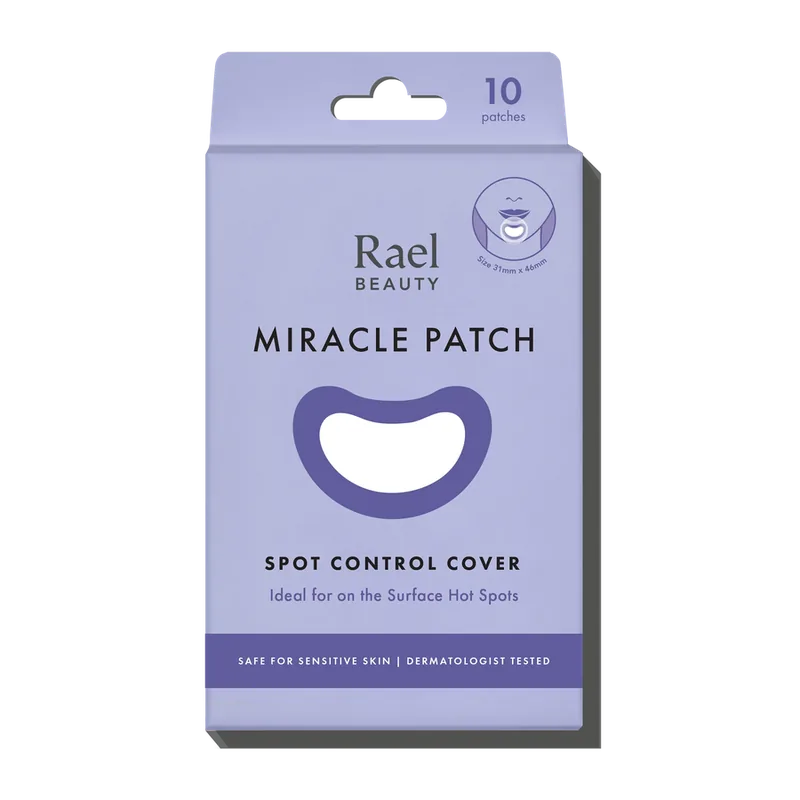
Miracle Patch Spot Control Cover
Oversized Cluster Patch
 Verified reviewer
Pros & cons.
- +Oversized format covers cluster breakouts and full zones (chin, nose, T-zone) that small dots can't
- +Can be cut to size with scissors — one patch covers what would otherwise need 5+ small ones
- +Same hydrocolloid matrix as the rest of the family — proven absorbent + occlusive function
- +Works as a contoured nose-strip-equivalent for blackhead-prone T-zones
- +Fragrance free, vegan, dermatologist tested
- +Cost-per-area is competitive with using multiple small patches
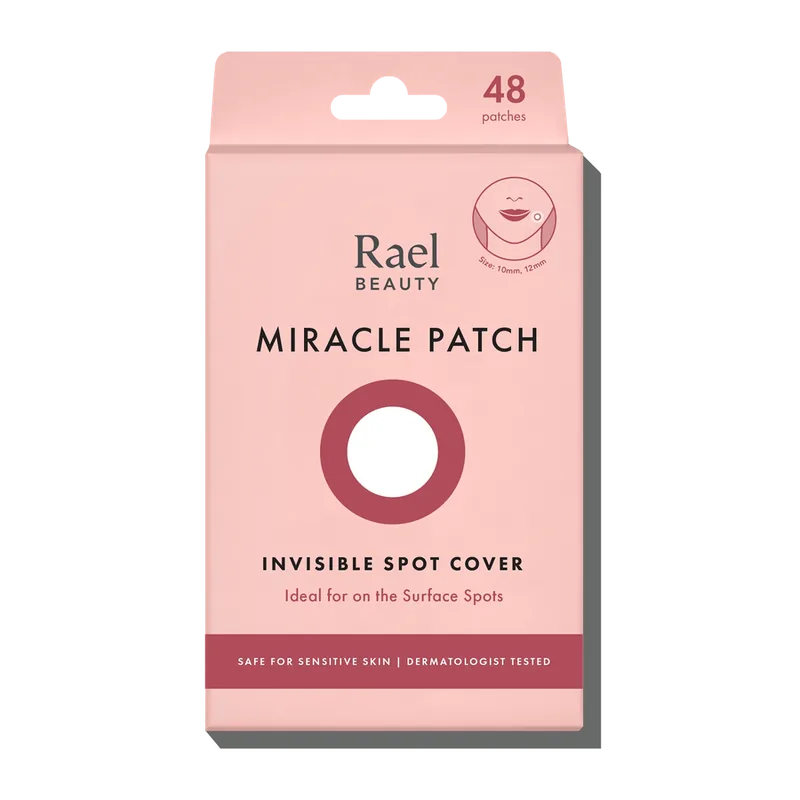
- −Only 10 patches per box at $13.99 = $1.40 each — much more per-patch than the 48-count Invisible Spot Cover
- −Large surface area means more visible than the regular Invisible variant — primarily for PM use
- −Custom-cutting takes a few seconds and requires clean scissors
- −Adhesion strength sometimes lifts at the edges over the curved chin contour
- −Doesn't have the matte invisible finish of the Invisible Spot Cover — slightly more bandage-like in appearance
The full review.
The Rael Miracle Patch Spot Control Cover is the oversized variant of the Miracle Patch line — designed for cluster acne and zone breakouts rather than single spots. Same three-component hydrocolloid matrix as the rest of the family; the value-add is purely geometric. One large patch covers what would otherwise require 4–5 individual Invisible Spot Cover dots, which makes it cheaper per square cm of coverage and visually cleaner than tiling small patches across a chin or jawline.
The cut-to-size design is the format’s real innovation. Many cluster breakouts have irregular geometry — a row along the jawline, a fan-shape on the chin, a strip down the nose. Rectangle-cut patches let users apply hydrocolloid only to the area that needs it, rather than wasting adhesive on a pre-cut oval that doesn’t match the breakout shape. Clean scissors work fine; the hydrocolloid matrix doesn’t lose adhesion or absorption from being cut.
The mechanism is identical to the rest of the line. Cellulose gum is the hydrophilic absorbent that swells as it pulls exudate from surfaced lesions. Polyisoprene gives the patch flexibility to conform to the chin or jawline contour. Polyisobutene is the tacky, water-resistant backing that maintains the seal. There’s no active ingredient and no pharmacological difference between this patch and the Invisible Spot Cover — it’s the same hydrocolloid material in a different geometry.
Use cases break down predictably. Hormonal chin acne and period flares concentrate on the lower face and benefit from the oversized format. Mask-line breakouts along the jaw — still common for healthcare workers and anyone in industries that mandate masks — are exactly the kind of cluster the Spot Control Cover is designed for. Body acne (back, chest) is the other strong use case; small patches don’t cover meaningful body surface area. T-zone blackhead zones can be treated nose-strip-style, but with the gentler healing-focused hydrocolloid rather than the stripping adhesion of traditional nose strips.
At $13.99 for 10 patches ($1.40 each), the per-patch cost is roughly 5x the Invisible Spot Cover (29¢). Per-area, the math is more favorable — one Spot Control patch covers about the area of 5–8 small patches at roughly half the combined cost. The value calculation depends on whether you actually need the large area; for occasional single-pimple users, the Invisible Spot Cover remains the right pick.
Not ideal for
Single-spot acne — the Invisible Spot Cover is far more cost-effective. Daytime makeup-friendly use — the oversized format is more visible than the matte Invisible variant. Cystic or unbroken comedones — like all hydrocolloid patches, no benefit without an exudate path.
Ingredient analysis.
Full INCI list
Cellulose Gum, Polyisoprene, Polyisobutene.
Skin match.
The science.
Why oversized hydrocolloid for cluster acne
Hormonal chin acne, mask-line jaw acne, and T-zone blackhead zones all share a feature: multiple lesions in close geographic proximity. Treating these with individual small hydrocolloid patches works but creates two problems — cost per square cm of coverage, and the visual of multiple visible spots across a small area. An oversized patch is functionally equivalent to a tile of smaller patches but cleaner to apply and remove.
The mechanism is identical to standard hydrocolloid. Cellulose gum absorbs exudate from surfaced lesions; polyisobutene provides the occlusive seal that maintains the moist healing environment and prevents bacterial recontamination; polyisoprene gives the patch the flexibility it needs to conform to the chin or jawline contour. There's no pharmacological difference between this format and the Invisible Spot Cover — the value-add is purely geometric.
The cut-to-size design is genuinely useful. Many cluster breakouts have irregular geometry — a row along the jawline, a fan-shape on the chin, a strip along the side of the nose. A pre-cut large oval often wastes adhesive on areas that don't need it. Custom cutting with clean scissors lets the user place hydrocolloid only where it's needed.
References
- Hydrocolloid dressings in dermatology — International Wound Journal (2012)
Where it fits in your routine.
Cleanse and fully dry the area. Peel a patch from the backing and apply directly over the cluster or zone. Press firmly for 5–10 seconds to seal. If needed, cut a custom shape before applying. Leave on 4–8 hours or until the patch goes opaque. Peel slowly from one edge.
$13.99 for 10 patches = $1.40 per patch. Per-area, cheaper than 4–5 individual patches doing the same coverage; per-patch, much more expensive than the Invisible Spot Cover ($0.29). Use these specifically for cluster coverage; use Invisible for single spots.
Cluster-acne sufferers — hormonal chin breakouts, mask-line jaw acne, T-zone blackhead zones. People who want to apply hydrocolloid to body acne (back, chest) where larger surface area matters.
Single-spot acne — use the Invisible Spot Cover instead. Anyone needing daytime invisible patches — these are more visible than the matte Invisible variant.
Product details.
Larger oval hydrocolloid sheet, ~1.5 inches across
Fragrance free
10 individually wrapped oversized patches per box
All Year
The backstory.
Rael's answer to cluster acne — an oversized hydrocolloid patch designed to handle multi-spot zones with a single piece rather than scattering small patches across a problem area.
About Rael
K-beauty / acne-careRael was founded in 2017 by three Korean-American women — Yanghee Paik, Aness An, Binna Won — initially around organic-cotton period care. The Miracle Patch line launched in 2019; this Spot Control oversized variant followed in 2021. South Korea manufacturing throughout.
Common myths.
A larger hydrocolloid patch is more powerful than a smaller one.
Larger patches cover more area, not deeper. The absorption mechanism is the same; you're getting absorption across more skin. For a single deep cyst, a large patch is no more effective than a small one — both work on the drained exudate at the surface only.
You should leave them on as long as possible to maximize absorption.
Like all hydrocolloid patches, these saturate within 4–8 hours and stop working after that. A larger patch saturates at the same rate per square mm; the larger area just means more total exudate absorbed at saturation.
FAQ.
When should I use these vs the regular Miracle Patch?
Spot Control is for clusters and zones — chin acne, T-zone breakouts, jawline along the mask line. Use the regular Invisible Spot Cover for individual spots. If you have 4+ pimples in close proximity, one Spot Control Cover is more economical than 4+ individual patches.
Can I really cut them with scissors?
Yes — Rael designs the patches to be customizable. Use clean scissors on a flat surface. Cut shapes that match your problem zone — strips for T-zone, half-moons for chin, etc. The hydrocolloid matrix doesn't lose adhesion or absorption capacity from being cut.
How is this different from the Mighty Patch Surface?
Very similar concept — both are oversized hydrocolloid patches designed for acne clusters. Mighty Patch Surface comes in larger oval shapes; Rael's are more rectangular and cut-customizable. Both use the same hydrocolloid chemistry. Pick based on which shape fits your problem zone better.
Will these leave marks on my skin?
They sometimes leave a slight outline that fades within an hour. The adhesive is medical-grade and doesn't typically cause skin damage, but the brief discoloration from the seal is normal and harmless.
What the community says.
"One patch covers my entire chin breakout zone"
"Saves money vs using multiple small patches"
"Customizable size works perfectly for nose strips"
"Same absorption as the small ones, just bigger"
"Great for body acne"
"Bigger than I expected — more visible than the Invisible patches"
"Adhesion lifts on contoured areas"
"Only 10 per box; runs out fast for daily use"
"Pricier per area than the 48-count Invisible variant"
Featured in.
People also looked at.