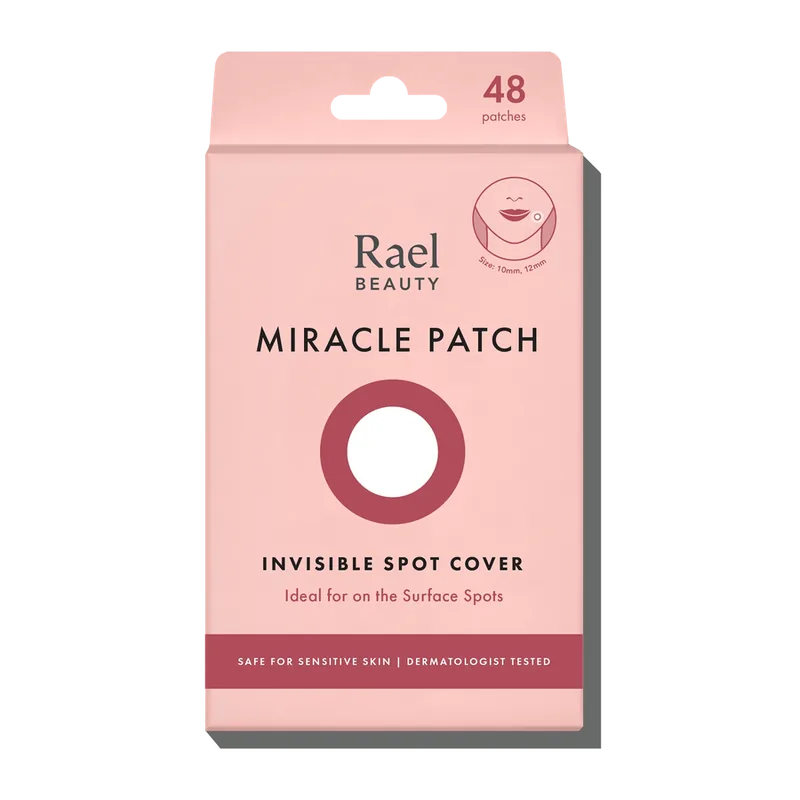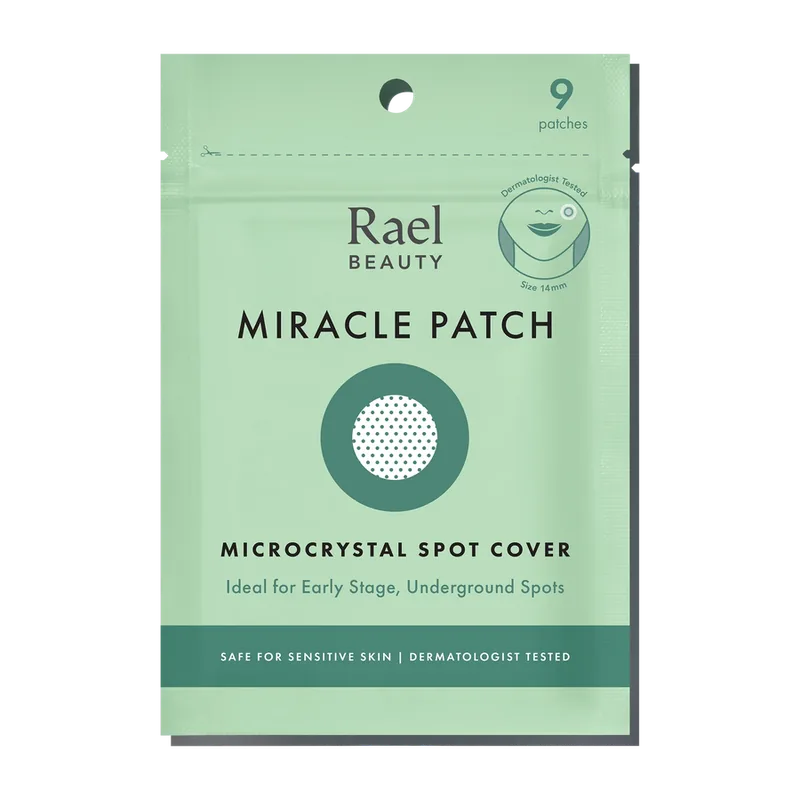
Miracle Patch Microcrystal Spot Cover
Microneedle Hydrocolloid Patch
 Verified reviewer
Pros & cons.
- +Dissolving microneedles deliver active ingredients through intact skin — the only patch format that works on under-the-skin bumps
- +Succinic acid + niacinamide + tea tree address the antibacterial, anti-inflammatory, and sebum-regulation arms of acne biology
- +Hydrocolloid backing takes over once the spot surfaces, so the patch handles both stages of a lesion
- +Painless application — microneedles dissolve within 1–2 hours, you don't feel them once applied
- +Fragrance free, alcohol free, vegan formulation
- +The only patch in this category that has any meaningful active delivery for closed-comedone-stage acne
- −9 patches at $12.99 = $1.44 each — substantially more expensive than the 29¢ plain hydrocolloid patches
- −Microneedle depth is shallow (intentionally) — won't reach genuinely deep cystic acne
- −Initial application sensation is described as "slight prick" by some users; not pain but not nothing
- −Less universal use case than the plain Miracle Patch — buy these specifically for the under-the-skin stage
- −Single-use plastic individual wrappers add waste vs the sleeve format of the plain patches
The full review.
The Rael Miracle Patch Microcrystal Spot Cover is the microneedle answer to the hydrocolloid patch’s main limitation. Plain hydrocolloid only works on already-surfaced whiteheads — there has to be an open path to the surface for the absorbent gel to do anything. Under-the-skin bumps, the kind you can feel before you can see, get no benefit from a passive patch. The Microcrystal variant addresses that gap directly: dissolving microneedles physically deliver succinic acid, niacinamide, and tea tree through the stratum corneum, reaching the inflamed follicle below.
The microneedle delivery mechanism is the formulation’s whole point. The stratum corneum — skin’s outermost barrier layer — blocks the passive penetration of most actives. Hydrophilic and high-molecular-weight molecules like niacinamide, hyaluronic acid, and most peptides get almost nowhere from a leave-on topical. Dissolving microneedle patches solve this by puncturing the stratum corneum with short (~500 µm) needles made of dissolvable hyaluronic acid. The needles create transient channels that bypass the barrier entirely, deposit the active payload into the viable epidermis, and dissolve within 1–2 hours of application. The puncture sites close immediately; no lasting wound.
For acne treatment, this matters because the inflamed follicle in a pre-surfaced lesion sits beneath the stratum corneum and the surface skin layers. A topical niacinamide serum reaches that follicle at a tiny fraction of the formulation concentration. A microneedle patch delivers the same niacinamide directly to the inflammation site. The same is true for succinic acid (antibacterial against C. acnes) and tea tree extract (mild antibacterial via terpinen-4-ol). The combined active delivery is what lets the Microcrystal patch shorten the lifecycle of a deep tender bump from days to hours.
The other interesting design choice is the dual-stage operation. The microneedles dissolve and deliver actives during the first 1–2 hours of wear. After that, the hydrocolloid backing takes over — exactly as in the plain Miracle Patch. If the bump surfaces during the wear window (which often happens for actives-pushed lesions), the hydrocolloid absorbs the exudate the same way it would on a non-microneedle patch. The product handles both pre-surface and post-surface lesion stages within a single patch.
At $12.99 for 9 patches (~$1.44 each), the per-patch cost is significantly higher than plain hydrocolloid (29¢ at sleeve volume). The price reflects the microneedle technology — manufacturing dissolving polymer microneedles at scale is meaningfully more complex than producing plain hydrocolloid pads. Hero Cosmetics’ Mighty Patch Micropoint is a direct competitor at roughly $2 per patch, with a slightly different active stack (salicylic acid + tea tree + totarol vs Rael’s succinic + niacinamide + tea tree). Both reach the same use case via different active routes.
Not ideal for
Users whose acne is primarily surfaced whiteheads — plain hydrocolloid is far more cost-effective. Active rosacea or dermatographism patients (the micro-puncture can aggravate vascular reactions). Daily-acne sufferers who would burn through a 9-patch box weekly — at this price point, microcrystal patches are best deployed surgically on the bumps that need them, with plain hydrocolloid handling everything else.
Ingredient analysis.
Full INCI list
Hydrocolloid (Cellulose Gum, Polyisoprene, Polyisobutene). Microneedle payload: Hyaluronic Acid, Sodium Hyaluronate, Succinic Acid, Niacinamide, Melaleuca Alternifolia (Tea Tree) Leaf Extract, Centella Asiatica Extract, Panthenol, Allantoin, Tocopherol.
Skin match.
The science.
How microneedle patches deliver actives through intact skin
The stratum corneum — the outermost ~15 layers of skin — is the main barrier to topical active penetration. Lipophilic small molecules (salicylic acid, retinol) can diffuse through it slowly; larger or more hydrophilic molecules (niacinamide, peptides, hyaluronic acid) penetrate barely at all from a leave-on topical. This is why a niacinamide serum delivers only a small fraction of its concentration to the viable epidermis.
Dissolving microneedle patches solve this by physically piercing the stratum corneum with short (typically 200–500 µm) needles made of dissolvable polymers — typically hyaluronic acid. The needles create transient channels that bypass the stratum corneum entirely, deliver the encapsulated actives directly to the viable epidermis and upper dermis, and then dissolve within 1–2 hours. The puncture sites close immediately and there's no lasting wound.
For acne treatment specifically, the value is delivery of actives to the inflamed follicle below the visible bump. Niacinamide, succinic acid, and tea tree extract — the three actives in Rael's microcrystals — are all molecules that penetrate intact skin poorly. Delivered via microneedles, they reach the site of inflammation at meaningful concentration. Hydrocolloid backing then handles the second stage if the bump surfaces during the wear window.
References
- Dissolving microneedle patches in dermatology — Journal of Controlled Release (2019)
- Microneedles for acne treatment — Drug Delivery and Translational Research (2019)
Where it fits in your routine.
Cleanse and fully dry the area — the patch needs a dry, oil-free surface to seal. Peel a patch from its individual wrapper. Press firmly onto the under-the-skin bump for 5–10 seconds to engage the microneedles. Leave on for 4–8 hours (overnight is fine). Peel slowly from the edge. Discard. Follow with your normal AM routine and sunscreen.
$12.99 for 9 patches = $1.44 per patch. Substantially more expensive than plain hydrocolloid (29¢ each at sleeve volume) but cheaper per patch than Hero Cosmetics' Mighty Patch Micropoint ($16 for 8 = $2 each). Use these surgically on the bumps that need the active delivery; use plain patches on surfaced spots.
Anyone with frequent under-the-skin tender bumps (the kind that hurt before they become visible). Acne sufferers whose breakouts skip the surfaced-whitehead stage and go straight to inflamed papules.
Users whose acne is primarily surfaced whiteheads — plain hydrocolloid is more cost-effective. Anyone with active rosacea (the micro-punctures can aggravate it).
Product details.
Microneedle hydrocolloid patch
Fragrance free
9 individually wrapped patches per box
All Year
The backstory.
The microneedle innovation that took Rael's Miracle Patch line beyond the plain hydrocolloid category. Launched in 2022, the Microcrystal Spot Cover addresses the most common complaint about hydrocolloid patches — that they only work on already-surfaced spots — by adding dissolving microneedles that deliver actives through intact skin.
About Rael
K-beauty / acne-careRael was founded in 2017 by three Korean-American women — Yanghee Paik, Aness An, Binna Won — initially around organic-cotton period care. The Miracle Patch line launched in 2019; the Microcrystal extension was the first technical evolution of the format. Subsequent Microcrystal variants (Dark Spot, PM Serum patches) followed in 2023–24.
Common myths.
Microneedle patches work for deep cystic acne.
The needles are 0.5 mm or less by design — for sensation tolerability and to avoid skin damage. Cystic lesions sit much deeper in the dermis. Microneedle patches help with shallow under-the-skin bumps but won't reach true cystic inflammation. Don't expect prescription-level results from a 0.5 mm needle.
Microneedles can introduce bacteria into the skin and worsen acne.
The needles are sterilely packaged and dissolve rapidly in skin moisture. The transient micro-puncture closes immediately. Studies on dissolving microneedle products show no meaningful increase in infection risk vs leave-on topicals applied to the same skin.
FAQ.
Do the microneedles hurt?
Most users describe it as a faint prick on application that resolves within minutes. The needles are extremely short (less than 0.5 mm) and made of hyaluronic acid that dissolves quickly. It's not a pain you'd notice during wear — only on the first 1–2 seconds of pressing the patch onto skin.
When should I use this vs the plain Miracle Patch?
Use Microcrystal on under-the-skin bumps you can feel but not see (deep tender pimples that haven't surfaced). Use plain Miracle Patch (Invisible Spot Cover) once those have surfaced as whiteheads. The Microcrystal patch covers the pre-surface stage that plain hydrocolloid can't address.
How does it compare to Hero Cosmetics' Mighty Patch Micropoint?
Very similar concept — both use dissolving microneedles to deliver actives through intact skin. Mighty Patch Micropoint uses salicylic acid + tea tree + totarol as its active payload; Rael uses succinic acid + niacinamide + tea tree. Mighty's salicylic acid is more familiar as an acne active; Rael's niacinamide handles the anti-inflammatory work more directly. Both are reasonable; pick based on which active stack matches your skin's tolerance.
Will it work on cystic acne?
Partially — the microneedles deliver actives below the surface, which is closer to where cystic inflammation lives than passive topicals. But truly deep cystic lesions (centimeters below the surface) are beyond what 0.5 mm needles can reach. For chronic cystic acne, dermatology consultation is the right path; for occasional deep tender bumps, this is the OTC product most likely to help.
How long do I leave it on?
4–8 hours is the recommendation. The microneedles dissolve in the first 1–2 hours, after which you're essentially wearing a plain hydrocolloid patch. Wearing it longer doesn't hurt but doesn't add benefit beyond the standard hydrocolloid absorption window.
What the community says.
"Actually flattens bumps I'd otherwise have to wait days for"
"The microneedle feeling is barely noticeable"
"Stops a deep pimple from ever becoming visible"
"Works on the early-stage hormonal flares that nothing else touches"
"Hydrocolloid backing means it keeps working once the spot surfaces"
"Pricey per patch"
"9 per box runs out fast for daily acne sufferers"
"Individual wrappers create more waste"
"Slight tingle on application (some users find this unsettling)"
Featured in.
People also looked at.