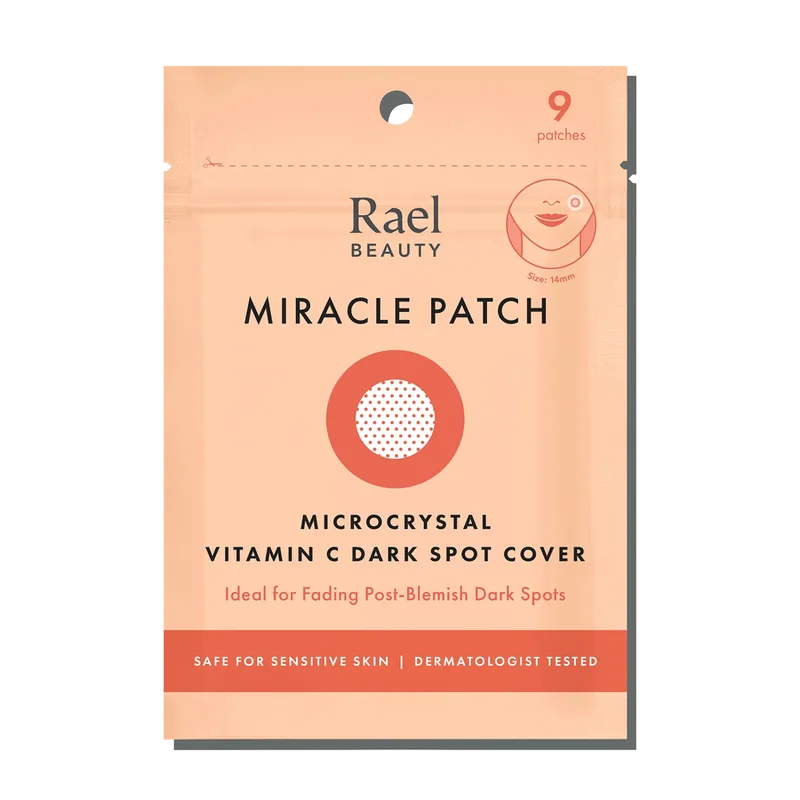
Miracle Patch Microcrystal Vitamin C Dark Spot Cover
Microneedle Brightening Patch
 Verified reviewer
Pros & cons.
- +10% vitamin C delivered via microneedles — much higher effective concentration than a leave-on vitamin C serum can achieve through intact stratum corneum
- +240 microcrystals per patch creates dense delivery channels, more than typical microneedle products
- +Targets post-inflammatory hyperpigmentation specifically — the most common long-tail acne damage
- +Hydrocolloid base means it doubles as a healing patch for any spot that surfaces during the wear window
- +Arbutin and niacinamide add complementary depigmentation pathways alongside the vitamin C
- +Painless application; microcrystals dissolve in 1–2 hours
- −9 patches at $13.99 = $1.55 each — premium pricing
- −10% vitamin C is high but the form (likely ascorbyl glucoside, less potent than L-ascorbic acid) isn't disclosed
- −Won't replace consistent broad-spectrum SPF for PIH prevention
- −Application is on healing spots, not for general all-over brightening
- −Vitamin C in this format may cause transient mild stinging on sensitive skin
The full review.
The Rael Miracle Patch Microcrystal Vitamin C Dark Spot Cover is the post-acne sequel to Rael’s microneedle line — same delivery technology as the original Microcrystal Spot Cover, but with the active payload optimized for fading the marks pimples leave behind rather than treating the pimples themselves. 240 dissolving microcrystals per patch deliver 10% vitamin C plus niacinamide, arbutin, and tranexamic acid directly through the stratum corneum to the layers where post-inflammatory pigmentation lives.
The case for microneedle vitamin C is straightforward. Topical vitamin C delivery has a persistent challenge: L-ascorbic acid (the most active form) needs pH below 3.5 to cross the stratum corneum, which causes irritation; gentler derivatives penetrate less well. A vitamin C serum at 10% reaching the viable epidermis at single-digit percentages of its applied dose is typical. Microneedle delivery bypasses the stratum corneum entirely — the needles deposit the payload directly into the layers where melanocytes operate. The same 10% concentration delivers a substantially higher effective dose to the cells where post-inflammatory hyperpigmentation forms.
The 240-microcrystal density is unusually high for the category. Most dissolving microneedle products use 100–150 needles per patch; Rael’s density creates more delivery channels and more uniform active distribution across the patch area. The needles are made of hyaluronic acid that dissolves in skin moisture within 1–2 hours, after which the hydrocolloid backing takes over for any continued exudate absorption if the underlying lesion is still draining.
The four-pathway depigmentation approach is the formulation’s smart choice. Vitamin C inhibits tyrosinase (the enzyme that produces melanin) and provides antioxidant protection. Niacinamide blocks melanosome transfer between melanocytes and keratinocytes — a different point in the pigmentation cascade. Arbutin is a slow tyrosinase inhibitor via its hydroquinone-glycoside structure. Tranexamic acid inhibits the plasmin-driven inflammatory cascade that drives melanogenesis after acne lesions resolve. The combination addresses PIH from four mechanistic angles simultaneously, which produces more reliable cumulative fading than any single-active product.
At $13.99 for 9 patches ($1.55 each), the price is on par with other microneedle brightening products and substantially less than dermatology-clinic in-office microneedling. The target use is intermittent treatment of specific stubborn marks — 2–3 times per week on a given spot — rather than all-over application. For users with multiple PIH spots, the math gets harder; a leave-on niacinamide + tranexamic acid serum might be more economical for broad coverage, with these patches reserved for the worst persistent spots.
Not ideal for
Active acne sufferers — wait for lesions to heal before targeting the marks they leave. Melasma patients — needs a different regimen, often oral tranexamic acid. Anyone unwilling to commit to daily SPF — UV exposure undoes the brightening work as fast as the patch can fade the existing pigment.
Ingredient analysis.
Skin match.
The science.
Why microneedles change vitamin C delivery
Topical vitamin C has well-established benefits for skin: antioxidant protection against UV damage, tyrosinase inhibition (which slows new pigment formation), and collagen synthesis stimulation. The persistent challenge is delivery. L-ascorbic acid — the most studied and most active vitamin C form — requires a pH below 3.5 to cross the stratum corneum, which causes irritation. More stable derivatives (ascorbyl glucoside, magnesium ascorbyl phosphate, ascorbyl tetraisopalmitate) are gentler but penetrate less and convert to active vitamin C in skin at variable rates.
Microneedle patches sidestep the penetration problem. The 200–500 µm needles pierce the stratum corneum and deposit their payload directly into the viable epidermis and upper dermis — the layers where melanocytes produce the pigment that causes post-inflammatory hyperpigmentation. The pH constraint is removed because the active doesn't have to cross the acid barrier of the stratum corneum. Vitamin C derivatives that would underperform in a leave-on serum can deliver meaningful effect through this format.
Rael's specific formulation pairs the vitamin C with three additional depigmentation pathways. Niacinamide blocks melanosome transfer between melanocytes and keratinocytes — a different mechanism from tyrosinase inhibition. Arbutin slowly inhibits tyrosinase via a hydroquinone-derived structure. Tranexamic acid inhibits the plasmin-driven inflammatory cascade that drives melanogenesis after acne lesions. The four-pathway approach addresses the multifactorial nature of PIH more comprehensively than vitamin C alone.
References
- Topical vitamin C in dermatology — Indian Dermatology Online Journal (2013)
- Microneedle drug delivery — Journal of Controlled Release (2019)
- Tranexamic acid for skin pigmentation — Journal of Cutaneous and Aesthetic Surgery (2017)
Where it fits in your routine.
Cleanse and fully dry the affected area. Apply the patch directly over the dark spot and press firmly for 5–10 seconds to engage the microneedles. Leave on 4–8 hours (overnight). Peel slowly in the morning, follow with SPF. Use 2–3x per week on the same spot; not for daily application.
$13.99 for 9 patches = $1.55 per patch. Comparable to other microneedle brightening products (typical $1.50–$2.00 each). Less expensive than dermatology-clinic in-office microneedling, more expensive than a leave-on vitamin C serum.
Users with post-inflammatory hyperpigmentation from healed acne — the brown or red marks left after a pimple resolves. Anyone with deeper skin tones (more PIH-prone). People who've tried vitamin C serums and didn't see results.
Active acne sufferers — wait until lesions heal. Anyone with melasma — needs a different regimen. Sensitive skin that reacts to vitamin C in any form.
Product details.
Microneedle hydrocolloid patch with 240 microcrystals per piece
Fragrance free
9 individually wrapped patches per box
All Year (but rigorous SPF mandatory)
The backstory.
The post-acne sequel to Rael's Microcrystal Spot Cover — same microneedle delivery format, different active payload aimed at fading the marks pimples leave behind rather than treating the pimples themselves. Launched 2023, sits in the Miracle Patch family alongside the original Microcrystal, the plain Invisible Spot Cover, and the Advanced Strength Retinol variant.
About Rael
K-beauty / acne-careRael was founded in 2017 by three Korean-American women — Yanghee Paik, Aness An, Binna Won. The Miracle Patch line debuted in 2019; the Microcrystal microneedle line followed in 2022 with the original Spot Cover, the Dark Spot Cover in 2023, and the PM Serum patches in 2024. South Korea manufacturing throughout; vegan and cruelty-free across the line.
Common myths.
Higher vitamin C concentration always means better brightening.
Vitamin C effectiveness depends on form, pH, and delivery route — not just concentration. A 20% L-ascorbic acid serum at pH 3 with no delivery enhancement reaches less viable epidermis than 10% via microneedles. Form and delivery matter as much as concentration.
Vitamin C patches replace daily sunscreen.
Brightening products and SPF do different jobs. Vitamin C reduces existing pigment; SPF prevents new pigment. Skipping SPF while using brightening patches is the most reliable way to make zero progress on dark spots — the new pigment forms as fast as the patch removes the old.
FAQ.
How is this different from a vitamin C serum?
A topical vitamin C serum has to penetrate the stratum corneum to reach the viable epidermis where pigment-producing melanocytes live. Most of the applied dose never gets there. Microneedles bypass the stratum corneum entirely, depositing the vitamin C directly into the viable skin layers. At a given concentration, microneedle delivery achieves substantially higher effective doses than topical application.
When should I apply it?
After the active acne has healed and you're left with the residual mark — a brown or red flat patch where the pimple used to be. Apply 2–3x per week to the affected area. Don't apply over actively inflamed or broken skin; wait until the acne has fully resolved.
Will I see results faster than from a vitamin C serum?
Probably yes, with the caveat that consistency still matters. Even with microneedle delivery, PIH fading takes weeks to months. Expect visible improvement at 4–6 weeks, continued fading through 12+ weeks. Pair with daily SPF — UV exposure undoes the brightening work.
Is the microneedle sensation strong?
Most users describe a mild prick on application that resolves in seconds. The needles are extremely short and made of dissolvable hyaluronic acid; they're imperceptible once dissolved.
Can I use these on melasma?
Melasma is a different pigmentation pathway from post-inflammatory hyperpigmentation — it's hormonally driven and requires sustained treatment, often including tranexamic acid orally. This patch contains topical tranexamic acid in the microneedle payload, which may help slightly, but melasma typically needs a more aggressive regimen than intermittent spot patches.
What the community says.
"Faded my year-old chin marks faster than the serum I'd been using"
"Microneedle application is painless after the first second"
"One patch can target a specific stubborn spot precisely"
"Hydrocolloid backing means it still works if the spot is just healing"
"240 microcrystals per patch is more than competitors"
"Pricey per patch"
"Won't replace daily SPF for prevention"
"9 patches per box runs out fast for multi-spot users"
"Vitamin C form isn't disclosed"
Featured in.
People also looked at.