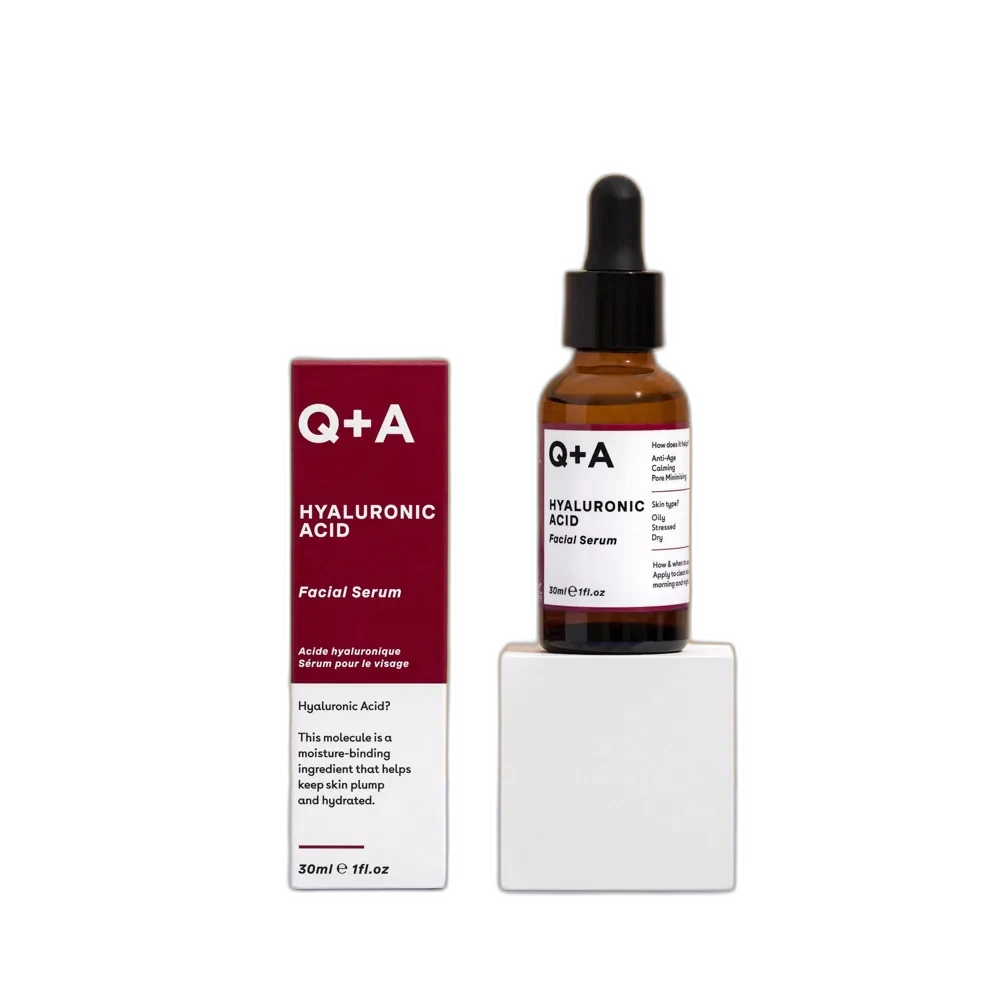
Hyaluronic Acid Facial Serum
Budget Hydration Essential
 Verified reviewer
Pros & cons.
- +Multiple molecular weights of hyaluronic acid in a single affordable formula
- +Glycerin as a meaningful secondary humectant
- +Truly fragrance-free, suitable for fragrance-sensitive users
- +Vegan and cruelty-free with recyclable packaging
- +Fungal-acne safe and appropriate for all skin types
- +Budget-friendly price with wide retail availability
- −Simple formula with no additional actives or delivery enhancers
- −Witch hazel water contribution is more branding than substance
- −Dropper packaging can be finicky and less hygienic than pump alternatives
- −No added panthenol or soothing ingredients found in competitors
- −Brand is younger with a shorter independent validation track record
The full review.
Around 2018, budget skincare changed. For years, cheap products meant compromise; consumers bought drugstore brands because prestige was too expensive. Then The Ordinary arrived. Consumers realized premium skincare costs often cover packaging, branding, and marketing rather than formulation. Q+A Skincare entered this market with a British approach: vegan, recyclable, single-ingredient-forward serums priced for daily use rather than occasional splurges. The Hyaluronic Acid Facial Serum embodies this philosophy.
The formula is simple. It contains water, glycerin, sodium hyaluronate in two molecular weight forms, a small amount of witch hazel water, and a basic preservation system. It lacks vitamins, peptides, penetration enhancers, cica complexes, or botanical flourishes. This absence is intentional. Hyaluronic acid is a humectant with proven hydration benefits; every ingredient here either is HA or supports it. Nothing performs a secondary task.
The two molecular weights matter. Hyaluronic acid exists in various molecule sizes. Topical HA serums use either one molecular weight or multiple weights. Multiple-weight formulas are generally more effective because different sizes settle at different depths of the upper skin layers. Larger molecules stay mostly at the surface as immediate humectants, while smaller hydrolyzed forms penetrate deeper to hold water in lower stratum corneum layers. The difference between single-weight and multi-weight HA serums is real but modest. By including both sodium hyaluronate and hydrolyzed sodium hyaluronate, Q+A Skincare makes this serum more sophisticated than most budget HA products.
Glycerin is a key ingredient. It is second on the list, meaning it is present in a high quantity. Glycerin is one of the most studied and well-tolerated humectants in cosmetic science. It works differently than hyaluronic acid by binding water molecules to its polar surfaces. Combining glycerin and HA produces better hydration than using either alone. A budget serum that prioritizes glycerin over fancy ingredients shows good formulation priorities.
Witch hazel water is the only ingredient that warrants scrutiny. Witch hazel is a traditional astringent, but standard extracts often contain drying alcohol. Q+A Skincare uses the hydrosol form—witch hazel water—which is water-distilled and lacks high alcohol concentrations, making it gentler. Evidence that topical witch hazel water does more than mildly soothe skin is limited, but at this low concentration, it does not cause harm.
The texture is watery-thin, applies in a thin layer, absorbs within 30 seconds, and leaves a slightly plumped, softer finish. It has no scent, tingle, or color. The Ordinary’s HA serum is more viscous and sometimes sticky; this version feels lighter. The Ordinary’s HA serum uses sodium hyaluronate crosspolymer and panthenol to provide more slip and cushion. Both are valid preferences.
The serum has specific limitations. It does not brighten pigmentation, smooth fine lines through anything other than surface hydration, or calm inflammation beyond what any fragrance-free formula provides. For those benefits, use other products; the Hyaluronic Acid Facial Serum acts as the hydration base. It is not a standalone solution. It works well as a hydration layer under vitamin C, retinol, or other actives.
HA serums work best on damp skin followed immediately by a moisturizer. As a humectant, hyaluronic acid pulls water into the skin. In low-humidity environments without surface water, HA can pull moisture from deeper layers, leaving skin drier. Applying to damp skin provides necessary water, and a moisturizer prevents evaporation. This applies to every HA serum. Users who dislike hyaluronic acid often face this issue rather than a product defect.
At around $10, this serum is highly accessible. While some private-label versions are cheaper, this is among the most affordable options with a multiple-molecular-weight formulation, vegan certification, recyclable packaging, and an independent brand identity. It is a reliable choice for a first HA serum, an everyday staple, or a backup product.
### Formula
---Ingredient analysis.
Full INCI list · pH 5.5
Aqua, Glycerin, Sodium Hyaluronate, Hydrolyzed Sodium Hyaluronate, Hamamelis Virginiana (Witch Hazel) Leaf Water, Chondrus Crispus (Carrageenan) Powder, Xanthan Gum, Potassium Sorbate, Sodium Benzoate, Citric Acid, Phenoxyethanol, Ethylhexylglycerin
Skin match.
The science.
The Science
Hyaluronic acid is one of the most well-characterized humectant ingredients in cosmetic science. The molecule is a glycosaminoglycan that occurs naturally throughout the body, with high concentrations in skin, connective tissue, and joint fluid. Topical hyaluronic acid doesn't penetrate deeply enough to replenish the molecule's dermal reservoir, but it effectively binds water molecules in the stratum corneum, producing immediate visible plumping and improved hydration markers. Research published in multiple dermatology and cosmetic science journals has documented HA's effects on skin hydration, elasticity, and the appearance of fine lines, particularly when used consistently over several weeks.
The multiple-molecular-weight approach used in this serum reflects contemporary thinking about HA formulation. Research suggests that larger HA molecules — typically above 1000 kDa — stay primarily at the skin surface and form a moisture-trapping film, while smaller molecules (below 100 kDa, sometimes called 'hydrolyzed HA') can penetrate into the upper stratum corneum and deliver hydration at slightly greater depth. Some studies have suggested that very small HA fragments (below 10 kDa) may even have mild signaling effects on skin cells, though this is less well-established. Combining multiple molecular weights in a single formulation is generally considered a slightly more sophisticated approach than relying on a single weight, and it's one of the features that separates this serum from the most basic HA options.
Glycerin's hydration effects have been studied for decades. Research in the Journal of Investigative Dermatology and similar publications has documented glycerin's ability to improve barrier function, increase stratum corneum water content, and support desquamation processes. Unlike HA, which is a large molecule that works primarily through water binding at the surface, glycerin is a small molecule that can integrate into the skin's natural moisturizing factor system. The combination of glycerin and hyaluronic acid is a reliable pairing in cosmetic formulation and is supported by consistent evidence for improved hydration outcomes over either ingredient alone.
Witch hazel water's evidence base is more limited. Traditional witch hazel extract contains tannins and has documented astringent effects, but the hydrosol form used in cosmetic products is primarily water-based with much lower concentrations of the active compounds. Research specifically on witch hazel water's topical effects is sparse, and its contribution to this formulation is best understood as a supporting botanical rather than a primary functional ingredient.
Dermatologist Perspective
Dermatologists frequently recommend hyaluronic acid serums as foundational elements of routines for nearly any skin type, and multi-molecular-weight HA formulations are generally considered a reasonable upgrade from single-weight budget options. Board-certified dermatologists often note that the price-to-performance ratio for basic HA serums has improved dramatically in recent years, with budget options from brands like Q+A, The Ordinary, and similar providing effects comparable to much more expensive products. Dermatologists consistently emphasize two practical points about HA serums: apply to damp skin for best results, and always follow with a moisturizer to prevent the transepidermal water loss that can otherwise occur in low-humidity environments. For patients with any skin type looking for a simple, affordable hydration layer, this type of formulation is routinely considered an appropriate recommendation.
Where it fits in your routine.
Apply 3-4 drops to damp, clean skin after cleansing and before other serums or moisturizer. Press it gently into the face and neck. Wait 20-30 seconds for absorption before layering the next product. Damp skin is necessary; hyaluronic acid binds to water, and applying to dry skin in low humidity reduces hydration. Always follow with a moisturizer to lock in hydration. Use it morning and night, every day, with almost any other active in your routine.
At approximately $10 for 30ml, this serum offers high value for basic hydration. Premium brands charge $40-80 for similar sizes; those formulas include extra ingredients, but the core HA effect is the same. Q+A uses a straightforward formulation and a low price so users get reliable hydration without paying for marketing or packaging. The 30ml size lasts roughly 2-3 months with twice-daily use, making the per-application cost negligible. For users comparing this to The Ordinary's HA serum at a similar price, the choice depends on personal preference and availability rather than a quality gap.
Anyone seeking a budget-friendly hyaluronic acid serum, regardless of skin type. Fragrance-sensitive users needing a fully unscented hydration option. Minimalist routines wanting reliable hydration without complicated formulations. First-time HA serum users testing the ingredient before buying more expensive options.
Users want a multi-active serum that combines hydration and treatment ingredients. This suits those who prefer thicker, cushioned HA serum textures. It works for anyone needing peptide or panthenol alongside their HA.
Product details.
Thin, watery serum with slight slip from carrageenan
No scent — truly fragrance-free
Glass dropper bottle with recyclable components
It applies as a watery layer and absorbs within 30 seconds. Most users see a faint plumping effect within minutes. It has no adjustment period, no purging, and no tingling.
Approximately 2-3 months with twice-daily use
12 months
All Year
The backstory.
Q+A launched in 2016 as a UK answer to the single-ingredient, budget-first skincare trend that The Ordinary helped popularize. The brand's positioning around vegan formulation, recyclable packaging, and transparent ingredient choices fit the moment, and distribution through Boots and Holland & Barrett made the products widely accessible to British consumers looking for simple, effective basics.
About Q+A Skincare
Emerging Brand (2–5 years)Q+A Skincare is a British brand founded in 2016. It focuses on single-ingredient, affordable, vegan products in recyclable-packaging. The formulations use straightforward, well-established actives, but the brand has less independent clinical validation than legacy derm-developed lines.
Common myths.
Higher-priced hyaluronic acid serums work much better.
The ceiling for hyaluronic acid in a topical serum is similar across price points. Premium HA serums may add extra actives or delivery systems, but the HA does the same job regardless of price.
Hyaluronic acid is all your skin needs for hydration.
HA is a humectant that pulls water into the upper skin layers. Without an occlusive or emollient moisturizer on top, that water evaporates. In dry environments, HA pulls moisture from deeper skin layers. Always follow with moisturizer.
FAQ.
How does this compare to The Ordinary's Hyaluronic Acid 2% + B5?
Both are budget-friendly HA serums with multiple molecular weights. The Ordinary's version adds panthenol (vitamin B5) to soothe skin, while Q+A's formula is simpler but uses witch hazel water. Both provide basic hydration at similar price points.
Will it make my skin look plumper immediately?
Most users see a modest, immediate plumping effect as the HA pulls water into the upper skin layers. This effect is subtle, not dramatic, and shows most on slightly dehydrated skin.
Can I use it on top of other serums?
HA serums work best on damp skin before other serums and moisturizer. You can layer HA serums over other serums, but applying them early in the routine is more effective.
Is it safe during pregnancy?
Yes. Hyaluronic acid, glycerin, and witch hazel water are pregnancy-safe. This formula contains no ingredients of concern during pregnancy or breastfeeding.
Why does my HA serum make my skin feel tighter or drier?
In very low-humidity environments, HA pulls moisture from deeper skin layers if the surface lacks water. Apply HA to damp skin and follow with a moisturizer to lock in hydration.
***
Is it fragrance-free?
Yes, completely. The formula has no added fragrance or natural scent components. It works for fragrance-sensitive users.
How long until I see results?
Hydration shows within minutes. Daily use shows consistent plumping and less dryness within the first week.
***
Community
What the community says.
"affordable"
"no fragrance"
"noticeably plumping"
"non-sticky"
"basic formula with no added actives"
"dropper can be messy"
"results require consistent use"
People also looked at.